Key Takeaways
-
Master woodworkers understand wood as a living material, carefully selecting lumber based on grain orientation, moisture content, and species characteristics for optimal performance.
-
Precision joinery like dovetails and mortise-and-tenon connections create mechanical bonds that can last generations, revealing a craftsman’s true skill level.
-
Systematic surface preparation through progressive sanding and careful finishing techniques transform raw wood into functional art with exceptional visual and tactile quality.
-
Modern woodworking blends traditional hand tool techniques with advanced machinery, allowing craftsmen to maintain quality while achieving greater efficiency.
-
Successful woodworking requires understanding wood movement, accommodating natural expansion and contraction to prevent structural failures and aesthetic defects.
Woodworking craftsmanship represents the pinnacle of skill, patience, and artistic vision coming together to transform raw lumber into functional art. Whether you’re admiring a hand-carved mantelpiece or a custom-built bookshelf, exceptional woodworking reflects years of dedication and an unwavering commitment to quality. In today’s world of mass production, true craftsmanship stands out as a testament to human skill and attention to detail. Understanding what separates mediocre woodwork from masterful pieces can help you appreciate the value of skilled carpentry and make informed decisions when investing in custom woodwork for your home. This comprehensive guide explores the defining characteristics of exceptional woodworking craftsmanship and what to look for when evaluating quality work.
The Foundation of Quality Woodworking
Exceptional woodworking craftsmanship begins long before the first cut is made. The foundation lies in understanding wood as a living material with unique characteristics that must be respected and accommodated. Master craftsmen recognize that wood continues to expand and contract with humidity changes, has distinct grain patterns that affect strength and appearance, and contains natural variations that can be leveraged for beauty or must be worked around strategically.
Material selection forms the cornerstone of quality work. Experienced woodworkers carefully choose lumber based on the project requirements, considering factors like grain orientation, moisture content, and the inherent properties of different wood species. Hardwoods like oak, maple, and walnut offer durability and beautiful grain patterns for cabinetry and built-ins, while softer woods may be preferred for decorative elements where workability matters more than structural strength.
Proper wood preparation cannot be overlooked. This includes allowing lumber to acclimate to the environment where it will ultimately reside, checking moisture content with precision instruments, and milling boards to exact specifications. Rushing this foundational stage often leads to warped joints, cracked panels, and failed finishes down the line. According to learn more about carpentry, proper preparation and understanding of wood properties has been fundamental to the trade for centuries.
Understanding Wood Movement and Grain
Wood movement presents one of the greatest challenges in woodworking craftsmanship. As humidity levels change throughout the year, wood expands across the grain and contracts when conditions dry out. Master craftsmen design joints and assemblies that accommodate this natural movement without creating stress points that could lead to cracks or structural failure.
Reading grain direction helps craftsmen make critical decisions about how to orient pieces for maximum strength and visual appeal. Grain running the wrong direction in a structural component can lead to catastrophic failure, while grain orientation in visible surfaces dramatically affects the final appearance. Skilled woodworkers also identify and work around defects like knots, spalting, and mineral streaks, either incorporating them as design features or eliminating them where structural integrity is paramount.
Precision Joinery and Technical Excellence
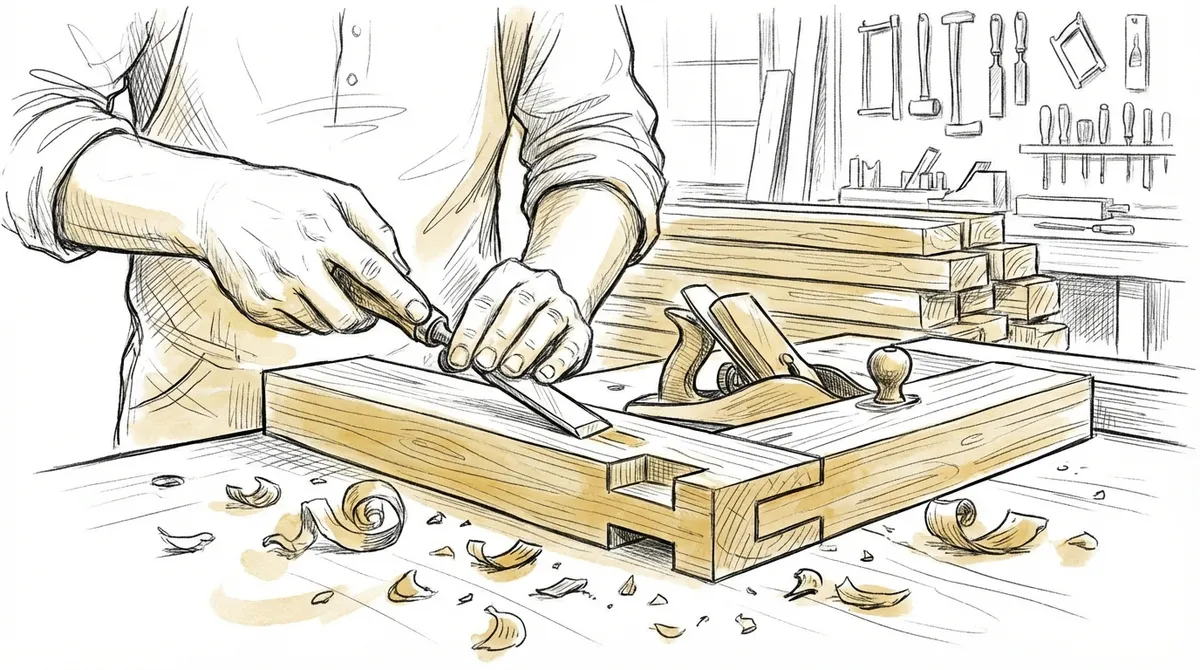
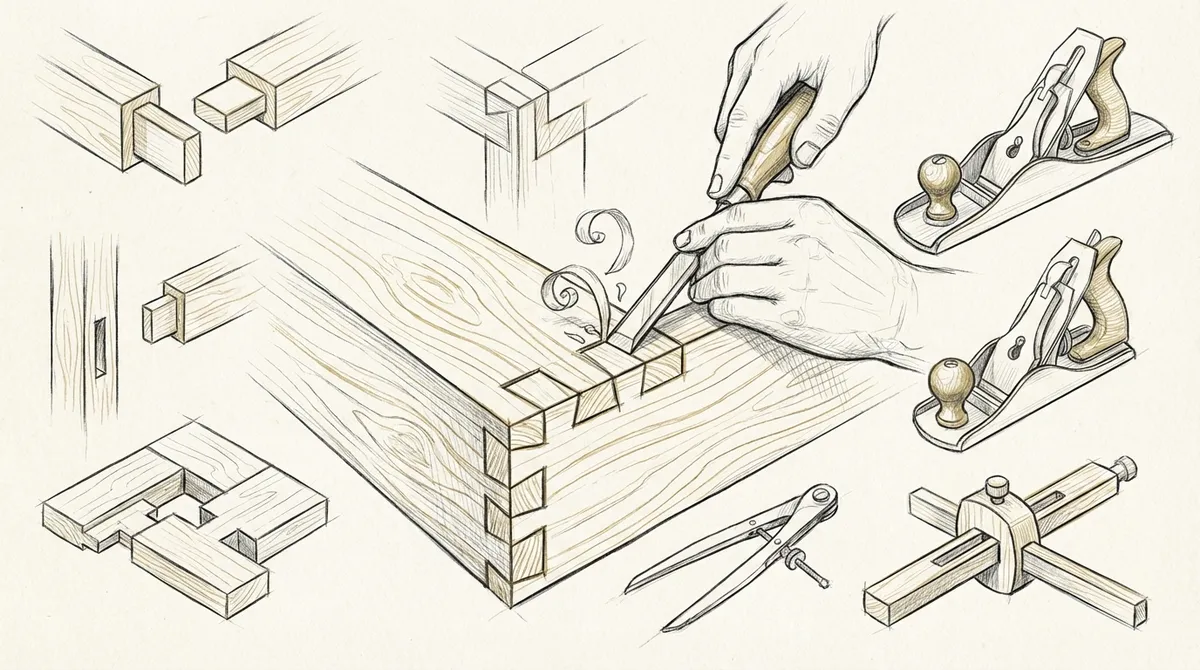
The joints connecting wood pieces together reveal the true skill level of a craftsman. While modern adhesives are remarkably strong, properly executed joinery creates mechanical connections that can last for generations even if the glue fails. Traditional joints like dovetails, mortise-and-tenon, and bridle joints require precise cutting and fitting to function correctly.
Dovetail joints, with their interlocking pins and tails, create incredibly strong connections for drawer construction and box assemblies. Hand-cut dovetails demonstrate exceptional skill, with evenly spaced pins, tight fitting joints, and clean shoulders that require no filler. Machine-cut dovetails can be equally functional but lack the subtle variations that reveal human craftsmanship.
Mortise-and-tenon joinery forms the backbone of frame-and-panel construction used in cabinet doors, face frames, and furniture. This joint type relies on a projecting tenon fitting snugly into a corresponding mortise cavity. Proper execution requires precise dimensions, square cuts, and careful glue application. When done correctly, mortise-and-tenon joints create connections stronger than the surrounding wood.
Modern Tools Meet Traditional Techniques
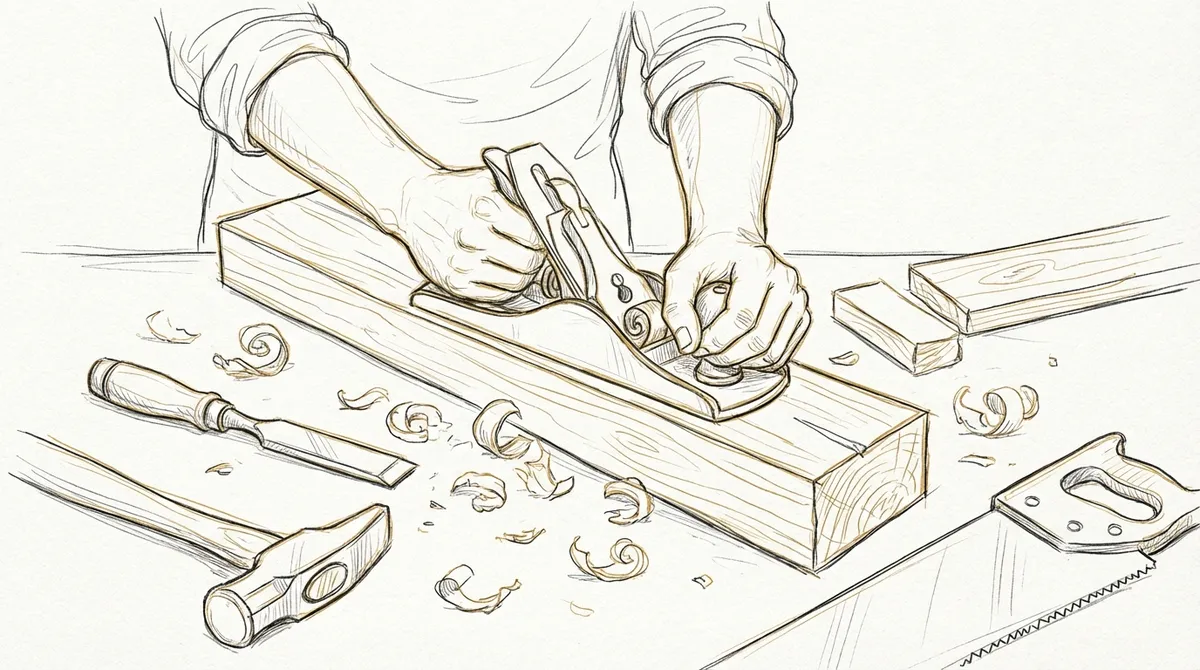
Contemporary woodworking craftsmanship blends traditional hand tool techniques with modern power tools and CNC machinery. This combination allows craftsmen to maintain quality standards while achieving efficiency that makes custom work more accessible. A skilled woodworker knows when hand planing produces a superior surface finish and when a router creates the most consistent profile.
CNC technology has revolutionized certain aspects of woodworking, enabling repeatable precision for complex cuts and patterns. However, the human element remains irreplaceable for assessing grain patterns, making aesthetic decisions, and handling the final fitting and finishing touches that distinguish exceptional work from merely adequate results.
Attention to Detail and Surface Preparation
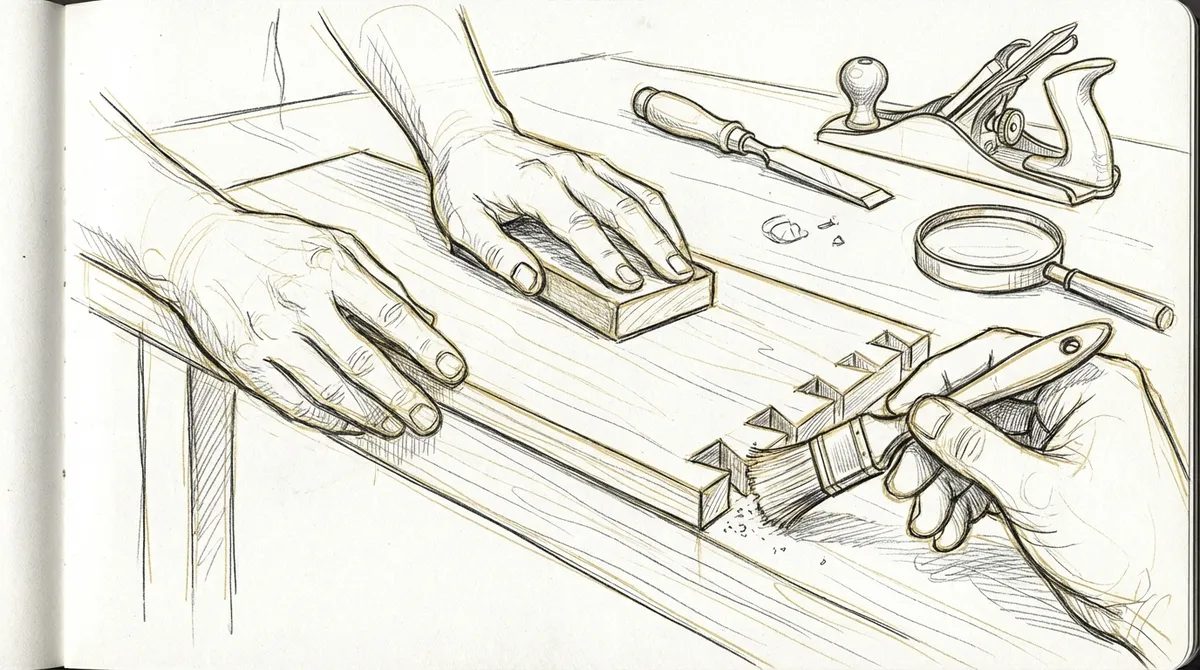
Surface preparation separates good woodworking from exceptional craftsmanship. This time-intensive process involves progressively smoothing wood surfaces through sanding, scraping, or planing until they’re ready for finishing. Rushing this stage results in visible scratches, uneven stain absorption, and finishes that highlight imperfections rather than concealing them.
Professional craftsmen follow systematic sanding sequences, typically starting with 80 or 100-grit abrasives and progressing through 120, 150, 180, and sometimes 220-grit papers. Each grit removes the scratches left by the previous one while creating finer scratches of its own. Skipping grits or sanding unevenly creates problems that become painfully obvious once finish is applied.
Attention to detail extends beyond visible surfaces. Craftsmen who take pride in their work ensure that interior surfaces are smooth and free of glue squeeze-out, drawer bottoms slide smoothly without catching, and every edge is properly eased to prevent splintering. These hidden details contribute to the overall quality and longevity of the piece.
The Art of Sanding and Smoothing
Proper sanding technique involves more than just running a random orbital sander across surfaces. Skilled craftsmen sand with the grain direction to minimize visible scratches, apply consistent pressure to avoid creating low spots, and frequently check their progress with raking light that reveals imperfections invisible under direct lighting.
Hand scraping with sharp card scrapers offers an alternative to sanding that produces exceptionally smooth surfaces without creating the tiny scratches inherent to abrasive papers. This traditional technique requires skill to master but delivers results particularly well-suited to fine furniture and visible surfaces where perfection matters. Companies like Bucheli Trim understand that exceptional surface preparation forms the foundation for flawless finishes in custom carpentry projects.
Finishing Techniques That Enhance and Protect
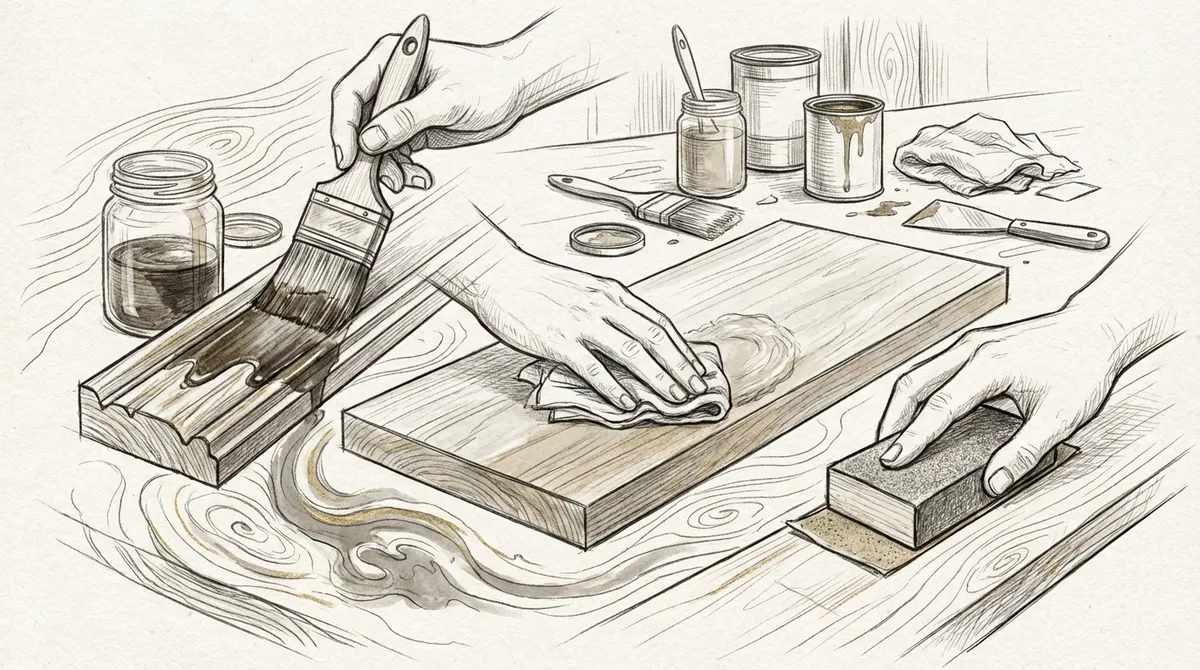
Finishing represents the final opportunity to enhance or ruin months of careful work. Exceptional finishing requires understanding how different products interact with various wood species, proper surface preparation, controlled application techniques, and patience for adequate drying and curing times between coats.
Oil finishes penetrate wood fibers to enhance grain patterns while providing moderate protection. These finishes are relatively easy to apply and repair but offer less protection against water and wear than film-building finishes. Popular options include tung oil, Danish oil, and various oil-varnish blends that combine ease of application with improved durability.
Film-building finishes like polyurethane, lacquer, and conversion varnish create protective layers on wood surfaces. These finishes offer superior protection against moisture, scratches, and chemicals but require more skill to apply smoothly. Professional spray equipment produces the finest results, though brushing and wiping techniques can achieve excellent outcomes in skilled hands.
Staining and Color Matching
Achieving consistent stain color across an entire project requires careful technique and understanding of how different grain patterns and wood densities absorb stain. Open-grained woods like oak absorb more stain than tight-grained maple, creating dramatic contrast in projects combining multiple species. Pre-stain conditioners help achieve more even coloration on blotchy woods like pine and cherry.
Color matching existing woodwork demands exceptional skill. Craftsmen must account for how original finishes have aged and changed color, then formulate custom stain mixtures that blend seamlessly with surrounding surfaces. This process often requires multiple test samples and adjustments before achieving acceptable results.
Custom Ceiling and Wall Applications
Woodworking craftsmanship extends beyond furniture and cabinetry to architectural elements that transform entire spaces. Custom ceiling designs incorporating coffered panels, exposed beams, and decorative moldings require precise measurement, careful planning, and expert installation techniques that account for building settlement and seasonal wood movement.
Coffered ceilings exemplify advanced woodworking craftsmanship, combining structural elements with decorative details to create dramatic visual impact. Each coffer must be perfectly square with consistent spacing, clean joints at intersections, and crown molding that transitions smoothly around corners. Installation requires careful layout, accurate cutting, and methodical assembly that ensures everything aligns precisely.
Wall enhancements like wainscoting, panel molding, and picture frame molding add architectural character while protecting walls from damage. Quality installation requires finding studs for secure attachment, using proper adhesives to prevent separation, and coping inside corners rather than mitering them for joints that remain tight despite wood movement and building settlement.
Molding and Trim Details
The quality of molding installation significantly impacts the perceived quality of any space. Perfect miter joints with no gaps, smooth transitions between adjoining pieces, and consistent reveal along edges require precise measuring, accurate cutting, and proper fastening techniques. Coped joints at inside corners create connections that remain tight as materials shift, while mitered outside corners need precise 45-degree cuts that fit together seamlessly.
Crown molding installation presents particular challenges since cuts occur at compound angles. Craftsmen must account for both the miter angle where pieces meet and the bevel angle where molding tilts away from the wall. Proper installation creates the illusion that complex molding profiles flow continuously around rooms without visible breaks or gaps.
Built-In Cabinetry and Custom Millwork
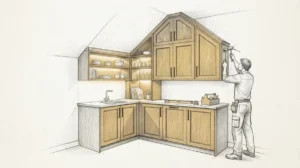
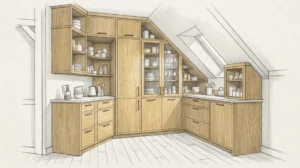
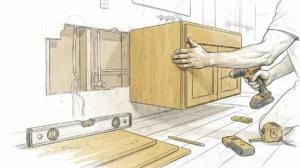
Built-in cabinetry represents woodworking craftsmanship at its most functional and demanding. Unlike freestanding furniture that can be adjusted and shimmed into position, built-ins must integrate perfectly with surrounding architecture despite walls that are rarely plumb, floors that aren’t level, and corners that don’t form true right angles.
Exceptional cabinet makers begin with careful site measurement using precision tools and techniques that capture the actual conditions rather than assuming ideal dimensions. This information guides custom fabrication that accounts for irregularities, ensuring finished cabinetry fits precisely within available spaces without awkward gaps or forced installations that stress joinery.
Face frame construction, popular in traditional American cabinetry, uses hardwood frames attached to cabinet box fronts. This approach allows for adjustment during installation, conceals plywood edges, and creates strong mounting points for doors and drawers. European-style frameless cabinetry maximizes interior space but demands greater precision in construction and installation since no face frame conceals gaps or misalignments.
Drawer Construction and Hardware Installation
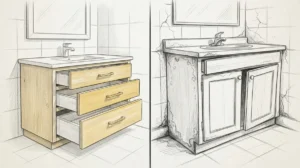
Quality drawer construction separates professionally built cabinetry from amateur work. Dovetailed solid wood drawers with captured plywood bottoms running in smooth slides represent the gold standard. Properly built drawers glide effortlessly without binding, maintain square geometry under heavy loads, and feature fronts that align perfectly with adjacent openings.
Hardware installation requires precise placement for proper function and consistent appearance. Drawer slides must be level and parallel, door hinges need exact positioning for proper reveals and smooth operation, and pulls should align consistently across multiple cabinet fronts. Professional installers use jigs and templates to ensure every hole drills in exactly the right location.
Working With Specialized Materials
Contemporary woodworking craftsmanship often incorporates specialized materials beyond traditional lumber. Engineered products like medium-density fiberboard (MDF) offer advantages for painted finishes since they lack grain patterns that telegraph through paint. Plywood provides dimensional stability superior to solid wood for large panels, though exposed edges require careful treatment with veneer or solid wood banding.
Some custom carpentry projects incorporate materials like epoxy resins for river tables and decorative inlays, metal accents for industrial-style designs, and glass panels for display cabinetry. Successfully integrating these materials requires understanding their properties and appropriate joinery techniques that accommodate different expansion rates and attachment requirements.
Live edge slabs harvested from single large logs preserve natural bark edges and dramatic grain patterns. Working with these irregular pieces requires creativity in layout, specialized flattening techniques using router sleds, and careful stabilization of checks and cracks that could expand without proper treatment. The result showcases wood’s natural beauty in ways impossible with dimensional lumber.
Installation Excellence and Problem-Solving
Exceptional woodworking craftsmanship extends beyond the workshop to include expert installation. Even perfectly crafted pieces fail to satisfy if installation introduces gaps, misalignments, or damage. Professional installers arrive with comprehensive tool kits, make careful measurements before mounting anything permanently, and solve unexpected problems creatively while maintaining aesthetic standards.
Scribing techniques allow craftsmen to fit cabinetry and trim tightly against irregular walls and uneven floors. This process involves holding pieces in approximate position, transferring the actual contours to the workpiece, and carefully removing material to create perfect fits. The resulting installations appear seamless despite building imperfections that would otherwise create obvious gaps.
Professional problem-solving distinguishes experienced craftsmen from less skilled workers. When unexpected obstacles like hidden pipes, electrical wires, or structural elements interfere with planned installations, master craftsmen adapt their approaches while maintaining structural integrity and design intent. This might involve modifying cabinet backs for clearance, adjusting trim profiles around obstructions, or redesigning components to accommodate site conditions.
Ensuring Long-Term Durability
Quality installations consider long-term performance rather than just initial appearance. This includes allowing for seasonal wood movement, using appropriate fasteners that won’t rust or corrode, and ensuring adequate support for heavy components like stone countertops and large crown moldings. Proper installation techniques prevent callbacks for repairs and maintain customer satisfaction for years after project completion.
Professional craftsmen also provide maintenance guidance to help clients preserve their investments. This might include recommendations for cleaning products safe for specific finishes, seasonal adjustment procedures for doors and drawers affected by humidity changes, and touch-up techniques for minor damage that occurs during normal use.
The Value of Experience and Continuous Learning
Woodworking craftsmanship develops over years of practice, mistakes, and continuous learning. Experienced craftsmen accumulate knowledge about which techniques work best in specific situations, how different wood species behave, and where shortcuts compromise quality versus where efficiency makes sense. This accumulated wisdom cannot be rushed or replaced by simply owning quality tools.
Master craftsmen remain students throughout their careers, staying current with new materials, evolving techniques, and improved tools that enhance capabilities. They attend workshops, study historical examples of exceptional work, and experiment with unfamiliar approaches to expand their skill sets. This commitment to continuous improvement ensures their work remains relevant and competitive.
Mentorship relationships between experienced craftsmen and apprentices preserve traditional techniques while adapting them to contemporary contexts. Hands-on training under skilled supervision develops the intuitive understanding of materials and processes that distinguishes true craftsmen from technicians who merely follow procedures without understanding underlying principles.
Evaluating Craftsmanship in Your Projects
When commissioning custom woodwork, understanding quality indicators helps you evaluate proposals and completed work. Look for tight joints with no visible gaps, smooth surfaces free from sanding scratches or tool marks, and consistent finish application without runs, drips, or thin spots. Hardware should operate smoothly without binding, and doors and drawers should reveal consistent gaps around their perimeters.
Ask potential craftsmen about their processes, material sources, and approach to problem-solving. Quality craftsmen explain their methods confidently and provide examples of previous work showcasing similar techniques. They discuss how they’ll handle anticipated challenges and what contingencies exist if unexpected obstacles arise during your project.
Review portfolios critically, looking beyond attractive photography to examine joinery details, finish quality, and design appropriateness. Notice whether previous projects demonstrate range and versatility or simply repeat the same approaches regardless of context. Quality craftsmen adapt their techniques to serve each project’s unique requirements rather than forcing all work into familiar patterns.
Maintaining and Caring for Quality Woodwork
Preserving exceptional woodworking craftsmanship requires appropriate maintenance and care. Regular dusting prevents abrasive particles from scratching finishes during cleaning, while periodic conditioning with appropriate products maintains moisture balance in wood and refreshes protective coatings. Avoid harsh chemicals that can damage finishes or dry out wood, instead using cleaners specifically formulated for wood surfaces.
Environmental control significantly impacts wood’s longevity and appearance. Maintaining consistent humidity levels between 35-55% prevents excessive expansion and contraction that can open joints and crack panels. Positioning furniture and cabinetry away from heat vents, fireplaces, and direct sunlight minimizes localized drying that causes warping and finish degradation.
Address minor damage promptly before it worsens. Small scratches often respond to simple touch-up techniques using matching stain markers or furniture polish. Loose joints should be repaired before stress causes additional damage, and failing finishes need refinishing to prevent moisture damage to underlying wood. Professional craftsmen like those at Bucheli Trim can assess damage and recommend appropriate repairs that preserve your investment.
Conclusion
Exceptional woodworking craftsmanship combines technical skill, artistic vision, and unwavering attention to detail to create pieces that transcend mere functionality and become lasting expressions of quality. From selecting appropriate materials and executing precise joinery to applying flawless finishes and solving installation challenges, every stage requires knowledge, experience, and dedication to excellence. Understanding what distinguishes masterful woodwork helps you appreciate the value of skilled craftsmanship and make informed decisions when investing in custom carpentry for your home.
Whether you’re considering custom ceiling designs, built-in cabinetry, or architectural millwork, partnering with experienced craftsmen ensures results that enhance your space while providing decades of satisfaction. Quality woodworking represents an investment in beauty, functionality, and lasting value that mass-produced alternatives simply cannot match. If you’re ready to experience exceptional woodworking craftsmanship in your home, contact our team of skilled craftsmen to discuss your vision and discover how custom carpentry can transform your space. You can also visit us on Google to see examples of our work and read what our satisfied clients have to say about their experiences.
FAQs
Q: What distinguishes exceptional woodworking craftsmanship from average work?
A: Exceptional craftsmanship is characterized by precise joinery with tight-fitting connections, flawless surface preparation free from scratches or tool marks, and professional finishing that enhances wood’s natural beauty. Quality work also accounts for wood movement, uses appropriate materials for specific applications, and demonstrates attention to hidden details that contribute to long-term durability and functionality.
Q: How long does it take to develop professional woodworking skills?
A: Developing professional-level woodworking craftsmanship typically requires several years of dedicated practice and learning. Most craftsmen spend 3-5 years as apprentices or in training positions before working independently, and continue refining their skills throughout their careers. Mastery of advanced techniques like hand-cut dovetails, complex joinery, and flawless finishing requires ongoing practice and experience with diverse projects.
Q: What types of wood joints are strongest for furniture and cabinetry?
A: Mortise-and-tenon joints are considered among the strongest for frame construction, creating connections that often exceed the strength of the surrounding wood. Dovetail joints provide exceptional strength for drawer boxes and case assemblies due to their mechanical interlocking design. Both joint types, when properly executed with quality glue, create connections that can last for generations under normal use conditions.
Q: How does humidity affect finished woodwork?
A: Wood naturally expands when humidity increases and contracts as humidity decreases, a phenomenon called wood movement. This occurs primarily across the grain rather than along the length. Excessive humidity changes can cause joints to open, panels to crack, and finishes to fail. Maintaining consistent indoor humidity levels between 35-55% helps minimize movement and preserves the integrity and appearance of quality woodwork.
Q: What should I look for when evaluating the quality of custom woodwork?
A: Examine joints for tight fits without visible gaps, check surfaces for smooth, consistent finish application, and test hardware operation for smooth, precise movement. Look at corners and transitions where craftsman skill is most evident, inspect for consistent grain matching in visible areas, and verify that doors and drawers have uniform reveals. Quality work should demonstrate attention to both visible surfaces and hidden structural details.