Key Takeaways
-
Custom TV enclosures use solid wood and quality materials built to last decades, unlike mass-produced furniture with particle board that typically needs replacement within 5-10 years.
-
Custom enclosures are built to your exact wall measurements and accommodate architectural features like windows or fireplaces, eliminating awkward gaps that store-bought standard-sized options create.
-
Well-designed custom TV cabinetry adds measurable home value as a permanent built-in improvement that appeals to buyers seeking move-in ready homes with high-end finishes.
-
Choose materials strategically: walnut and cherry for premium aesthetics, oak for traditional appeal, maple for modern painted finishes, and pine for budget-conscious farmhouse styles.
-
Integrate cable management systems, LED lighting, soft-close hardware, and proper ventilation during the design phase to ensure functionality and longevity of your entertainment system.
-
Budget 3-4 weeks for mid-range quality hardwood built-ins or 6-8 weeks for full wall systems, which costs more upfront than store-bought but eliminates future replacement expenses.
Your television is often the focal point of your living room. But what if it could be more than just a screen on the wall? A custom TV enclosure transforms your entertainment area into a stunning design feature that reflects your personal style. Instead of settling for basic store-bought options, you can create a built-in solution that matches your home’s architecture and meets your exact needs.
Many homeowners struggle with making their TV blend seamlessly into their space. Standard TV stands and generic wall mounts rarely complement high-end interiors. That’s where custom carpentry shines. Custom cabinetry allows you to hide wires, add storage, and create a polished look that elevates your entire room.
This guide explores everything you need to know about custom TV enclosures. You’ll discover design options, material choices, and how to decide between custom and pre-made solutions. Whether you’re working with an experienced carpenter or planning a DIY project, you’ll find practical advice to help you create the perfect entertainment center for your home.
What Is a Custom TV Enclosure?
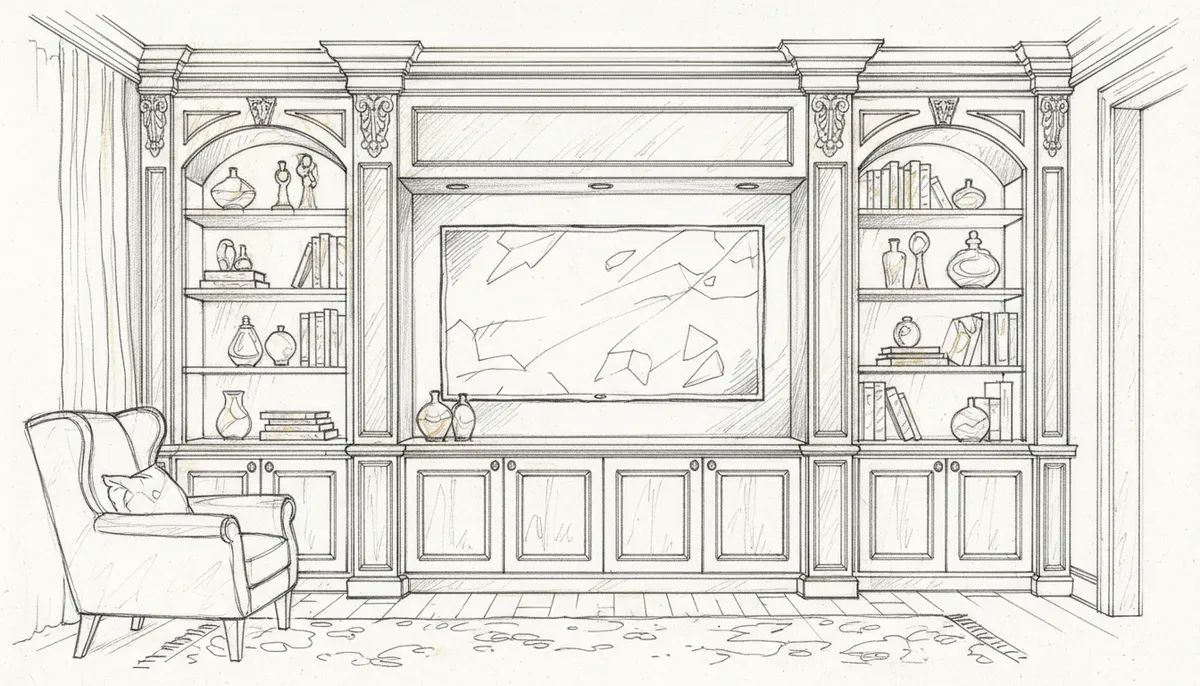
A custom TV enclosure is a built-in cabinet or frame designed specifically for your television. Unlike standard furniture, it’s crafted to fit your exact wall dimensions and style preferences. These enclosures can range from simple frames to elaborate wall enhancement systems with shelving, lighting, and hidden storage.
The beauty of custom work lies in its flexibility. You can choose materials that match your existing trim and molding details. You can also integrate features like cable management systems and ventilation for electronics. This level of customization ensures your TV becomes part of your room’s overall design rather than an afterthought.
Custom enclosures work in any room. They’re popular in living rooms, bedrooms, and home theaters. Some homeowners even add them to outdoor entertainment spaces. The key is working with skilled craftspeople who understand how to blend functionality with visual appeal.
Benefits of Custom TV Enclosures
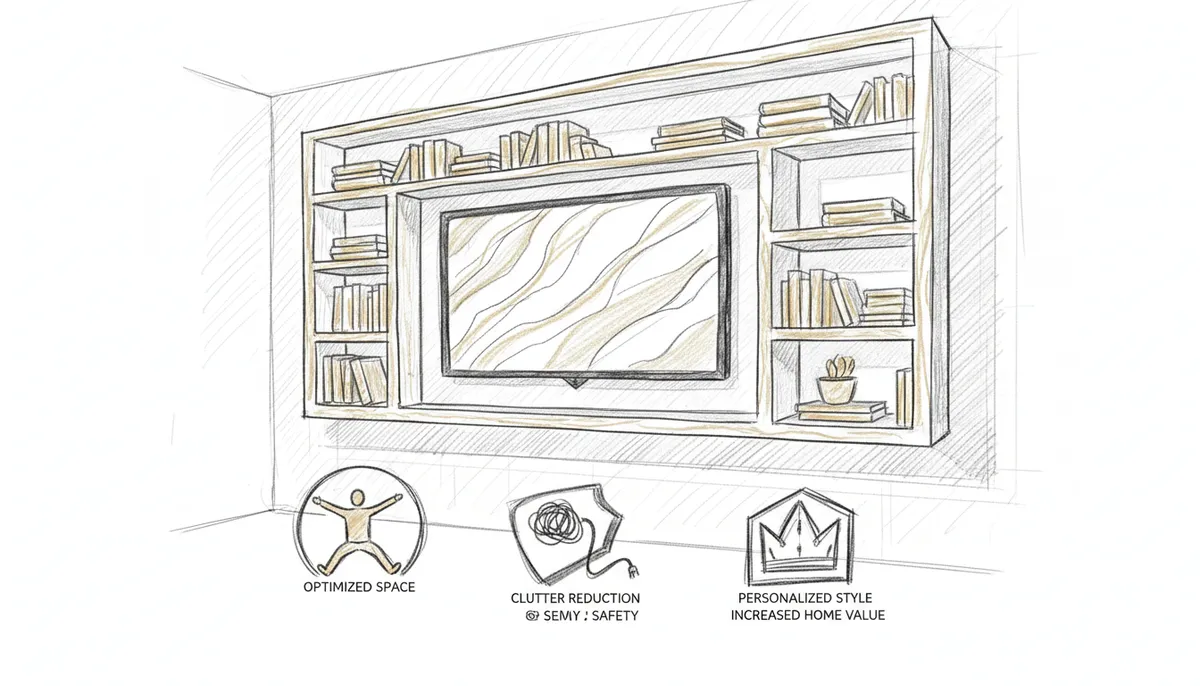
Custom TV enclosures offer advantages that store-bought options simply can’t match. Here are the top reasons homeowners choose custom solutions:
Perfect Fit for Your Space
Every wall is different. Store-bought entertainment centers come in standard sizes that rarely fit perfectly. A custom enclosure is built to your exact measurements. This means no awkward gaps or wasted space. Your TV sits exactly where you want it, at the perfect viewing height.
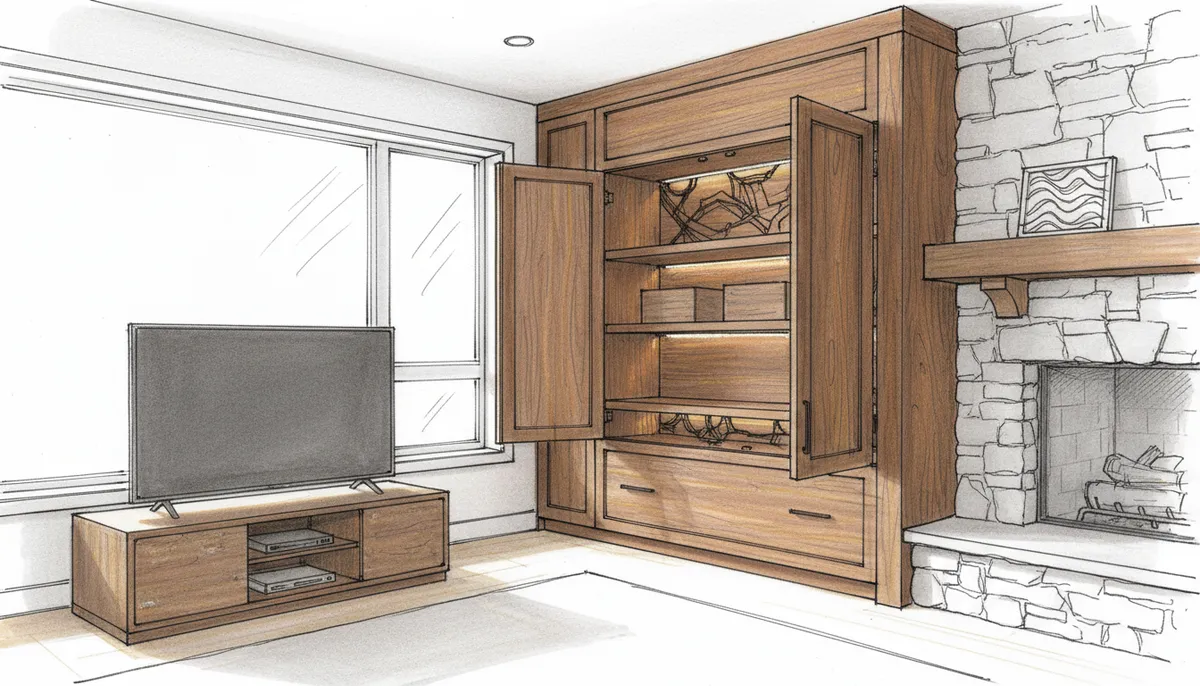
Custom work also accommodates unusual wall features. If you have windows, fireplaces, or architectural details to work around, a carpenter can design an enclosure that complements these elements. The result is a cohesive look that feels intentional and well-planned.
Superior Craftsmanship and Quality
Mass-produced furniture often uses particle board and cheap hardware. Custom carpentry relies on solid wood and quality materials that last for decades. The joints are stronger, the finishes are more durable, and the overall construction is built to withstand daily use.
Skilled carpenters pay attention to details that factory furniture overlooks. They ensure doors close smoothly, shelves are level, and finishes are flawless. This level of quality is especially important for custom projects that become permanent features of your home.
Unlimited Design Options
With custom work, you’re not limited to what’s in stock. You can choose from numerous wood species, stains, and paint colors. You can add glass doors, open shelving, or hidden compartments. The design possibilities are endless.
Want to incorporate your TV into a larger built-in cabinetry system? No problem. Prefer a minimalist frame that barely shows? That works too. Custom carpentry adapts to your vision, not the other way around.
Increased Home Value
Quality built-ins add value to your property. Real estate experts note that custom woodwork appeals to buyers looking for move-in ready homes with high-end finishes. A well-designed TV enclosure signals attention to detail and quality throughout the house.
Unlike furniture that comes and goes, built-in enclosures are permanent improvements. They become part of your home’s character and appeal. This makes them a smart investment for homeowners planning to sell in the future.
Store-Bought TV Stands: Pros and Cons
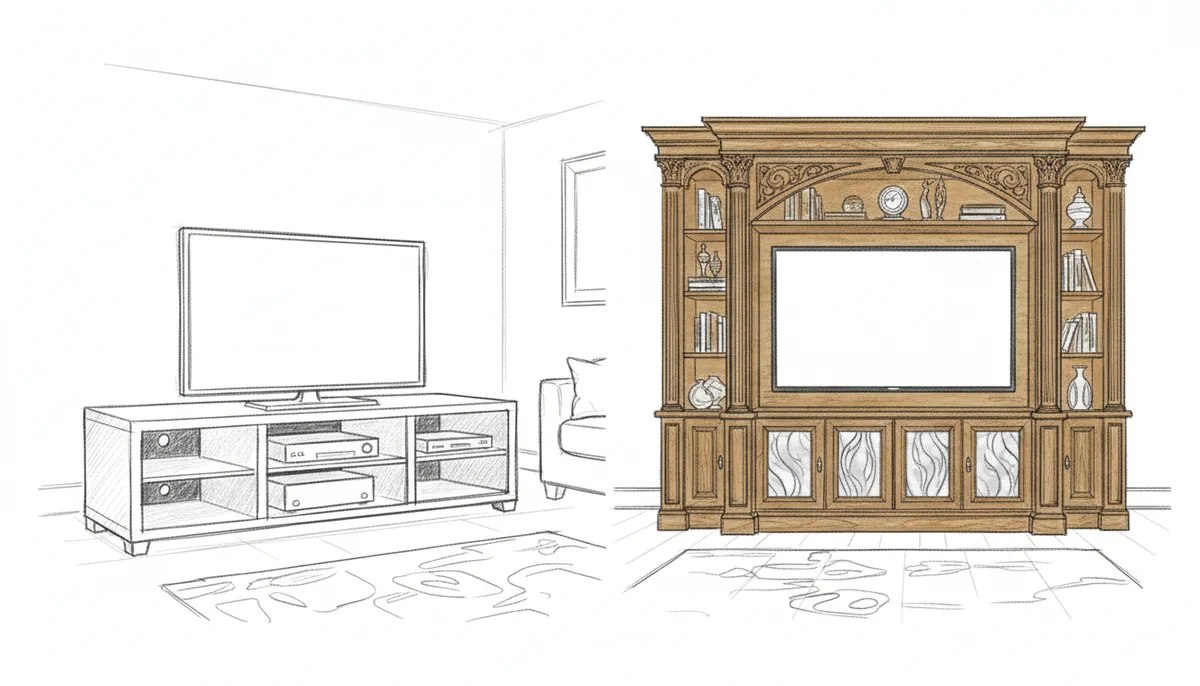
Store-bought options have their place in home design. Understanding their strengths and weaknesses helps you make an informed decision.
Advantages of Pre-Made Furniture
- Immediate availability: You can buy and take home a TV stand the same day. There’s no waiting for custom work to be completed.
- Lower upfront cost: Mass-produced furniture is generally less expensive than custom carpentry, making it accessible for tight budgets.
- Easy to move: If you relocate, you can take your TV stand with you. This flexibility appeals to renters and people who move frequently.
- Simple assembly: Most store-bought units require basic tools and come with instructions. You can set them up yourself in an afternoon.
Disadvantages of Pre-Made Options
- Limited sizes: Standard dimensions rarely fit your space perfectly, leaving gaps or forcing you to compromise on placement.
- Generic appearance: Mass-produced designs lack the character and uniqueness of custom work.
- Lower quality materials: Particle board and veneer finishes don’t hold up as well as solid wood construction.
- No personalization: You’re stuck with whatever colors and configurations are available in stores.
- Shorter lifespan: Cheaper materials and construction mean you’ll likely replace the unit within a few years.
| Feature | Custom TV Enclosure | Store-Bought Stand |
|---|---|---|
| Cost | Higher upfront investment | Lower initial expense |
| Quality | Solid wood, superior construction | Particle board, basic hardware |
| Fit | Exact measurements for your space | Standard sizes only |
| Customization | Unlimited design options | Choose from available models |
| Timeline | Several weeks for completion | Immediate availability |
| Lifespan | Decades with proper care | 5-10 years typically |
Design Ideas for Custom TV Enclosures
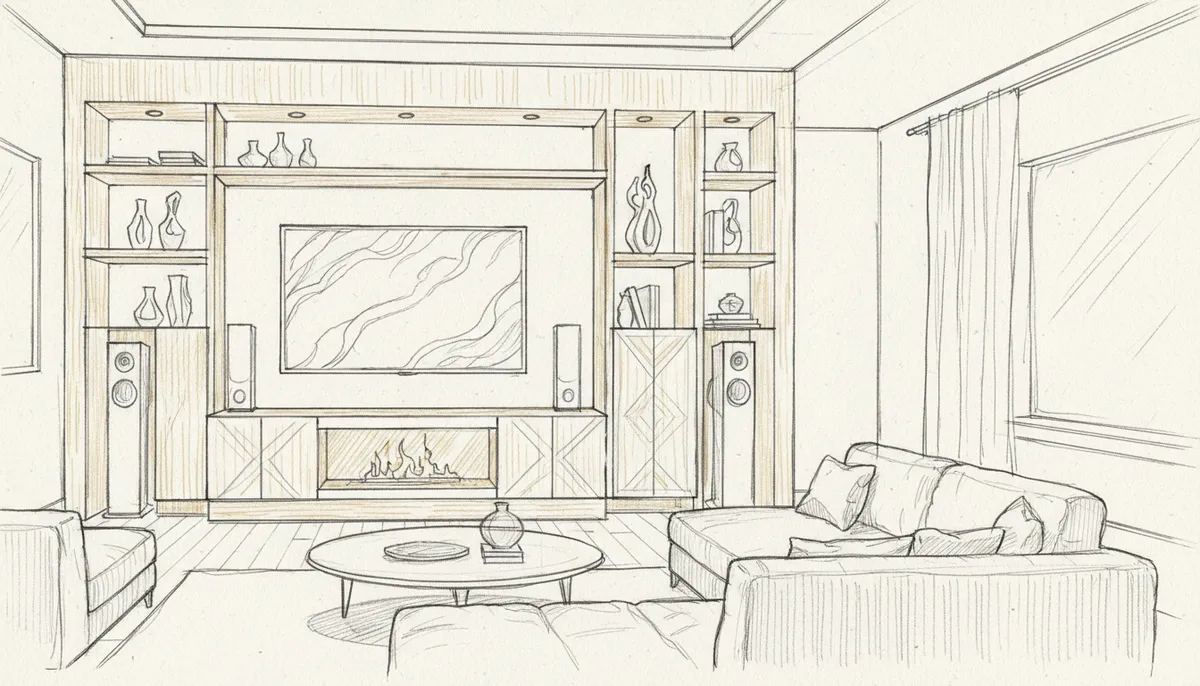
Your custom TV enclosure should reflect your home’s style and your personal taste. Here are popular design approaches to consider:
Traditional Built-In Wall Units
These classic designs feature cabinetry on either side of the TV. The enclosure typically includes shelving for books and decorative items. Base cabinets provide closed storage for media equipment and games. Crown molding and detailed trim work add elegance.
This style works beautifully in formal living rooms and traditional homes. It creates symmetry and balance while maximizing storage space. The TV becomes part of a larger furniture piece rather than standing alone.
Modern Floating Designs
Minimalist homeowners often prefer clean lines and sleek profiles. A floating TV enclosure mounts to the wall with hidden brackets. The design eliminates visible hardware and bulky supports. The result is a streamlined look that emphasizes simplicity.
These designs often incorporate wall panel backgrounds to add texture without clutter. The TV appears to float within a frame of wood or stone. This approach suits contemporary interiors and open-concept spaces.
Rustic Barn Door Enclosures
Want to hide your TV when not in use? A barn door enclosure uses sliding doors to cover the screen. When closed, the doors display beautiful wood grain or decorative panels. When open, they slide to the sides to reveal the TV.
This design adds farmhouse charm and functionality. It’s perfect for homeowners who don’t want technology to dominate their living space. The barn door hardware becomes a decorative feature in itself.
Entertainment Wall Systems
For dedicated media rooms, consider a full wall system. These comprehensive designs include space for TVs, speakers, gaming systems, and media collections. They often feature LED lighting, adjustable shelving, and specialized compartments for different equipment.
A wall system can extend from floor to ceiling, creating a dramatic focal point. It provides everything you need for an immersive entertainment experience while keeping all components organized and accessible.
Choosing the Right Materials
Material selection impacts both appearance and performance. Here’s what you need to know about common choices:
Wood Species Options
- Oak: Durable and affordable with prominent grain patterns. Takes stain well and offers traditional appeal.
- Maple: Hard and smooth with subtle grain. Perfect for painted finishes and modern designs.
- Cherry: Rich color that darkens beautifully over time. Premium choice for elegant interiors.
- Walnut: Dark, luxurious appearance with excellent workability. Ideal for high-end custom work.
- Pine: Budget-friendly softwood with rustic character. Works well for farmhouse and casual styles.
Finish Options
Your finish choice affects maintenance and appearance. Stains enhance natural wood grain while providing some protection. They come in countless colors from light honey to deep espresso. Painted finishes offer more color options and a smoother appearance. They’re easier to clean and better at hiding wood imperfections.
Clear coats protect wood without changing its color. They’re popular for species with beautiful natural tones like walnut and cherry. Professional painting and finishing ensure durable results that last for years.
Hardware and Accessories
Don’t overlook the details. Hinges, handles, and drawer pulls should match your home’s overall style. Traditional designs use brass or bronze hardware with classic shapes. Modern designs favor brushed nickel or matte black with clean lines.
Consider adding soft-close hinges for doors and drawers. These mechanisms prevent slamming and extend the life of your cabinetry. LED strip lighting can illuminate shelves and highlight decorative items. Cable management systems keep wires organized and out of sight.
Working with Professional Carpenters
Creating a custom TV enclosure requires skill and experience. Here’s what to expect when hiring professionals:
Initial Consultation
The process starts with a discussion about your needs and preferences. A carpenter will visit your home to take measurements and assess the space. They’ll ask about your style preferences, budget, and timeline. This conversation helps them understand your vision and determine if custom work is the right solution.
Experienced professionals like Bucheli Trim bring portfolio examples to show previous projects. This helps you visualize possibilities and refine your ideas. Don’t hesitate to ask questions about materials, construction methods, and maintenance requirements.
Design and Planning Phase
After the initial meeting, the carpenter creates detailed drawings or 3D renderings. These plans show exactly how the enclosure will look and function. You’ll review dimensions, materials, and features before work begins. This is your opportunity to request changes and ensure every detail meets your expectations.
The planning phase also covers practical concerns. Where will speakers and components go? How will cables route through the cabinetry? What about ventilation for heat-generating equipment? Good carpenters address these technical requirements upfront.
Construction and Installation
Custom cabinetry is typically built in a workshop, then installed in your home. This approach ensures precise construction and better quality control. The carpenter may need to make minor adjustments during installation to account for wall irregularities or settling.
Professional installation includes securing the unit to wall studs for safety. Heavy built-ins need proper anchoring to prevent tipping. The carpenter will also handle any trim work needed to blend the enclosure seamlessly with existing woodwork.
Cost Considerations
Understanding what influences cost helps you plan your budget effectively. Here are the main factors:
Size and Complexity
Larger enclosures require more materials and labor. A simple frame around your TV costs less than a full wall unit with storage and lighting. Complex designs with curved elements or intricate details increase labor time. Simple rectangular designs with straight lines are more affordable.
Material Quality
Premium wood species like walnut and cherry cost more than common options like oak or maple. Solid wood construction is pricier than plywood or MDF alternatives. However, the investment pays off in durability and appearance. You get what you pay for in custom carpentry.
Special Features
Each added feature increases the total cost. Lighting systems, soft-close hardware, and glass doors add to the budget. Custom paint colors that require special mixing cost more than standard stains. Discuss priorities with your carpenter to balance features with budget constraints.
Labor and Timeline
Experienced carpenters command higher rates than less skilled workers. However, their expertise ensures better results and fewer problems. Rush jobs may incur additional fees. Planning ahead and allowing adequate time helps control costs.
| Project Type | Materials | Features | Timeline |
|---|---|---|---|
| Simple Frame | Basic wood, standard finish | Minimal storage, basic design | 1-2 weeks |
| Mid-Range Built-In | Quality hardwood, custom stain | Shelving, cabinets, lighting | 3-4 weeks |
| Full Wall System | Premium wood, specialty finishes | Complete storage, automation | 6-8 weeks |
Maintenance and Care
Proper care keeps your custom TV enclosure looking beautiful for decades. Follow these simple guidelines:
Regular Cleaning
- Dust weekly with a soft, dry cloth to prevent buildup
- Use furniture polish sparingly to avoid residue accumulation
- Clean glass doors with streak-free cleaner and microfiber cloths
- Wipe spills immediately to prevent staining or water damage
- Avoid harsh chemicals that can damage wood finishes
Wood Care
Wood expands and contracts with humidity changes. Maintain consistent indoor humidity levels between 35-55% to prevent warping or cracking. Use a humidifier in winter and dehumidifier in summer if needed. This simple step protects your investment.
Inspect hinges and drawer slides annually. Tighten any loose screws and lubricate moving parts with appropriate products. Address minor scratches promptly with touch-up markers or furniture crayons that match your finish.
Electronic Equipment Considerations
Electronics generate heat that can damage wood over time. Ensure adequate ventilation in enclosed spaces. Leave gaps behind components for air circulation. Consider adding small fans if you notice excessive heat buildup.
Organize cables regularly to prevent tangling and accidental damage. Use cable ties or clips to keep wires neat and accessible. This makes equipment changes easier and improves airflow around components.
Making Your Decision: Custom vs. Store-Bought
Choosing between custom and pre-made solutions depends on several factors. Consider these questions:
Budget and Timeline
Do you need an immediate solution or can you wait several weeks? If you’re moving into a new home and need furniture quickly, store-bought options make sense. If you’re planning a renovation or long-term home improvement, custom work is worth the wait.
Can you afford the upfront investment in custom carpentry? While more expensive initially, custom work lasts much longer. Calculate the long-term value, not just the immediate cost. Replacing cheap furniture every few years adds up.
Permanence and Flexibility
- How long will you stay in your home? Custom built-ins make sense for permanent residences. If you move frequently, portable furniture offers more flexibility.
- Do you anticipate layout changes? Built-in units are harder to modify than freestanding furniture. Consider your future plans before committing to permanent installations.
- Will you upgrade your TV? Custom enclosures can accommodate size changes better than standard furniture if designed with flexibility in mind.
Style and Quality Priorities
How important is a cohesive, high-end look? If your home features quality finishes and you value craftsmanship, custom work is the logical choice. It elevates your space and reflects your commitment to quality.
Do you want something truly unique? Store-bought furniture appears in countless homes. Custom carpentry creates one-of-a-kind pieces that showcase your personal style. This distinction matters to homeowners who value individuality.
Questions to Ask Before Starting Your Project
Before committing to a custom TV enclosure, clarify these important points with your carpenter:
- What’s the estimated timeline from design to installation?
- How do you handle unexpected issues during construction?
- What warranties or guarantees do you provide?
- Can you provide references from recent clients?
- How do you protect existing flooring and walls during installation?
- What’s included in the quoted amount?
Transform Your Living Space Today
A custom TV enclosure does more than house your television. It transforms your entertainment area into a design statement that reflects your taste and lifestyle. Whether you choose a full wall system or a simple built-in frame, custom carpentry delivers quality that store-bought options can’t match.
The investment in custom work pays dividends in durability, functionality, and visual appeal. Your enclosure becomes a permanent feature that adds value to your home and enjoyment to your daily life. It solves practical problems like cable management and equipment storage while creating a polished, professional appearance.
Ready to create the perfect entertainment center for your home? Contact our team to discuss your vision and explore design possibilities. We’ll help you create a custom solution that fits your space, style, and budget perfectly.
Don’t settle for generic furniture that doesn’t quite work. Discover how quality custom carpentry can transform your living space. Your dream entertainment center is closer than you think. Learn more about professional carpentry and the difference expert craftsmanship makes. Check out our Facebook page to see recent projects and customer testimonials. Connect with traditional woodworking techniques that stand the test of time.
FAQs
Q: How long does it take to build a custom TV enclosure?
A: A custom TV enclosure typically takes 2-8 weeks depending on complexity. Simple frames require 1-2 weeks, while full wall systems with storage and special features need 6-8 weeks. The timeline includes design approval, construction in the workshop, and final installation in your home.
Q: Can a custom TV enclosure accommodate different TV sizes?
A: Yes, experienced carpenters can design enclosures with flexibility for future TV upgrades. They create openings slightly larger than your current screen and add adjustable mounting systems. This forward-thinking approach protects your investment when you eventually upgrade your television.
Q: What wood is best for a custom TV enclosure?
A: Oak, maple, and cherry are popular choices for TV enclosures. Oak offers durability and affordability with beautiful grain patterns. Maple provides a smooth surface perfect for painted finishes. Cherry delivers rich color and premium appeal for high-end designs. Your carpenter can recommend the best option for your style and budget.
Q: Do custom TV enclosures require special ventilation?
A: Yes, proper ventilation is essential for enclosed TV spaces. Electronics generate heat that can damage both equipment and wood finishes. Good designs include rear ventilation gaps, strategically placed openings, and adequate space around components. Your carpenter should plan for airflow during the design phase.
Q: How do I maintain my custom TV enclosure?
A: Maintain your enclosure by dusting weekly with a soft cloth and avoiding harsh cleaning chemicals. Keep indoor humidity between 35-55% to prevent wood warping. Check and tighten hardware annually, and address scratches promptly with touch-up products. Proper care ensures your custom carpentry lasts for decades.