Key Takeaways
-
Carpenters undergo formal apprenticeships lasting 3-5 years and specialize exclusively in woodworking, while handymen learn on the job and handle various household repairs—making carpenters essential for custom cabinetry, trim, and architectural details.
-
Custom wood projects like built-in cabinetry, crown molding, and tray ceilings require a carpenter's precision tools and expertise; handymen lack the specialized equipment and training to achieve professional-grade finishes.
-
Licensed carpenters carry proper insurance and accountability, protecting homeowners from costly mistakes, while handymen credentials vary widely—making licensing verification critical for significant projects.
-
Handymen are cost-effective for simple, quick repairs like fixing hinges or patching drywall, but attempting complex carpentry work with a handyman often leads to poor results and wasted money.
-
A skilled carpenter brings measurable value to properties through precision, material knowledge, and design sense, making them the right investment for homeowners, designers, and developers seeking high-end, long-lasting results.
-
Request portfolio examples, verify licensing and insurance, and get written estimates before hiring; consulting a carpenter early on complex projects prevents expensive errors that cheaper initial choices might create.
When your home needs work, choosing the right professional matters. Many homeowners, interior designers, and real estate developers face this exact question: what is the difference between a carpenter and a handyman? The answer can save you time, money, and frustration. Picking the wrong person for the job can lead to poor results, especially when your project demands precision and artistry. Custom carpentry work — like ceiling designs, built-in cabinetry, and detailed trim — requires a level of skill that goes beyond general repairs. This article breaks down six clear differences between a carpenter and a handyman. By the end, you will know exactly who to call for your next home improvement project.
Understanding the Two Roles
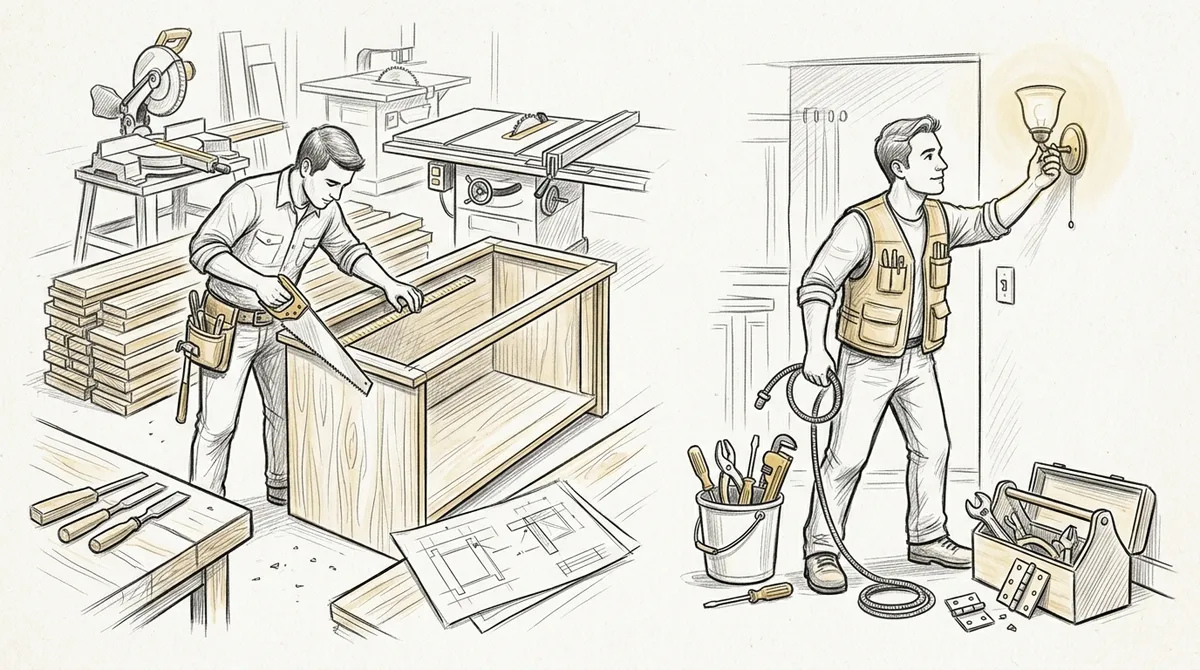
Before diving into the differences, it helps to understand what each professional does. A carpenter is a skilled tradesperson who specializes in working with wood and wood-related materials. A handyman, on the other hand, handles a wide range of general household tasks. To learn more about carpentry as a trade, Wikipedia offers a solid overview of its history and scope.
Both professionals serve important purposes. But they are not interchangeable. Knowing the distinction helps you get the best results for your specific project. Whether you are upgrading a Tampa Bay home or designing a luxury property, this knowledge is essential.
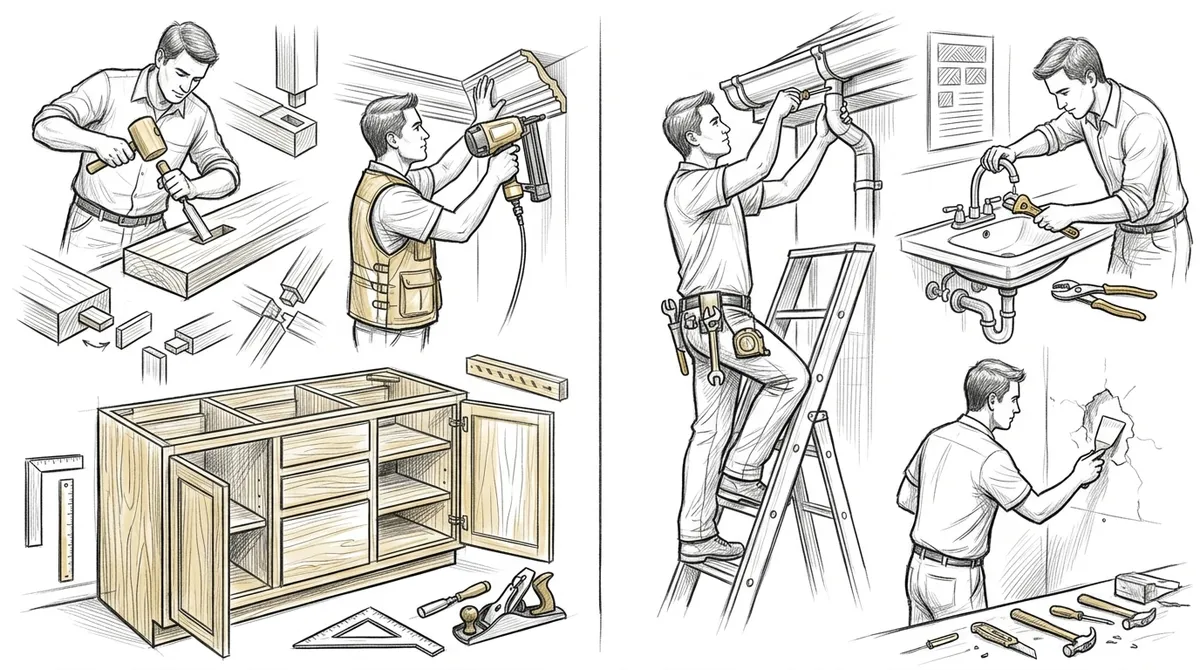
6 Key Differences Between a Carpenter and a Handyman
1. Training and Specialization
Carpenters go through formal training. They often complete apprenticeships that last several years. During this time, they learn technical skills like joinery, framing, and finish work. Their expertise is deep and focused on one craft.
Handymen typically learn through experience. They pick up a variety of skills over time. They are generalists, not specialists. This makes them great for simple household repairs. But it limits them on complex, high-skill projects.
- Carpenters train specifically in woodworking techniques
- Handymen have broader but shallower skill sets
- Carpentry apprenticeships can last 3–5 years
- Handymen often learn on the job without formal certification
2. Scope of Work
A handyman handles everyday tasks. Think fixing a leaky faucet, patching drywall, or replacing a light fixture. These are quick jobs that don’t require deep expertise in any single area.
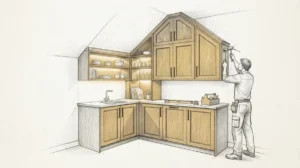
A carpenter focuses exclusively on wood-based work. This includes wall enhancements, custom built-ins, trim installation, and cabinetry. Molding details and architectural millwork fall squarely in a carpenter’s domain. If your project involves transforming a space with wood, a carpenter is the right call.
- Handymen handle mixed repairs across plumbing, electrical, and general maintenance
- Carpenters focus on structural and decorative wood projects
- Custom work like built-ins and cabinetry always requires a carpenter
3. Quality of Finish
This is one of the most important differences. Carpenters are trained to deliver a flawless finish. They understand wood grain, proper joinery, and precise measurements. The result is work that looks beautiful and lasts for decades.
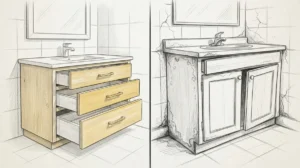
Handymen can do basic carpentry tasks, like hanging a door or replacing a shelf. But fine detail work requires a specialist. For example, installing custom cabinets or crown molding demands tight tolerances and artistic eye. A handyman may not have the tools or training to achieve that level of precision.
For homeowners who want luxury finishes, this distinction is critical. Real estate developers know that premium carpentry adds measurable value to properties. Interior designers rely on skilled carpenters to execute their creative visions down to the last detail.
4. Tools and Equipment
Professional carpenters invest heavily in specialized tools. They use table saws, routers, miter saws, and finish nailers designed for precise woodworking. These tools enable them to create clean, accurate cuts and perfect joints.
Handymen carry a general toolkit. They bring what’s needed for a variety of small jobs. Their tools are versatile but not specialized. This works fine for routine repairs. But for custom carpentry, the right tools make all the difference.
- Carpenters use industry-grade woodworking tools
- Handymen rely on general-purpose toolkits
- Specialty tools lead to cleaner, more precise results
- Custom projects demand equipment that most handymen don’t carry
5. Project Complexity
Ask yourself: how complex is my project? If the answer involves custom design, architectural detail, or structural wood elements, you need a carpenter. Projects like custom carpentry projects, tray ceilings, wainscoting, and floor-to-ceiling bookcases are beyond a handyman’s typical scope.
Handymen shine when the job list is long but each task is simple. They’re ideal for honey-do lists. But a single complex carpentry project deserves a dedicated specialist who can plan, measure, cut, and install with expertise.
Consider these examples of when each professional fits best:
| Task | Carpenter | Handyman |
|---|---|---|
| Custom built-in cabinetry | ✓ Best choice | ✗ Not recommended |
| Crown molding installation | ✓ Best choice | ✗ Limited skill |
| Fixing a squeaky door hinge | ✓ Can do | ✓ Well suited |
| Tray ceiling design | ✓ Best choice | ✗ Not equipped |
| Replacing a cabinet handle | ✓ Can do | ✓ Well suited |
| Wainscoting installation | ✓ Best choice | ✗ Not recommended |
6. Licensing, Insurance, and Accountability
Carpenters who take on significant projects are more likely to carry proper licensing and insurance. This protects you as a homeowner. If something goes wrong, a licensed professional is accountable. Their reputation depends on quality work.
Handymen vary widely in their credentials. Some are licensed and insured. Others operate informally. For small repairs, this may be acceptable. But for larger investments like custom built-ins or flooring installation, you want a professional who is fully accountable. Always ask for proof of licensing and insurance before hiring anyone for major work.
- Licensed carpenters follow building codes and industry standards
- Insurance protects your home and property
- Handymen may lack formal credentials for complex jobs
- Accountability matters more as project size increases
When Should You Hire a Carpenter?
Hire a carpenter whenever your project involves custom woodwork, architectural details, or high-end finishes. This includes installing custom doors, designing built-in storage, or adding decorative molding details throughout your home. If you want results that look professionally crafted and last for years, a skilled carpenter is the right investment.
Interior designers working on high-end projects should always partner with a carpenter for custom elements. Real estate developers who want to attract buyers seeking luxury finishes need a carpenter’s level of expertise. For homeowners in the Tampa Bay area, working with a trusted specialist makes a noticeable difference in the final result.
You can also explore 7 signs you need professional carpentry near you today to determine if your situation calls for expert help.
When Is a Handyman Enough?
A handyman is a smart choice for small, simple jobs. If you need several minor repairs done in one visit, a handyman is efficient and cost-effective. Think replacing outlet covers, patching small holes in drywall, or adjusting cabinet hinges. These tasks don’t require deep carpentry expertise.
However, if there’s any doubt about the complexity of a project, it’s worth consulting a carpenter first. Getting a professional opinion early can prevent costly mistakes later. You can read more about DIY carpentry vs. professional service to further clarify when to upgrade your approach.
What Makes a Great Custom Carpenter?
A great carpenter brings more than technical skill to the table. They bring vision, precision, and a deep understanding of materials. They listen to your needs and translate them into beautiful, functional results.
- Attention to detail — Every measurement and cut must be exact
- Knowledge of materials — Understanding wood species, grain, and finishes
- Design sense — Ability to create work that fits your home’s style
- Communication — Keeping clients informed throughout the project
- Reliability — Showing up on time and completing work as promised
Bucheli Trim embodies all of these qualities. As a Tampa Bay custom carpentry specialist, the team delivers high-end ceiling designs, wall enhancements, and built-in cabinetry with a focus on craftsmanship. You can explore the full range of custom carpentry projects or learn more about the team’s background and approach.
Follow Bucheli Trim on Facebook to see recent project photos and client testimonials that showcase the difference expert carpentry makes.
Tips for Choosing the Right Professional
Not sure which professional to hire? Use these tips to guide your decision:
- Define your project scope clearly before making any calls
- Ask for a portfolio of completed work, especially for carpentry projects
- Request references from previous clients
- Verify licensing and insurance for any significant project
- Get a written estimate that outlines the full scope of work
- Read reviews on Google or other trusted platforms
If you are in Tampa Bay and need expert guidance, visit us on Google — Bucheli Trim to read real client reviews and see our work firsthand. You can also check out 7 mistakes to avoid when hiring carpenters near me before making your final decision.
Conclusion
Understanding the difference between a carpenter and a handyman helps you make smarter decisions for your home. Carpenters bring specialized training, precision tools, and focused expertise. They are the right choice for any project involving custom woodwork, decorative trim, or architectural detail. Handymen are best for quick, simple tasks that don’t demand deep skill in any one area.
For high-end results that stand the test of time, a skilled carpenter is the clear choice. Whether you are a homeowner, interior designer, or real estate developer, investing in the right professional pays off in quality and lasting value. Explore more about what homeowners need to know about custom carpentry or discover 13 signs of true craftsmanship in custom carpentry to set your expectations right.
Ready to bring your vision to life with expert craftsmanship? Get in touch with the Bucheli Trim team today and discover what a true custom carpenter can do for your home.
FAQs
Q: What is the difference between a carpenter and a handyman?
A: A carpenter is a trained specialist who focuses on woodworking, including custom cabinetry, trim, and architectural details. A handyman is a generalist who handles a variety of small household repairs across different trades. For complex wood projects, a carpenter is always the better choice.
Q: Can a handyman do basic carpentry tasks?
A: A handyman can handle simple tasks like adjusting cabinet hinges or replacing a shelf. However, precision work such as crown molding installation, custom built-ins, or tray ceilings requires the specialized training and tools that a professional carpenter provides.
Q: When should I hire a carpenter instead of a handyman?
A: Hire a carpenter when your project involves custom woodwork, decorative trim, built-in cabinetry, or any architectural detail. These projects demand deep expertise, specialized tools, and a high level of precision that goes beyond what a general handyman typically offers.
Q: Are carpenters more expensive than handymen?
A: Carpenters often charge more for their specialized expertise, tools, and training. However, the investment is worthwhile for complex projects where quality, durability, and precision matter. Paying for skill upfront prevents costly mistakes and poor results down the line.
Q: Do carpenters need to be licensed?
A: Licensing requirements vary by location and project type. For significant carpentry work such as structural elements or large custom installations, hiring a licensed and insured carpenter is strongly recommended. This protects your home and ensures the work meets local building codes and professional standards.