Key Takeaways
-
Plan your ceiling design before installation, accounting for room dimensions, lighting placement, architectural style, and building elements like HVAC vents and fixtures to avoid costly mistakes and misaligned designs.
-
Match ceiling designs to room proportions: low ceilings need simple, subtle designs; standard 8-foot ceilings work with modest details; high ceilings can handle bold styles like coffered grids to create visual harmony.
-
Coordinate lighting and ceiling design before construction begins by marking fixture locations and consulting electricians early, as retrofitting lights after installation is expensive and disruptive.
-
Hire experienced carpenters with proven custom ceiling projects, local climate knowledge, and precision skills, as poor installation leads to visible seams, sagging panels, and misaligned beams that become obvious overhead.
A new ceiling can completely transform a room. It adds style, depth, and character to any space. But many homeowners, designers, and developers make costly mistakes during the process. These errors can ruin the final look and waste significant time and money.
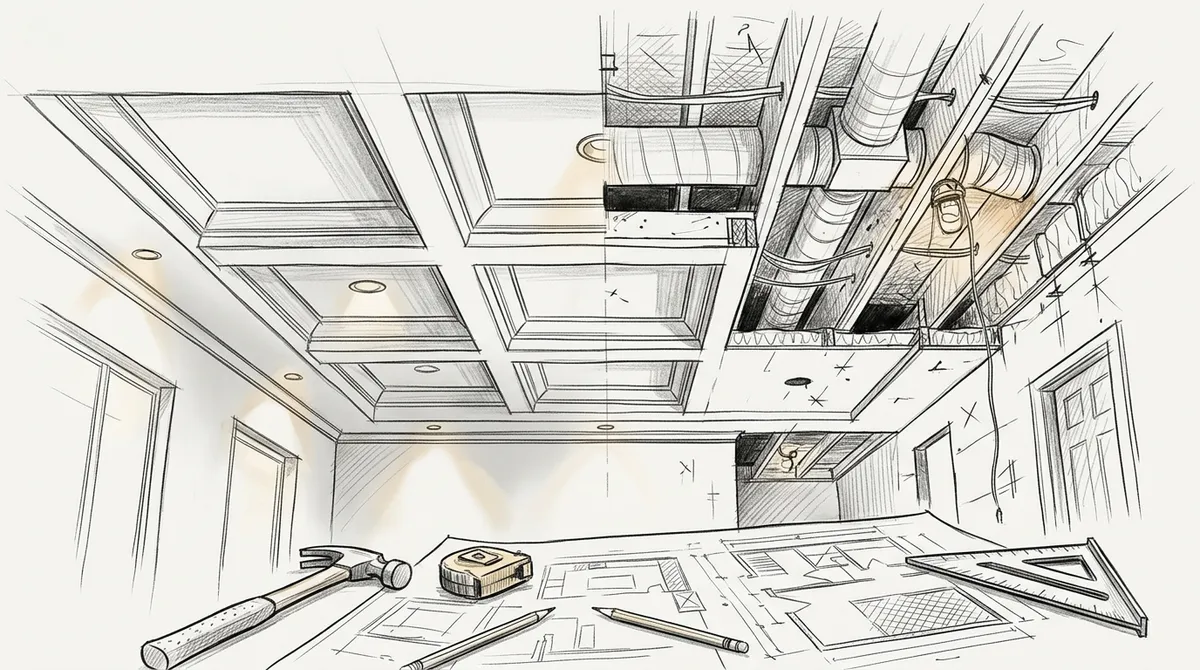
Whether you’re planning a coffered ceiling, a tray ceiling, or decorative beams, the details matter. Small oversights during planning or installation can lead to big disappointments. Understanding what to avoid is just as important as knowing what to do.
This guide covers the most common new ceiling mistakes. Each one is preventable with the right knowledge and the right team. Read on to protect your investment and achieve a stunning result.
Mistake 1: Skipping the Planning Stage
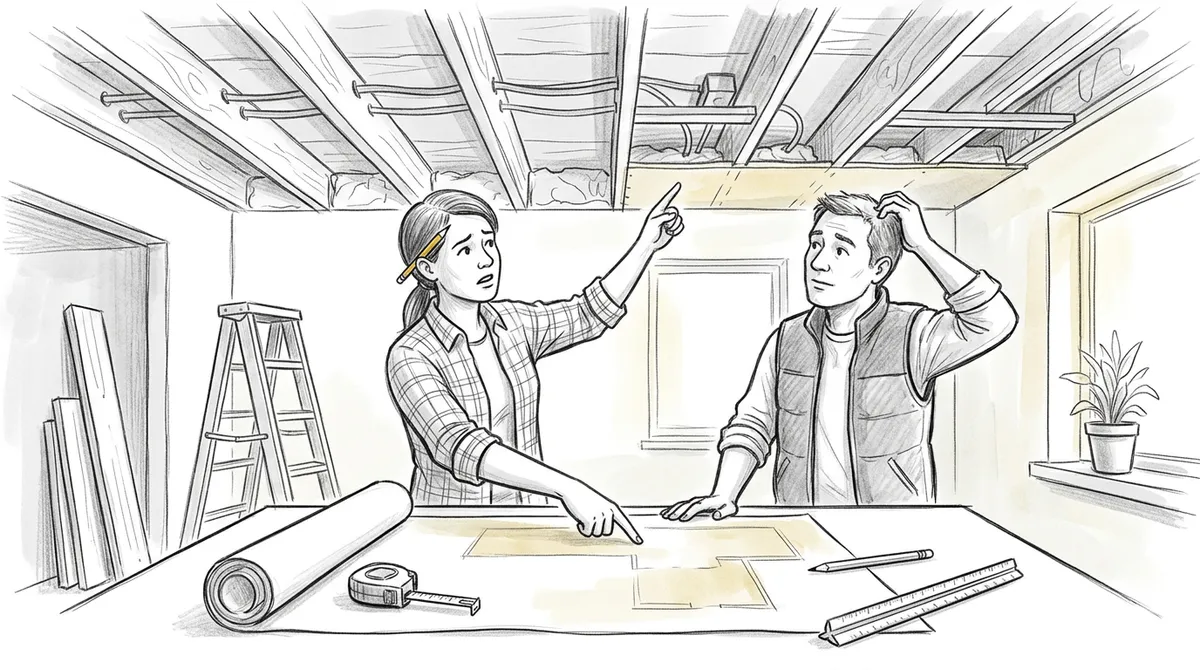
Many people rush into a new ceiling project without proper planning. This almost always causes problems. A well-planned ceiling design accounts for room dimensions, lighting placement, and architectural style.
Without a clear plan, you risk choosing a design that clashes with your existing space. You might also forget to account for HVAC vents, smoke detectors, or light fixtures. These elements need to be part of the design from day one.
Before any work begins, explore your options. Review ceiling designs that match your home’s architecture and your personal taste. A thoughtful plan saves time, reduces waste, and delivers better results.
Mistake 2: Ignoring Room Proportions
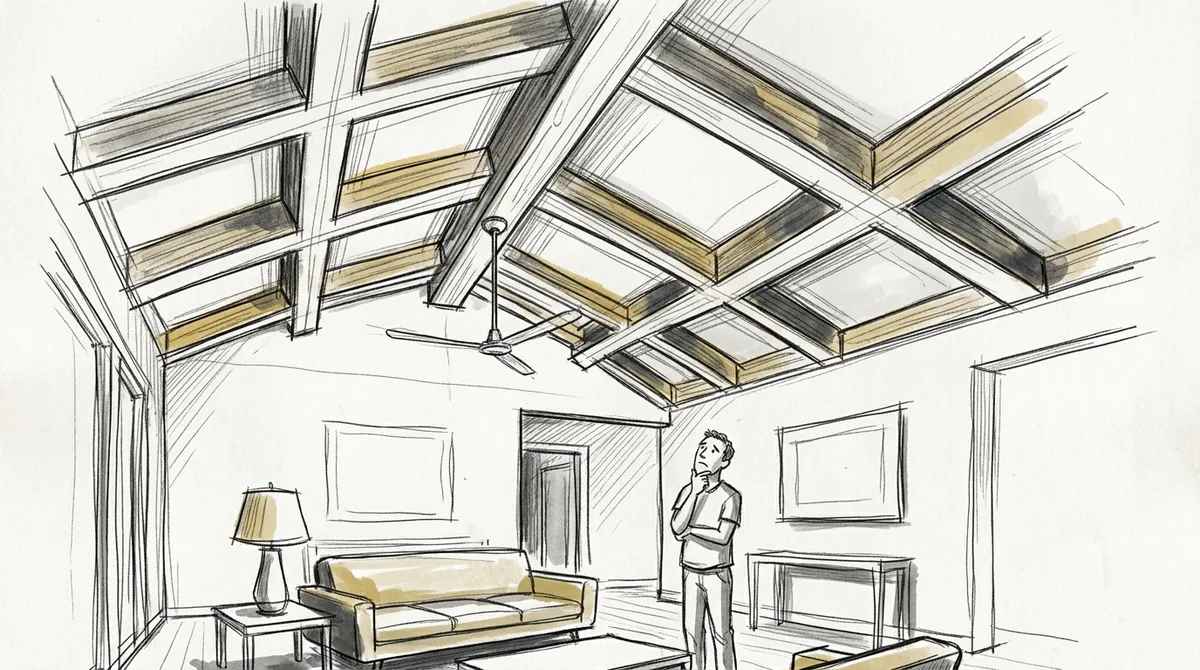
A ceiling design must fit the room’s proportions. A heavy coffered ceiling in a small room feels overwhelming. A flat, plain ceiling in a grand entryway feels underwhelming.
Room height is especially important. Rooms with standard 8-foot ceilings need lighter, simpler designs. Rooms with 10 or 12-foot ceilings can handle bolder, more elaborate styles.
- Low ceilings: Use subtle tray designs or simple panel details
- Standard ceilings: Choose modest beams or clean trim lines
- High ceilings: Consider coffered grids, dramatic medallions, or layered designs
- Open floor plans: Use ceiling zones to define separate spaces visually
Getting proportions right creates harmony. Getting them wrong makes the space feel awkward and unbalanced.
Mistake 3: Choosing the Wrong Material
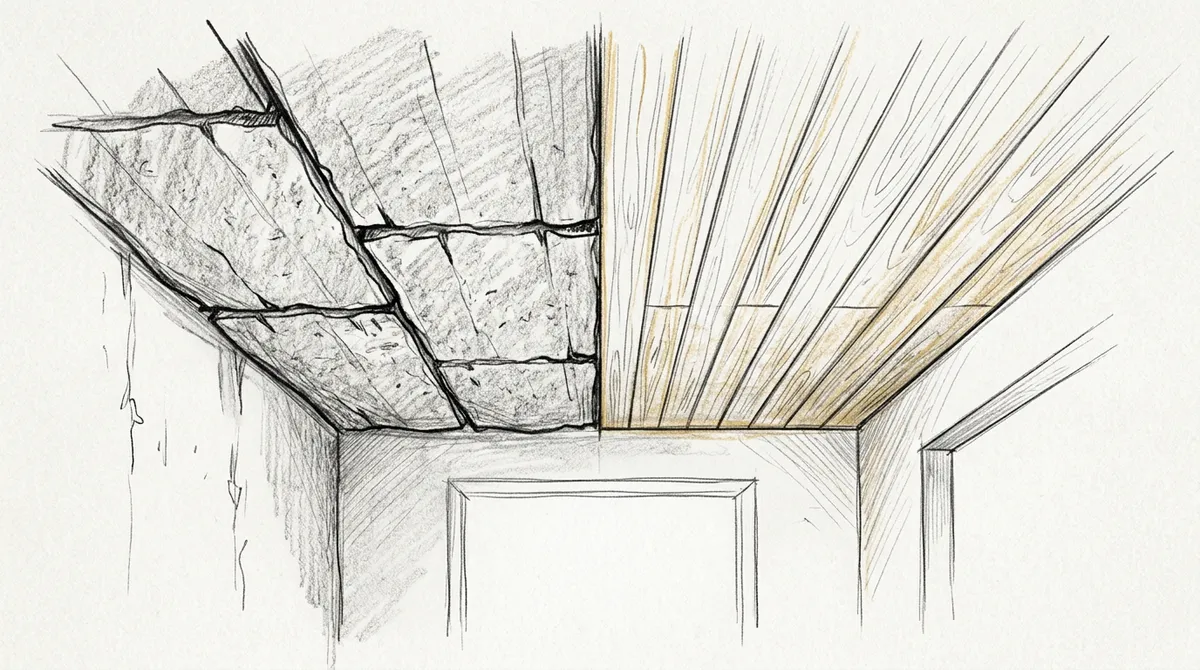
Not all ceiling materials perform the same way. Choosing the wrong material is a very common mistake. It can lead to sagging, cracking, warping, or moisture damage over time.
In Tampa Bay’s humid climate, material selection matters even more. Wood beams, for example, need proper sealing and finishing to resist humidity. MDF panels may be great for dry spaces but can swell in high-moisture areas.
Here is a quick comparison of common ceiling materials:
| Material | Best Use | Key Consideration |
|---|---|---|
| Solid Wood Beams | Living rooms, great rooms | Requires sealing in humid climates |
| MDF Panels | Dry interior spaces | Avoid in high-moisture areas |
| PVC Trim | Bathrooms, kitchens | Moisture-resistant, easy to clean |
| Tongue & Groove | Porches, covered patios | Great for rustic or coastal styles |
| Plaster or Drywall | Most interior rooms | Smooth finish, paint-ready |
Always discuss material options with your carpenter before making a decision. To learn more about carpentry materials and techniques, exploring foundational resources can help you ask better questions.
Mistake 4: Forgetting About Lighting Integration
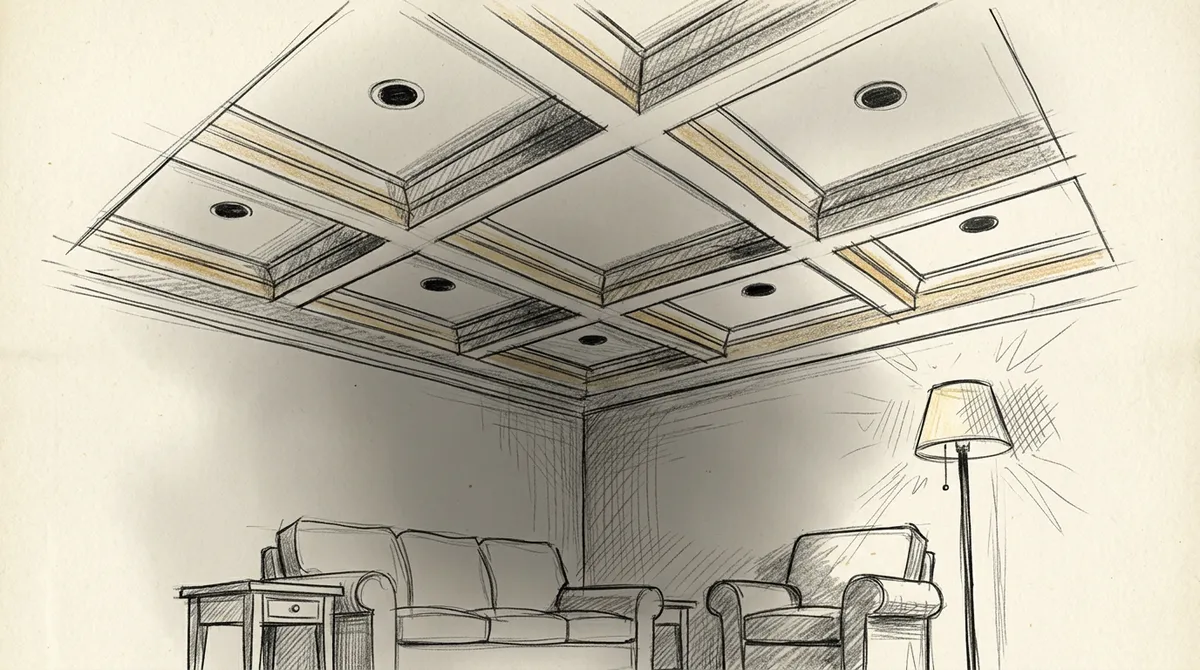
Lighting and ceiling design go hand in hand. One of the biggest mistakes is designing a ceiling without thinking about lighting first. Recessed lights, pendant fixtures, and cove lighting all need to be planned before construction begins.
Adding lights after the ceiling is complete is expensive and disruptive. It may require cutting into finished work and patching it later. This wastes both time and money.
Follow these steps to integrate lighting correctly:
- Decide on your primary light sources before finalizing the ceiling design
- Mark the exact locations of all fixtures on a layout drawing
- Coordinate with your electrician before carpentry work starts
- Choose lighting that complements the ceiling style (e.g., warm tones for wood beams)
- Plan for dimmer switches to create ambiance in key rooms
Proper lighting makes a beautiful ceiling look even better. Poor lighting hides all the detail and craftsmanship that went into it.
Mistake 5: Neglecting Trim and Molding Details
Trim and molding are what make a ceiling look truly finished. Many people underestimate how much these details matter. A ceiling without proper trim can look incomplete or even sloppy.
Crown molding is one of the most impactful details you can add. It creates a clean transition between the ceiling and the walls. It also adds a sense of elegance and polish to any room.
Beyond crown molding, consider these finishing details:
- Cove molding for a softer, curved transition
- Panel molding to create visual interest on flat ceilings
- Coffered beam trim for a refined, upscale look
- Rosette corners to add decorative accents at intersections
- Painted trim in contrasting or complementary colors
Explore the range of molding details available to understand how finishing work elevates any ceiling design. These small touches make a significant visual impact.
Mistake 6: Hiring Inexperienced Installers
A beautiful ceiling design is only as good as the installation. Hiring inexperienced workers is one of the costliest mistakes you can make. Poor installation leads to uneven surfaces, visible seams, sagging panels, and misaligned beams.
Custom ceiling work requires precision. Every cut, joint, and angle must be exact. Even a small error becomes very visible overhead. This is not a project for someone without the right skills and experience.
Look for these qualities in a carpentry team:
- Proven experience with custom ceiling designs
- A portfolio of completed projects you can review
- Knowledge of local building codes and humidity considerations
- Clear communication and a detailed project plan
- Positive client reviews and references
The team at Bucheli Trim brings precision and craftsmanship to every ceiling project in the Tampa Bay area. You can also check their Google Business Profile to see what past clients have experienced firsthand. Skilled professionals make the difference between a good result and a great one.
Mistake 7: Treating the Ceiling as an Afterthought
The ceiling is often called the “fifth wall” of a room. Yet many people focus all their attention on floors, walls, and furniture. They treat the ceiling as an afterthought. This is a major missed opportunity.
A thoughtfully designed ceiling ties a whole room together. It creates cohesion with the wall enhancements and architectural details throughout the space. It also adds real value to a property.
Real estate developers especially benefit from investing in ceiling design. Luxury buyers notice quality finishes above their heads. A distinctive ceiling helps a property stand out in a competitive market.
Interior designers can use ceiling design as a powerful creative tool. From painted accent ceilings to intricate wood inlays, the possibilities are endless. The ceiling can anchor the design of an entire room.
How Ceiling Mistakes Affect Different Projects
The impact of ceiling mistakes varies depending on the type of project. Here’s a quick overview:
| Project Type | Common Mistake | Result |
|---|---|---|
| Residential Renovation | Wrong material choice | Moisture damage or premature wear |
| New Construction | No lighting plan | Expensive retrofits after completion |
| Luxury Development | Skipping custom trim | Unfinished look, reduced property appeal |
| Commercial Space | Ignoring proportions | Uncomfortable, visually awkward space |
| Interior Design Project | Hiring wrong team | Poor craftsmanship, missed deadlines |
Every project type has its own vulnerabilities. Knowing the risks ahead of time helps you avoid them entirely.
What a Successful New Ceiling Project Looks Like
When done right, a new ceiling becomes the highlight of a room. It draws the eye upward and adds architectural interest. It makes the entire space feel more intentional and well-crafted.
Here’s what the process should include:
- A detailed design consultation to understand the space and goals
- Material selection based on the room’s function and climate
- Coordinated planning with electricians and other tradespeople
- Precision installation by skilled, experienced carpenters
- Final finishing with trim, molding, and paint for a polished result
For inspiration, explore custom projects that show the range of what’s possible with skilled craftsmanship. You’ll find ideas that apply to homes, luxury developments, and designer spaces alike.
Don’t overlook how the ceiling connects to the rest of the room. Coordinating it with flooring choices and cabinetry creates a unified, high-end look. Every element should work together as part of a cohesive design.
If you’re considering a full interior refresh, pairing your new ceiling with upgraded cabinets and detailed millwork can dramatically elevate the overall feel. You can also explore resources like what custom ceilings are and why you should consider them to deepen your understanding before your project begins.
For those new to working with custom carpenters, learning about the broader scope of services available is helpful. Read about 11 ways custom woodworking transforms homes to see how ceiling work fits into a larger renovation strategy. Also, follow Bucheli Trim on Facebook for project updates, design ideas, and helpful tips.
Conclusion
A new ceiling is one of the most impactful upgrades you can make to any space. But it only delivers results when done correctly. Avoiding the seven mistakes outlined in this guide puts you on the path to a stunning, long-lasting ceiling.
Plan carefully. Choose the right materials. Integrate lighting from the start. Pay attention to trim and molding. And most importantly, hire experienced professionals who take pride in their work.
Ready to start your ceiling project the right way? Reach out to our team at Bucheli Trim to discuss your vision and get expert guidance from the first step to the last.
FAQs
Q: What is the best type of new ceiling for a humid climate like Tampa Bay?
A: In humid climates, moisture-resistant materials like PVC trim and sealed solid wood perform best. MDF panels can swell over time in high-humidity environments, so they are better suited for dry interior spaces. Always discuss material options with an experienced carpenter who understands your local climate conditions.
Q: How do I choose the right new ceiling design for my room size?
A: Room height and square footage are the key factors to consider. Low or standard ceilings work best with simple designs like subtle trays or clean trim lines, while high ceilings can support bolder coffered grids or layered designs. A design consultation with a skilled carpenter helps you match the ceiling style to your room’s proportions.
Q: Should lighting be planned before or after a new ceiling is installed?
A: Lighting should always be planned before the ceiling installation begins. Retrofitting lights after the ceiling is complete requires cutting into finished work, which is costly and disruptive. Coordinating with your electrician before carpentry starts ensures a seamless, well-integrated result.
Q: Does a new ceiling add value to a home or property?
A: Yes, a custom ceiling design can significantly increase a property’s appeal and perceived value. Luxury buyers and real estate developers recognize quality craftsmanship, and a distinctive ceiling helps a property stand out. When paired with matching trim, molding, and finishes, a new ceiling contributes to a cohesive, high-end interior.
Q: How important is trim and molding when installing a new ceiling?
A: Trim and molding are essential finishing details that make a ceiling look complete and polished. Crown molding, cove molding, and panel details create clean transitions and add architectural elegance to any room. Skipping these details often results in an unfinished appearance that diminishes the overall impact of the ceiling design.