Key Takeaways
-
Custom-built entertainment centers are measured and constructed to fit your exact space, addressing common problems like awkward wall shapes and cable management that store-bought units cannot solve.
-
Proper ventilation is essential during design to prevent electronics from overheating; good designs include built-in vents, gaps, or small fans into the cabinetry.
-
Built-in entertainment centers add long-term home value as permanent fixtures and can significantly impact buyer perception during home sales compared to freestanding furniture.
-
Planning should include measuring wall obstacles, selecting compatible wood species and finishes to match existing trim, and determining storage needs before construction begins.
-
Pairing your entertainment center with complementary carpentry features like crown molding, wainscoting, and updated baseboards creates a unified room design that enhances overall aesthetic appeal.
-
Common mistakes to avoid include skipping precise measurements, ignoring ventilation requirements, hiring unlicensed labor, and overlooking future changes in TV size or technology.
Choosing the right entertainment center is about more than picking a spot for your TV. It shapes how your whole living room feels and functions. A well-built entertainment center blends storage, style, and smart design into one lasting feature. Homeowners, interior designers, and real estate developers across Tampa Bay all turn to custom carpentry to make this happen.
Store-bought units often fall short. They rarely fit the wall perfectly, and they tend to wear out fast. A custom-built entertainment center, on the other hand, is designed for your exact space. It works with your ceiling height, wall shape, and daily habits. This guide walks you through what makes a custom entertainment center worth the investment and how to plan one that fits your home for years to come.
What Is a Custom Entertainment Center?
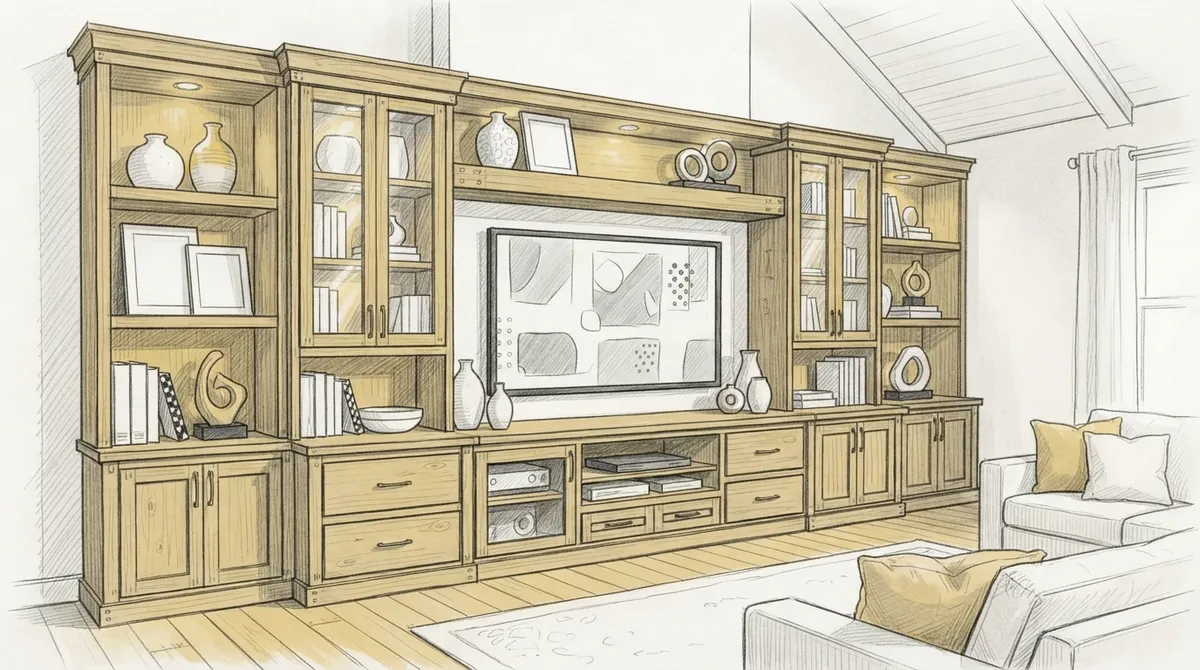
A custom entertainment center is a built-in or semi-built-in unit made specifically for your space. Unlike furniture store options, it is designed, measured, and constructed to match your room. Skilled carpenters use quality wood, precise joinery, and thoughtful design to create something that looks like it was always part of the house.
This kind of woodwork often includes shelving, cabinets, open display areas, and wire management systems. Many homeowners pair their unit with wall enhancements or molding details to create a cohesive look throughout the room. You can learn more about how carpentry techniques have evolved over time by reading about the history of the craft through this resource on carpentry.
Why Homeowners Choose Built-In Designs
Built-in entertainment centers solve common problems that homeowners face with standard furniture. Here are the main reasons people choose this option:
- They maximize awkward or unused wall space
- They hide cords, cables, and electronics cleanly
- They add long-term value to the home
- They match existing trim, molding, and cabinetry styles
- They offer more storage than typical media consoles
- They can be designed around fireplaces, windows, or odd angles
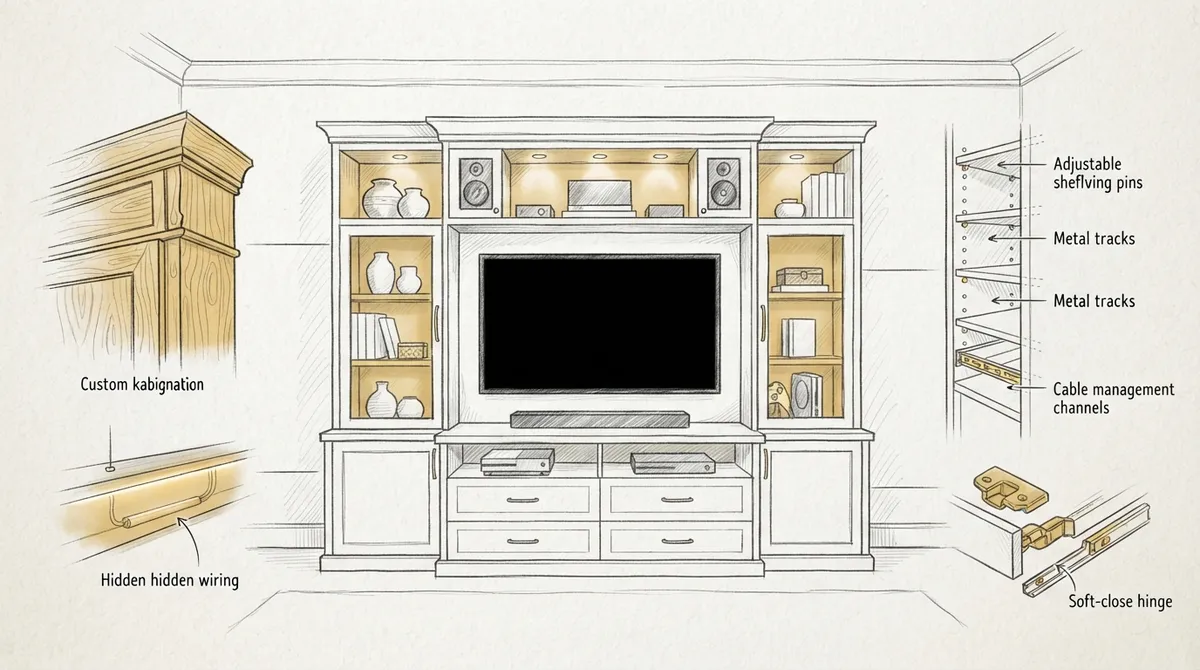
Key Design Elements to Consider
Before building starts, several design choices shape the final look and function of your entertainment center. Thinking through these details early helps avoid costly changes later.
1. Wall Space and Layout
The size of your wall determines how large your unit can be. A carpenter will measure the space and account for outlets, vents, and windows. Some homeowners choose a floor-to-ceiling design, while others prefer a lower profile unit with open shelving above.
2. Storage Needs
Think about what you actually need to store. Games, speakers, gaming consoles, and cable boxes all need a home. Closed cabinets keep clutter hidden, while open shelves display books or decor. Many designs combine both for balance.
3. Wood Species and Finish
The type of wood affects both looks and durability. Popular choices include oak, maple, walnut, and painted MDF. Your carpenter can match the finish to existing cabinets or trim in your home for a seamless look.
4. Ventilation for Electronics
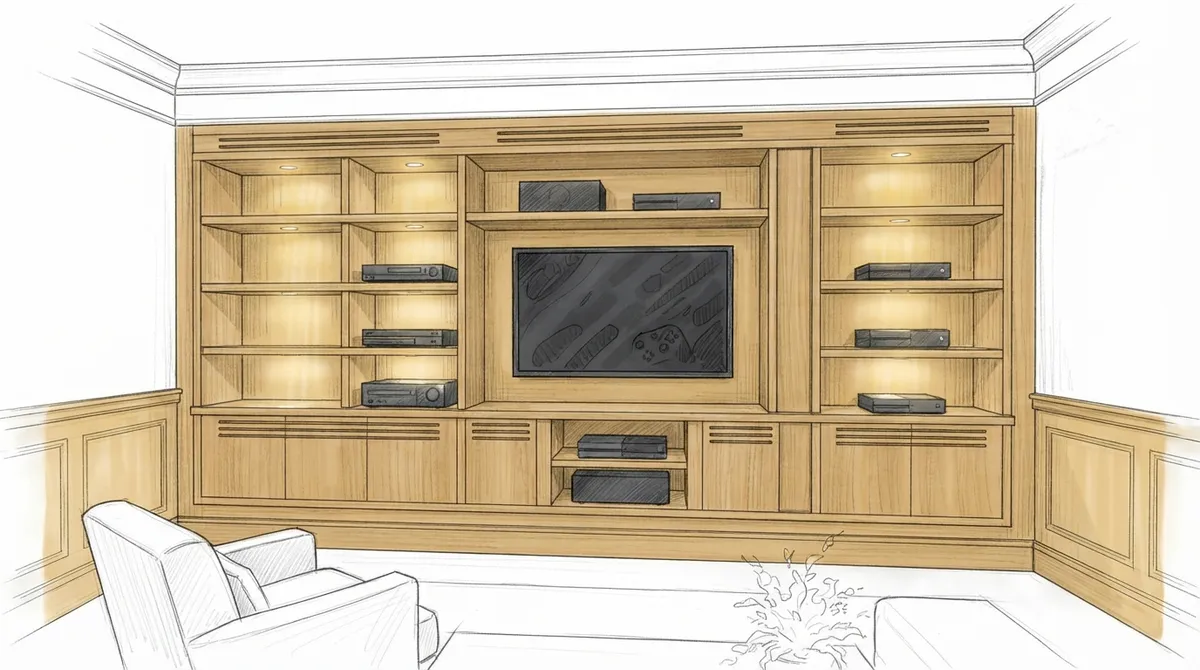
Electronics generate heat. A good design includes proper airflow so devices do not overheat. This means adding vents, gaps, or small fans built into the cabinetry.
Steps to Plan Your Custom Entertainment Center
Building a custom unit is a step-by-step process. Knowing what to expect helps you feel confident during each phase.
- Schedule a consultation to discuss your goals and budget-friendly options
- Measure the wall space and note any obstacles like outlets or vents
- Choose wood species, finish, and hardware style
- Review a design sketch or 3D rendering before work begins
- Confirm the plan for wire management and lighting
- Begin construction and installation with a licensed carpentry team
- Complete a final walkthrough to check fit and finish
This process works well whether you are updating a single family home or finishing several units for a new development. Real estate developers often request this kind of planning across multiple properties to keep style consistent while meeting each buyer’s taste.
Built-In vs Freestanding: Which Should You Choose?
Many homeowners debate between a built-in unit and a freestanding piece. Both have benefits depending on your goals.
| Feature | Built-In Entertainment Center | Freestanding Unit |
|---|---|---|
| Fit to Space | Custom-fit to exact wall dimensions | Standard sizes, may leave gaps |
| Storage Options | Fully customizable shelving and cabinets | Fixed layout, limited flexibility |
| Home Value | Often adds resale value | Considered furniture, not a fixture |
| Style Matching | Matches trim, molding, and wall finishes | May clash with existing decor |
| Longevity | Built with solid materials for lasting use | Varies by manufacturer quality |
For most homeowners planning to stay in their home long-term, a built-in option offers better value and function. If you are unsure which direction fits your space, our team can walk you through the pros and cons during a consultation.
Popular Styles for Entertainment Centers
Style trends shift over time, but certain designs remain popular across Tampa Bay homes. Consider these options when planning your project:
- Floor-to-ceiling built-ins with a centered TV niche
- Fireplace surrounds combined with media storage
- Floating shelves paired with lower cabinets
- Coffered or tray ceiling accents above the unit
- Open shelving with integrated lighting
- Sliding or hidden doors for a minimalist look
Many of these styles pair naturally with other carpentry features. For example, a media wall often looks even better alongside custom ceiling designs or accent lighting built into the trim. If you want more ideas, browse our guide on media wall ideas for inspiration.
How Interior Designers Benefit From Custom Builds
Interior designers often need a carpentry partner who can bring detailed drawings to life. Custom entertainment centers give designers full creative control over proportions, finishes, and hardware. This flexibility is hard to match with pre-made furniture.
Working with a skilled carpentry team also means fewer compromises. Designers can request specific wood grains, matching stains, or unique molding details that tie the whole room together. This level of precision helps designers deliver polished results that satisfy demanding clients.
Why Real Estate Developers Add Built-In Media Walls
Luxury developments often use built-in entertainment centers as a selling point. Buyers notice the difference between a plain wall and a designed feature wall with integrated storage. This small addition can make a property stand out during showings.
Developers working on multiple units benefit from partnering with one carpentry team for consistency. This keeps design language uniform across a property while allowing slight customization for each unit’s layout. For larger projects, browse examples of past custom projects to see how built-ins have been used across different home styles.
Common Mistakes to Avoid
Even well-planned projects can run into issues without careful attention to detail. Watch out for these common mistakes:
- Skipping proper measurements before ordering materials
- Ignoring ventilation needs for electronics
- Choosing a design that does not match existing trim or flooring
- Overlooking future changes in TV size or technology
- Hiring unlicensed or inexperienced labor for a complex build
Working with an experienced team helps you avoid these pitfalls from the start. It also ensures the finished product holds up over time, both structurally and visually.
Maintaining Your Entertainment Center
Once installed, a little care keeps your unit looking great for years. Follow these simple steps:
- Dust shelves and surfaces weekly with a soft cloth
- Avoid placing hot electronics directly on wood finishes
- Check cabinet hinges and sliding doors every few months
- Clean glass doors with a non-abrasive cleaner
- Touch up scratches with matching wood stain when needed
If your unit includes epoxy-coated shelving or accents, cleaning is even easier thanks to the durable surface. You can learn more about this finishing option by reading about epoxy and its uses in home design. Our team also offers epoxy floors for those wanting a matching finish elsewhere in the home.
Pairing Your Entertainment Center With Other Carpentry Features
A media wall rarely stands alone. Many homeowners choose to update surrounding features at the same time for a unified look. Popular pairings include:
- Crown molding along the ceiling line above the unit
- Wainscoting or wall paneling on adjacent walls
- New flooring to complement the wood tone of the built-in
- Updated baseboards to match the cabinetry trim
If you are exploring these details further, our article on crown molding history offers helpful background on this classic trim style. You can also review our own guide to trim and molding for more design ideas that pair well with a built-in media wall.
Working With a Trusted Carpentry Team
Choosing the right team makes all the difference in how your project turns out. Bucheli Trim has worked with homeowners, designers, and developers throughout the Tampa Bay area to create lasting, high-quality entertainment centers and other custom carpentry features. Every project starts with careful planning and ends with a finished product built to last.
Many past clients have shared their experience working with our team. You can visit us on Google — Bucheli Trim to read reviews from homeowners across the area, or connect with us on Facebook to see recent project photos and updates.
Bringing Your Vision to Life
A custom entertainment center is more than a place for your TV. It is a design feature that reflects your taste and adds function to your daily life. Whether you are a homeowner updating a family room, a designer planning a client’s space, or a developer finishing new units, custom carpentry offers a solution built specifically for your needs.
Ready to start planning your own built-in media wall? Reach out to our team today to schedule your consultation and take the first step toward a custom entertainment center built just for your home.
FAQs
Q: What is a custom entertainment center made from?
A: Custom entertainment centers are typically built from solid wood species like oak, maple, or walnut, or painted MDF for a smooth finish. The material choice depends on your budget, style preference, and how the finish will match existing trim in your home.
Q: How long does it take to build a custom entertainment center?
A: Most projects take a few weeks from initial design to final installation, depending on complexity. Simple shelving units move faster, while floor-to-ceiling built-ins with detailed molding take more time to complete properly.
Q: Can a built-in entertainment center increase home value?
A: Yes, a well-built entertainment center is considered a permanent fixture and can add appeal during a home sale. Buyers often view custom built-ins as a sign of quality craftsmanship throughout the home.
Q: Do I need to plan for ventilation in my entertainment center design?
A: Yes, proper ventilation is important to prevent electronics from overheating inside enclosed cabinets. A carpenter can design vents, gaps, or small fans into the unit to keep airflow moving.
Q: Should I match my entertainment center to existing trim and molding?
A: Matching your built-in to existing trim, molding, and flooring creates a cohesive look throughout the room. Many homeowners work with their carpenter to select finishes that tie the new feature into the rest of the home’s style.