Key Takeaways
-
Water damage beneath sinks is the most common kitchen carpentry problem; inspect for soft wood, water stains, and musty odors before they spread, as damaged cabinetry compromises even new sinks.
-
Use marine-grade plywood for cabinet boxes and solid hardwood with protective sealant for doors and trim to resist Florida's humidity and daily water exposure near sink areas.
-
Hire a specialized custom carpenter rather than a general contractor for sink remodels, as they provide precise joinery, better material selection, and moisture-resistant construction that lasts years longer.
-
Choose a durable finish like polyurethane sealant or catalyzed lacquer instead of standard latex paint to protect your investment and avoid repainting cabinets within a few years.
-
Plan for a complete remodel addressing cabinet structure, doors, trim, and hardware together rather than replacing just the sink basin, which prevents mismatched appearance and future problems.
-
Consider expanding your sink remodel to include surrounding cabinets, countertops, and backsplash for a cohesive kitchen update that delivers better returns and avoids visual inconsistencies.
Your kitchen sink area works harder than almost any other spot in your home. It handles daily dishes, meal prep, and cleanup year after year. When the cabinets below start to sag or the surrounding woodwork looks tired, it drags down your whole kitchen. Kitchen sink remodeling is not just about picking a new basin. It is about rebuilding the wood framework, cabinetry, and trim that support your sink and make it functional and beautiful.
Homeowners in Tampa Bay often focus on countertops or appliances first. But the carpentry beneath and around your sink plays a bigger role than most people realize. Sagging cabinet bases, water-damaged wood, and outdated cabinet doors can make even a brand-new sink look out of place. This guide walks you through what goes into a proper kitchen sink remodel from a custom carpentry perspective, so you can plan a project that actually lasts.
Why Kitchen Sink Remodeling Starts With Carpentry
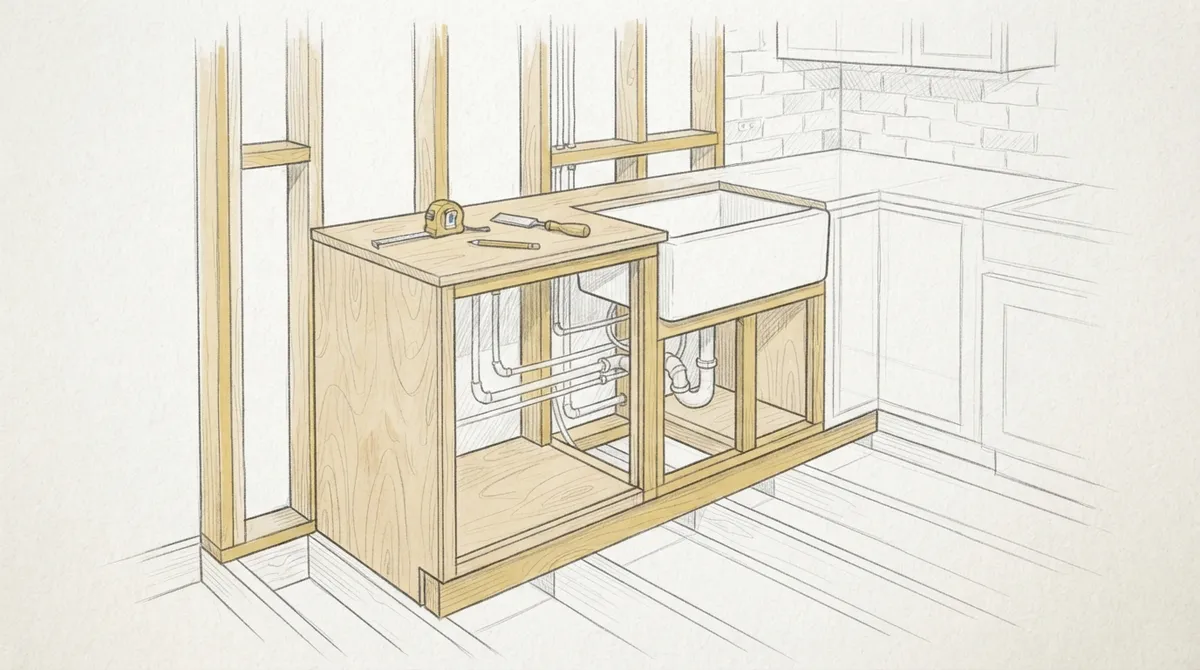
Most people think sink remodeling means swapping the basin and faucet. In reality, the carpentry work underneath is what determines how well your new sink performs. Cabinet boxes, support framing, and drawer systems all need to be solid before anything else matters.
Water exposure near sinks causes more wood damage than any other kitchen area. Over time, moisture seeps into particle board or low-quality plywood, causing swelling and rot. A skilled carpenter checks this foundation first, because a beautiful sink installed on weak cabinetry will fail within a few years.
Common Signs Your Sink Area Needs Carpentry Attention
- Cabinet doors below the sink no longer close evenly
- Soft or spongy wood when you press near the sink base
- Visible water stains or discoloration on cabinet interiors
- Gaps forming between the sink and countertop edge
- A musty smell coming from under-sink storage
- Drawers near the sink stick or fail to slide smoothly
If you notice any of these signs, it is time to consider a full remodel rather than a quick patch. For a broader look at how carpentry issues show up around the house, this guide on signs you need professional carpentry covers related warning signs worth knowing.
Key Components of a Kitchen Sink Remodel
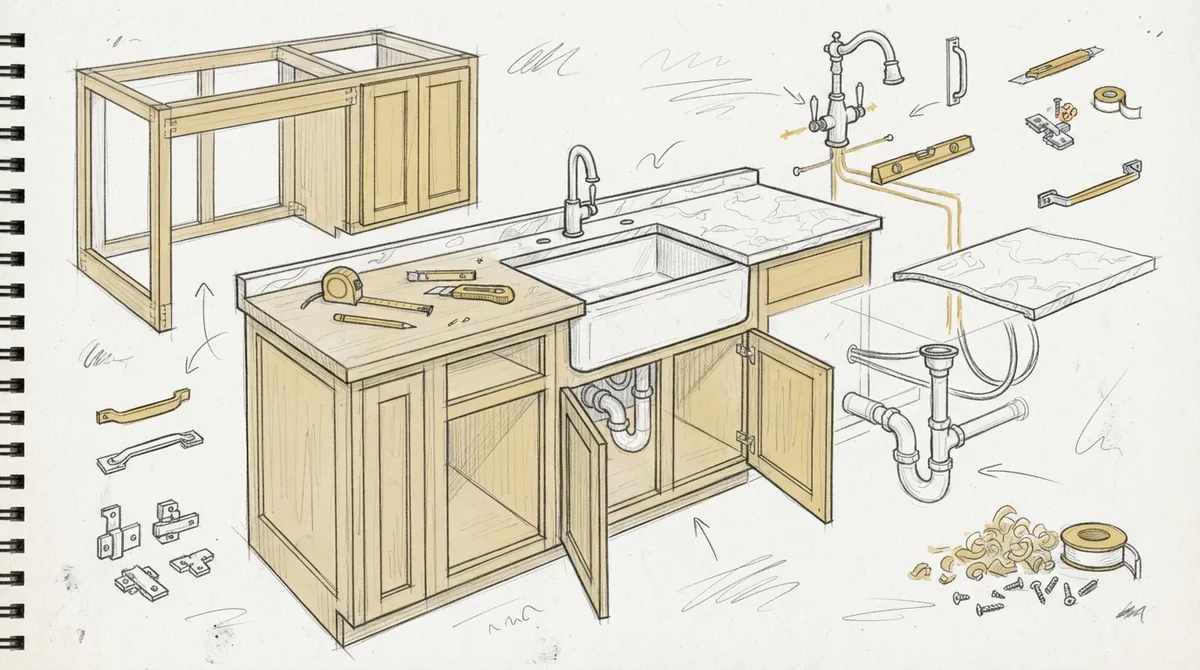
A complete kitchen sink remodel involves several carpentry elements working together. Each piece affects both function and appearance, so it helps to understand what is involved before you start planning.
Cabinet Base and Support Structure
The cabinet box beneath your sink carries the weight of the basin, water lines, and stored items. Custom carpenters rebuild this structure using moisture-resistant materials designed to handle daily exposure to water. This is far more durable than standard builder-grade cabinetry found in many homes.
Custom Cabinet Doors and Drawers
New cabinet fronts instantly modernize the look of your sink area. Options range from shaker-style doors to sleek flat panels, all built to match your kitchen’s overall design. Quality custom cabinets are constructed to resist warping from humidity, which is especially important in Florida’s climate.
Trim and Molding Details
Small trim details around the sink cabinet make a big visual difference. Toe-kick molding, edge banding, and decorative trim pieces tie the sink area into the rest of your kitchen’s design. Learn more about how these finishing touches work in our guide on trim and molding for your space.
Steps in a Professional Kitchen Sink Remodel
Understanding the remodeling process helps you know what to expect and how to plan your timeline. Here is the typical sequence a custom carpentry team follows.
- Initial assessment – A carpenter inspects the existing cabinet base, checking for water damage, structural issues, and measurements.
- Design planning – You choose cabinet styles, wood species, and finishes that match your kitchen’s overall look.
- Demolition – Old, damaged cabinetry is carefully removed without disturbing plumbing lines.
- Framing and structural repair – Any water-damaged wood is replaced with durable, treated materials.
- Cabinet installation – New custom cabinets are built and installed to fit your exact space.
- Trim and hardware – Molding, handles, and hinges are added for a finished look.
- Final inspection – The carpenter checks alignment, drawer function, and door spacing before completion.
Following this order prevents costly mistakes. Skipping structural repair to save time often leads to bigger problems down the road. Working with an experienced carpentry company like Bucheli Trim ensures each step gets proper attention.
Choosing Materials That Handle Water Exposure
Not all wood and cabinet materials are equal when it comes to sink areas. Since this section deals with constant moisture, material choice matters more here than almost anywhere else in the kitchen.
| Material | Water Resistance | Best Use |
|---|---|---|
| Marine-grade plywood | High | Cabinet boxes under sink |
| Solid hardwood | Moderate (with sealant) | Cabinet doors and trim |
| MDF (moisture-resistant) | Moderate | Painted cabinet fronts |
| Particle board | Low | Not recommended near sinks |
Marine-grade plywood is often the top choice for cabinet boxes because it resists swelling even with regular water exposure. Solid hardwood works well for doors and trim as long as it receives a proper protective finish. Our team can walk you through painting and finishing options that add an extra layer of protection against moisture.
Design Ideas for Custom Sink Cabinetry
Beyond function, your sink area is a chance to add real style to your kitchen. Interior designers and homeowners alike are moving toward customized solutions rather than generic cabinet boxes.
Popular Design Choices for 2026
- Furniture-style cabinet legs beneath farmhouse sinks
- Hidden pull-out trash and recycling drawers
- Open shelving paired with closed cabinet storage
- Two-tone cabinet finishes to create visual contrast
- Built-in drying racks integrated into cabinet design
- Soft-close hinges and drawer slides for a quiet, smooth feel
These details might seem small, but they add up to a kitchen that feels custom-built rather than store-bought. If you are working with a designer, our custom projects portfolio shows examples of how these ideas come together in real homes.
How Sink Remodeling Fits Into a Larger Kitchen Project
Many homeowners start with sink cabinetry but end up expanding into a full kitchen update. This makes sense, since matching new sink cabinets to old surrounding cabinetry can look mismatched.
Related Areas Worth Considering
- Surrounding base and upper cabinets for a cohesive look
- Countertop edges near the sink for proper sealing
- Backsplash areas that meet the sink wall
- Flooring near the sink, which often shows wear first
- Lighting above the sink for better task visibility
If you are already planning sink work, it may be worth reviewing our full kitchen remodeling guide for Tampa homes to see how these pieces fit together. Real estate developers preparing homes for sale often find that a cohesive kitchen update, rather than a piecemeal one, delivers stronger returns.
Working With a Custom Carpenter vs. General Contractor
Some homeowners assume any general contractor can handle sink cabinetry. But custom carpentry requires specific skills in joinery, wood selection, and precise measurements that generalists may not have.
Benefits of Hiring a Specialized Carpenter
- Precise, made-to-fit cabinet dimensions instead of generic sizes
- Better wood selection knowledge for moisture-prone areas
- Attention to detail in trim, molding, and finish work
- Ability to match existing kitchen style seamlessly
- Long-term durability built into the construction process
According to general woodworking standards described in this overview of learn more about carpentry, precision joinery and material knowledge are what separate durable builds from short-term fixes. This is exactly why specialized carpentry teams matter for sink-area remodels.
Protecting Your Investment With the Right Finish
Once your cabinets are built and installed, the finish you choose determines how well they hold up over time. Many homeowners in humid climates are turning toward tougher, moisture-resistant coatings for cabinet interiors and even nearby flooring.
For example, some homeowners pair their new sink cabinetry with epoxy flooring nearby for extra water resistance in high-traffic kitchen zones. If you are curious about this option, our epoxy floors page explains how it compares to traditional flooring choices in kitchens.
Finish Options Ranked by Durability
- Polyurethane sealant on solid wood doors
- Catalyzed lacquer for painted cabinet fronts
- Marine varnish for extreme moisture areas
- Standard latex paint (lowest durability near water)
Choosing the right finish now saves you from repainting or repairing cabinets again in just a few years. A knowledgeable carpenter can recommend the best option based on your specific sink setup and household habits.
Planning Your Kitchen Sink Remodel Timeline
Timelines vary depending on the scope of work, but understanding a general framework helps you plan around your household schedule.
- Design consultation and material selection: about 1-2 weeks
- Custom cabinet fabrication: several weeks depending on complexity
- Demolition and structural repair: a few days
- Installation and finishing: about 3-5 days
- Final walkthrough and adjustments: 1 day
Working with an experienced team keeps this process organized and reduces surprises. Interior designers managing multiple client projects especially benefit from a carpentry partner who communicates clearly and meets deadlines consistently.
Why Tampa Bay Homeowners Choose Custom Carpentry for Sink Areas
Florida’s humidity puts extra stress on kitchen cabinetry, especially near water sources like sinks. Local carpenters understand these regional challenges better than out-of-area contractors or big-box installation services.
Bucheli Trim has worked with homeowners, designers, and developers throughout the Tampa Bay area to rebuild sink cabinetry that stands up to Florida’s climate while looking sharp for years. You can visit us on Google — Bucheli Trim to see feedback from local clients, or follow project updates on Facebook for design inspiration.
Final Thoughts on Kitchen Sink Remodeling
A successful kitchen sink remodel goes far beyond picking a new basin. It requires solid cabinet construction, moisture-resistant materials, and thoughtful design choices that hold up over time. Whether you are a homeowner refreshing a tired kitchen, a designer bringing a client’s vision to life, or a developer preparing a property for sale, the carpentry beneath your sink deserves real attention.
Ready to start planning your kitchen sink remodel? Reach out to our team today to schedule a consultation and get expert guidance on building a sink area that lasts.
FAQs
Q: What does kitchen sink remodeling involve from a carpentry perspective?
A: It involves rebuilding the cabinet base, framing, doors, and trim around the sink area. Carpenters replace water-damaged wood with moisture-resistant materials and install custom cabinetry designed to last in humid conditions.
Q: How do I know if my sink cabinets need to be replaced?
A: Look for soft or spongy wood, doors that no longer close evenly, water stains, or a musty smell under the sink. These signs usually mean moisture has damaged the cabinet structure and a rebuild is needed.
Q: What materials work best for cabinets near a kitchen sink?
A: Marine-grade plywood is ideal for cabinet boxes because it resists swelling from water exposure. Solid hardwood with a protective sealant works well for doors and trim in the same area.
Q: Should I hire a custom carpenter instead of a general contractor?
A: Yes, a custom carpenter brings specialized skills in joinery, wood selection, and precise measurements that general contractors often lack. This results in better-fitting cabinets and longer-lasting construction.
Q: How long does a typical kitchen sink remodel take?
A: Most projects take a few weeks total, including design consultation, cabinet fabrication, demolition, and installation. Custom cabinet fabrication usually takes the longest, depending on design complexity.