Key Takeaways
-
Professional installers level, shim, and anchor cabinets into studs so they carry heavy loads safely and do not pull away from the wall over time.
-
Always check that the installer finds the highest point of the floor and marks level lines first, since every cabinet height is set from those marks.
-
Install upper cabinets before base cabinets to keep the work safer and easier, and to avoid having base units in the way.
-
Good cabinets can look average if set poorly, so judge an installer by their portfolio, reviews, licensing, insurance, and a detailed written estimate.
-
Ask how they handle uneven walls and floors, who will be on site daily, and what their plan is for damaged or wrong-size cabinets before signing anything.
-
Coordinate trim, filler strips, and crown molding with the cabinet install so gaps are hidden and the room looks finished as one project.
You spent months picking the perfect cabinets. The wood looks great. The finish is just right. Then the install goes wrong. Doors hang crooked. Gaps show along the wall. Drawers stick. It happens more often than most people think.
That is why professional cabinet installers matter so much. Great cabinets can look average when they are set poorly. Average cabinets can look stunning when they are set with care. The install is where the work either shines or falls apart.
This guide explains what professional cabinet installers do, why their skills matter, and how to choose the right one. It is written for homeowners, interior designers, and real estate developers who want clean, lasting results. You will also learn the steps of a proper install and the warning signs of a poor one.
What Do Professional Cabinet Installers Actually Do?
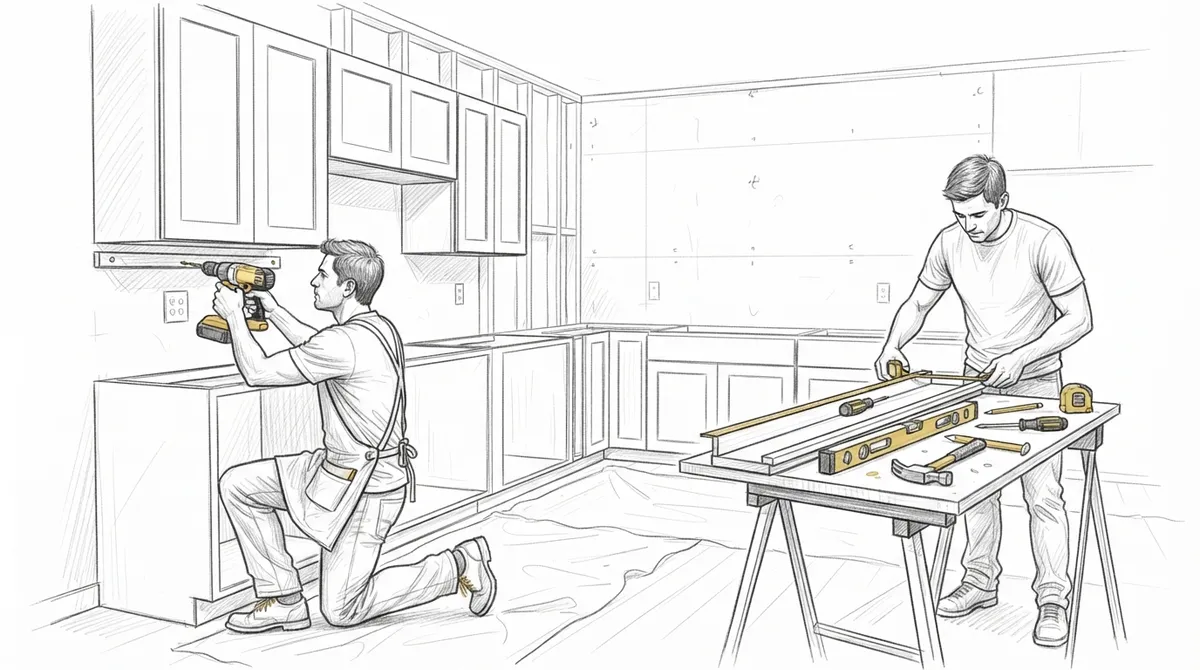
Professional cabinet installers do much more than screw boxes to a wall. They plan, measure, level, fit, and finish. Their goal is simple. Every cabinet must sit straight, hold weight, and look like it belongs in the room.
In the world of custom carpentry, the job goes even deeper. Walls are rarely flat. Floors are rarely level. Ceilings often slope. A skilled installer sees these flaws and adjusts for them. The result looks perfect even when the house is not.
Here are the main tasks a pro handles:
- Checking the layout and plans before work starts
- Finding wall studs and marking the right height lines
- Leveling base and wall cabinets on uneven surfaces
- Securing cabinets so they carry heavy loads safely
- Aligning doors and drawers so they close smoothly
- Adding trim, filler strips, and crown details for a finished look
This level of care is what separates a true craftsman from a quick install crew.
Why Does Professional Installation Matter So Much?
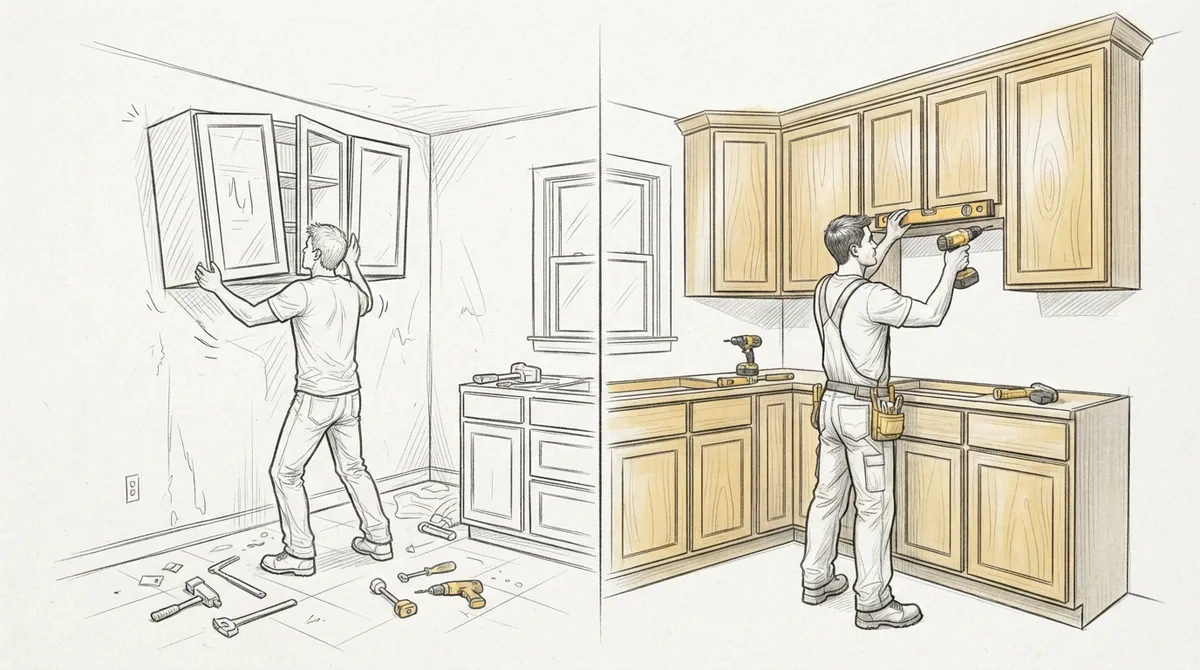
Cabinets carry real weight. A full set of wall cabinets filled with dishes can hold hundreds of pounds. If they are not anchored well, they can pull away from the wall. That is a safety risk, not just a style issue.
Looks matter too. A small error at the start grows as you add more cabinets. One crooked cabinet throws off the whole run. Gaps appear at the ceiling. Doors do not line up. Counters do not sit flat.
Precision Protects Your Investment
Custom cabinets are a big part of any home upgrade. A pro install protects that value. When cabinets are set right, they work better and last longer. Hinges do not wear out early. Frames do not twist. Finishes do not chip from stress.
Time and Stress Savings
A professional crew works fast because they have done it many times. They bring the right tools. They know what to do when a wall is out of square. This saves you from delays, repeat trips, and costly fixes.
Better Results for Design Vision
Interior designers know that a plan on paper only works if the install matches it. A skilled installer reads the design and brings it to life. Reveals stay even. Lines stay clean. The room looks the way the client was promised.
Professional Installers vs. DIY Installation
Many homeowners wonder if they can handle the install themselves. Some can, in simple cases. But cabinets are heavy, tight, and unforgiving. Small mistakes show up fast.
If you are weighing the choice, this comparison can help. You can also read our guide on DIY vs. pro cabinet installation for more detail.
| Factor | Professional Installer | DIY Install |
|---|---|---|
| Skill level | Trained and experienced | Often first-time attempt |
| Tools | Full set of pro tools | Limited or rented tools |
| Handling uneven walls | Adjusts with shims and scribing | Gaps and tilt are common |
| Safety | Secure anchoring and lifting methods | Higher risk of injury or falls |
| Final finish | Clean lines, tight seams | Visible flaws are likely |
| Timeline | Predictable schedule | Often drags on |
For a more detailed look at the trade-offs, see this article on DIY vs. professional cabinetry installation.
How Does a Proper Cabinet Installation Work?
A great install follows a clear order. Skipping a step leads to problems later. Here is how professional cabinet installers usually work from start to finish.
- Review the plans and site. The installer checks measurements, appliance sizes, and wall conditions before touching a single cabinet.
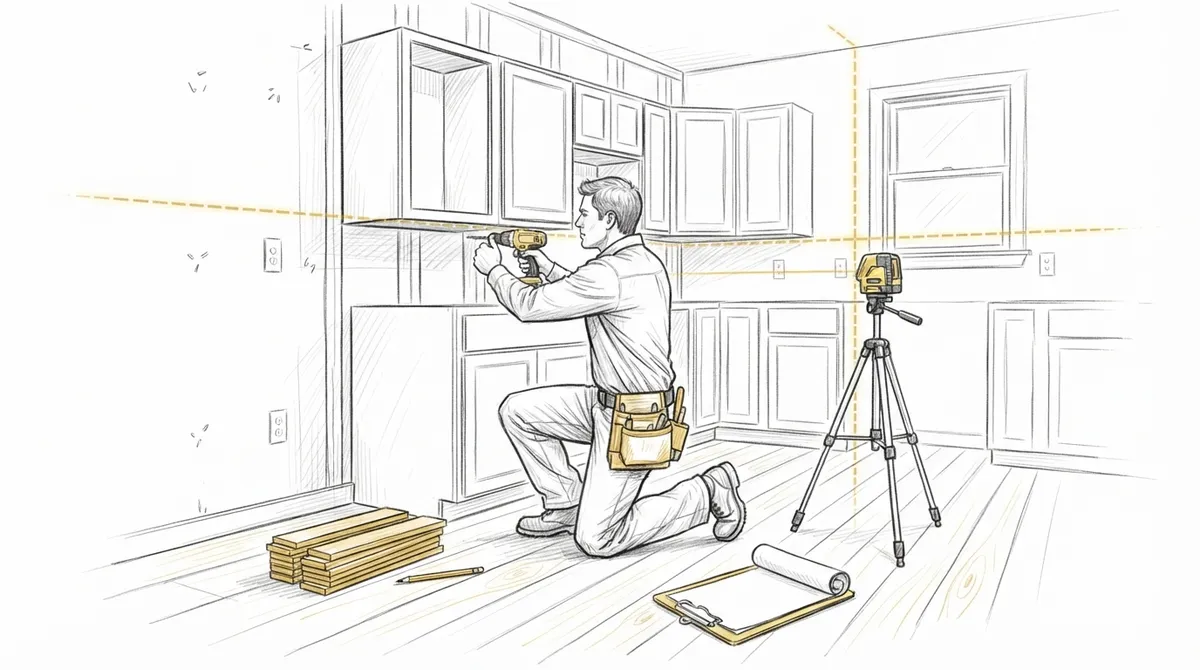
- Mark layout lines. They find the highest point of the floor and draw level lines on the wall. Every cabinet height starts from these marks.
- Locate studs. Strong anchoring points are marked so each cabinet can hold its full load.
- Install upper cabinets first. This keeps base cabinets from getting in the way and makes the work safer and easier.
- Set base cabinets. Each base unit is leveled, shimmed, and tied to the next one for a tight, even run.
- Fasten and align. Cabinets are clamped together and screwed through the frames. Door and drawer fronts are adjusted for even gaps.
- Add trim and finishing pieces. Filler strips, toe kicks, light rails, and crown are fitted to hide gaps and complete the look.
For a deeper walkthrough, check out these cabinet installation steps for a flawless fit.
Why Custom Carpentry Skill Makes a Difference
Not every installer has the same background. Many come from general remodeling. Others come from a woodworking trade. Cabinets built for a specific space, such as built-ins or tall pantry units, need a true carpenter’s eye.
Custom work often calls for on-site changes. A cabinet may need to be trimmed to fit a curved wall. A face frame may need scribing along a stone fireplace. These tasks need a steady hand and good judgment. They cannot be rushed.
If you want to learn more about the craft itself, you can learn more about carpentry and its long history. The skills used today still build on those classic methods.
At Bucheli Trim, the focus is on precision and style. Our team handles custom cabinets from planning to the final detail, so the install matches the quality of the build.
Signs You Have Found a Great Cabinet Installer
Hiring the right person is half the battle. A good installer is easy to spot if you know what to look for. Use this list as a quick check.
- A clear plan. They ask questions and review the layout before starting.
- Strong portfolio. They can show photos of past kitchens, baths, and built-ins.
- Good reviews. Past clients praise their neatness and communication.
- Proper insurance and licensing. This protects you if something goes wrong.
- Detailed estimate. The scope of work is written out clearly.
- Respect for your home. They protect floors, clean up, and keep the site tidy.
You can also read about the signs you found the right cabinet maker to compare notes. Many of the same traits apply to installers.
Common Cabinet Installation Mistakes to Avoid
Even skilled crews run into trouble when planning is weak. Knowing the most common errors helps you ask better questions before work begins.
Skipping the Level Check
Floors in many homes slope slightly. If the installer does not find the high point first, cabinets end up uneven. Doors then swing open or closed on their own.
Weak Anchoring
Cabinets screwed only into drywall can pull loose over time. Pros anchor into studs or use strong hardware made for heavy loads.
Poor Filler and Trim Work
Gaps at the wall or ceiling look sloppy. Good installers scribe panels to match the wall and add trim that hides small flaws. Learn more in this list of kitchen cabinet installer mistakes and other errors that ruin a home.
Rushed Door Alignment
Doors need small, careful adjustments. A rushed job leaves uneven gaps that bother the eye every day.
Who Benefits Most from Professional Cabinet Installers?
Different people need pro installers for different reasons. Here is how each group gains.
Homeowners
You get a kitchen, bath, or built-in that looks sharp and works well for years. You also avoid the stress of a failed DIY attempt.
Interior Designers
You need a partner who respects your plans. A pro installer keeps lines clean and details true to your concept. This protects your reputation with clients.
Real Estate Developers
Buyers notice quality. Clean cabinet work signals a well-built home. A reliable installer also keeps your project on schedule, which keeps costs under control.
How Cabinets Fit Into the Bigger Picture
Cabinets rarely stand alone. They connect with trim, crown molding, flooring, and countertops. A pro who understands the whole space can tie these parts together. For example, crown molding above wall cabinets adds a finished edge that makes the room feel complete.
You may also want to explore related upgrades like molding details, flooring, and tile work. Planning them together leads to a smoother schedule and a more polished look.
If you are planning a larger project, our guide on kitchen remodeling in Tampa shows how cabinet work fits into the full plan. For built-in storage ideas, see these built-in cabinetry solutions.
Questions to Ask Before You Hire
A short interview can save you a lot of trouble. Ask these questions before you sign anything.
- How many cabinet installs have you completed in homes like mine?
- Can I see photos of recent work?
- Who will be on site each day, and who is in charge?
- How do you handle walls and floors that are not level?
- What is your plan if a cabinet arrives damaged or the wrong size?
- What is the expected timeline, and how will you keep me updated?
Clear answers show confidence and honesty. Vague answers are a warning sign. You can also review mistakes to avoid when hiring carpenters before you decide.
Tampa Bay Considerations
Homes in Tampa Bay face unique conditions. Humidity is high, and wood reacts to moisture. A skilled installer knows how to seal edges, allow for small movement, and choose fasteners that hold up in a humid climate. They also understand local home styles, from older block homes to new construction.
This local knowledge helps cabinets stay stable and look good for many years. If you are hunting for a trusted local team, read about finding the best custom cabinet maker in Tampa. You can also see what past clients say on our testimonials page and read Bucheli Trim reviews through our Google Business Profile.
Other Trusted Resources for Your Home
Good homes are built by good teams. When you need other services, look for partners with a strong reputation. For example, Dental Theory is a local name known for quality care. Business owners who want to grow their online presence can also look at tools from SEO Rocket. You can stay up to date with our latest work by following us on Facebook.
Final Thoughts on Professional Cabinet Installers
Cabinets set the tone for any kitchen, bath, or built-in space. The install decides whether they look flawless or flawed. Professional cabinet installers bring skill, tools, and an eye for detail that protect your investment and your time.
Whether you are a homeowner, a designer, or a developer, the right installer makes the whole project easier. Take time to check their work, ask clear questions, and pick a team that values craftsmanship.
Ready to see what expert cabinet work can do for your space? Get in touch with the Bucheli Trim team to plan your project today.
FAQs
Q: What do professional cabinet installers do?
A: Professional cabinet installers measure, level, secure, and align cabinets so they look clean and hold weight safely. They also add trim, filler strips, and finishing details. Their work makes sure doors and drawers open smoothly and the whole run looks even.
Q: How long does a professional cabinet installation take?
A: A typical kitchen install often takes a few days to a week. The exact time depends on the size of the room, the number of cabinets, and any custom trim work. Built-in units or tricky walls may add extra time.
Q: Can I install cabinets myself instead of hiring a pro?
A: Simple installs are possible for experienced DIYers. However, cabinets are heavy and must be leveled and anchored with care. Mistakes can cause crooked doors, visible gaps, or even safety risks, so many homeowners choose a pro.
Q: How do I know if a cabinet installer is qualified?
A: Look for a strong portfolio, positive reviews, proper licensing, and clear written estimates. A qualified installer will also explain how they handle uneven walls and floors. Good communication is another strong sign of skill.
Q: Do professional cabinet installers also handle trim and molding?
A: Many custom carpentry installers do. Trim, crown molding, and filler pieces help cabinets blend into the room. Asking about this up front lets you plan the full look in one project.