Key Takeaways
-
Professional custom carpentry delivers flawless results with precise cuts and premium materials that DIY cannot match, while DIY installations risk warping, cracking, and loose boards due to uneven cuts and alignment errors.
-
A professionally installed wood accent wall can significantly increase your home's resale value and appeal to buyers, especially in high-visibility areas like living rooms and master bedrooms.
-
Complex wood accent wall designs like herringbone patterns, geometric panels, and raised wainscoting require advanced woodworking skills and professional-grade tools that are extremely difficult for DIYers to execute.
-
Professional installation typically completes within 1-3 days with a built-to-last quality, while DIY projects require multiple weekends and often result in varying finish quality dependent on skill level.
-
DIY wood accent walls only make practical sense for simple designs in low-visibility areas if you have solid woodworking experience and the right tools; otherwise, hire a professional.
-
Wood accent walls work in any room style from farmhouse to modern and must be properly sealed with moisture-resistant finishes in humid environments like bathrooms and kitchens.
A wood accent wall can completely change a room. It adds warmth, texture, and a sense of luxury that paint alone cannot match. Homeowners, interior designers, and real estate developers all love them. But here’s the big question: should you attempt a DIY wood accent wall, or hire a custom carpentry professional?
Both paths have real advantages. Both also have clear drawbacks. Making the right choice depends on your goals, your skill level, and the result you want to achieve. This guide breaks down both options honestly. You’ll walk away knowing exactly which approach fits your project — and how to get the best possible outcome for your space.
Whether you want a rustic shiplap feature wall, an intricate geometric pattern, or a sleek modern panel design, the method you choose will shape everything from the final look to the longevity of the installation. Let’s explore both options in detail.
What Is a Wood Accent Wall?
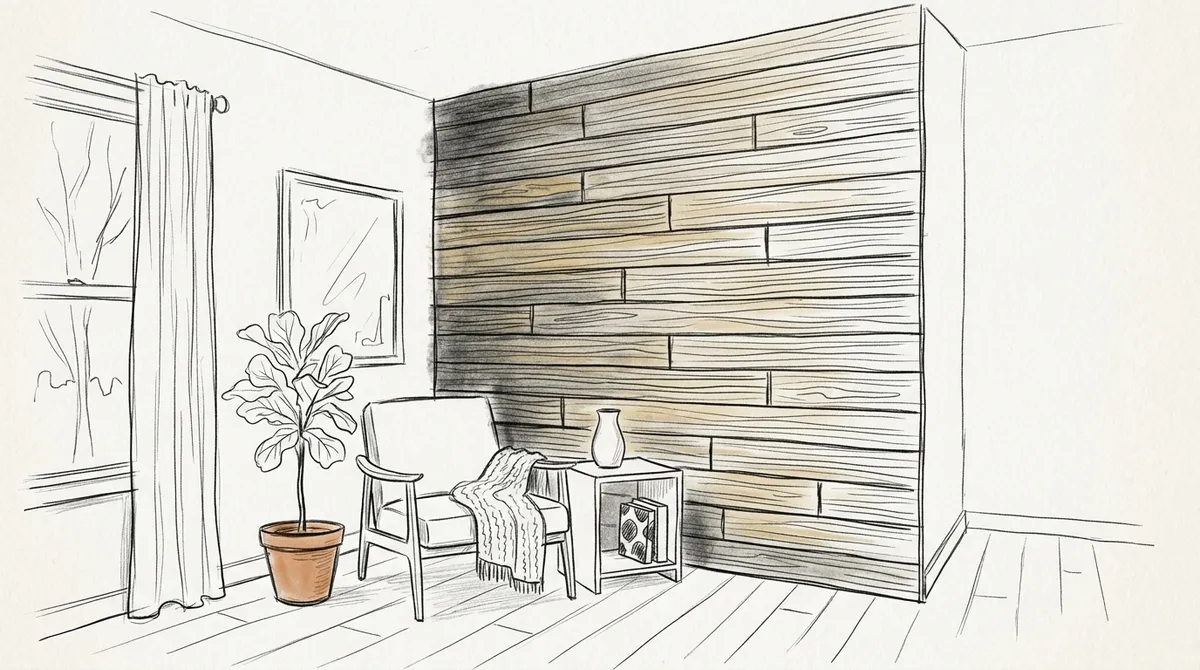
A wood accent wall is a single wall covered with wood panels, planks, or boards to create a focal point in a room. It draws the eye and adds dimension. Unlike wallpaper or paint, wood brings a natural, tactile quality to any interior. You can explore wall enhancements that go far beyond simple planks — from raised paneling to custom geometric designs.
Wood accent walls work in living rooms, bedrooms, dining areas, and even home offices. They suit a wide range of design styles, including farmhouse, modern, transitional, and traditional. To learn more about carpentry and how woodworking techniques influence interior design, it helps to understand the basics before choosing your approach.
DIY Wood Accent Wall: The Basics
Many homeowners consider the DIY route first. It feels empowering and seems cost-effective on the surface. But there’s more to it than picking up some boards at the hardware store.
How DIY Installation Works
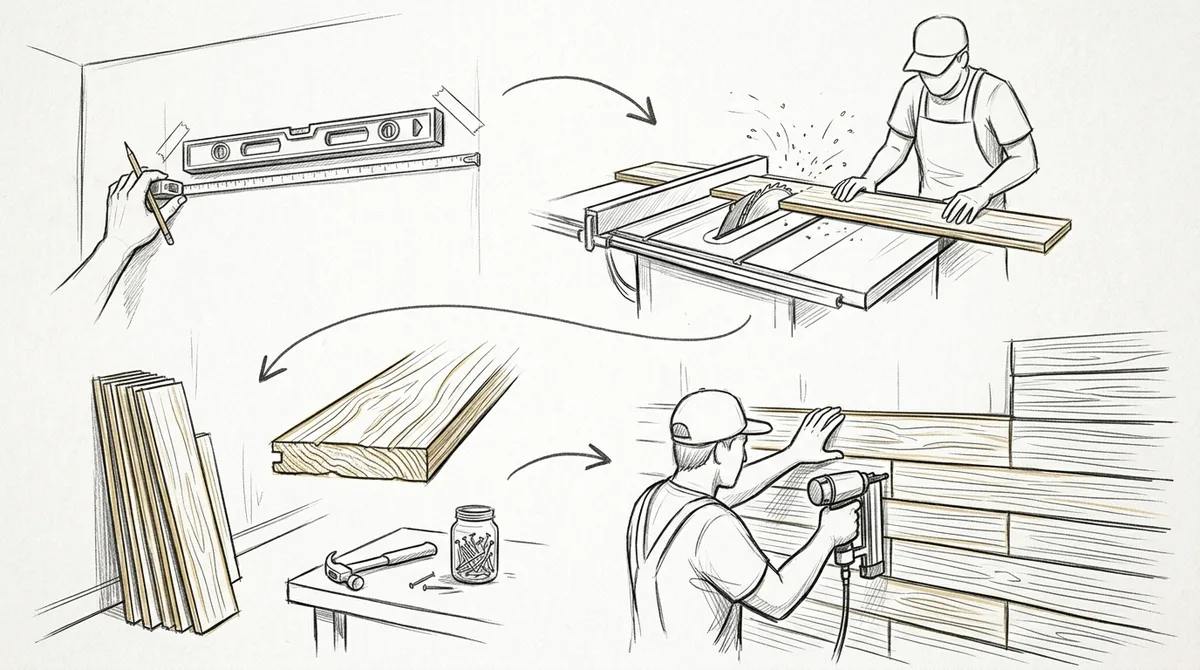
A typical DIY wood accent wall project follows a basic sequence. Here’s what the process usually looks like:
- Plan the design. Decide on the wood type, pattern (horizontal, vertical, herringbone, etc.), and the overall layout of the wall.
- Measure and calculate materials. Calculate the square footage and order enough wood, accounting for waste and cuts.
- Prepare the wall surface. The wall must be clean, flat, and dry before installation begins.
- Cut the boards. Each plank needs to be cut to the correct length. Corners and edges require precise angles.
- Attach the wood. Boards are nailed or glued to the wall, working row by row.
- Finish the surface. Sand edges, fill nail holes, and apply stain, paint, or sealant.
This process sounds straightforward. In practice, it often isn’t. Walls that aren’t perfectly flat, studs that don’t line up as expected, or wood that warps can all cause major problems for an inexperienced installer.
Pros of DIY
- You have complete creative control over every decision
- It can be a satisfying hands-on project for skilled DIYers
- Works well for simple, flat panel designs
- Flexibility to work at your own pace
Cons of DIY
- Mistakes are common and costly to fix
- Complex patterns require advanced woodworking skills and tools
- Poor installation can cause boards to warp, crack, or loosen over time
- Uneven cuts or gaps look unprofessional
- Limited access to premium wood species and finishes
Custom Carpentry Wood Accent Walls: The Professional Approach
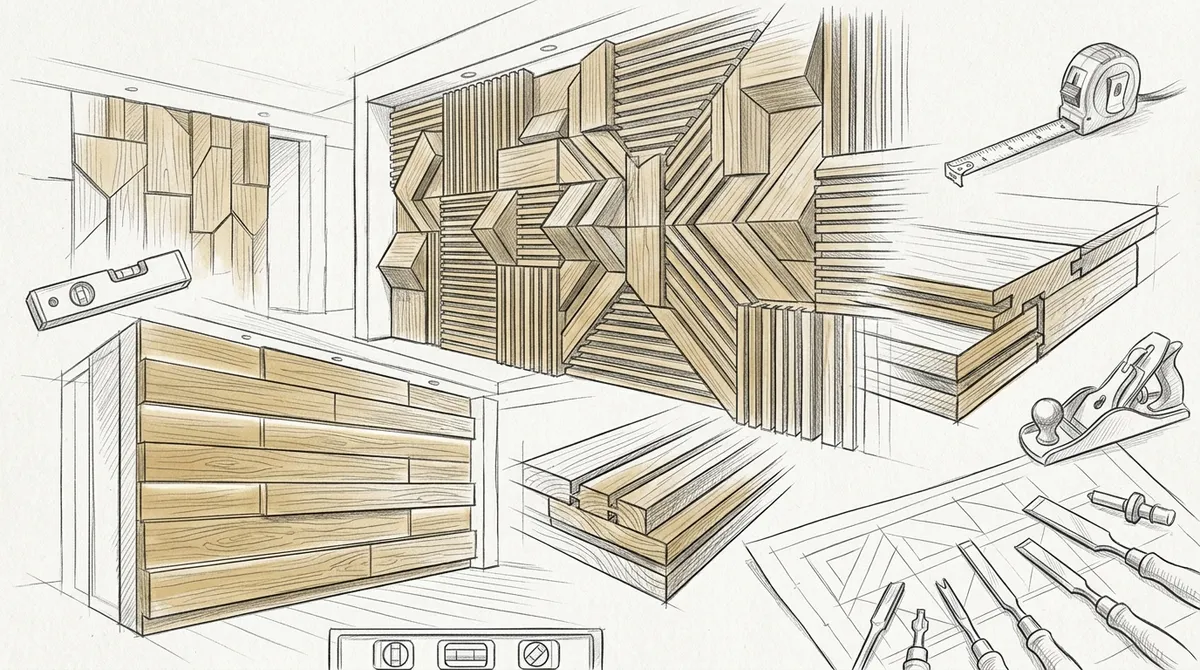
A custom carpentry professional brings expertise, precision, and craftsmanship to every wood accent wall project. The result is a wall that looks flawless and lasts for decades. Custom carpentry projects go well beyond what most DIYers can achieve on their own.
How Professional Installation Works
Here’s what a professional wood accent wall installation typically involves:
- Design consultation. A skilled carpenter works with you to understand your vision, the room’s dimensions, and the design style you want to achieve.
- Material selection. Professionals have access to premium hardwoods, specialty veneers, and custom finishes that aren’t always available at retail stores.
- Precision measurement. Every measurement is taken carefully to ensure perfect alignment and a seamless fit.
- Expert cutting and fitting. Complex angles, mitered corners, and intricate patterns are handled with professional-grade tools.
- Seamless installation. Boards are secured properly, ensuring they stay in place without warping or shifting over time.
- Professional finishing. Staining, painting, or sealing is applied evenly for a polished, high-end result.
If you’re also considering complementary upgrades like molding details or a custom ceiling to match your new feature wall, a professional can design everything to work together harmoniously. You might also find inspiration by reading about how trim and molding transform your space with style.
Pros of Custom Carpentry
- Flawless results with precise cuts and seamless joints
- Access to premium materials and custom finishes
- Complex patterns and designs are achievable
- Long-lasting installation that won’t warp or loosen
- Design expertise to help you choose the right look for your space
- Adds significant value to your home or property
Cons of Custom Carpentry
- Requires scheduling and coordinating with a professional
- More planning is involved upfront
DIY vs. Custom Carpentry: Side-by-Side Comparison
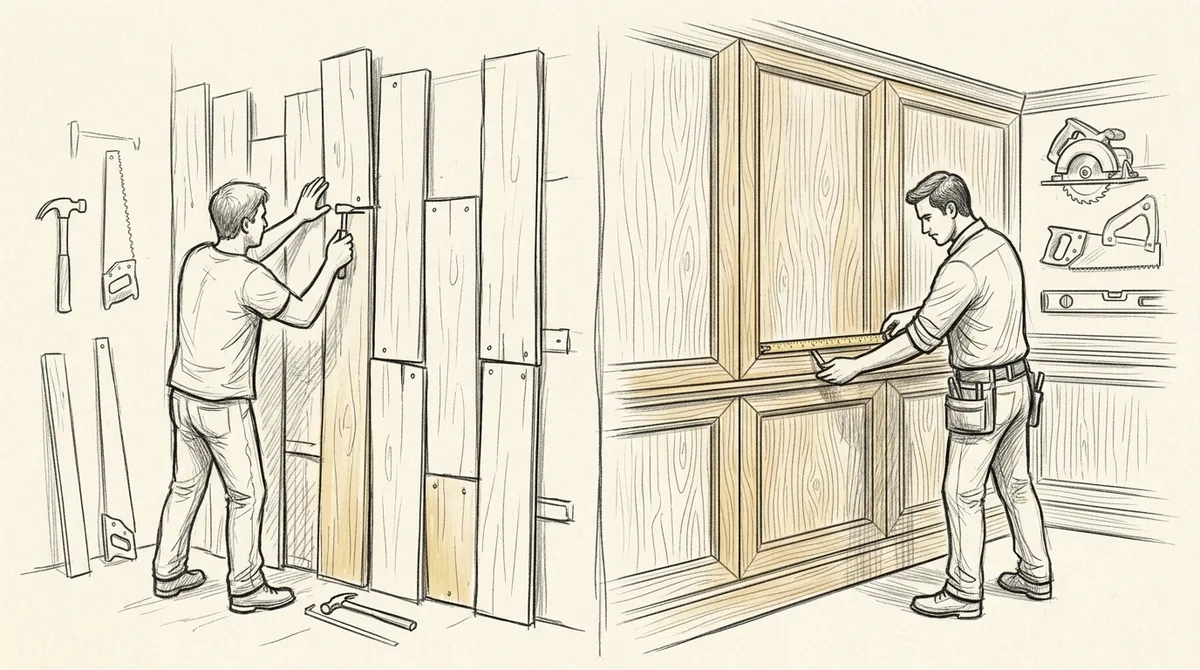
Here’s a clear breakdown of how both options stack up across the most important factors:
| Factor | DIY Wood Accent Wall | Custom Carpentry |
|---|---|---|
| Design Complexity | Limited to basic patterns | Any design possible |
| Finish Quality | Varies — skill-dependent | Consistently high-end |
| Material Options | Retail-grade wood | Premium and specialty wood |
| Time Required | High — multiple weekends | Efficient professional timeline |
| Longevity | Can vary based on skill | Built to last for decades |
| Added Home Value | Moderate | Significant |
| Risk of Errors | High for complex designs | Minimal with a professional |
Styles of Wood Accent Walls Professionals Can Create
One of the biggest advantages of hiring a custom carpenter is the sheer range of styles available. Here are some of the most popular options that professionals can execute flawlessly:
- Shiplap panels. A clean, classic look with overlapping horizontal boards. Works beautifully in farmhouse and coastal interiors.
- Raised panel wainscoting. Traditional elegance with framed panels that add architectural depth. Often paired with crown molding and crown molding details for a classic finish.
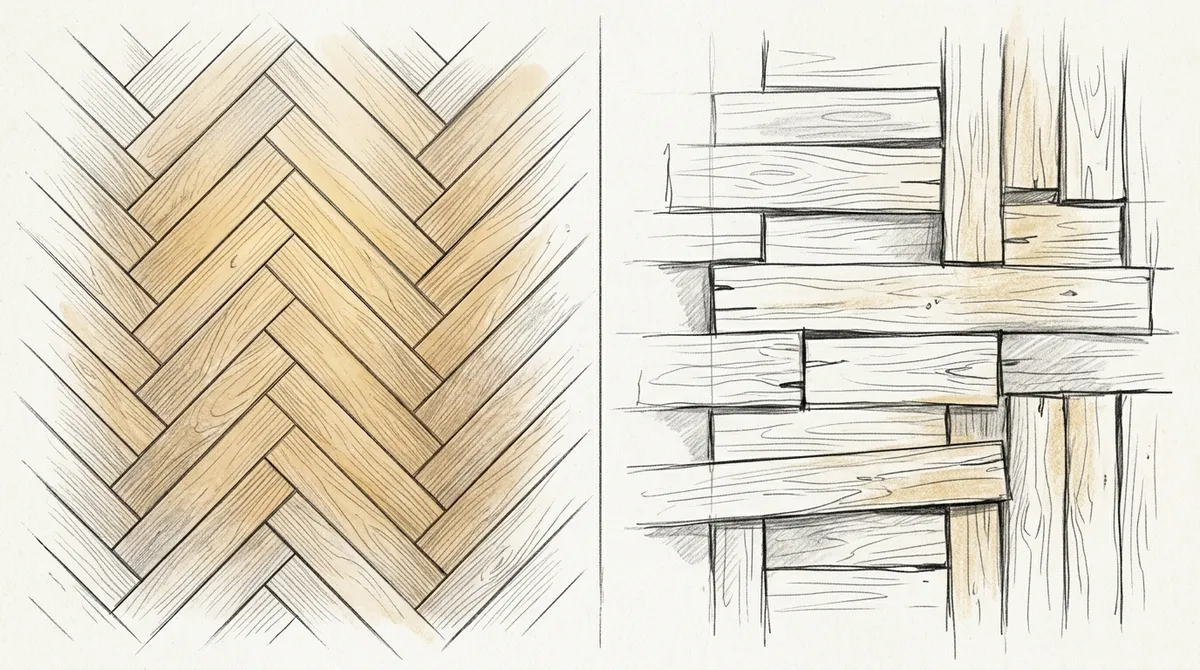
- Herringbone pattern. A dynamic, geometric arrangement of boards cut at angles. Extremely difficult to DIY but stunning when professionally crafted.
- Board and batten. Vertical boards with flat strips covering the seams. Clean, graphic, and highly versatile.
- Custom geometric panels. Hexagons, diamonds, chevrons, and other shapes arranged in a repeating pattern for a truly bespoke look.
Interior designers often work with firms like O’Reilly Consultants when coordinating large residential or commercial projects, ensuring that every element — including the wood accent wall — fits within the overall design vision.
Wood Accent Walls and Home Value
A professionally installed wood accent wall does more than look great. It can increase your home’s perceived value and appeal to buyers. Real estate developers know that high-end finishes — like a custom wood feature wall — make properties stand out in competitive markets.
Buyers remember rooms with character. A beautifully crafted wood accent wall becomes a selling point that photos capture well and that buyers experience emotionally when they walk into a room. If you’re interested in 11 ways custom woodworking transforms homes, you’ll see just how impactful these upgrades can be.
Pairing a wood accent wall with complementary features — like custom ceiling designs or premium flooring — creates a cohesive, luxury feel throughout a space. This comprehensive approach is what separates a beautifully finished home from a standard one.
When DIY Makes Sense
To be fair, DIY can work well in some situations. Here’s when taking the DIY route might be reasonable:
- You already have solid woodworking experience and the right tools
- The design is simple — such as basic horizontal shiplap in a small room
- You’re working in a low-visibility area like a basement or utility space
- You have plenty of time and are comfortable learning through trial and error
For anything more complex — or in a high-visibility area of your home — a professional carpenter will deliver results that simply aren’t achievable through DIY. You can read about 7 signs you need professional carpentry to help you determine when it’s time to call in an expert.
Why Bucheli Trim for Your Wood Accent Wall
Bucheli Trim has built a strong reputation across the Tampa Bay area for delivering high-end custom carpentry with exceptional attention to detail. From intricate geometric wood accent walls to elegant raised paneling, every project is treated as a unique work of craftsmanship. You can also visit us on Google to see what our customers are saying about our work.
Whether you’re a homeowner looking to refresh your living room, an interior designer sourcing a skilled carpentry partner, or a real estate developer seeking premium finishes, Bucheli Trim brings the expertise needed to make your vision a reality. Follow us on Facebook to see recent projects and design inspiration.
The Verdict: Which Option Wins?
For simple, small-scale projects with a basic design, DIY can be a viable option — if you have the skills. But for a wood accent wall that truly elevates your space, custom carpentry wins every time. The precision, material quality, design flexibility, and long-term durability simply cannot be matched by most DIY efforts.
A wood accent wall is an investment in your home’s beauty and value. It deserves the craftsmanship and expertise that only a professional custom carpenter can provide. Don’t leave the result to chance when the stakes are this high.
Ready to transform a room with a stunning wood accent wall? Reach out to our team today to discuss your project, explore design options, and take the first step toward a beautifully crafted feature wall that will impress for years to come.
FAQs
Q: What types of wood are best for a wood accent wall?
A: Popular choices include pine, cedar, shiplap, reclaimed wood, and hardwoods like oak or walnut. Each wood species offers a different look and texture. A custom carpenter can help you select the best material based on your design goals and the room’s existing style.
Q: How long does a professionally installed wood accent wall take to complete?
A: Most professional wood accent wall installations are completed within one to three days, depending on the size of the wall and the complexity of the design. Intricate patterns like herringbone or custom geometric panels may require additional time to ensure precision and a flawless finish.
Q: Can a wood accent wall work in humid environments like bathrooms?
A: Yes, but the wood must be properly sealed and moisture-resistant materials should be used. A professional carpenter can recommend the right wood species and protective finishes that hold up well in higher-humidity spaces like bathrooms or kitchens.
Q: Does a wood accent wall increase home resale value?
A: A professionally crafted wood accent wall can increase your home’s appeal and perceived value, especially in high-visibility areas like living rooms and master bedrooms. High-end finishes are a key selling point in competitive real estate markets, and buyers often remember rooms with distinctive, well-crafted features.
Q: How do I maintain a wood accent wall over time?
A: Wood accent walls are relatively low-maintenance. Regular dusting and occasional cleaning with a dry or slightly damp cloth keep them looking great. If the wall is stained or painted, a professional can advise on touch-up products to keep the finish looking fresh for years.