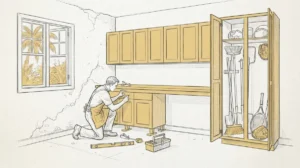
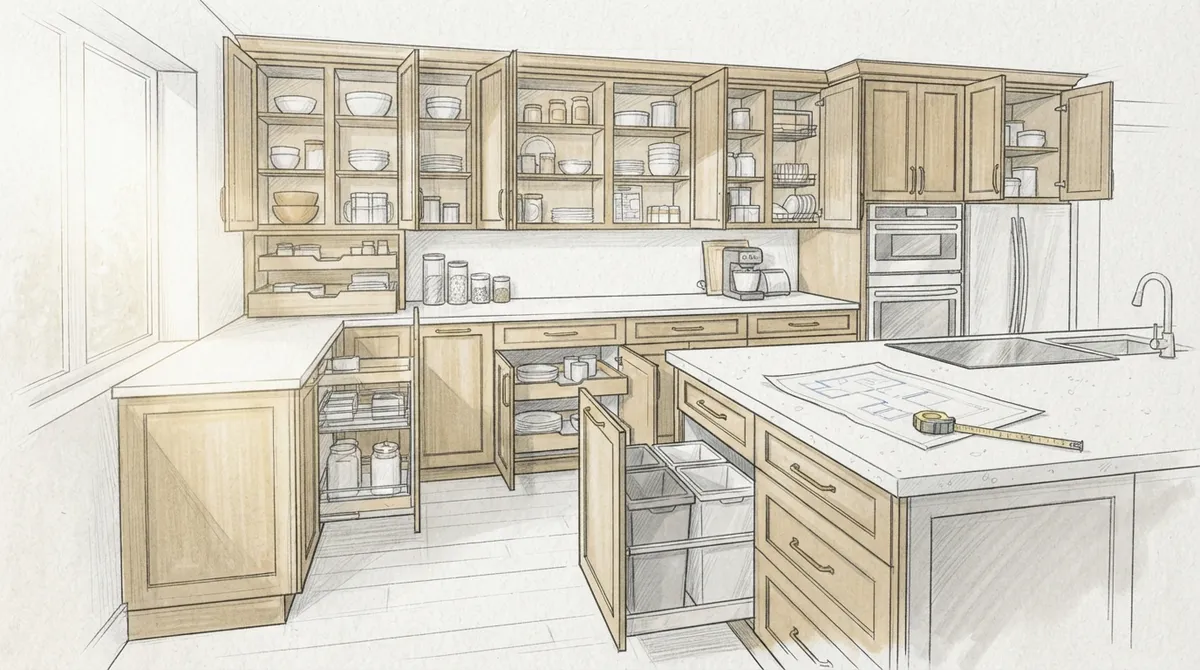
Key Takeaways
-
Create a detailed design plan mapping every drawer, shelf, and appliance location before ordering cabinets to avoid awkward spacing and wasted storage.
-
Invest in quality materials like solid wood and quality plywood instead of particle board, especially in humid climates where cheap materials warp and crack within years.
-
Plan cabinet layout around your kitchen workflow triangle (sink, stove, fridge) and add functional features like pull-out shelves, soft-close hardware, and corner storage solutions.
-
Hire based on portfolio and references rather than lowest price, and ensure professional precision measurements to prevent gaps, misaligned doors, and costly on-site adjustments.
Kitchen cabinet remodeling can transform a tired kitchen into the heart of your home. But many homeowners rush into this project without a clear plan. They end up with cabinets that look nice at first but fail within a few years. Others spend money on features that don’t fit their daily needs.
Whether you are a homeowner planning your dream kitchen, an interior designer sourcing skilled craftsmen, or a real estate developer adding luxury touches to a new build, avoiding common mistakes matters. Custom cabinetry is one of the biggest investments in any kitchen project. Getting it wrong can cost you time, money, and daily frustration. This guide walks through ten mistakes that ruin kitchen cabinet remodeling projects, and how to sidestep each one. At Bucheli Trim, we have seen these mistakes firsthand across many Tampa Bay homes, and we want to help you avoid them.
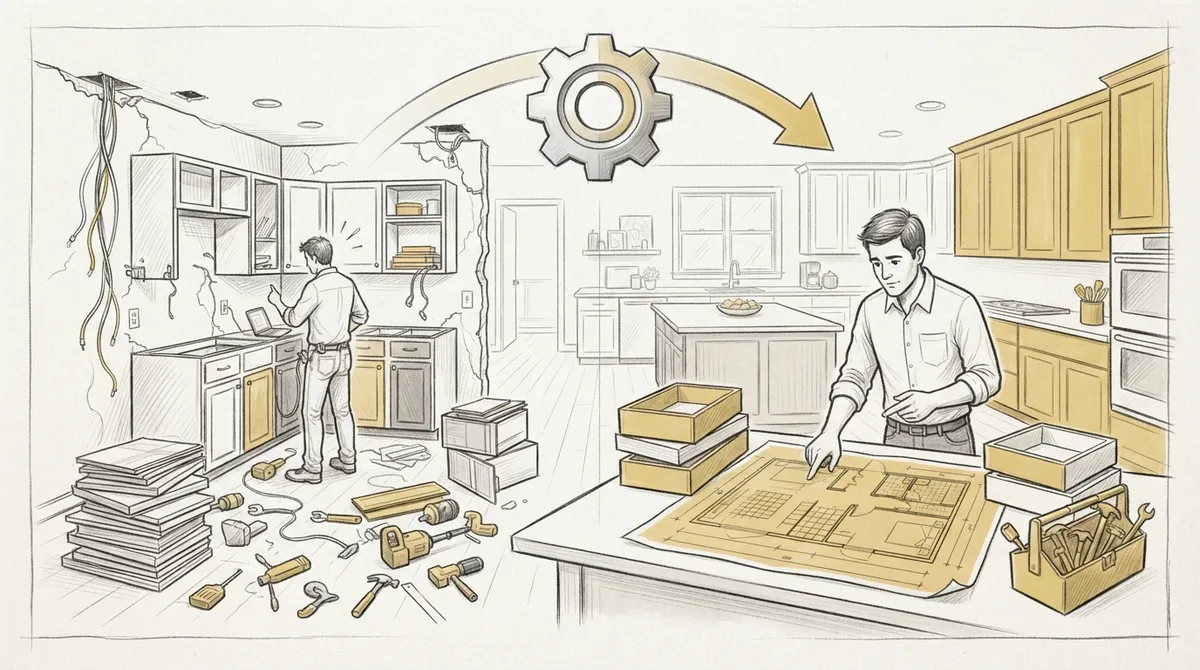
Why Kitchen Cabinet Remodeling Deserves Careful Planning
Cabinets are not just storage. They set the tone for your entire kitchen design. Poor planning leads to wasted space, mismatched finishes, and cabinets that don’t hold up over time. A well-planned remodel, on the other hand, adds real value to your home and makes daily cooking easier.
Custom carpentry gives you control over every detail, from wood type to door style. This is different from buying stock cabinets off a shelf. You can learn more about the process in our guide on kitchen remodeling in Tampa.
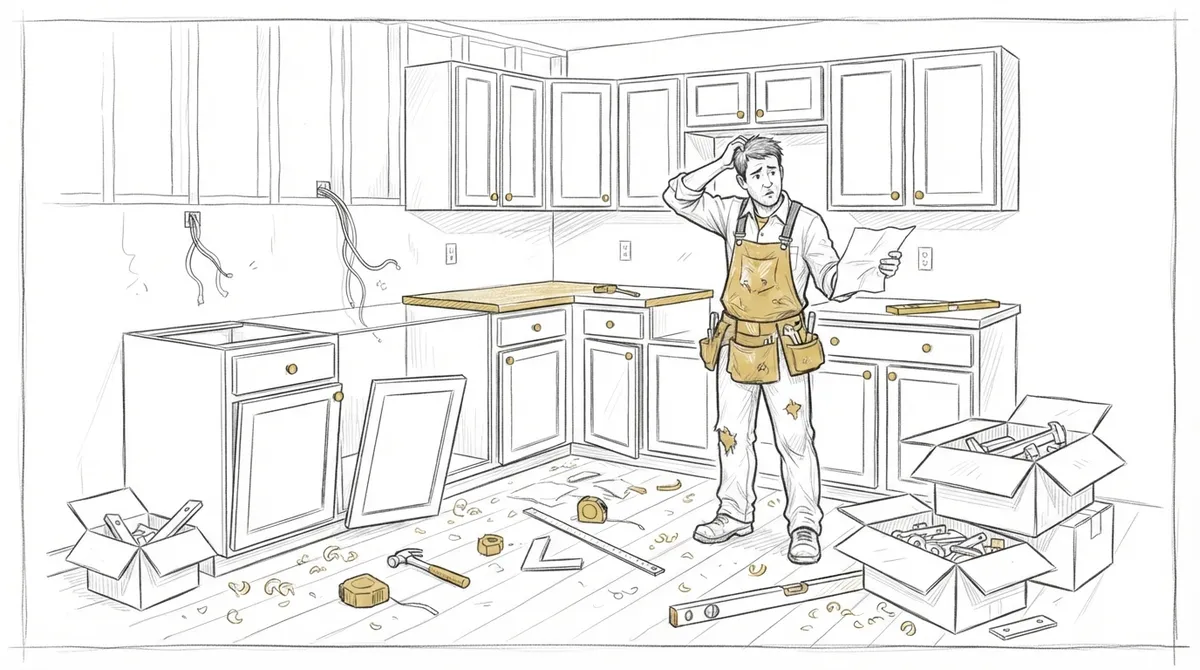
1. Skipping a Detailed Design Plan
Many homeowners jump straight to picking cabinet colors without a full layout plan. This leads to awkward spacing and wasted storage. A detailed plan should map out every drawer, shelf, and appliance location before any wood is cut.
- Measure your kitchen space accurately before ordering cabinets
- Plan for appliance clearance and door swing space
- Map out your workflow between the sink, stove, and fridge
- Consider how much storage you actually need
Working with a custom carpenter early in the process helps avoid these layout errors. Our team at Bucheli Trim reviews your custom kitchen cabinet needs before any work begins.
2. Choosing Cheap Materials to Save Money
Low-quality wood and hardware may look fine on day one. But they warp, crack, and sag within a few years. This is especially true in Florida’s humid climate, where cheap materials break down faster.
Solid wood and quality plywood construction last decades longer than particle board options. Ask your carpenter about the wood species and construction methods before committing. You can read more about material choices in our post on why custom cabinetry in Tampa is worth it.
3. Ignoring Kitchen Workflow
The classic “kitchen triangle” between sink, stove, and fridge still matters. Cabinets placed without thinking about this triangle can make cooking a hassle. You end up walking farther than needed for simple tasks.
Steps to Improve Kitchen Workflow
- Map out your daily cooking habits and common movements
- Place frequently used items in easy-reach cabinets
- Keep pots and pans near the stove
- Store dishes near the dishwasher for easy unloading
- Leave enough space for multiple people to work at once
4. Overlooking Soft-Close Hardware
Basic hinges and drawer slides feel cheap and wear out fast. Soft-close hardware costs a bit more upfront but saves your cabinets from slamming damage over time. This small detail makes a big difference in daily use.
- Soft-close hinges prevent door damage from slamming
- Full-extension drawer slides give better access to contents
- Quality hardware reduces noise in the kitchen
- Better hardware extends the life of your cabinet boxes
5. Forgetting About Ventilation and Plumbing
Cabinets built around existing plumbing and electrical without proper planning cause headaches later. You may need to cut into new cabinets to fix a pipe or add an outlet. This is avoidable with proper upfront coordination.
A skilled carpenter works with your plumber and electrician to plan cabinet cutouts correctly. This coordination is part of what separates custom cabinet installation from generic prefab options.
6. Choosing Trends Over Timeless Style
Bold trendy colors and finishes can feel dated within a few years. Classic styles with quality craftsmanship tend to last longer, both in looks and function. This matters even more for real estate developers building homes meant to appeal to a wide range of buyers.
Timeless vs. Trendy Cabinet Choices
| Feature | Timeless Choice | Trendy Risk |
|---|---|---|
| Cabinet Color | Neutral whites, grays, natural wood tones | Bold saturated colors |
| Door Style | Shaker or flat panel | Ornate or overly modern profiles |
| Hardware | Simple brushed metal pulls | Novelty or oversized handles |
| Finish | Matte or satin | High-gloss trend finishes |
7. Not Accounting for Storage Needs
Many remodels focus on looks but forget about function. Pull-out shelves, deep drawers, and corner solutions all add real value to daily kitchen use. Skipping these features often leads to regret later.
- Deep drawers for pots and pans instead of lower cabinets
- Pull-out trash and recycling bins
- Corner cabinet solutions like lazy Susans
- Vertical dividers for baking sheets and trays
- Built-in spice racks near the cooking area
8. Hiring Based on Price Alone
Choosing the cheapest bid often leads to rushed work and lower quality materials. Skilled custom carpentry takes time and expertise that reflects in the final product. This is one of the most common kitchen cabinet installer mistakes homeowners make.
Instead, look at portfolios, ask for references, and review past project photos. Checking testimonials from past clients gives you a clearer picture of what to expect. You can also visit us on Google — Bucheli Trim to see what our customers say about their finished kitchens.
9. Skipping Professional Measurements
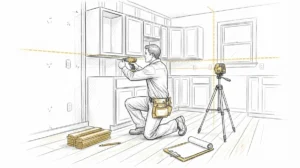
Even small measurement errors can throw off an entire cabinet installation. Gaps, uneven doors, and misaligned drawers are common results of rushed measuring. Professional carpenters use precise tools and methods to avoid these issues.
Why Precision Matters
- Ensures cabinet doors and drawers align properly
- Prevents gaps between cabinets and walls
- Allows appliances to fit without modification
- Reduces the need for costly on-site adjustments
According to the learn more about carpentry field’s long history, precision has always been the mark of quality craftsmanship. This tradition still applies to modern kitchen cabinetry today.
10. Neglecting Finishing Touches
Small details like crown molding, trim, and matching hardware pull a kitchen together. Skipping these finishing elements can make even well-built cabinets look unfinished. These details also help interior designers achieve a cohesive look across a client’s space.
- Crown molding along the top of upper cabinets
- Matching toe kick trim at the base
- Consistent hardware finish throughout the kitchen
- Coordinated countertop and backsplash pairing
For added durability in high-traffic kitchens, some homeowners also consider epoxy coatings on nearby flooring to complement new cabinetry. You can explore more flooring pairing ideas through our flooring services page.
How Custom Carpentry Improves Kitchen Cabinet Remodeling
Working with a dedicated custom carpentry team means every cabinet is built to fit your exact space. This differs greatly from stock or semi-custom options that may not match your kitchen’s unique layout. Custom work also allows for better wood choices, joinery, and finish quality.
Interior designers benefit from this flexibility because it allows creative visions to come to life without compromise. Real estate developers gain a competitive edge by offering buyers cabinetry that feels high-end and built to last. Homeowners get a kitchen that truly fits their lifestyle.
Benefits of Choosing Custom Cabinetry
- Exact fit for unique kitchen layouts and odd angles
- Choice of premium wood species and finishes
- Better structural durability compared to mass-produced options
- Design flexibility for unique storage needs
- Higher resale value for homes with quality craftsmanship
Our team also handles related projects like custom cabinets, molding details, and wall enhancements that complement any kitchen remodel. This full-service approach means your kitchen design stays consistent from cabinets to ceiling.
Common Kitchen Cabinet Remodeling Steps
Understanding the general process helps set realistic expectations for your project timeline. While every project varies, most follow a similar path from start to finish.
- Initial consultation and space assessment
- Design planning and material selection
- Precise measurements and custom cabinet fabrication
- Removal of old cabinets and prep work
- Installation of new custom cabinetry
- Final finishing touches like trim and hardware
- Walkthrough and quality inspection
Following our kitchen renovation planning guide can help you prepare for each stage of this process.
Final Thoughts on Avoiding Kitchen Cabinet Remodeling Mistakes
Kitchen cabinet remodeling is a major investment that deserves careful attention to detail. Avoiding these ten common mistakes helps ensure your project results in a kitchen that looks great and functions well for years. From material choices to hardware selection, every decision matters.
Whether you are updating your own home, working on a client’s design vision, or adding value to a development property, quality craftsmanship makes the difference. Bucheli Trim has helped many Tampa Bay homeowners, designers, and developers achieve kitchens they love. You can also follow our latest project updates on Facebook for inspiration and completed work examples.
Ready to start your kitchen cabinet remodeling project the right way? Reach out to our team today to discuss your vision and get expert guidance from the very first step.
FAQs
Q: How long does kitchen cabinet remodeling usually take?
A: Most custom kitchen cabinet remodeling projects take between four to eight weeks, depending on design complexity and material availability. Custom fabrication takes longer than stock options but results in a better fit. Your carpenter can give you a more precise timeline after the initial design consultation.
Q: What is the difference between custom and stock kitchen cabinets?
A: Custom cabinets are built specifically for your kitchen’s exact dimensions and design preferences. Stock cabinets come in standard sizes and limited style options. Custom work offers better fit, higher quality materials, and more design flexibility.
Q: Do I need to replace all my cabinets during a remodel?
A: Not always. Some homeowners choose to refinish or reface existing cabinet boxes while adding new doors and hardware. However, full replacement is often better if cabinets are structurally damaged or the layout needs to change.
Q: What wood types work best for kitchen cabinets in Florida?
A: Solid hardwoods like maple, oak, and cherry hold up well in Florida’s humid climate when properly sealed. Quality plywood construction also resists warping better than particle board. Your carpenter can recommend the best option based on your budget and style preferences.
Q: How can I make my kitchen cabinets more functional?
A: Adding pull-out shelves, deep drawers, and corner storage solutions improves daily functionality significantly. Soft-close hardware and vertical dividers also make cabinets easier to use. Planning these features during the design phase ensures they fit seamlessly into your kitchen layout.