Key Takeaways
-
Custom carpentry is the key differentiator between $15,000 and $50,000 bathroom renovations—skilled millwork on vanities, trim, and built-ins elevates every other element and commands higher property values on the Tampa market.
-
Tampa's humid subtropical climate (50+ inches annual rainfall) requires marine-grade plywood, moisture-resistant wood species like teak or white oak, and proper multi-coat sealing to prevent warping, swelling, and mold within years.
-
Custom vanities last 20-30+ years versus 5-10 years for prefab options, making the higher upfront investment worthwhile for long-term value despite initial cost differences.
-
Floating vanities with hidden storage, crown molding, built-in medicine cabinets, and shiplap wainscoting are 2026 Tampa luxury trends that create distinctive character while maximizing functionality in bathroom spaces.
-
Coordinate custom carpentry measurements and vanity plans with plumbers before work begins to avoid expensive plumbing relocations and rework during installation.
-
Choose stainless steel, solid brass, or marine-grade hardware to resist rust and corrosion in high-humidity Tampa bathrooms; avoid zinc alloy or low-grade chrome that deteriorates within 1-2 years.
The difference between a $15,000 bathroom remodel and a $50,000 showpiece often comes down to one overlooked element: the quality of custom carpentry work. Most bathroom renovation guides focus on plumbing and tiles. But the custom carpentry elements—vanities, trim work, and built-ins—are what truly transform a functional bathroom into a luxury space. Tampa homeowners spend thousands on fixtures and tile, then cut corners on the woodwork. This is where renovations fall flat. Skilled millwork elevates every other element in the room. A beautifully tiled shower looks even better when framed by custom molding details and precision-crafted trim. If you are planning bathroom renovations in Tampa, understanding the role of custom carpentry is essential. This guide covers the most common mistakes homeowners make, the right materials to use, and how to plan a bathroom that holds its value for decades. Whether you are a homeowner, interior designer, or real estate developer, this article will help you make smarter decisions from start to finish.
Why Custom Carpentry Defines Tampa Bathroom Renovations
Custom carpentry has a direct impact on property values. Homes with high-quality millwork consistently command higher prices on the Tampa market. Buyers notice the difference between precision-built vanities and off-the-shelf cabinet boxes. The details communicate quality throughout the entire home. To learn more about carpentry and its role in home value, it helps to understand what separates handcrafted work from mass production.
Tampa’s humid subtropical climate creates unique challenges for wood materials. The city averages over 50 inches of rain per year. Humidity levels stay high for most of the year. This means wood in bathrooms faces constant moisture exposure. Choosing the wrong materials leads to warping, swelling, and mold growth within just a few years.
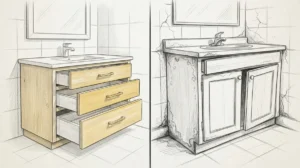
Custom vanities cost more upfront than prefab options. However, they offer significantly better value over time. A prefab vanity may cost less initially, but it often requires replacement within five to ten years. A custom-built vanity, using the right materials and finishes, can last the life of the home.
| Feature | Prefab Vanity | Custom Vanity |
|---|---|---|
| Lifespan | 5–10 years | 20–30+ years |
| Fit & Dimensions | Standard sizes only | Built to exact measurements |
| Material Quality | Particleboard/MDF | Marine-grade plywood or hardwood |
| Design Options | Limited | Fully customizable |
| Resale Value Impact | Minimal | Significant |
In 2026, Tampa luxury bathroom trends lean toward warm wood tones, floating vanity designs, and integrated storage solutions. Homeowners and designers are moving away from cold, minimalist styles. Natural wood finishes and layered trim details are now top requests in high-end bathroom renovations Tampa projects.
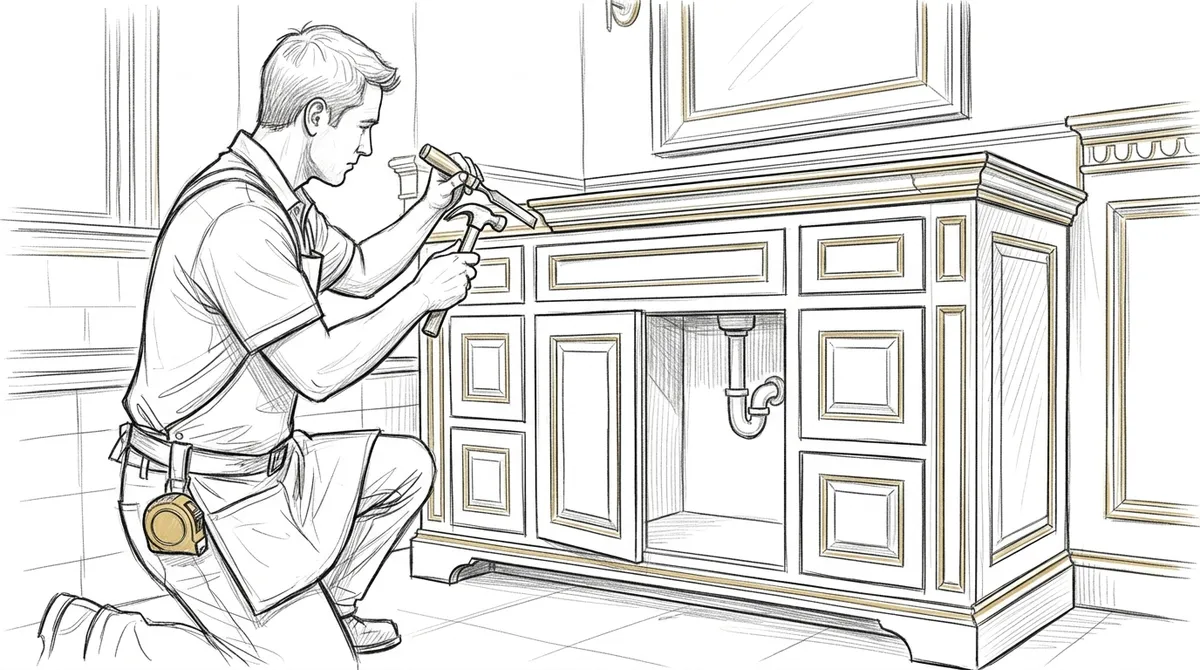
Essential Custom Carpentry Elements for Bathroom Upgrades
Knowing which carpentry elements to include helps you plan a bathroom that is both beautiful and functional. Here are the key components that make the biggest impact.
Floating Vanities with Hidden Storage
Floating vanities create a sense of space in smaller bathrooms. They are wall-mounted, which makes floors easier to clean. More importantly, they can be built with hidden drawers, pull-outs, and compartments that maximize every inch of storage. Custom builds allow you to design storage around your exact needs. Visit our cabinets page to explore built-in storage options that work perfectly in bathroom settings.
Crown Molding and Decorative Trim Packages
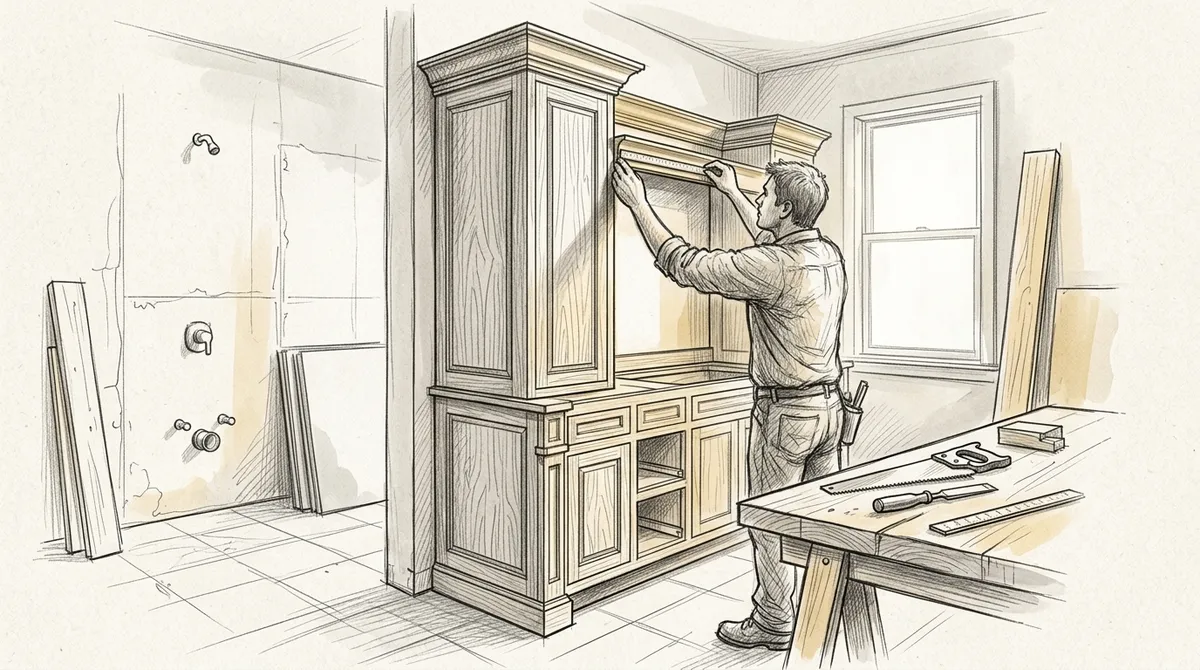
Crown molding adds architectural character that prefab bathrooms simply cannot replicate. Decorative trim packages frame mirrors, windows, and doorways with precision. Even a modest bathroom feels more refined with well-executed trim work. The wall enhancements available through skilled carpenters can completely change the feel of a room.
Built-In Medicine Cabinets and Niches
Built-in medicine cabinets sit flush with the wall. They save counter space and create a seamless, custom look. Shower niches, built directly into the wall structure, keep toiletries organized without cluttering the space.
Custom Drawer Organizers and Pullouts
Interior drawer organizers and pull-out trays are built to fit specific items. These details make daily routines easier and keep counters clear. They are one of the most practical upgrades in any bathroom renovation.
Shiplap and Wainscoting Applications
Shiplap and wainscoting bring texture and visual depth to bathroom walls. When sealed properly for moisture resistance, they hold up well in Tampa’s climate. These applications work especially well in master baths and powder rooms seeking a distinctive character. Explore how wall enhancements can bring this look to life in your home.
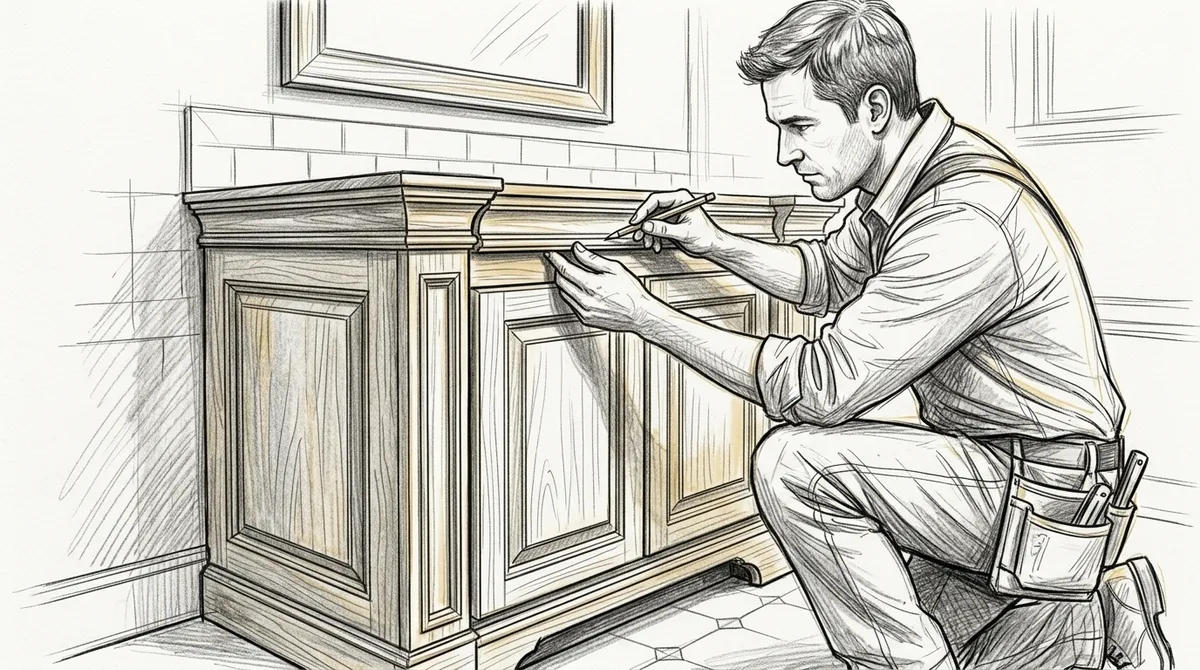
Material Selection for Tampa’s Climate Conditions
Choosing the right materials is one of the most important decisions in any bathroom renovation in Tampa. The wrong choice leads to costly repairs down the road.
Marine-Grade Plywood vs Standard MDF
Marine-grade plywood is built to withstand moisture. It uses waterproof glue between layers, making it far more resistant to swelling and delamination. Standard MDF, while smooth and easy to paint, absorbs water quickly. In a Tampa bathroom, MDF should be avoided for cabinet boxes and vanity bases unless fully sealed on all sides.
Moisture-Resistant Wood Species Rankings
Not all wood species handle humidity equally. Here is a ranked list from most to least moisture-resistant for bathroom use:
- Teak – Naturally oily and highly resistant to moisture and decay
- White Oak – Dense grain repels water better than red oak
- Cedar – Natural oils resist moisture and mold
- Maple – Hard and stable with proper sealing
- Pine – Affordable but requires thorough sealing in humid environments
Proper Sealing and Finishing Techniques
Even the best wood species needs proper sealing. All cut edges must be sealed before installation. A quality polyurethane or conversion varnish topcoat provides a strong moisture barrier. Two to three coats are recommended for bathroom environments. Our team at painting services understands how finishing choices protect woodwork in Florida’s climate.
Hardware Choices for Humid Environments
Hardware corrodes quickly in high-humidity bathrooms. Choose stainless steel, solid brass, or marine-grade hardware. These options resist rust and keep their finish far longer. Avoid zinc alloy or low-grade chrome hardware, which shows wear within one to two years in Tampa homes.
| Hardware Material | Humidity Resistance | Recommended Use |
|---|---|---|
| Stainless Steel | Excellent | Pulls, hinges, drawer slides |
| Solid Brass | Very Good | Decorative pulls and knobs |
| Marine-Grade Bronze | Excellent | Heavy-duty hinges and handles |
| Zinc Alloy | Poor | Not recommended for bathrooms |
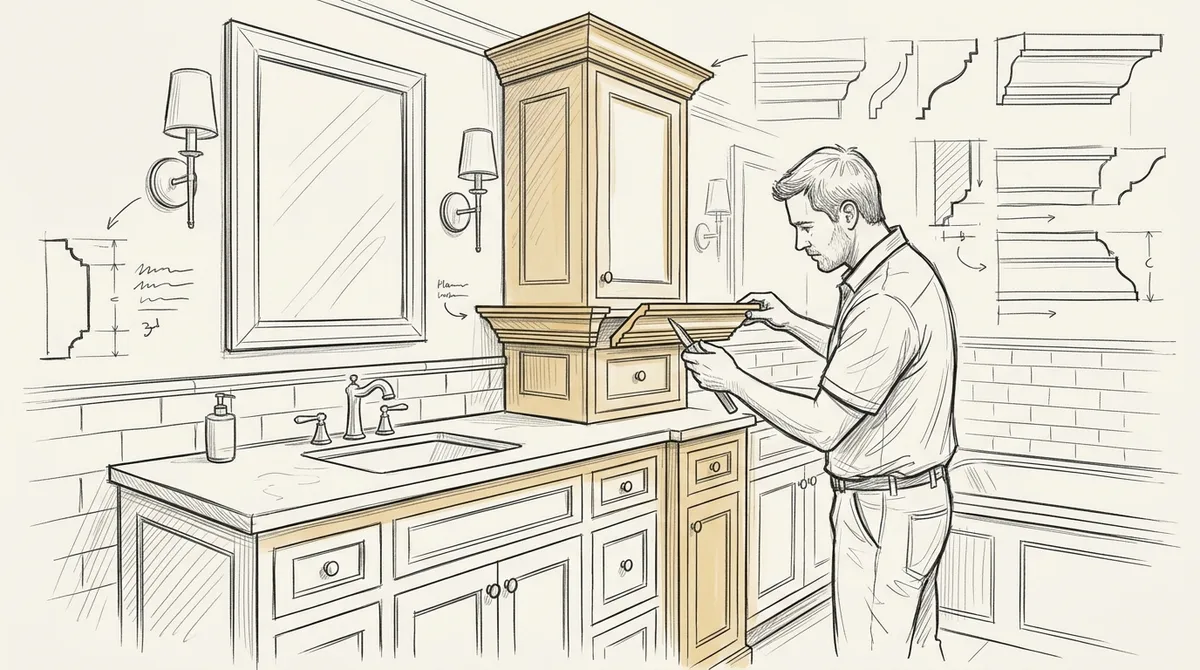
Planning Your Bathroom Carpentry Layout
Good planning prevents costly mistakes during installation. Here is how to approach the planning phase step by step.
Step 1: Measure for Custom Vanity Installations
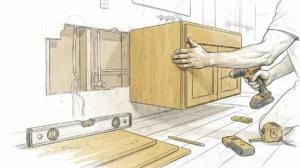
Accurate measurements are the foundation of every custom project. Measure the width, depth, and height of the vanity space. Account for any obstacles like pipes, outlets, or recessed areas. Custom builds are only as precise as the measurements they are based on.
Step 2: Coordinate with Plumbing Rough-Ins
Your carpentry layout must align with existing plumbing rough-ins. Share your custom vanity plans with your plumber before any work begins. Moving plumbing adds significant time and expense to a renovation. Planning ahead avoids this entirely.
Step 3: Optimize Storage
Think carefully about what you store in the bathroom. Build storage around your actual habits. Here are key strategies for maximizing bathroom storage:
- Use vertical space with tall cabinet towers beside the vanity
- Add pull-out hampers inside lower cabinets
- Include deep drawers for hair tools and accessories
- Build recessed niches in shower and bath surrounds
- Install floating shelves between studs for extra depth
Step 4: ADA Compliance Considerations
If aging-in-place or accessibility is a priority, ADA guidelines matter. Vanity heights, clearance space, and hardware choices must meet specific standards. Custom carpentry makes it easy to build compliant features without sacrificing style. The custom projects team can design accessible bathrooms that look beautiful and function well for everyone.
Step 5: Integrate Electrical for Vanity Lighting
Vanity lighting placement affects both function and design. Coordinate with your electrician early in the planning phase. Custom mirror frames, light bars, and medicine cabinet surrounds must be planned around exact outlet and junction box locations. Getting this right from the start prevents rework later.
Cost Breakdown of Custom Bathroom Millwork
Understanding how custom bathroom millwork is priced helps you plan your budget wisely. Here are the main cost factors to know.
Linear Foot Pricing for Trim Work
Trim and molding are typically priced by the linear foot. This includes crown molding, base molding, door casings, and decorative trim packages. The trim and molding choices you make directly affect the overall feel of the finished bathroom.
Custom Vanity Cost Factors
Several variables affect custom vanity pricing:
- Wood species and material grade
- Number of drawers and doors
- Size and configuration
- Finish type (paint, stain, or specialty coating)
- Hardware selection
Installation Labor
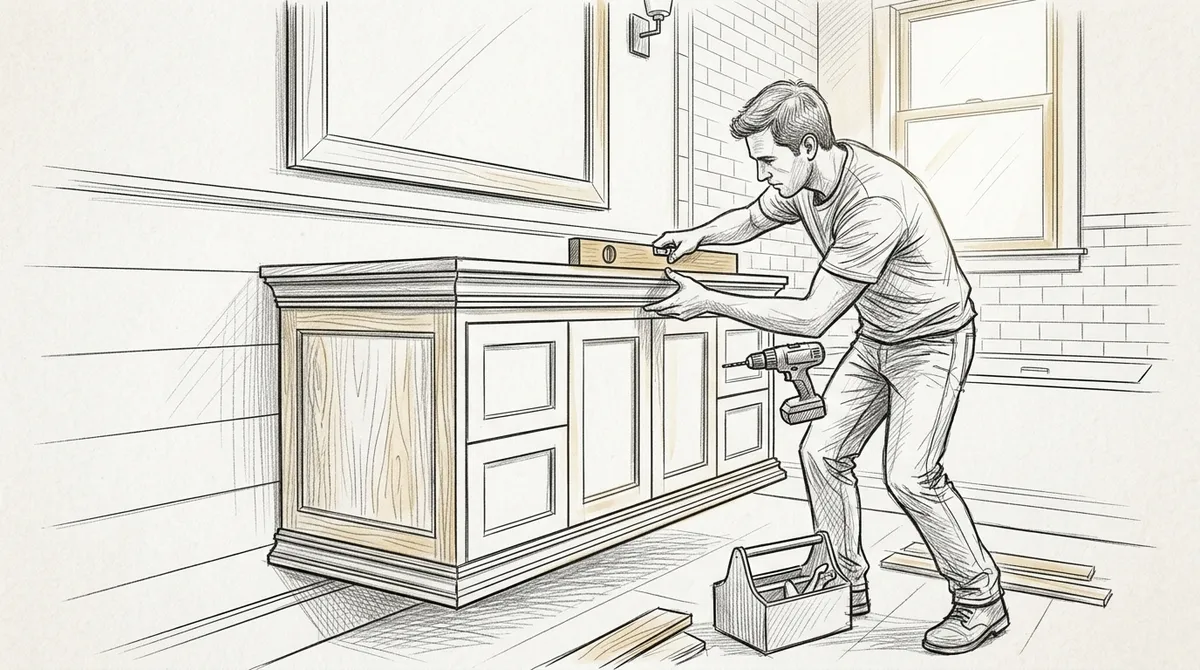
Labor is a significant part of any custom carpentry project. Skilled carpenters with experience in bathroom renovations Tampa projects invest time in precise fitting, leveling, and finishing. Rushed or unskilled installation can damage even the best custom work.
Premium Finish Upcharges
Specialty finishes like glazed paint, cerused wood, or high-gloss lacquer add to the overall investment. These finishes offer superior protection and a distinctive visual result. For bathroom environments in Tampa, premium finish options are worth considering for long-term durability.
Working with Tampa Carpentry Contractors
Choosing the right contractor is just as important as choosing the right materials. Here is what to look for when hiring a custom carpentry professional for bathroom renovations in Tampa.
Portfolio Evaluation Criteria
Always review a contractor’s portfolio before committing. Look for these qualities:
- Clean, tight joints with no visible gaps
- Consistent finish quality across surfaces
- Evidence of custom work, not just prefab installation
- Bathroom-specific projects in their portfolio
You can review completed projects and explore the Bucheli Trim portfolio at custom projects. You can also visit us on Google to see customer reviews and project photos.
Timeline Expectations for Custom Work
Custom carpentry takes more time than prefab installation. A custom vanity may take two to four weeks to build before installation even begins. Plan your bathroom renovation timeline accordingly. Rushing custom work leads to poor results.
Contract Terms and Warranties
A good contractor provides a clear written contract. It should outline scope, timeline, materials, and warranty terms. Workmanship warranties of one to two years are standard for quality custom carpentry. Do not begin work without a signed agreement.
Coordination with Other Trades
Custom carpenters must coordinate closely with plumbers, electricians, and tile installers. Good contractors manage this coordination efficiently. Ask potential contractors how they handle scheduling with other trades. Follow Bucheli Trim on Facebook to see how our team collaborates on full bathroom renovation projects across the Tampa Bay area.
Maintenance and Longevity of Bathroom Woodwork
Protecting your investment starts the day installation is complete. Proper maintenance keeps custom woodwork looking great for decades.
Cleaning Products Safe for Finishes
Use pH-neutral cleaners on all painted or stained wood surfaces. Avoid bleach-based sprays and abrasive scrubbers. These damage finishes quickly. A damp cloth with mild dish soap is often the safest option for daily cleaning.
Annual Inspection Checkpoints
Check these areas once a year to catch problems early:
- Caulk lines around vanity bases and backsplashes
- Cabinet door alignment and hardware tightness
- Finish condition on high-moisture surfaces near the sink
- Drawer glide function and smooth operation
Touch-Up and Repair Techniques
Small scratches and finish wear can be repaired with touch-up kits matched to your original finish. Recaulking around vanity bases is a simple annual task that prevents moisture infiltration. Addressing small issues early prevents larger and more expensive repairs later. For inspiration on future upgrades, explore built-in cabinetry solutions that can grow with your home over time.
When to Refinish vs Replace
If the wood structure is still sound, refinishing is almost always better than replacement. A professional refinish restores the original look and adds another layer of protection. Replacement is only necessary when the structural integrity of the wood is compromised by rot or severe moisture damage. Learn what warning signs to watch for at 7 signs you need professional carpentry near you today.
Elevate Your Tampa Bathroom with Expert Custom Carpentry
The difference between a good bathroom and a great one is found in the details. Custom millwork, precision-built vanities, and thoughtful trim work create spaces that look and feel like luxury. Tampa homeowners who invest in quality custom carpentry see real returns in both daily enjoyment and long-term property value. Avoiding the common mistakes covered in this guide puts you ahead of most renovation projects in the area.
Whether you are designing a master bath, a guest bathroom, or a powder room, the right carpentry partner makes all the difference. Explore how Bucheli Trim brings craftsmanship and precision to every bathroom renovation project in the Tampa Bay area. Ready to get started on your custom bathroom renovation? Reach out to our team today to discuss your project and get expert guidance from the first step to the final finish.
FAQs
Q: How long does custom bathroom carpentry typically take compared to prefab installation?
A: Custom bathroom carpentry generally takes two to six weeks longer than prefab installation due to the build and finishing time required before installation begins. Prefab vanities can often be installed in a single day, while a custom vanity may require two to four weeks of shop time followed by a one to two day installation. Planning ahead and working with a contractor early in your renovation timeline helps avoid delays.
Q: What’s the ROI on custom millwork versus standard bathroom fixtures in Tampa homes?
A: Custom millwork in Tampa bathrooms consistently delivers stronger returns than standard fixtures, particularly in the mid-to-luxury market segment. Buyers in the Tampa Bay area recognize quality craftsmanship, and homes with custom vanities and detailed trim work tend to sell faster and at higher prices. Real estate professionals frequently cite bathroom quality as one of the top factors influencing buyer decisions in competitive listings.
Q: Can existing bathroom vanities be modified with custom carpentry instead of full replacement?
A: Yes, existing vanities can often be upgraded with custom carpentry work rather than full replacement, which reduces both cost and renovation time. A skilled carpenter can add custom drawer inserts, replace door fronts, apply new molding trim, or refinish surfaces to create a dramatically different look. This approach works well when the existing cabinet box is structurally sound and free from moisture damage.
Q: What permits are required for custom carpentry work in Tampa bathroom renovations?
A: In Tampa, permits are typically required when structural changes, electrical work, or plumbing modifications are part of the renovation scope. Pure cosmetic carpentry work—such as installing a vanity in an existing space or adding trim molding—generally does not require a permit on its own. Always consult with your contractor and the Hillsborough County permitting office to confirm requirements specific to your project scope.
Q: How do I protect custom wood elements from mold in Florida’s humidity?
A: Protecting custom wood in Florida’s humid climate starts with proper material selection, including moisture-resistant species and marine-grade substrates, combined with a high-quality sealed finish on all surfaces and edges. Maintaining good bathroom ventilation with an exhaust fan rated for your bathroom size is equally important in reducing ambient moisture levels. Annual inspection of caulk seals around vanity bases and backsplashes helps catch moisture entry points before mold can develop.