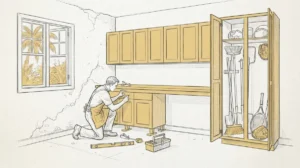

Key Takeaways
-
Ask local carpenters for written estimates, detailed project timelines, and references from recent clients before hiring to verify their skill level and reliability.
-
Local carpenters understand regional climate challenges like humidity and heat, know building codes, and have established supplier relationships that distant contractors cannot match.
-
Quality custom carpentry includes coffered ceilings, built-in cabinetry, wall enhancements, and trim work that typically costs 2-4 weeks for cabinets and 1-3 days for molding installation.
-
Watch for clean seams, consistent finishes, proper use of measuring tools, and careful cleanup during projects—these details distinguish skilled craftsmen from rushed work that needs repairs.
-
Designers should prioritize carpenters who can execute detailed drawings precisely and communicate well, while developers should focus on bulk pricing and consistent quality across multiple properties.
-
Local carpenters build stronger reputations within tight-knit communities, making their work easier to verify through neighbors and past clients while providing faster response times for follow-up repairs.
Finding a skilled local carpenter can feel like a big task. You want someone who understands your style, respects your budget of time, and delivers work that lasts for decades. Whether you are a homeowner dreaming of a custom ceiling, an interior designer needing a reliable craftsman, or a real estate developer aiming to add luxury touches, the right carpenter makes all the difference. This guide walks you through what to look for, what to expect, and how to make a smart choice for your project.
Custom carpentry is more than just cutting wood and hanging shelves. It includes detailed ceiling designs, wall enhancements, built-in cabinetry, and fine trim work that transforms an ordinary room into something special. A trusted local carpenter brings years of hands-on skill and a real understanding of your area’s building styles and climate needs. In Tampa Bay, that means knowing how humidity and heat affect wood, finishes, and installation methods.
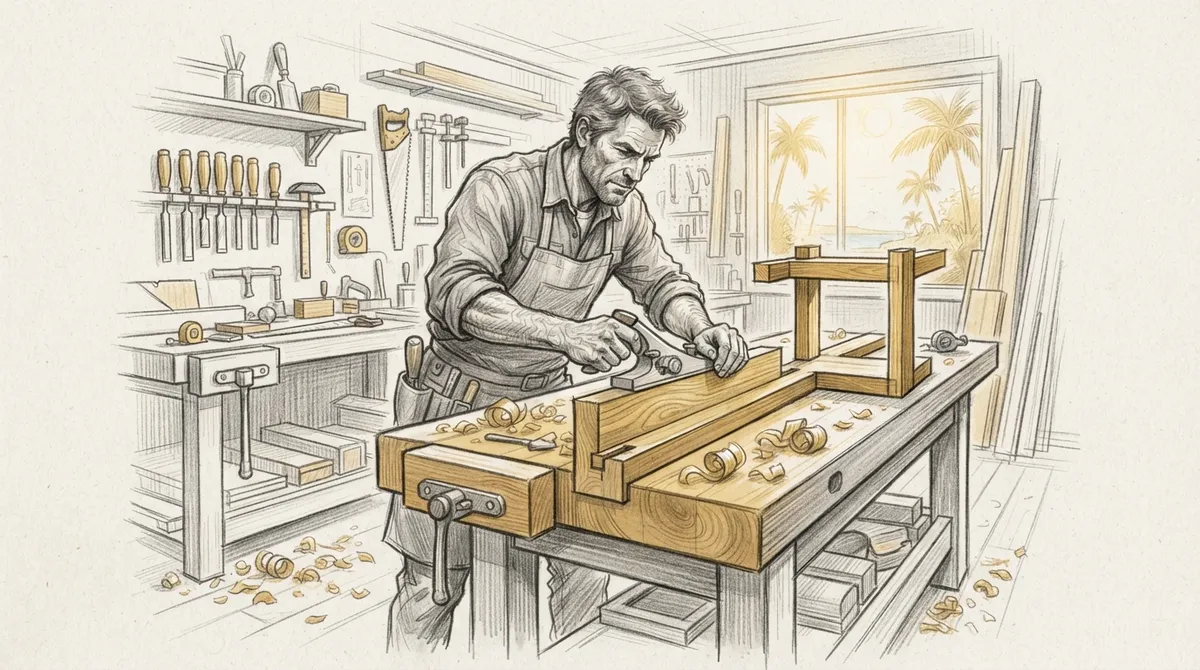
Why Choosing a Local Carpenter Matters
Hiring someone based in your community offers advantages you simply cannot get from a distant contractor. Local carpenters know the area’s homes, common architectural styles, and even local permit requirements. They also build reputations within the community, which means their work is easier to verify through neighbors, past clients, and local reviews.
- Faster response times for site visits and follow-up repairs
- Better understanding of regional wood movement due to humidity
- Established relationships with local suppliers for quality materials
- Easier to check references and see completed projects in person
- Support for the local economy and small business community
A carpenter who lives and works in your region also tends to care more about long-term reputation. Word travels fast in tight-knit communities, so quality work is often their best form of advertising. This accountability gives homeowners and developers extra peace of mind.
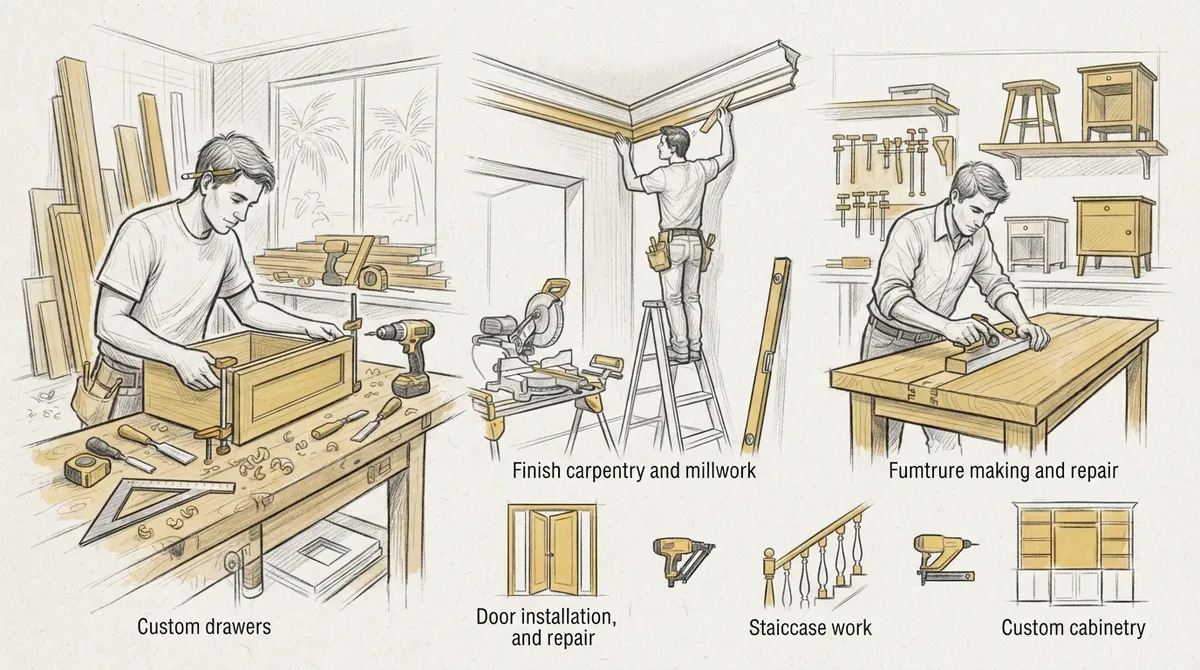
Key Services a Skilled Local Carpenter Should Offer
Not all carpenters offer the same range of services. Custom carpentry covers a wide variety of specialties, and the best professionals are versatile enough to handle multiple project types without sacrificing quality.
Ceiling and Architectural Details
Custom ceiling designs can completely change the feel of a room. Coffered ceilings, tray designs, and exposed beams add depth and character that flat, plain ceilings cannot match. A skilled carpenter measures carefully and plans every angle before cutting a single board.
Wall Enhancements and Millwork
From wainscoting to shiplap, wall enhancements add texture and visual interest. These details work well in dining rooms, hallways, and home offices. Interior designers often request these upgrades to give a space a polished, custom look that store-bought decor cannot replicate.
Built-In Cabinetry and Storage
Built-ins are one of the most requested upgrades among homeowners. Custom cabinets maximize storage while fitting perfectly into odd corners or awkward spaces. Unlike standard furniture, built-ins are designed to match your home’s exact dimensions and style.
Trim, Molding, and Doors
Small details like molding details and finished doors tie a whole room together. Crown molding, baseboards, and window casings might seem minor, but they create a sense of finished quality that buyers and homeowners immediately notice. You can learn more about crown molding and its history to understand why this detail remains so popular in high-end homes.
How to Evaluate a Local Carpenter’s Skill Level
Not every carpenter has the same training or attention to detail. Before hiring someone for a big project, take time to review their background carefully.
- Ask to see photos of completed projects similar to yours
- Request references from recent clients in your area
- Check for proper licensing and insurance coverage
- Review online ratings and read customer feedback
- Ask about their experience with your specific project type
- Discuss timelines and how they handle unexpected delays
- Confirm they provide a written agreement before starting work
A true craftsman will be happy to answer these questions in detail. If someone hesitates to share references or past work, treat that as a warning sign. Quality carpenters take pride in showing off their portfolio and explaining their process step by step.
Comparing Project Types and What to Expect
Different carpentry projects require different skills, timelines, and levels of detail. The table below breaks down common project types and what homeowners typically should expect during the process.
| Project Type | Typical Timeline | Key Considerations |
|---|---|---|
| Custom Ceiling Design | 1-2 weeks | Room height, beam placement, lighting integration |
| Built-In Cabinetry | 2-4 weeks | Measurements, wood species, hardware finishes |
| Wall Paneling/Wainscoting | 3-7 days | Wall condition, panel style, paint or stain finish |
| Crown Molding Installation | 1-3 days | Ceiling height, corner angles, material type |
| Custom Doors and Trim | 1-2 weeks | Door style, frame condition, hardware selection |
These timelines can vary depending on the size of your home and the complexity of the design. Always ask your carpenter for a detailed project schedule before work begins so you know what to expect at each stage.
What Homeowners Should Look For
Homeowners often want carpentry that reflects their personal style while adding real value to their property. Before starting a project, think about your long-term goals for the space.
- Does the design match the rest of your home’s architecture?
- Will the materials hold up well in Florida’s humid climate?
- Can the carpenter show you similar completed projects?
- Is there a clear plan for cleanup and dust control during work?
- Does the quote include all materials and labor costs clearly?
Homeowners interested in upgrading a specific room should read what custom ceilings are and why they matter before committing to a design. This helps set realistic expectations for materials and installation methods.
What Interior Designers Should Prioritize
Interior designers need a carpentry partner who can bring detailed drawings and concepts to life without cutting corners. Communication and precision matter more than almost anything else in this relationship.
- Confirm the carpenter can read and execute detailed design plans
- Ask about their experience working alongside design teams
- Discuss material sourcing for custom finishes and stains
- Set clear checkpoints for design approval during construction
- Review past collaborations with other designers if possible
Designers working on multiple client projects benefit from a carpenter who understands deadlines and can adapt to changing design requests. This flexibility is often what separates an average contractor from a true craftsman.
What Real Estate Developers Need to Know
Developers focus on adding value quickly while keeping quality high enough to attract serious buyers. Custom carpentry can be a strong selling point in competitive markets.
- Bulk project pricing for multiple units or homes
- Consistent quality across several properties
- Ability to meet tight construction schedules
- Durable finishes that hold up during showings and open houses
- Trim and cabinetry that photograph well for listings
Developers looking to differentiate their properties often invest in custom carpentry projects that stand out in listing photos. Small upgrades like learn more about carpentry techniques can help developers understand what separates budget builds from luxury finishes buyers are willing to pay more for.
Questions to Ask Before Hiring
A short conversation can reveal a lot about whether a carpenter is the right fit for your project. Prepare these questions ahead of your first meeting.
- How many years have you worked in custom carpentry?
- Can you provide a written estimate and project timeline?
- What wood species and materials do you recommend for this project?
- How do you handle changes or issues that come up mid-project?
- Do you carry liability insurance and proper licensing?
Getting clear answers to these questions helps avoid confusion later. It also shows how the carpenter communicates, which matters for the entire length of your project.
Signs of Quality Craftsmanship
Once work begins, there are clear signs that indicate a carpenter is skilled and detail-oriented. Watch for these markers throughout the project.
- Clean, tight seams with no visible gaps in molding or panels
- Consistent finish quality across all surfaces
- Proper use of levels and measuring tools before cutting
- Careful attention to matching wood grain and color
- Respect for your home, including drop cloths and cleanup
These details might seem small, but they add up to a finished product that looks professional for years to come. A carpenter who rushes through these steps often leaves behind work that needs repairs sooner than expected.
Why Bucheli Trim Stands Out in Tampa Bay
Bucheli Trim has built a strong reputation across Tampa Bay for combining precision with creative design. The team focuses on ceiling designs, wall enhancements, and built-in cabinetry that fit each client’s unique vision. Homeowners, designers, and developers alike trust their attention to detail and commitment to lasting quality.
You can browse examples of past work and read about the company’s approach on the About page, or check out Testimonials from past clients. Many customers also share their experiences on Facebook, and you can also visit us on Google — Bucheli Trim to see reviews from Tampa Bay homeowners and businesses.
Final Thoughts on Choosing a Local Carpenter
Finding the right local carpenter takes some research, but the payoff is worth it. A skilled craftsman brings your vision to life while ensuring the work lasts for years without constant repairs. Whether you need a single custom cabinet or a full home renovation, choosing someone with local experience and a proven track record makes the entire process smoother.
If you are ready to start planning your next project, reach out today to get in touch with our team and discuss your ideas. From ceiling designs to built-in cabinetry, the right local carpenter can turn your vision into a lasting part of your home.
FAQs
Q: How do I know if a local carpenter is qualified for custom work?
A: Check their portfolio for similar completed projects and ask for references from recent clients. Confirm they carry proper licensing and insurance before signing any agreement. A qualified carpenter will happily answer detailed questions about their experience and process.
Q: What is the difference between a general contractor and a local carpenter?
A: A general contractor manages entire projects and hires various trades, while a local carpenter specializes in woodworking tasks like cabinetry, trim, and ceiling designs. For detailed custom work, hiring a specialized carpenter often results in better craftsmanship and attention to detail.
Q: How long does a typical custom carpentry project take?
A: Timelines vary based on project size and complexity, ranging from a few days for trim installation to several weeks for built-in cabinetry. Your carpenter should provide a clear schedule before work begins so you know what to expect.
Q: Why is hiring a local carpenter better than a national company?
A: Local carpenters understand regional climate challenges, building styles, and permit requirements better than distant companies. They also build reputations within the community, making it easier to verify quality through reviews and past client feedback.
Q: What should I look for during a carpentry project to ensure quality?
A: Watch for clean, tight seams in molding, consistent finishes, and careful attention to matching wood grain. A skilled carpenter also respects your home by keeping the workspace clean and organized throughout the project.