Key Takeaways
-
Custom carpentry wall accents like wainscoting, shiplap, and trim measurably increase home resale value by signaling craftsmanship and attention to detail that buyers notice immediately.
-
Choose wainscoting for dining rooms and bedrooms, shiplap paneling for farmhouse/coastal styles, and built-in shelving for living rooms and offices to maximize visual impact in each space.
-
Work with a skilled carpenter to select appropriate materials—MDF for painted finishes, solid hardwood for stained accents, and pine or poplar for rustic styles—based on room humidity and design goals.
-
Coordinate wall accents with your ceiling design and flooring choices to create a cohesive, unified design that makes spaces feel intentional and high-end rather than disconnected.
-
Expect installation timelines of 1-2 days for basic trim and molding in one room, but plan several days for full paneling or built-in features that require precise measurement and custom cutting.
-
Poorly executed joints, uneven panels, and visible gaps undermine the entire design, making quality craftsmanship and precision tools essential for wall accents to deliver their promised impact.
Your walls are more than just boundaries. They are blank canvases waiting to be transformed. Custom carpentry wall accents can turn a plain, boring room into something truly stunning. Whether you are a homeowner, interior designer, or real estate developer, the right wall treatments can make a dramatic difference.
Wall accents created through custom carpentry add depth, texture, and character to any space. From elegant wainscoting to intricate trim work, these features elevate a room instantly. They also add measurable value to your property. Understanding your options helps you make smarter design decisions.
In this article, we explore the most popular types of carpentry wall accents. We will break down how each one works, where it looks best, and why it matters. By the end, you will know exactly which wall accents suit your space and goals.
What Are Custom Carpentry Wall Accents
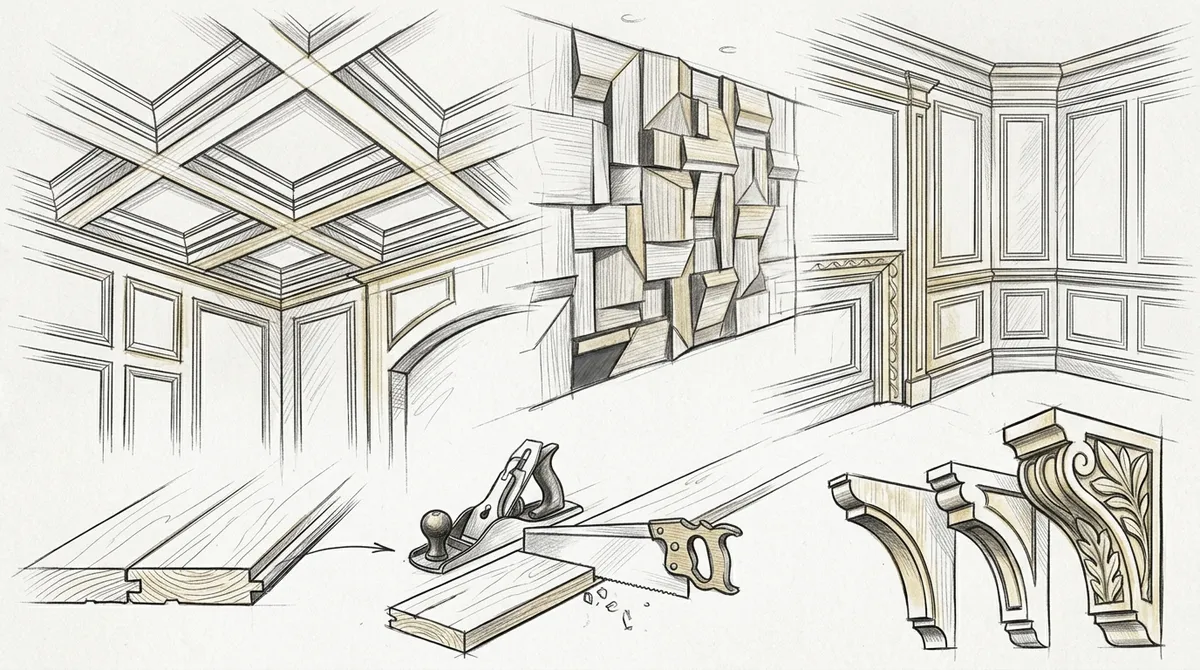
Custom carpentry wall accents are decorative woodwork elements installed directly onto or into your walls. They go far beyond a simple coat of paint. These features use wood, trim, molding, and paneling to create visual interest. They are crafted and fitted to match the exact dimensions and style of your space.
To learn more about carpentry as a craft and trade, it helps to understand its long history of combining function with beauty. Custom wall accents are one of carpentry’s most expressive applications. They allow a skilled craftsman to bring a designer’s vision to life with precision and detail.
These accents work in virtually any room. They are popular in living rooms, dining areas, home offices, and even bedrooms. The style can range from traditional and formal to modern and minimalist. The material, finish, and design are all customizable to your taste.
Top Types of Carpentry Wall Accents for Your Home
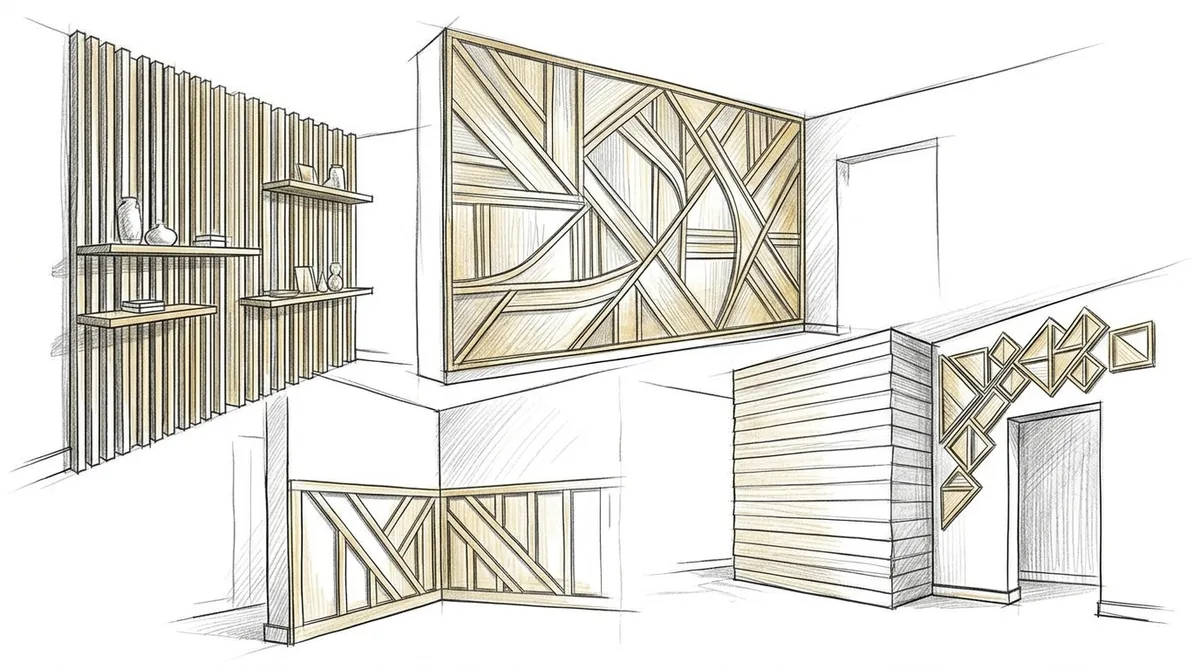
There are many types of custom carpentry wall accents to choose from. Each has a unique look and purpose. Here is a breakdown of the most popular options available through skilled custom carpentry services.
1. Wainscoting
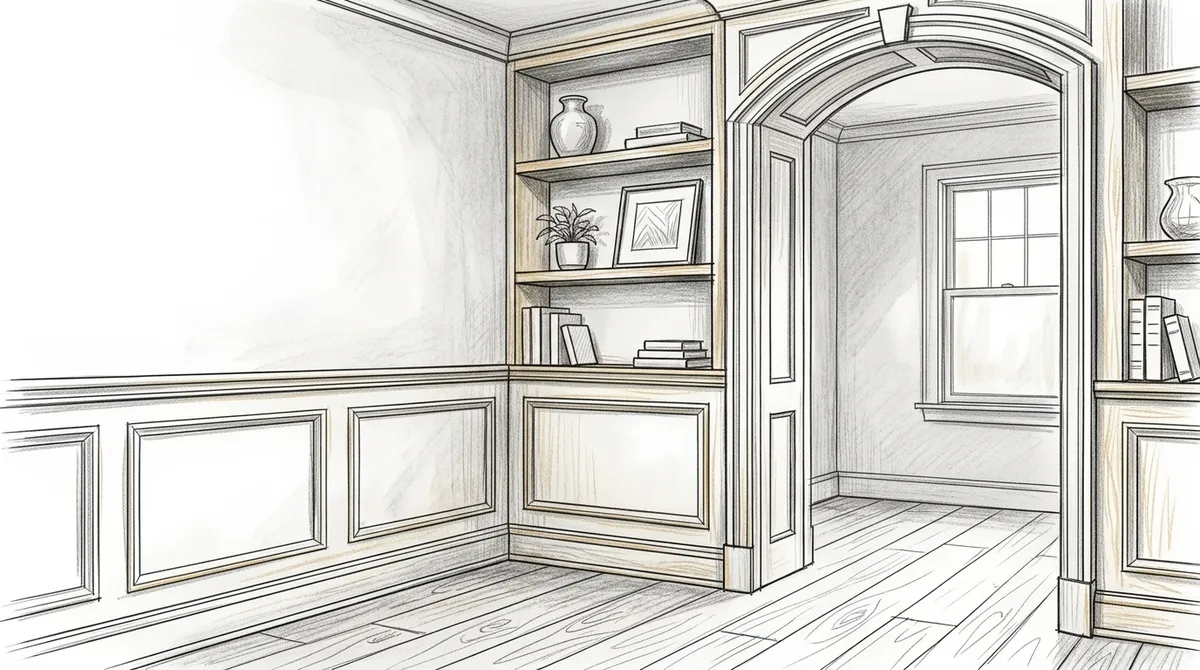
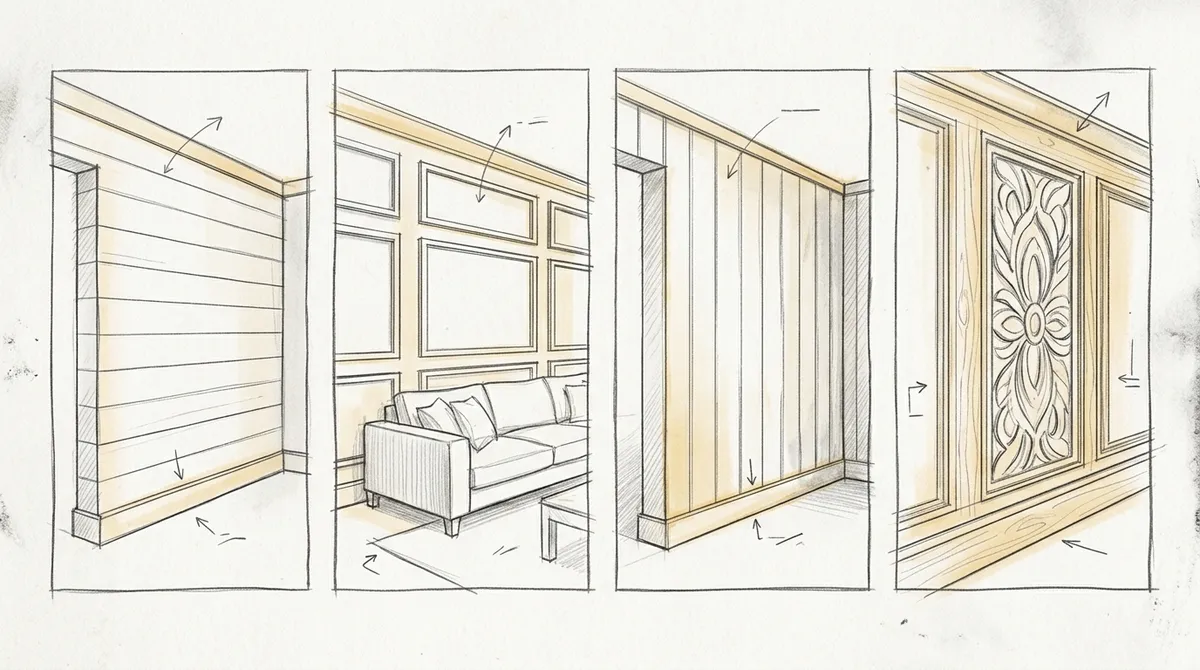
Wainscoting is one of the most classic wall accent choices. It involves installing wood paneling on the lower portion of a wall. Typically, it covers the bottom third to half of the wall surface. It adds a formal, polished look to any room.
There are several wainscoting styles to choose from:
- Raised panel wainscoting – Features panels that project slightly outward for a rich, traditional look
- Flat panel wainscoting – Clean, modern aesthetic with recessed panels
- Beadboard wainscoting – Uses narrow vertical planks with a bead groove between them
- Board and batten wainscoting – Alternating wide boards and narrow strips for a farmhouse or craftsman feel
Wainscoting pairs beautifully with crown molding and chair rails. Together, these elements create a fully finished, layered wall design. You can explore more about wall enhancements that include wainscoting and other custom treatments for your home.
2. Wall Trim and Molding
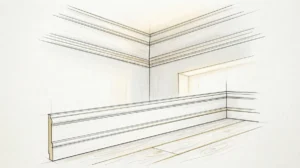
Trim and molding are among the most versatile wall accents in custom carpentry. They can frame doorways, line ceilings, or create decorative patterns directly on a flat wall surface. Crown molding is one of the most recognizable types, installed where the wall meets the ceiling.
Other popular trim types include:
- Chair rail molding – Runs horizontally across the wall, typically at chair height
- Picture rail molding – Installed near the ceiling for hanging artwork
- Casing molding – Frames windows and doors for a finished appearance
- Baseboard molding – Lines the base of the wall where it meets the floor
For a deeper dive into all the trim options available, visit the molding details page to see the full range of carpentry trim solutions. You can also read about how trim and molding transform your space with style to get inspired.
3. Wall Paneling and Shiplap
Wall paneling covers a larger surface area than trim alone. It adds warmth, texture, and strong visual impact. Shiplap, a style of horizontal wood plank paneling, has become especially popular in recent years. It works well in modern farmhouse, coastal, and transitional designs.
Full wall paneling can be installed on a single accent wall or throughout an entire room. It creates a cozy, layered feel that paint alone cannot achieve. Custom cuts and finishes ensure every panel fits your space perfectly.
4. Built-In Wall Features
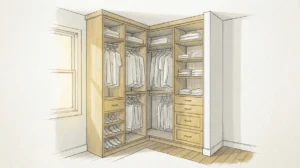
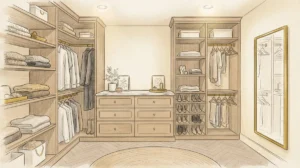
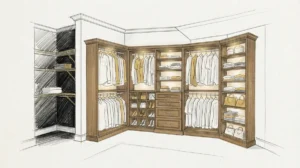
Built-in wall features go beyond decorative surface treatments. These include shelving units, entertainment centers, and display niches that are integrated directly into the wall. They serve a functional purpose while also acting as stunning focal points.
Built-ins are perfect for living rooms, home libraries, and home offices. They maximize space and eliminate the need for freestanding furniture. Explore the possibilities through 7 built-in cabinetry solutions that transform your home for real-world examples and inspiration.
Comparing Popular Wall Accent Styles
Choosing the right wall accent style depends on your design goals, room type, and overall aesthetic. The table below provides a quick comparison to help you decide.
| Wall Accent Type | Best Room Use | Design Style | Visual Impact |
|---|---|---|---|
| Wainscoting | Dining room, hallway, bedroom | Traditional, transitional | High |
| Crown Molding | Any room | Classic to modern | Medium-High |
| Shiplap Paneling | Living room, bedroom, bathroom | Farmhouse, coastal, modern | High |
| Built-In Shelving | Living room, office, library | Any style | Very High |
| Board and Batten | Entryway, mudroom, bedroom | Craftsman, farmhouse | Medium-High |
Benefits of Adding Wall Accents to Your Home
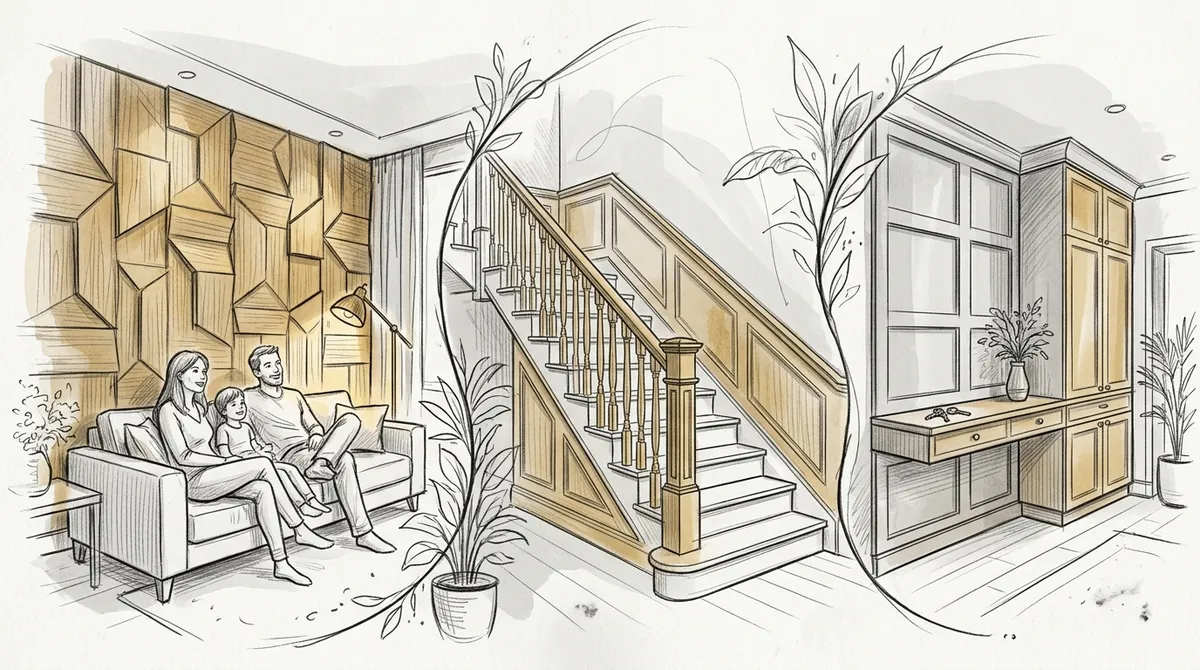
Custom carpentry wall accents do more than look beautiful. They offer practical advantages that homeowners, designers, and developers all appreciate. Here are the key benefits:
- Increased home value – High-quality woodwork adds measurable resale value
- Unique character – Custom details make your space one of a kind
- Architectural depth – Adds dimension that flat walls lack
- Improved perceived quality – Rooms with custom trim feel more refined and expensive
- Versatility – Works in any room and suits virtually any design style
- Durability – Quality wood accents last for decades with proper care
For real estate developers, wall accents can be the finishing detail that sets a property apart. Buyers notice custom woodwork immediately. It signals craftsmanship and attention to detail throughout the entire home.
How to Plan Your Wall Accent Project
A successful wall accent project requires planning and the right professional help. Follow these steps to get the best results:
- Define your style – Decide whether you want a traditional, modern, or transitional look
- Choose your rooms – Identify which spaces will benefit most from wall accents
- Select your accent type – Use the comparison table above as a starting guide
- Consult a custom carpenter – Work with a professional who can advise on materials and scale
- Review design options – Look at examples and inspiration before committing to a plan
- Coordinate with other finishes – Ensure your wall accents complement your flooring, ceiling, and cabinetry
- Prepare the space – Clear the room and address any existing wall damage before installation
Wall accents work best when they are part of a cohesive overall design. Consider how your new wall treatments will interact with your ceiling designs and flooring choices. A unified approach always produces the most impressive results.
Wall Accents and Interior Design: A Powerful Partnership
Interior designers understand the power of wall accents better than almost anyone. These features give designers a way to define spaces, establish mood, and create focal points. Custom carpentry is one of the most reliable tools in a designer’s toolkit.
When planning a full room redesign, wall accents often anchor the entire concept. A bold shiplap feature wall can set the tone for every other design decision. A refined wainscoting treatment can elevate a basic room into something truly elegant.
Coordinating wall accents with custom cabinets and built-in storage creates a seamless, finished look. Every element feels intentional and connected. This is the hallmark of high-end interior design.
Choosing the Right Material for Your Wall Accents
Not all wood is the same. The material you choose affects the look, feel, and longevity of your wall accents. Here is a quick guide to common material choices:
- MDF (Medium Density Fiberboard) – Affordable, smooth, and easy to paint. Great for painted paneling and trim.
- Solid hardwood – Durable and beautiful with natural grain patterns. Ideal for stained or natural finishes.
- Poplar – A popular choice for painted woodwork. Smooth and cost-effective.
- Pine – Light and easy to work with. Works well for rustic or painted finishes.
- Oak – Strong, durable, and has a distinctive grain. Perfect for stained accents in traditional spaces.
Your carpenter can help you choose the right material based on your design goals, room conditions, and long-term expectations. Always factor in humidity levels, especially in bathrooms or spaces near exterior walls.
What to Expect During Installation
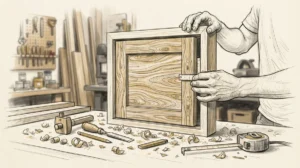
Professional wall accent installation is a precise process. A skilled carpenter will measure, cut, and fit each piece carefully. Here is what the typical installation process looks like:
- Initial consultation and measurement of the space
- Material selection and custom cutting
- Wall preparation including sanding and leveling if needed
- Precise installation of panels, trim, or built-in features
- Finishing, caulking, and touch-up painting
- Final inspection to ensure everything is level and secure
The timeline varies depending on the scope of the project. A single room with basic trim and molding might take a day or two. Larger projects with full paneling or built-ins may take longer. Always discuss timelines with your carpenter upfront.
If you are wondering how to find the right professional, read about where to find a skilled carpenter near me for helpful guidance. You can also learn about 7 signs you need professional carpentry near you today to determine if now is the right time to invest.
Why Quality Craftsmanship Matters for Wall Accents
Wall accents are only as impressive as the craftsmanship behind them. Poorly cut joints, uneven panels, or visible gaps will undermine the entire design. Quality work requires experience, precision tools, and a trained eye for detail.
Bucheli Trim brings all of these qualities to every project in the Tampa Bay area. With a focus on high-end custom carpentry, the team delivers wall enhancements that stand out for the right reasons. Every detail is carefully planned and expertly executed. Visit us on Google to see reviews from satisfied homeowners and designers throughout the area.
Follow Bucheli Trim on Facebook to see recent projects and get ideas for your own home. The gallery of completed wall accent work provides real-world inspiration across many different design styles and room types.
You can also explore the full range of services through the custom projects page to understand the scope of what skilled carpentry can achieve in your home.
Conclusion: Start Your Wall Accent Transformation Today
Custom carpentry wall accents are one of the smartest investments you can make in your home. They add beauty, value, and lasting character to any space. Whether you choose wainscoting, shiplap, crown molding, or built-in shelving, the impact is immediate and impressive.
The key is working with a skilled carpenter who understands design, precision, and quality materials. The right professional will help you choose the best wall accents for your space and execute the project flawlessly.
Ready to bring your walls to life? Reach out to our team today to discuss your wall accent ideas and get started on a design that truly reflects your vision.
FAQs
Q: What are wall accents in custom carpentry?
A: Wall accents in custom carpentry are decorative wood elements installed on your walls. They include wainscoting, trim, molding, shiplap paneling, and built-in shelving. These features add depth, texture, and visual interest that paint alone cannot achieve.
Q: Which rooms benefit most from custom carpentry wall accents?
A: Almost every room can benefit from wall accents, but living rooms, dining rooms, hallways, and home offices see the most dramatic results. Wainscoting works especially well in dining areas and bedrooms, while built-in wall shelving is ideal for living rooms and home offices.
Q: Do wall accents increase home value?
A: Yes, high-quality custom carpentry wall accents can increase your home’s resale value. They signal craftsmanship and attention to detail, which buyers notice immediately. Professionally installed woodwork is considered a premium finish that sets a property apart.
Q: What materials are used for carpentry wall accents?
A: Common materials include MDF, solid hardwood, poplar, pine, and oak. The best choice depends on your desired finish, room conditions, and budget. A professional carpenter can recommend the right material based on your specific project goals.
Q: How long does it take to install wall accents?
A: Installation time depends on the size and complexity of the project. A basic trim or molding job in one room may take one to two days. Larger projects involving full wall paneling or built-in features may take several days to complete properly.