Key Takeaways
-
Check if your opening is square and level before installation; older homes with settled walls need custom doors to prevent sticking, gaps, and premature hinge wear.
-
Prehung doors work for new construction with standard square openings, but custom-built doors are essential for older homes, unique sizes, or luxury finishes that buyers notice.
-
Professional installation involves seven key steps: measuring, selecting door type, repairing framing, setting the jamb level, hanging the door, installing hardware, and adding trim—skipping steps causes long-term problems.
-
Avoid common mistakes like ignoring out-of-square openings, using cheap shims, skipping level checks, poor hardware installation, and mismatched trim that creates design disconnects.
-
Interior designers and developers benefit from working with one carpentry team for doors, trim, and casing together, reducing coordination issues and ensuring cohesive design throughout the home.
-
Maintain doors after installation by tightening hinges every few months, protecting from moisture, refinishing every few years, and addressing sticking issues early before they worsen.
Choosing new doors for your home feels simple until you start comparing your options. Some homeowners buy a prehung door kit from a big box store. Others hire a custom carpenter to build and install doors made just for their space. Both paths lead to a working door, but the results can look and feel very different. If you care about fit, finish, and long-term value, knowing the difference matters.
This guide breaks down what happens during interior door installation, whether you choose a standard kit or a fully custom build. We will look at materials, the install process, common mistakes, and how each option holds up over time. Homeowners, interior designers, and real estate developers in the Tampa Bay area will find practical advice here to make a smart choice for their next project.
What Does Interior Door Installation Actually Involve
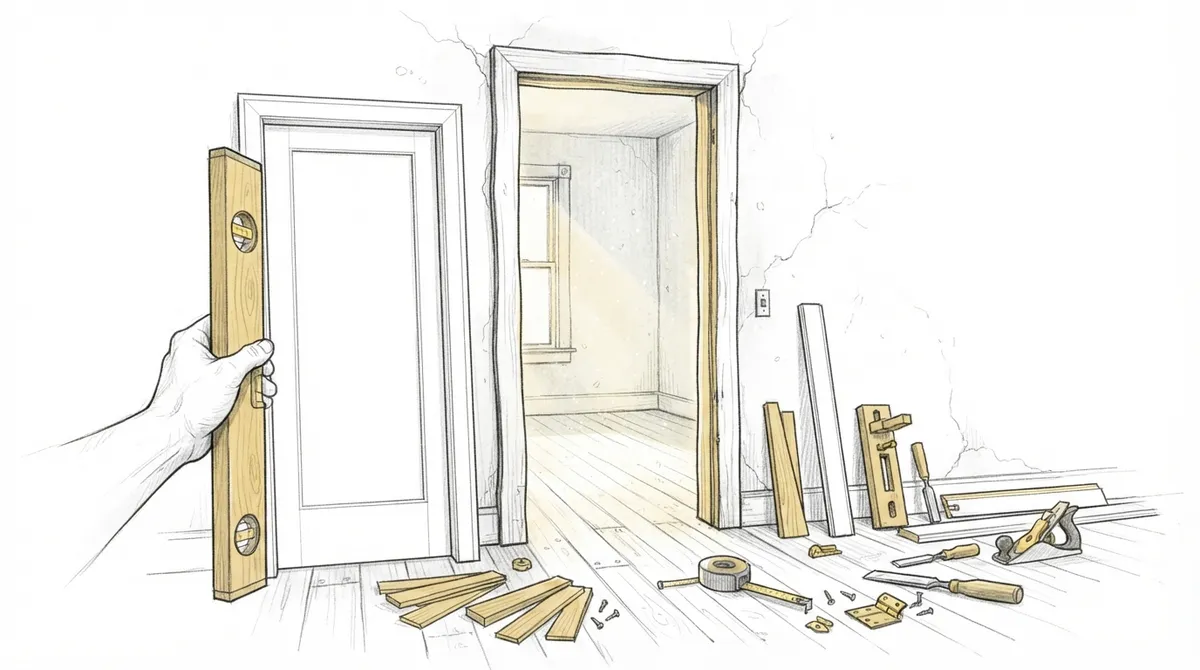
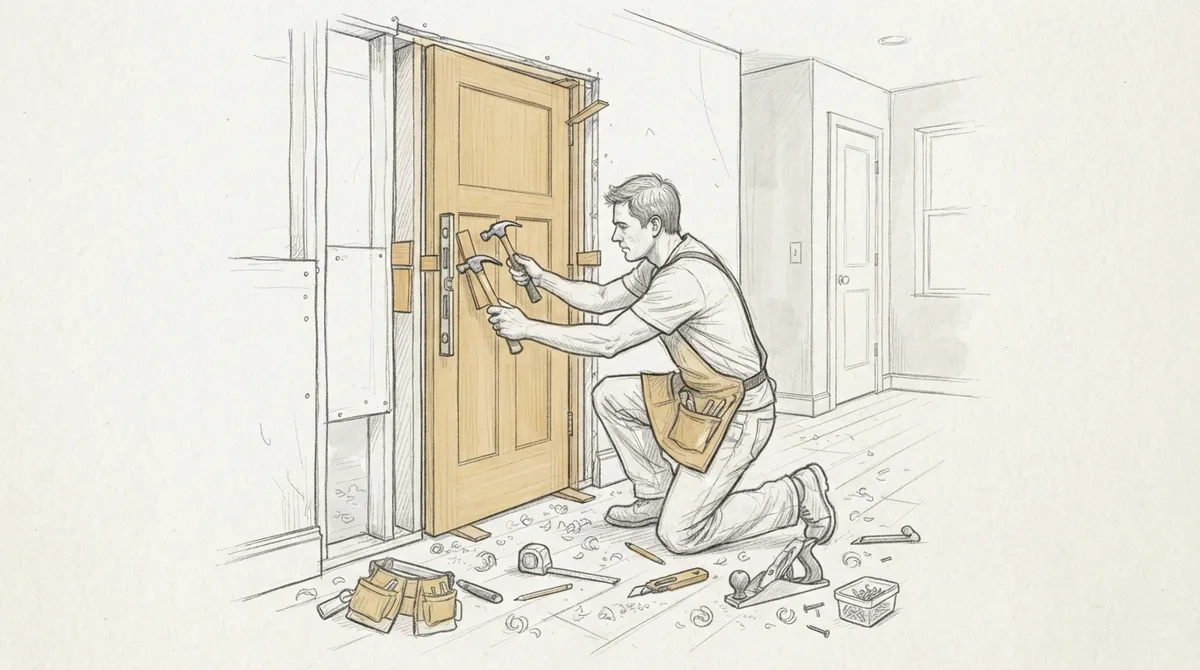
Interior door installation is more than hanging a slab on hinges. A carpenter measures the rough opening, checks the frame for square, and levels everything before the door ever swings. Skipping these steps causes doors that stick, gaps that let in noise, or hinges that wear out fast.
Every interior door has three main parts: the slab, the jamb, and the trim. The slab is the door itself. The jamb is the frame it hangs inside. The trim, sometimes called casing, covers the gap between the jamb and the wall. Getting all three pieces to work together takes skill and patience.
Standard Prehung Doors
A prehung door comes with the slab already attached to the jamb. This makes installation faster since the carpenter does not need to hang the door from scratch. Prehung doors work well for standard openings in newer homes where walls are already square.
Custom-Built Doors
Custom doors are built or heavily modified to fit unique openings, taller ceilings, or specific design styles. This is common in older Tampa Bay homes where walls have settled over time, or in luxury builds where standard sizes just do not fit the vision. A skilled carpenter can also match custom molding details to tie the new door into the rest of the room.
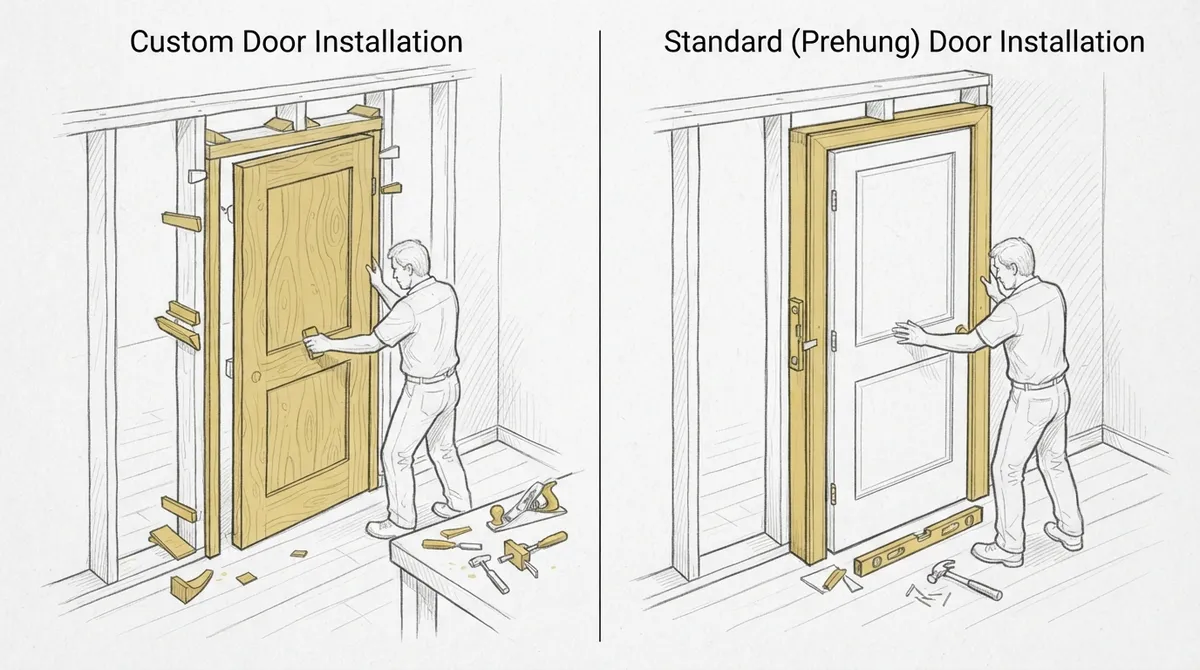
Custom vs. Standard Installation: Key Differences
Homeowners often ask which option is better. The honest answer depends on your home, your budget, and your goals. Here is a side-by-side look at how the two approaches compare.
| Factor | Standard Prehung Door | Custom Door Installation |
|---|---|---|
| Fit for older homes | May need shimming or trimming | Built to match uneven openings |
| Design flexibility | Limited to stock sizes and styles | Full control over size, wood, and style |
| Installation time | Faster for standard openings | Takes longer due to custom fitting |
| Long-term durability | Good if opening is square | Excellent, built for the exact space |
| Best for | New construction, simple upgrades | Older homes, luxury finishes, unique layouts |
Real estate developers working on spec homes often use standard prehung doors to keep timelines moving. But for homes meant to stand out, especially in competitive Tampa Bay markets, custom work adds a level of polish buyers notice right away.
Step-by-Step: How Professional Interior Door Installation Works
Whether the door is standard or custom, a professional installation follows a clear process. Here is what homeowners can expect when hiring a skilled carpenter.
- Measure the opening. The carpenter checks width, height, and depth of the rough opening. They also check if the floor and walls are level and plumb.
- Select the right door type. Based on the measurements, the carpenter decides if a standard prehung door will work or if a custom build is needed.
- Prepare the frame. Any damaged framing gets repaired. Shims are used to correct minor gaps in the wall structure.
- Set the jamb. The door frame is placed into the opening and checked for level, plumb, and square using a level and shims.
- Hang the door. The slab is attached to the jamb using hinges. The carpenter checks that the door swings smoothly without rubbing.
- Install hardware. Locksets, handles, and hinges are added and tested for smooth operation.
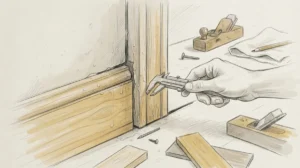
- Add trim and casing. Molding is cut and installed around the frame to cover gaps and finish the look.
- Final inspection. The door is opened and closed several times to confirm it operates correctly before the job is called complete.
This process is similar to what you would expect from any skilled trade. If you want a deeper look at how trim ties into the finished product, our guide on door trim installation covers this step in more detail.
Common Mistakes That Ruin Door Installations
Poor installation causes more problems than people expect. Doors that do not close right, gaps that let sound through rooms, and hardware that fails early all trace back to mistakes during setup. Here are the most common issues homeowners run into.
- Ignoring an out-of-square opening. Older homes settle over time, and skipping this check leads to doors that stick or swing open on their own.
- Using the wrong shims. Cheap or uneven shims cause the frame to shift after installation, leading to future sticking or gaps.
- Skipping the level check. A jamb that is not level will cause the door to bind at the top or bottom.
- Poor hardware installation. Loose hinges or misaligned strike plates cause doors to sag or fail to latch properly.
- Mismatched trim styles. Installing generic trim on a custom door creates a disconnect between the door and the rest of the room’s design.
Avoiding these mistakes is one reason many homeowners choose to work with an experienced team instead of tackling the project alone. For a broader look at carpentry pitfalls, see our article on mistakes to avoid when hiring carpenters near me.
Why Interior Designers Choose Custom Door Work
Interior designers often need doors that match a specific vision. A stock door from a hardware store rarely fits a high-end design plan. Custom carpentry allows designers to specify wood species, panel styles, and hardware finishes that fit the overall aesthetic of a room.
Custom doors also pair well with other carpentry upgrades. Many designers request matching trim, wall enhancements, and even coordinated ceiling designs to create a cohesive look throughout a home. This kind of coordinated planning is where working with a dedicated carpentry team, rather than piecing together separate contractors, tends to pay off.
Material and Style Options
Custom doors open up choices that go beyond what big box stores carry. Options include solid wood panel doors, shaker-style slabs, glass-insert designs, and even reclaimed wood for a rustic look. Learn more about carpentry techniques used to shape and finish these materials for long-lasting results.
Why Real Estate Developers Should Care About Door Quality
For developers, every finish detail affects resale value. Buyers notice doors that stick, hardware that feels cheap, or trim that does not line up. These small details add up to a bigger impression about the overall build quality of a home.
Investing in solid interior door installation, even on a budget-conscious project, helps homes sell faster and at better prices. Developers building luxury properties in the Tampa Bay area often pair custom doors with upgraded cabinets and flooring to create a consistent, high-end feel throughout the property.
Signs You Need Professional Installation, Not a DIY Fix
Some homeowners attempt door installation on their own to save time. This can work for simple, square openings. But certain signs point to the need for professional help.
- The door frame is visibly out of square or the walls have shifted over time.
- You are replacing multiple doors and want a consistent, matched look throughout the home.
- The opening is a nonstandard size that requires custom framing or a built door.
- You want matching trim, casing, or crown molding details tied into the new door installation.
- Previous DIY attempts have left gaps, sticking doors, or hardware issues.
If any of these apply to your project, it is worth reaching out to a professional team before starting demolition. Our article on signs you need professional carpentry near you covers additional red flags to watch for.
How Bucheli Trim Approaches Interior Door Projects
At Bucheli Trim, interior door installation is treated as part of a larger design process, not a standalone task. Every opening is measured carefully, and every door is set with attention to how it will look alongside existing trim, walls, and finishes. This approach fits naturally with the company’s broader focus on custom projects throughout the Tampa Bay region.
Homeowners and designers working with a dedicated carpentry team benefit from a single point of contact for doors, trim, and related finish work. This reduces the back-and-forth that often comes with juggling multiple contractors on one project. You can read more about the company’s background on the About page, or browse the full range of services on the Home page.
Maintaining Your Interior Doors After Installation
Good installation is only half the story. Proper care keeps doors working smoothly for years. Follow these simple steps to protect your investment.
- Check hinges every few months and tighten any loose screws.
- Keep doors away from excess moisture, especially in bathrooms and laundry rooms.
- Repaint or refinish door surfaces every few years to protect the wood.
- Address sticking or misaligned doors early before the issue gets worse.
- Inspect weatherstripping and seals if the door separates living spaces with different temperatures.
For homes with HVAC systems tied closely to interior door seals and airflow, working with a trusted local partner like Marks Air can help make sure your climate control and door fitting work together efficiently.
Bringing It All Together
Interior door installation might seem like a small piece of a larger renovation, but it plays a big role in how a home feels day to day. Standard prehung doors work fine for simple, square openings. Custom door installation shines in older homes, luxury builds, and any project where design consistency matters.
Homeowners want doors that open smoothly and match their style. Interior designers want flexibility to bring their vision to life. Real estate developers want finishes that help homes sell faster and for more. Custom carpentry checks all three boxes when done right.
If you are planning a door upgrade or a full home renovation in the Tampa Bay area, it helps to work with a team that understands both the technical and design sides of the job. See what past clients have said by checking testimonials, or follow project updates on Facebook. You can also read reviews and visit us on Google — Bucheli Trim to see feedback from local homeowners.
Ready to upgrade your doors with a team that pays attention to every detail? Get in touch with our team today to start planning your interior door installation project.
FAQs
Q: What is the difference between a prehung door and a custom door installation?
A: A prehung door comes with the slab already attached to a jamb, making it faster to install in standard, square openings. Custom door installation involves building or modifying doors to fit unique openings, older home framing, or specific design styles.
Q: How long does interior door installation usually take?
A: A standard prehung door can often be installed in a few hours if the opening is square and ready. Custom installations take longer, sometimes a full day per door, since the frame and slab must be fitted precisely to the space.
Q: Can custom carpenters match new doors to existing trim and molding?
A: Yes, a skilled carpenter can match new door casing, trim, and molding to the existing style in your home. This creates a seamless look instead of a mismatched patchwork between old and new finishes.
Q: Why do older homes often need custom door installation?
A: Older homes tend to settle over time, which can make wall openings slightly out of square. Custom door installation accounts for these shifts, ensuring the door fits properly instead of sticking or leaving gaps.
Q: Does interior door quality really affect home resale value?
A: Yes, buyers often notice small details like door fit, hardware quality, and trim alignment during showings. Well-installed, quality doors contribute to a stronger overall impression of a home’s craftsmanship and care.