Key Takeaways
-
Choose a door carpenter who can build custom doors, not just hang prehung slabs, since odd-sized or historic openings often need custom work to fit properly.
-
In Tampa Bay, salt air and summer humidity can warp poorly sealed doors, so exterior doors need sealing on all six sides, proper flashing, and weatherstripping.
-
Check door quality by looking for even gaps (about 1/8 inch), a smooth swing, a door that stays put on its own, a clean latch click, and a plumb frame.
-
Trim and casing strongly affect how a door looks, so confirm the carpenter will match your existing baseboards and casing and produce tight, gap-free miter corners.
-
Before hiring, verify licensing and insurance, request photos of finished door work, and get a written scope listing materials, work included, and timeline.
-
Ask each carpenter how they handle out-of-square openings, what material they recommend for your climate, and how they protect floors and walls during work.
Searching for a door carpenter near me sounds simple. But the right choice can shape how your home looks, feels, and works for decades. A door is more than a way in and out. It sets the tone for a room, controls privacy, and affects how well your home handles heat and humidity.
In Tampa Bay, doors face real challenges. Salt air, summer moisture, and strong sun can warp poor work fast. That is why skilled carpentry matters. A good door carpenter measures, fits, and finishes each piece with care.
This guide is for homeowners, interior designers, and real estate developers. It explains six key things to know before you hire. You will learn what a door carpenter does, which door types fit your project, how to judge quality, and what to ask before work begins. Use it as a simple checklist to find the right pro with confidence.
1. What a Door Carpenter Actually Does
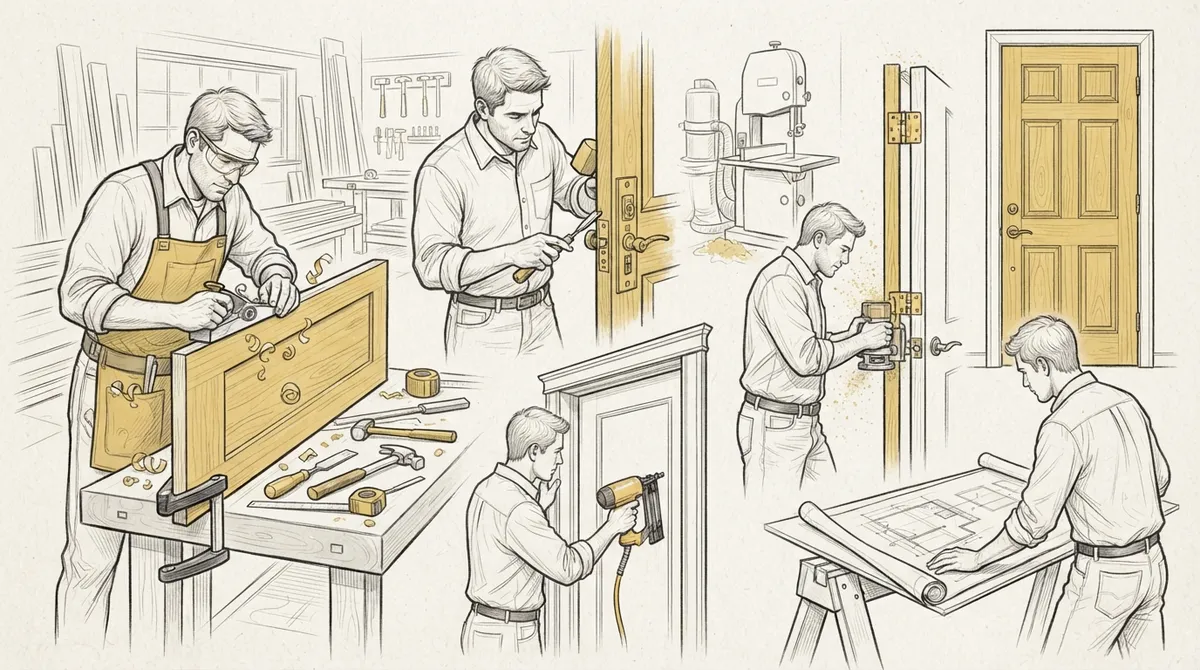
A door carpenter is a woodworking pro who builds, fits, and installs doors. This work goes beyond hanging a slab in a frame. It includes planning, precise cutting, trim work, hardware setup, and a clean finish.
If you want to learn more about carpentry as a trade, you will see that door work sits within finish carpentry. That branch focuses on visible, detail-heavy work. It needs a steady hand and a sharp eye.
Common door carpentry tasks
- Measuring openings and checking that walls are square and plumb
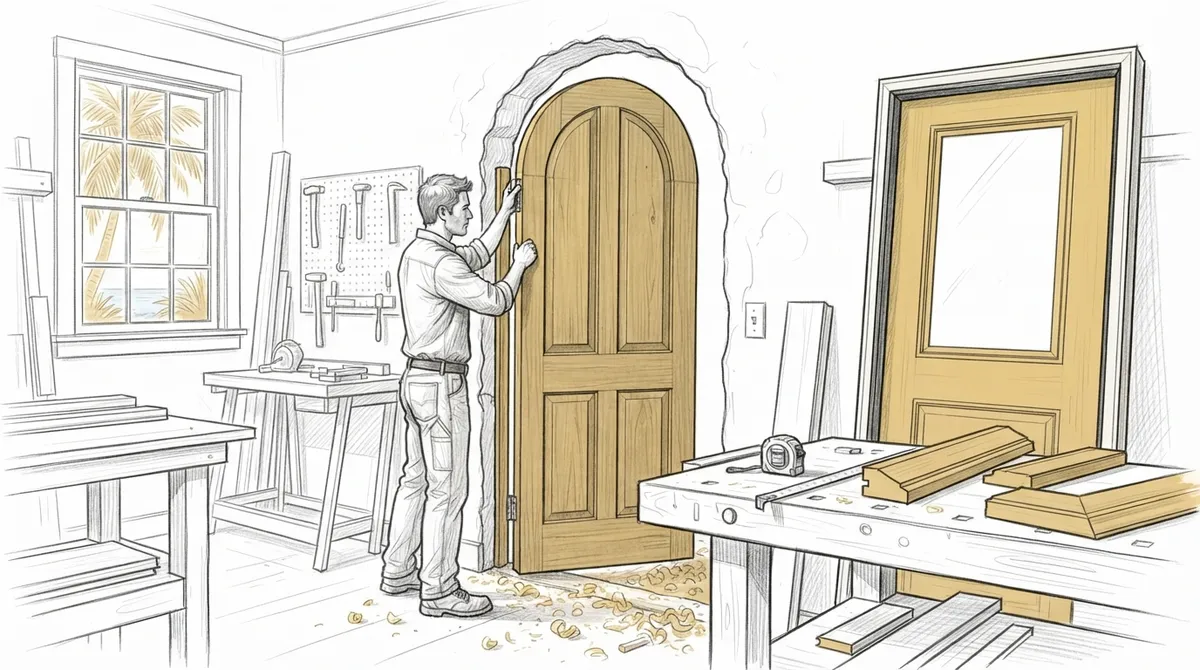
- Building custom doors to fit odd sizes or unique designs
- Hanging interior and exterior doors
- Installing frames, jambs, and casing
- Setting hinges, locks, and handles
- Adding door trim that matches the rest of the home
- Repairing or refinishing worn doors
A handyman can hang a simple door. A true carpenter does more. They solve problems like uneven floors, out-of-square frames, and tight clearances. If you want to understand the difference, read about the key differences between a carpenter and a handyman.
2. The Door Types a Carpenter Can Build or Install
Not every door fits every space. A good carpenter helps you pick the right style for the job. Here are the most common options.
Interior doors
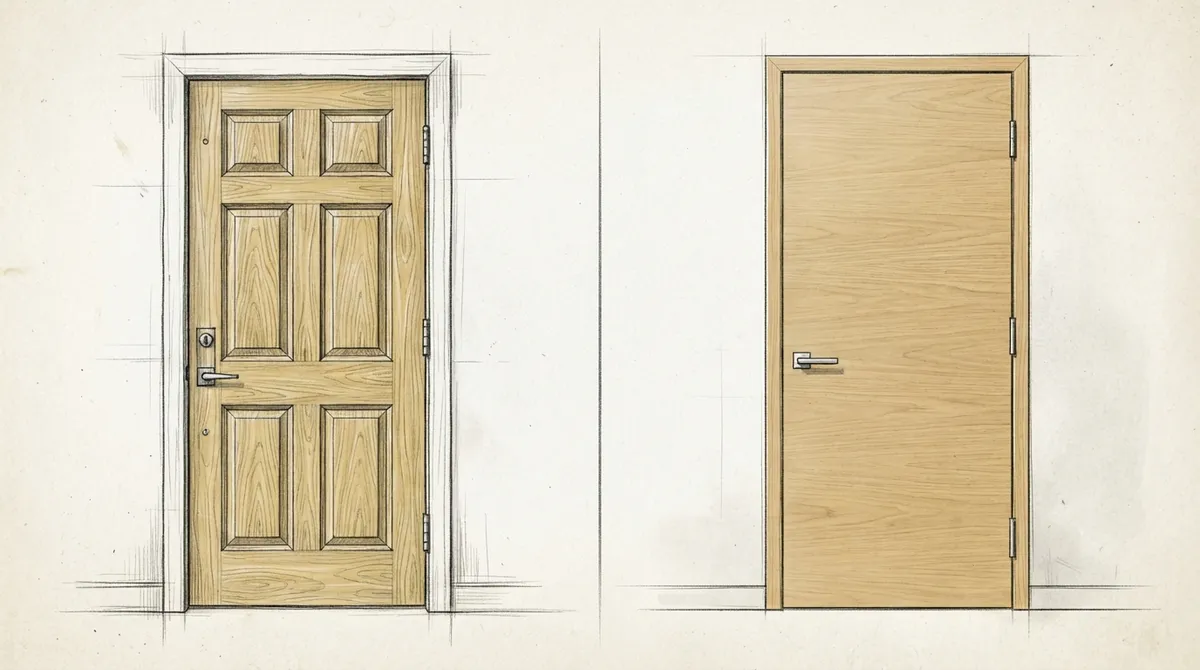
Interior doors include bedroom, bath, closet, and office doors. They can be solid wood, paneled, or flush. Custom sizes work well in older homes where openings are not standard.
Exterior doors
Front and back doors need to resist weather and add security. They must seal tightly and handle moisture. For a full look at this topic, see this custom carpentry guide to exterior door installation.
Barn doors
Barn doors slide on a track instead of swinging. They save space and add strong style. They work well in tight hallways, laundry rooms, and closets. Read more in this guide on how barn door installation really works in 2026.
Custom wood doors
Custom doors are built to your exact size, wood species, and design. They suit homes with arched openings, tall ceilings, or a specific style. Many Tampa homeowners choose this route for the front entry. See some ideas in these custom wood doors Tampa homeowners love.
Quick comparison of door types
| Door Type | Best For | Key Benefit | Main Consideration |
|---|---|---|---|
| Interior swing door | Bedrooms, baths, offices | Privacy and sound control | Needs clear swing space |
| Exterior entry door | Front and back entries | Security and curb appeal | Must resist moisture and sun |
| Barn door | Tight halls, closets, pantries | Saves floor space | Less sound privacy |
| Custom wood door | Unique openings, luxury homes | Exact fit and design | Longer lead time |
| Prehung door | Standard openings | Faster install | Limited size and style |
3. Custom Doors vs. Standard Doors
This is one of the biggest choices you will make. Standard doors come in set sizes and common styles. Custom doors are made for your space. Each has a place.
Standard and prehung doors work well when your openings are square and standard size. They install faster and cost less time on site. Custom doors shine when your home has unusual sizes, higher ceilings, or a design that needs a special look.
For a deeper side-by-side look, see this comparison of custom doors vs. standard doors. You can also compare custom and prehung interior door installation.
When custom makes more sense
- Your home has non-standard door openings
- You want a specific wood species or grain
- You need a taller, wider, or arched door
- You are matching existing historic or high-end trim
- You are building a luxury home that must stand out
For developers, custom doors can help a listing feel more premium. Buyers notice solid, well-fitted doors the moment they walk in. Designers also value custom work because it lets them match a client’s vision without compromise.
4. Why Trim and Casing Matter as Much as the Door
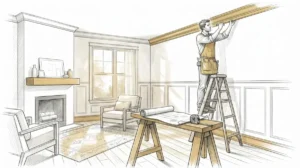
A great door can look off if the trim is wrong. Trim frames the door and ties it to the rest of the room. It hides the gap between the frame and the wall. It also adds depth and style.
Door casing comes in many profiles. Flat stock gives a clean, modern look. Layered casing with a header adds a classic feel. The best choice depends on your baseboards, crown molding, and overall style. If you want to see how crown molding fits the bigger picture, you can read about crown molding and how it works with other trim.
A skilled door carpenter matches the casing to your home. They also make sure corners meet tightly and nail holes are filled. Learn more about this step in door trim installation and how it elevates your home’s style.
Trim details a pro will check
- Casing width and profile match the rest of the home
- Reveal (the small step from frame to casing) is even
- Mitered corners are tight with no visible gaps
- Caulk and paint lines are clean
- Baseboards meet the casing at a neat height
If you plan to update many rooms at once, it helps to plan trim as one system. This guide on planning interior trim installation can save time and avoid mismatches.
5. How to Spot Quality Door Work
You do not need to be an expert to judge a good door install. A few simple checks tell you a lot. Whether you are a homeowner, a designer, or a developer walking a site, use these checks.
The quality checklist
- Even gaps: The space around the door should look the same on all sides. A common target is about an eighth of an inch.
- Smooth swing: The door should open and close without rubbing or sticking.
- Stays put: A door should not swing open or closed on its own.
- Tight latch: The latch should click into place cleanly with no rattle.
- Plumb frame: The frame should be straight, not leaning.
- Clean finish: Paint or stain should be smooth, with no drips or missed spots.
- Tight joints: Trim corners should meet with no visible gaps.
Poor work often shows up fast. A door that sticks in summer is often a sign of poor fitting or the wrong material for local humidity. Common errors are covered in this guide to door installation mistakes that ruin your home.
Special care for Tampa Bay homes
Humidity and salt air make wood move. Exterior doors need proper sealing on all six sides. They also need good flashing and weatherstripping. A local carpenter knows how to protect doors from this climate. That local knowledge is a real benefit when you search for a door carpenter near me.
6. How to Hire the Right Door Carpenter Near You
Now you know what good work looks like. The last step is finding the right pro. Here is a simple process to follow.
Step-by-step hiring process
- Define your project. List how many doors, which type, and your style goals.
- Look at past work. Ask for photos of finished doors and trim, not just stock images.
- Check licensing and insurance. A pro should be able to show proof. Learn what to look for when you find a licensed carpenter near you.
- Read reviews and testimonials. Look for comments about neat work, clear talk, and on-time finishes.
- Ask about timing. A clear schedule is a good sign. For a sense of what is normal, see how long it should take a carpenter to hang a door.
- Get a written scope. It should list the work, materials, and what is included.
Questions to ask every carpenter
- Do you build custom doors, or only install them?
- How do you handle out-of-square openings?
- What wood or material do you suggest for our climate?
- Will you match my existing trim and finish?
- How do you protect floors and walls during work?
- Who cleans up when the job is done?
It also helps to know the wider field of options. This article on how to find the best local carpenter near you offers more ideas for your search.
Why work with a custom carpentry specialist
Door projects often tie into other work. You may want new trim, a built-in, or a ceiling detail in the same room. A custom carpentry company can handle all of it in one plan. That keeps style and fit consistent. Bucheli Trim is a Tampa Bay custom carpentry company focused on precision and craftsmanship. The team offers door services alongside molding, cabinets, and wall and ceiling work. You can also see what past clients say by reading Bucheli Trim reviews on Google.
Tips for Each Type of Client
Different projects call for different priorities. Here is how to focus your search based on who you are.
For homeowners
Start with the doors that people see and touch most, like the front entry. Think about long-term care too. Solid wood with a good finish can last for decades with simple upkeep. Ask your carpenter for care tips before they leave the job.
For interior designers
Share your drawings, finish samples, and hardware picks early. A carpenter who builds custom work can match your vision closely. Clear specs on height, swing, and trim style prevent changes later. Many designers build long-term ties with one trusted carpentry team for repeat projects.
For real estate developers
Consistency and schedule matter most. Ask about lead times for custom doors, and plan them early in the build. Premium doors and trim help a property stand out in a crowded market. Buyers often judge quality by small details like door fit and trim finish.
Final Thoughts
Finding a door carpenter near me is not just about convenience. It is about picking a pro who can fit, finish, and protect a key part of your home. The six points in this guide give you a solid framework. Know what a carpenter does. Choose the right door type. Compare custom and standard options. Pay attention to trim. Check for quality. Then hire with a clear plan.
Bucheli Trim serves homeowners, designers, and developers across Tampa Bay with high-end custom carpentry. If you are ready to start your door project, get in touch with our team to talk through your goals. You can also follow project updates on Facebook.
FAQs
Q: What does a door carpenter do?
A: A door carpenter builds, fits, and installs doors, frames, and trim. They also set hinges and locks, fix out-of-square openings, and repair or refinish worn doors. Their goal is a door that swings smoothly, seals well, and looks clean.
Q: Should I choose a custom door or a standard door?
A: Standard or prehung doors work well for standard, square openings and faster installs. Custom doors are a better fit for odd sizes, taller openings, or a specific wood and design. Many luxury and historic homes use custom doors for the best fit and look.
Q: How do I find a good door carpenter near me?
A: Start by reviewing photos of finished work and reading client reviews. Confirm licensing and insurance, and ask for a written scope of work. A local carpenter who understands Tampa Bay humidity and salt air is a strong choice.
Q: How long does it take a carpenter to install a door?
A: A simple prehung interior door can often be installed in a few hours. Custom doors, exterior doors, and jobs with new trim usually take longer. Your carpenter should give you a clear timeline before work starts.
Q: Why does door trim matter?
A: Trim frames the door and hides the gap between the frame and the wall. The right casing ties the door to your baseboards and crown molding. Clean, tight corners also signal quality workmanship.