Key Takeaways
-
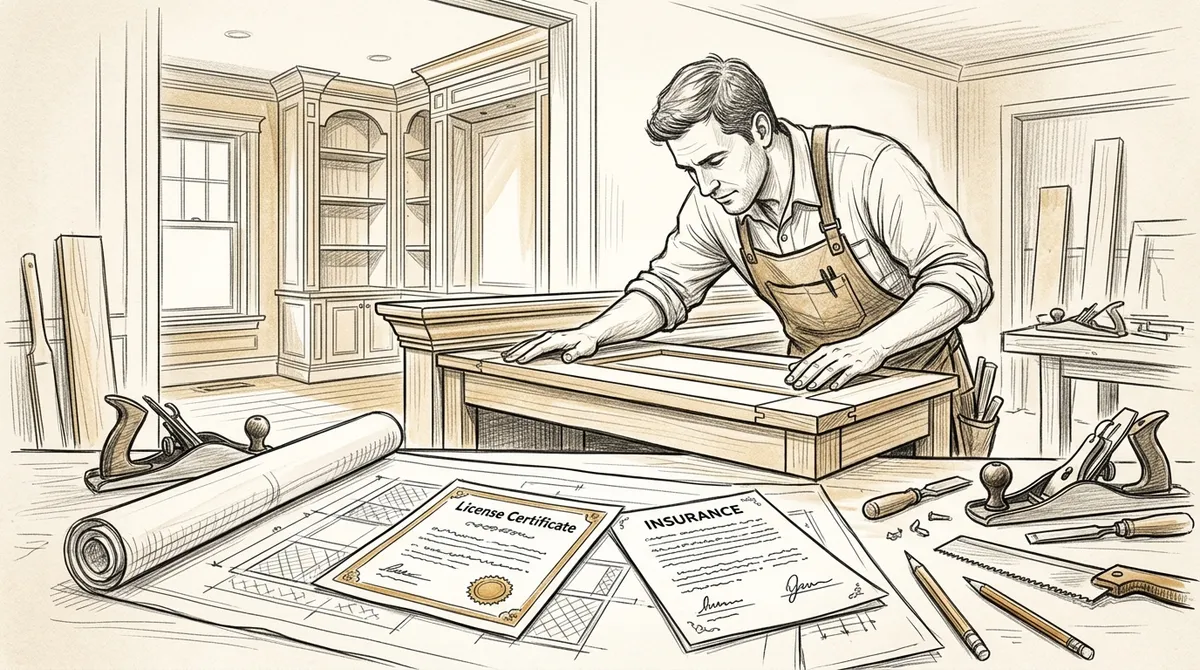
Verify a carpenter’s license through your state’s licensing board website using their contractor license number before hiring to confirm they meet specific skill and safety standards.
-
Unlicensed carpenters risk faulty installations that void warranties, fail inspections, or require expensive repairs; licensed professionals provide insurance coverage and accountability through a licensed business entity.
-
Review portfolios for consistency, sharp cuts, seamless joints, and ask carpenters to walk you through past projects to assess craftsmanship beyond just credentials.
-
Red flags include requests for full upfront payment, no physical business address, vague verbal contracts, and unwillingness to provide proof of insurance or license.
-
Hire a finish or trim carpenter (not a general carpenter) for custom interior upgrades like crown molding, wainscoting, and built-in cabinetry requiring specialized expertise.
-
Local licensed carpenters understand regional building codes, climate conditions affecting material choices, and have established supplier relationships for better materials and faster turnaround.
Are you searching for a licensed carpenter near me? You’re not alone. Homeowners, interior designers, and real estate developers across Tampa Bay are all looking for the same thing — a skilled, trustworthy professional who can deliver high-quality custom carpentry work. The challenge isn’t just finding someone with tools. It’s finding someone with verified credentials, proven experience, and the craftsmanship to match your vision.
The difference between a licensed and unlicensed carpenter can mean the difference between a stunning finished space and a costly disaster. This guide walks you through everything you need to know about finding, vetting, and hiring a licensed carpenter for your custom project in 2026.

Why Licensing Matters in Custom Carpentry
Licensing isn’t just a piece of paper. It’s a signal that a carpenter has met specific skill and safety standards. A licensed professional has typically passed exams, completed training, and agreed to follow local building codes. This protects you as a homeowner or developer. To learn more about carpentry as a trade and what it involves, it helps to understand the full scope of the profession.
When you hire an unlicensed carpenter for detailed work like custom ceiling designs or built-in cabinetry, you take on real risks. Faulty installations can void warranties, fail inspections, or require expensive repairs down the road.
Key Benefits of Hiring a Licensed Carpenter
- Work meets local building code requirements
- Insurance coverage protects your property
- Accountability through a licensed business entity
- Higher-quality results backed by verified skills
- Peace of mind for inspections and resale value
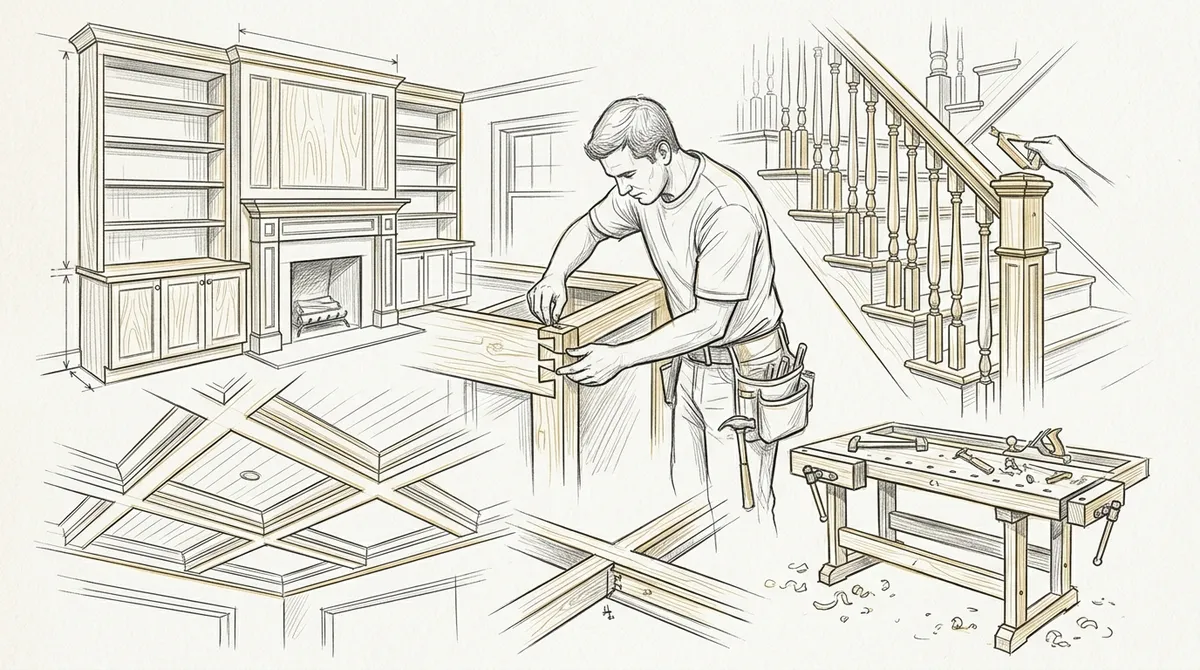
What Services Can a Licensed Carpenter Provide?
A licensed custom carpenter offers far more than basic woodworking. In 2026, high-end carpentry covers a wide range of interior and architectural upgrades. These services can dramatically transform the look and feel of any space.
Here are common services offered by licensed custom carpenters:
- Custom ceiling designs including coffered, tray, and beam styles
- Wall enhancements such as wainscoting, shiplap, and paneling
- Built-in cabinets, shelving, and entertainment centers
- Crown molding, baseboard, and trim installation
- Custom doors, closets, and millwork details
- Flooring installation and finish work
To explore a full list of what professional carpenters can do, check out this guide on what custom carpentry work Tampa carpenters do.

How to Search for a Licensed Carpenter Near Me
Finding the right professional takes more than a quick online search. You need a clear process to identify candidates and filter out those who aren’t qualified. Here’s a step-by-step approach that works.
Step-by-Step Search Process
- Start with a local search: Use Google or local directories to search for licensed carpenters in your city or region. Focus on businesses with consistent reviews and a professional website.
- Check licensing credentials: Ask each candidate for their contractor license number. Verify it through your state’s licensing board website.
- Review their portfolio: Look for photos of past projects similar to yours. Custom carpentry work should be precise, clean, and well-finished.
- Read customer reviews: Look at Google reviews and other platforms for honest feedback. Focus on projects similar to what you need.
- Request a consultation: A professional carpenter will walk through your space, discuss your goals, and offer specific recommendations.
- Compare quotes carefully: Don’t just go with the lowest number. Compare scope of work, materials, and timeline.
You can also read more about mistakes to avoid when hiring carpenters near me to sharpen your search strategy.

What to Look for in a Licensed Carpenter
Not every licensed carpenter is equally skilled. Licensing confirms training, but craftsmanship is what separates good from great. When evaluating a carpenter, look beyond the paperwork.
| Quality Indicator | What to Look For |
|---|---|
| Portfolio Quality | Sharp cuts, seamless joints, consistent finish work |
| Communication | Clear, timely, and professional responses |
| Specialization | Experience in your specific project type |
| References | Verifiable past clients willing to speak to their experience |
| Insurance | Liability and worker’s compensation coverage |
| Timeline Reliability | History of completing projects on schedule |
If you want to dig deeper into what separates professionals from amateurs, explore these 13 signs of true craftsmanship in custom carpentry.
Questions to Ask Before You Hire
Asking the right questions upfront saves you frustration later. Here are the most important ones to cover before signing any agreement.
- Are you licensed and insured in this state?
- How long have you been doing custom carpentry?
- Can I see a portfolio of similar projects?
- Who will be doing the actual work — you or subcontractors?
- What materials do you recommend for this project?
- How do you handle unexpected issues during a project?
- What does your timeline look like?
Also, review this guide on what to expect from home carpentry services near me to help you set realistic expectations from the start.
Red Flags to Watch Out For
Even when searching for a licensed carpenter near me, you can still run into unreliable contractors. Knowing the warning signs can protect you from a bad experience.
- Requests for full payment upfront before any work begins
- No physical business address or verifiable contact information
- Vague or verbal-only contracts with no written details
- Unwillingness to provide license number or proof of insurance
- No online presence, reviews, or portfolio to review
A reputable carpenter will have no problem providing documentation and references. If anything feels off, trust your instincts and keep looking.
Custom Carpentry Projects That Benefit Most from a Licensed Pro
Some carpentry projects are straightforward. Others require precise skill, specialized knowledge, and proper licensing. These are the projects where cutting corners can cost you the most.
High-Value Projects That Require Licensed Expertise
- Custom ceilings: Coffered, tray, and beam designs require precise structural knowledge. Learn more about what custom ceilings are and why you should consider them.
- Built-in cabinetry: Structural installation tied to walls and floors needs to be done right. See 7 built-in cabinetry solutions that transform your home.
- Crown molding and trim: Complex angles and finishing demand expertise. Explore what to know about crown molding installers near me.
- Custom doors: Proper fitting and hanging affect security and energy efficiency. See custom doors vs. standard doors: which is worth it.
- Wall paneling and enhancements: Professional installation ensures lasting results. Read about wall enhancements for inspiration.
Why Local Matters When Hiring a Licensed Carpenter
Hiring locally isn’t just about convenience. A local licensed carpenter understands regional building codes, climate conditions, and design trends specific to your area. In Tampa Bay, for example, humidity and heat affect wood choices and finishing methods. A local expert accounts for all of this.
Local carpenters also have established relationships with suppliers. This can mean better materials and faster turnaround. They’re also easier to hold accountable if issues come up after the job is done. Read about 7 reasons to hire a Tampa carpenter for your home to understand the local advantage.
Bucheli Trim is a licensed custom carpentry team serving the Tampa Bay area. The team specializes in high-end ceiling designs, wall enhancements, and built-in cabinetry. Every project is handled with precision and care. You can visit Bucheli Trim on Google to read reviews from local homeowners and see how the team has transformed spaces across the region. You can also follow along on Facebook for project updates and design inspiration.
How to Evaluate Carpentry Portfolios Effectively
A carpenter’s portfolio is one of the most telling indicators of quality. But knowing how to evaluate it makes all the difference. Don’t just look at the finished photos — think critically about what you see.
- Look for consistency: Are all the projects finished to the same high standard, or do quality levels vary?
- Check for variety: A skilled carpenter should show a range of project types and styles.
- Inspect the details: Zoom in on corner joints, trim edges, and surface finishes. Sloppy details show up in photos.
- Ask about each project: A confident professional will happily walk you through past work and explain their process.
For deeper inspiration on what quality custom work looks like, browse custom project examples to see the level of detail that defines true craftsmanship.
The Difference Between a Finish Carpenter and a General Carpenter
Not all carpenters do the same type of work. Understanding the difference helps you hire the right person for your project.
A general carpenter handles structural work like framing, subfloors, and rough construction. A finish carpenter focuses on the visible, decorative elements — trim, molding, cabinetry, and built-ins. For custom home upgrades, you almost always want a finish or trim carpenter. Learn more about what an interior trim carpenter does for your home.
Some licensed carpenters are also skilled in specialty finishes. For example, epoxy flooring is a specialty service that requires additional expertise beyond standard woodworking — it’s worth asking if your contractor offers multi-trade capability.
Conclusion: Start Your Search with Confidence
Finding a licensed carpenter near me doesn’t have to be overwhelming. With the right process, you can identify a qualified professional who delivers the custom results you’re looking for. Start with licensing verification, review portfolios carefully, ask the right questions, and watch for red flags. The right carpenter will be transparent, skilled, and proud to show their work.
Whether you’re a homeowner upgrading your living space, an interior designer seeking a reliable trade partner, or a developer adding premium finishes to a property, hiring a licensed professional is always the smarter choice. The investment pays off in quality, durability, and peace of mind.
Ready to take the next step? Reach out to our team at Bucheli Trim to discuss your custom carpentry project and get expert guidance from a licensed professional you can trust.
FAQs
Q: How do I verify that a carpenter is properly licensed?
A: You can verify a carpenter’s license by asking for their license number and checking it against your state’s contractor licensing board database. Most states have a free online lookup tool that shows license status, expiration date, and any disciplinary history.
Q: What is the difference between a licensed carpenter and a handyman?
A: A licensed carpenter has completed formal training, passed required exams, and met state or local standards for the trade. A handyman may handle minor repairs but typically lacks the credentials, insurance, and specialized skill set required for complex custom carpentry projects like built-ins, crown molding, or custom ceilings.
Q: Do I need a licensed carpenter for custom interior work like trim and molding?
A: For detailed finish work such as crown molding, wainscoting, and built-in cabinetry, hiring a licensed carpenter is strongly recommended. Licensed professionals understand building codes, use proper techniques, and deliver results that hold up over time and pass inspection if needed.
Q: How long does a typical custom carpentry project take?
A: Project timelines vary based on scope and complexity. A simple trim installation may take one to two days, while a full custom cabinetry or ceiling design project could take one to three weeks. A licensed carpenter will provide a clear timeline during the initial consultation.
Q: Why should I hire a local licensed carpenter instead of a national contractor?
A: Local licensed carpenters are familiar with regional building codes, climate factors, and design preferences specific to your area. They’re also easier to reach for follow-up work or warranty issues, and often have established relationships with local material suppliers that benefit your project.