
Key Takeaways
-
Define your project scope clearly before hiring by listing rooms, desired style (traditional, modern, farmhouse), and complexity level, as different trim carpenters specialize in different work types.
-
Verify licensing, insurance, and references by calling 3-5 recent clients and checking online reviews to confirm the carpenter's communication, punctuality, and quality standards.
-
Evaluate craftsmanship quality using specific markers: tight mitered joints, exact measurements, properly filled nail holes, and level/plumb installation rather than visible gaps or misalignments.
-
Quality trim work increases home value significantly and attracts buyers who appreciate craftsmanship, making it a smart investment for homeowners and real estate developers seeking to differentiate properties.
Your home deserves beautiful details. From elegant crown molding to custom built-ins, the right trim work can completely transform a space. But finding the right trim carpenter makes all the difference. A skilled professional brings craftsmanship, precision, and creativity to every project. They turn raw wood into stunning architectural features that elevate your entire home.
Whether you are a homeowner dreaming of a polished interior, an interior designer searching for a reliable craftsman, or a real estate developer adding luxury finishes to a property, this guide is for you. You will learn exactly what to look for, what questions to ask, and how to find someone who delivers exceptional results. Let’s get started.
What Does a Trim Carpenter Actually Do?
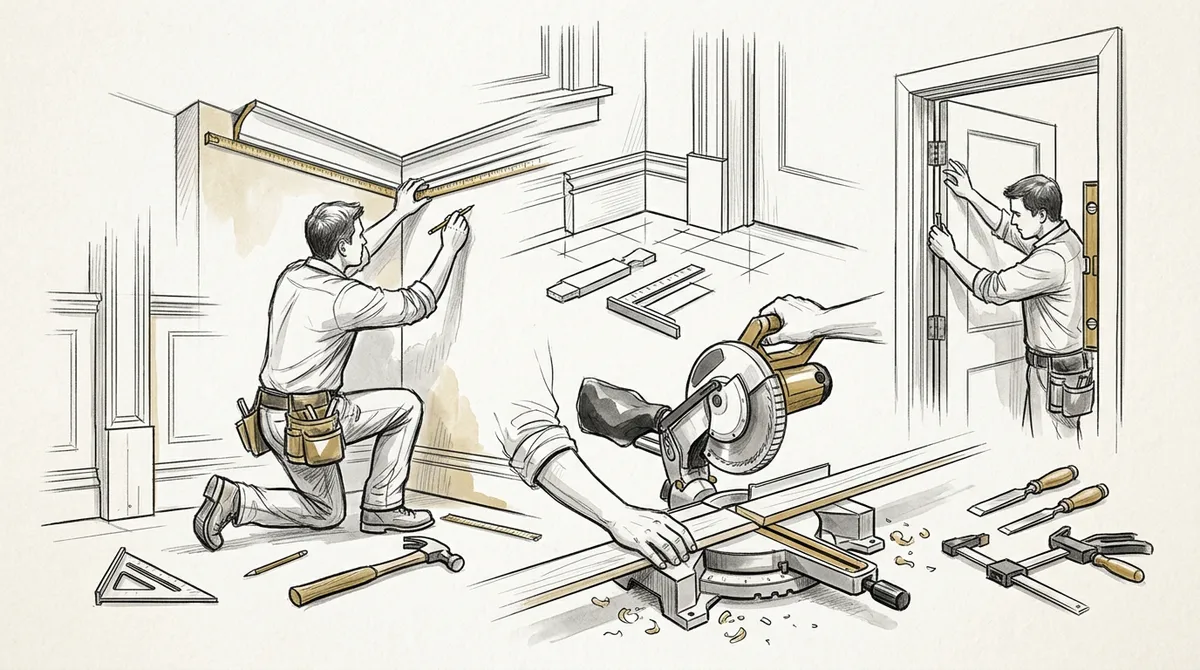
A trim carpenter specializes in the finishing details of a home. They install and craft decorative woodwork that defines a room’s character. This is not basic construction work. It requires an eye for detail and a high level of skill. To learn more about carpentry as a trade and its history, it helps to understand just how specialized this craft really is.
Here are the main types of work a trim carpenter handles:
- Crown molding and molding details: Decorative trim where walls meet ceilings
- Ceiling designs: Coffered ceilings, tray ceilings, and custom ceiling features
- Wall enhancements: Wainscoting, board and batten, and panel designs
- Built-in cabinetry: Custom storage solutions built into walls and rooms
- Door and window casing: Decorative frames around doors and windows
- Baseboards and chair rails: Trim pieces along floors and mid-wall heights
Each of these elements requires careful measurement, precise cuts, and seamless installation. A great trim carpenter leaves no gaps, no visible nails, and no uneven lines.
Step 1: Define Your Project Scope
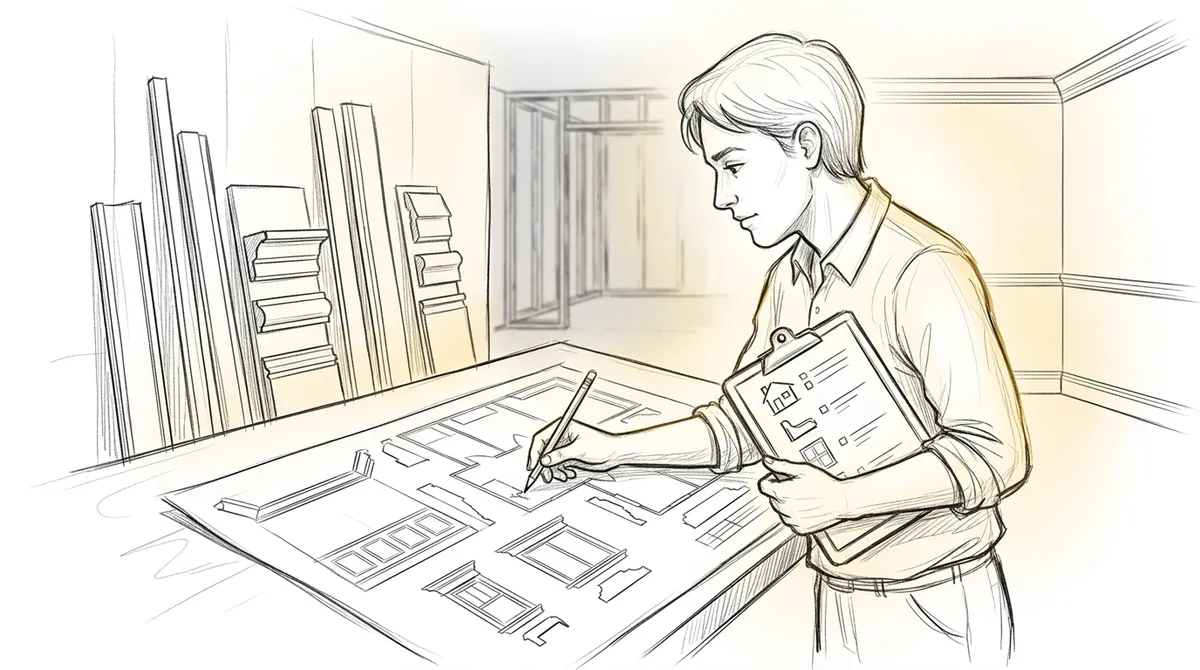
Before you start searching for a trim carpenter, get clear on what you need. Different projects require different skill sets. A carpenter who excels at installing baseboards may not have experience with complex custom ceiling designs.
Ask yourself these questions first:
- What rooms need trim work? List every space you want to improve.
- What style do you want? Traditional, modern, farmhouse, or transitional?
- How complex is the work? Simple baseboards or intricate coffered ceilings?
- Do you need custom designs? Or standard off-the-shelf profiles?
Writing down your vision helps when interviewing carpenters. It also ensures you get accurate estimates and realistic timelines from potential hires.

Step 2: Look for These Key Qualifications
Not every carpenter is a skilled trim carpenter. This specialty requires specific training and experience. Here is what to look for when evaluating candidates.
Experience and Specialization
Ask how long they have been doing trim work specifically. General contractors build walls and frames. Trim carpenters focus on fine finishing details. Look for someone with at least several years of dedicated trim and finish carpentry experience. You can also check out 7 signs you need professional carpentry near you today to help confirm your need for a specialist.
A Strong Portfolio
Always ask to see past work. Photos tell a clear story. Look for clean lines, tight joints, and professional finishes. Review projects similar to yours. If you want coffered ceilings, confirm they have done coffered ceilings before. A strong portfolio builds confidence before a single cut is made.
References and Reviews
Ask for three to five references from recent clients. Call them. Ask about the carpenter’s communication, punctuality, and quality of work. You can also check online reviews. Visit us on Google to see how top-rated carpenters in Tampa Bay present themselves and earn customer trust.
Licensing and Insurance
Always verify that your trim carpenter holds the required licenses for your area. Also confirm they carry liability insurance. This protects you if something is damaged during the project. Never skip this step, no matter how talented the carpenter seems.
Step 3: Compare Craftsmanship Standards
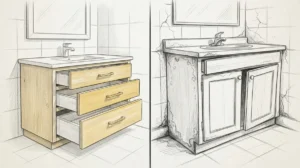
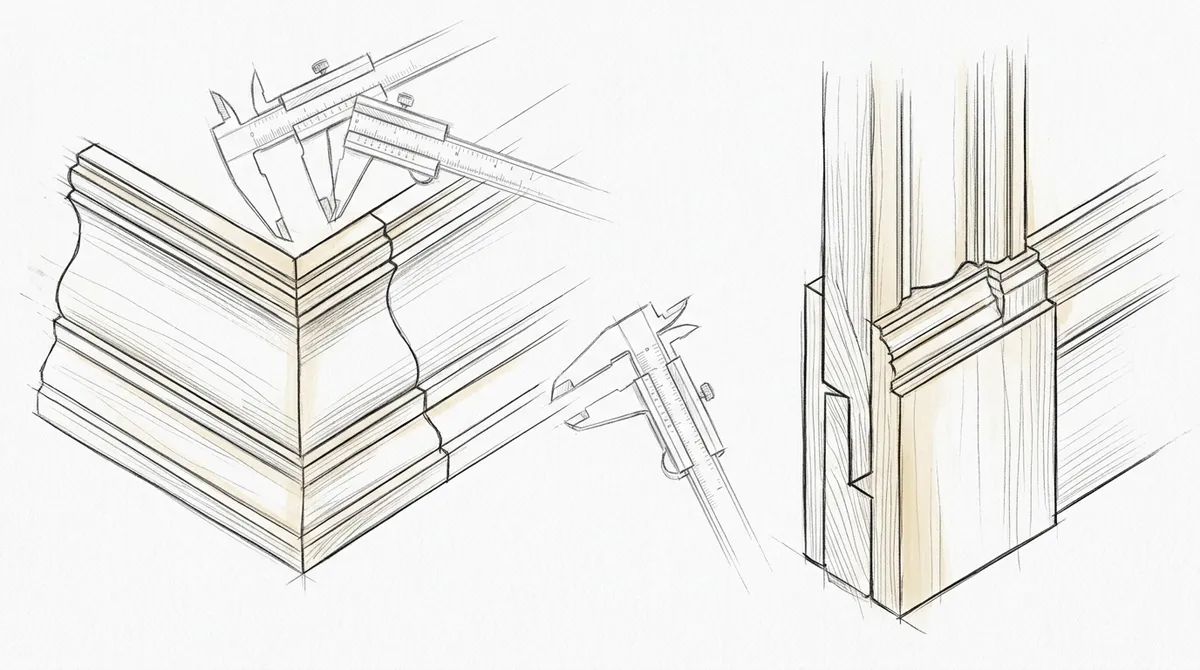
Quality trim work is defined by precision. A skilled trim carpenter takes pride in every detail. Here is a comparison of what separates high-quality trim work from average work:
| Feature | High-Quality Trim Work | Average Trim Work |
|---|---|---|
| Joints and corners | Tight, seamless mitered joints | Visible gaps or caulk-filled gaps |
| Measurements | Exact cuts, perfect fit | Slight misalignments |
| Nail holes | Properly filled and sanded smooth | Visible or poorly filled |
| Finishing | Ready for paint, clean surface | Rough edges or sanding marks |
| Installation | Level, plumb, and secure | Slightly off-level or loose |
Use this comparison as a checklist when reviewing a carpenter’s portfolio or visiting a completed project in person.
Step 4: Ask the Right Questions
A good interview process separates talented trim carpenters from average ones. Here are the most important questions to ask:
- How do you handle corners that are not perfectly square? Experienced carpenters know walls are rarely perfect.
- What wood species do you recommend for this project? They should explain options clearly.
- Do you do custom millwork or only install pre-made profiles? Custom work shows higher skill.
- How do you prepare surfaces before installation? Good prep leads to better results.
- What is your process for painting or finishing trim? Some carpenters coordinate with painters.
Listen carefully to how they answer. Confident, clear answers show expertise. Vague responses are a warning sign.
Step 5: Review Their Range of Services
The best trim carpenters offer a wide range of services. This is important for larger home renovation projects. When one professional handles multiple aspects of your project, results stay consistent. Look for carpenters who can handle:
- Custom ceiling installations and ceiling design work
- Detailed wall enhancement projects like wainscoting and panels
- Built-in shelving, entertainment units, and built-in cabinetry solutions
- Custom closet systems and custom closet builds
- Door framing, casing, and hardware installation
- Specialty trim like crown molding and decorative millwork
Bucheli Trim, serving the Tampa Bay area, is a great example of a full-service custom carpentry company. They offer everything from ceiling designs to custom projects tailored to each client’s vision.
Step 6: Evaluate Communication and Professionalism
Skills matter. But so does how a carpenter communicates with you. A professional trim carpenter should:
- Respond to calls and messages promptly
- Provide a clear, written estimate before starting work
- Explain the project timeline and milestones
- Keep you updated throughout the job
- Clean up the work area at the end of each day
Poor communication leads to missed expectations and frustrating outcomes. Trust your instincts. If a carpenter seems disorganized during the estimate phase, that may reflect their work habits on the job site.
Step 3: Understand How Trim Enhances Home Value
Investing in quality trim work is a smart decision for homeowners and developers alike. Well-executed trim details increase a home’s perceived value significantly. Real estate developers in particular benefit from this. Luxury trim finishes attract buyers who appreciate quality craftsmanship.
Interior designers also rely on skilled trim carpenters to bring their design concepts to life. Details like trim and molding work add depth, character, and elegance to any room. Even simple additions like baseboards and door casings make a dramatic difference in the overall feel of a space.
You can also explore 11 ways custom woodworking transforms homes to understand the full impact skilled carpentry has on interior aesthetics and property value.
Red Flags to Avoid When Hiring
Knowing what to avoid is just as important as knowing what to look for. Watch out for these warning signs:
- No portfolio or references: Experienced carpenters always have past work to show.
- Unusually fast timelines: Rushing trim work leads to poor quality.
- No written estimate: Verbal agreements create confusion and disputes.
- Unwillingness to discuss details: Good carpenters welcome specific questions.
- No insurance or license documentation: This puts your home and finances at risk.
If you spot any of these red flags early, it is better to keep searching. The right trim carpenter is worth the extra time it takes to find them.
Where to Find Skilled Trim Carpenters Near You
Finding a qualified trim carpenter does not have to be difficult. Start with these reliable sources:
- Online directories and Google searches: Search for local trim carpenters with strong reviews.
- Referrals from friends or neighbors: Personal recommendations are highly valuable.
- Interior design networks: Designers often have trusted carpenters they work with regularly.
- Local contractor associations: These often list vetted and licensed professionals.
- Social media and portfolios: Many talented carpenters showcase their work on platforms like Facebook.
You can also read our guide on where to find a skilled carpenter near me for more detailed search strategies specific to the Tampa Bay area.
Conclusion
Choosing the right trim carpenter is one of the most important decisions in any home renovation or new build project. The details matter. Precise cuts, tight joints, and beautiful finishes are what separate a good carpenter from a great one. Take your time with the selection process. Ask the right questions, review portfolios carefully, and always verify credentials.
When you invest in quality craftsmanship, the results speak for themselves. Your home becomes more elegant, more valuable, and more uniquely yours. Whether you need simple baseboards or a dramatic coffered ceiling, the right trim carpenter will bring your vision to life with skill and dedication.
Ready to get started on your next project? Reach out to our team at Bucheli Trim to discuss your custom carpentry needs and take the first step toward a beautifully finished home.
FAQs
Q: What is the difference between a trim carpenter and a general carpenter?
A: A trim carpenter specializes in the finishing and decorative woodwork of a home, such as crown molding, baseboards, built-ins, and door casings. A general carpenter typically handles structural work like framing. Trim carpentry requires a higher level of precision and an eye for fine detail.
Q: How do I know if a trim carpenter is qualified for my project?
A: Ask to see a portfolio of completed projects similar to yours and request references from past clients. Confirm they hold the proper licensing and carry liability insurance. A qualified trim carpenter will answer your questions clearly and confidently.
Q: What types of trim work can a custom carpenter complete for my home?
A: A skilled trim carpenter can install crown molding, wainscoting, coffered ceilings, board and batten walls, built-in cabinetry, custom closets, door and window casings, and chair rails. Each of these details adds elegance and value to any room in your home.
Q: How long does a typical trim carpentry project take?
A: Project timelines vary depending on the scope and complexity of the work. A single room with basic trim installation may take one to two days, while a full-home renovation with custom ceiling designs and built-ins can take several weeks. A professional carpenter will provide a clear timeline before work begins.
Q: Does quality trim work really increase my home’s value?
A: Yes, high-quality trim and finish carpentry significantly improve a home’s perceived value and appeal. Buyers and real estate appraisers notice detailed woodwork, elegant moldings, and custom built-ins as signs of a well-crafted home. These finishes help properties stand out in competitive markets.