Key Takeaways
-
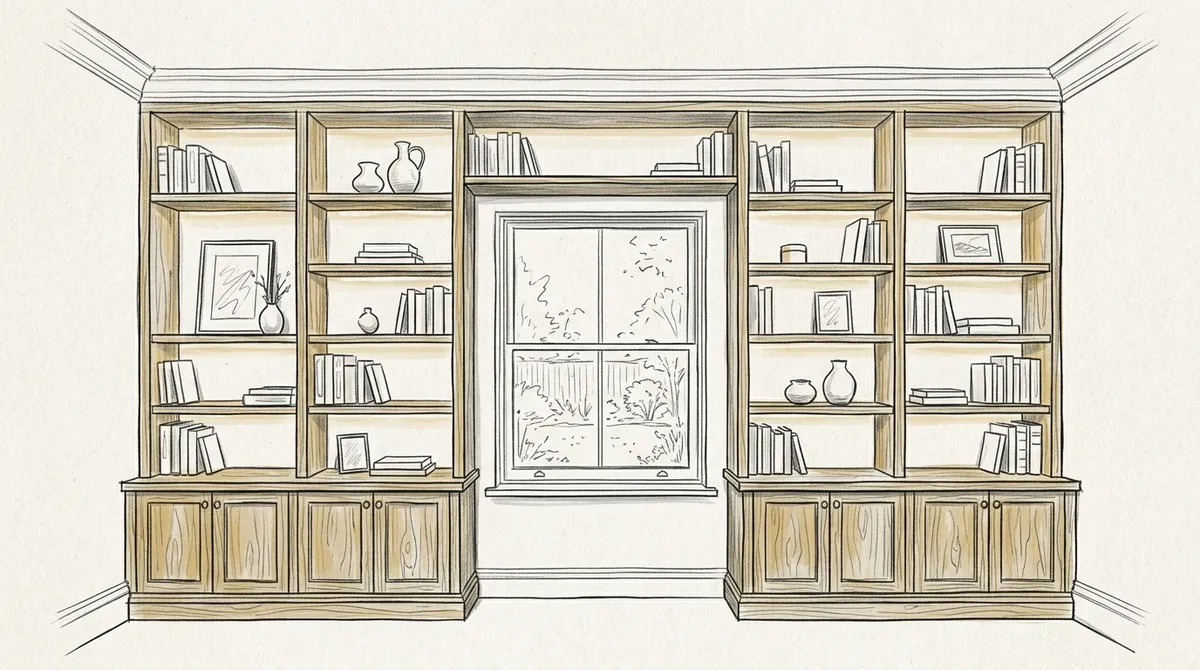
Built-in bookcases maximize wall space from floor-to-ceiling with no gaps, creating a seamless architectural look that adds significant resale value and can be custom-designed around windows, doors, or fireplaces.
-
Match your built-in design to existing trim details—baseboard profiles, crown molding, and door styles—to make it look like an original part of your home rather than an add-on.
-
Choose materials strategically: use plywood or MDF for painted finishes, solid hardwood for stained luxury pieces, and combine materials (plywood boxes with solid wood frames) to balance quality, cost, and durability.
-
Plan carefully before building by measuring exact wall dimensions, defining primary purpose (books, display, media storage), selecting a style matching your home’s architecture, and considering add-ons like integrated LED lighting or glass-front doors.
-
Hire a professional carpenter rather than attempting DIY—custom built-ins require precision measuring, cutting, and fitting that mistakes are costly to fix, and professionals deliver exact fits with long-term durability.
-
Design built-ins tailored to each room’s function: living rooms for display and fireplace framing, home offices for file storage with integrated desks, bedrooms as custom headboards, and dining rooms as buffet storage with shelving for glassware.
A built-in bookcase can completely change a room. It adds storage, style, and a sense of permanence that freestanding furniture simply cannot match. Whether you want to display books, show off collectibles, or frame a fireplace, a custom-built bookcase gives your home a polished, finished look that buyers and guests both notice.
But choosing the right design is not always simple. There are many styles, materials, and layout options to consider. The right choice depends on your room size, your personal taste, and how you plan to use the space. This guide walks you through everything you need to know to make the best decision for your home.
To understand what makes built-in furniture design transform your space, it helps to start with the basics — what styles exist, what materials work best, and how to plan the layout from the start.
Why Choose a Built-In Bookcase Over Freestanding
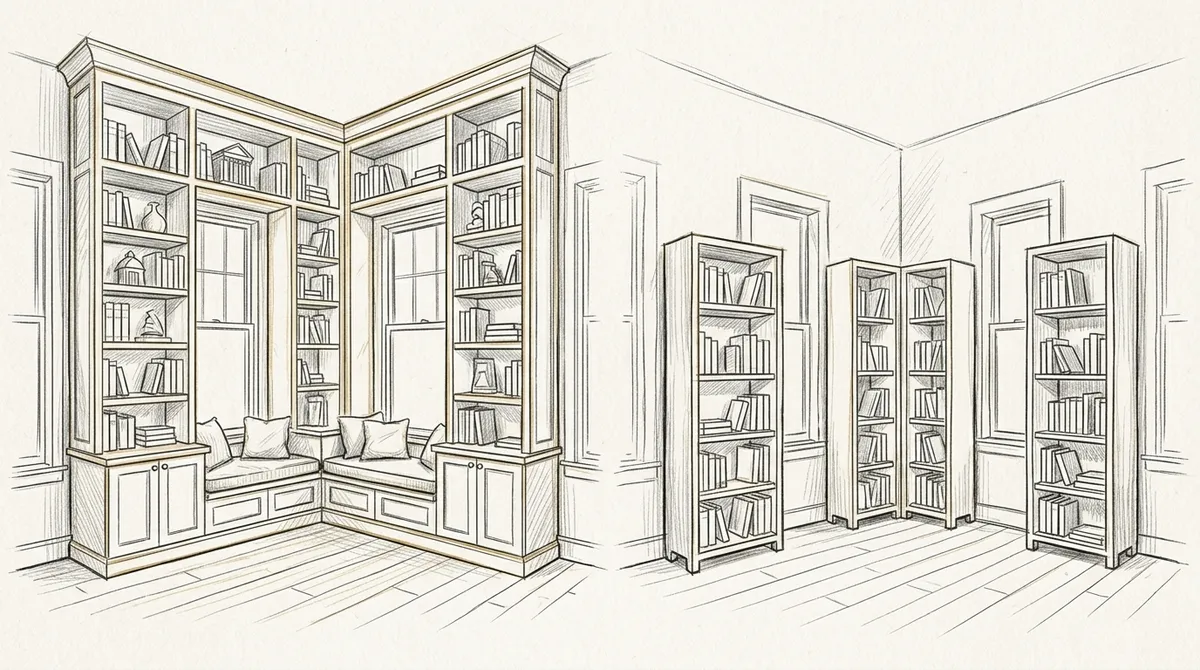
Built-in bookcases are custom-made to fit your exact wall space. They go from floor to ceiling or wall to wall with no gaps. This creates a seamless look that freestanding units simply cannot replicate. To learn why custom floor-to-ceiling bookcases are worth it, consider the long-term benefits over a standard shelf unit.
Here are the key advantages of built-in bookcases:
- They maximize every inch of wall space
- They add significant resale value to your home
- They can be designed around windows, doors, or fireplaces
- They give rooms a high-end, architectural feel
- They eliminate the wobbling and instability of freestanding shelves
- They can be customized with lighting, glass doors, and unique finishes
These benefits make built-in bookcase designs a smart investment for any homeowner who wants lasting quality in their home.
Popular Built-In Bookcase Design Styles
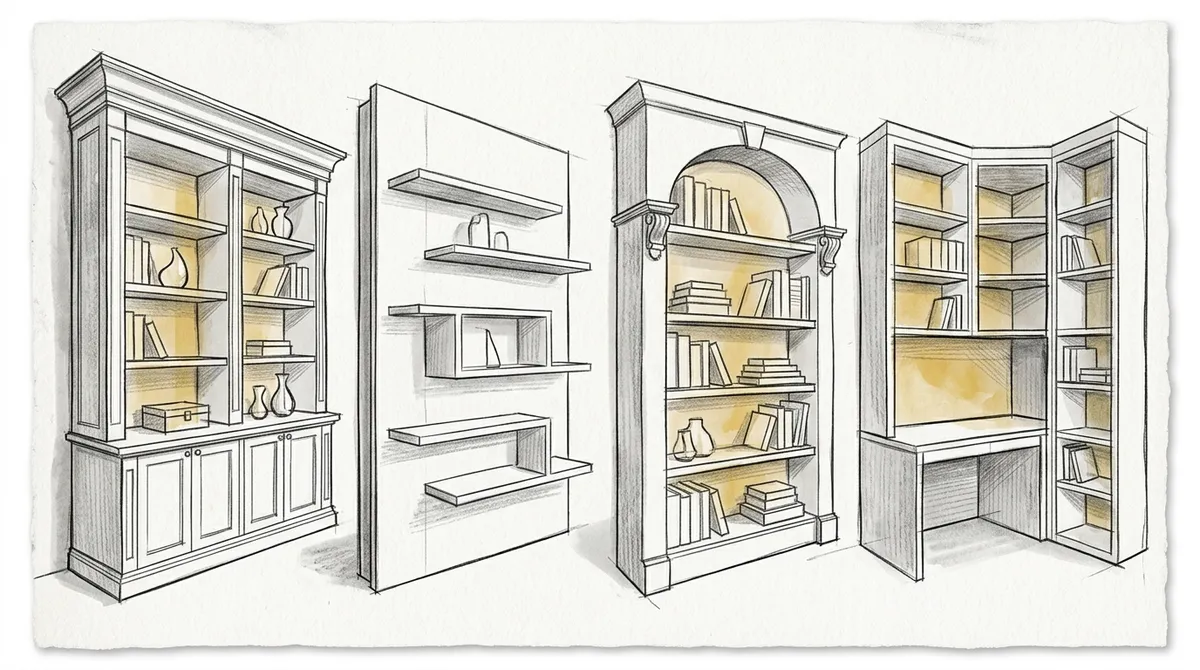
There is no one-size-fits-all approach to built-in bookcase designs. The style you choose should match your home’s existing architecture and your personal aesthetic. Here are the most popular styles available in 2026.
Traditional and Classic Designs
Traditional built-ins feature raised panel doors, detailed molding details, and rich wood finishes. They pair well with colonial, craftsman, and Victorian-style homes. Deep crown molding at the top adds elegance and connects the unit to the ceiling. To see how crown molding installation near me can complete a built-in design, look at homes with library-style shelving.
Modern and Minimalist Designs
Modern built-ins use clean lines and flat surfaces. They often feature frameless construction, integrated LED lighting, and matte or high-gloss finishes. This style suits contemporary homes and open-plan living spaces. The focus is on simplicity and function without ornate detail.
Built-Ins Around Fireplaces
Flanking a fireplace with built-in bookcases is one of the most popular design choices. This layout creates a stunning focal point in any living room. It adds symmetry, depth, and a cozy reading-nook feel. Custom custom mantels near you can tie the whole design together beautifully.
Floor-to-Ceiling Library Style
This design uses the full height of the wall for maximum storage and visual impact. A rolling library ladder can be added for both function and drama. This style works in home offices, studies, and formal living rooms. It creates a sense of grandeur that no freestanding bookshelf can achieve.
Built-Ins with Integrated Cabinets
Combining open shelving with closed cabinet sections gives you the best of both worlds. You can display books and décor on open shelves while storing less attractive items behind closed doors. This is a practical and versatile design for family rooms and home offices alike. To explore more options, check out 7 built-in cabinetry solutions that transform your home.
Step-by-Step Guide to Planning Your Built-In Bookcase
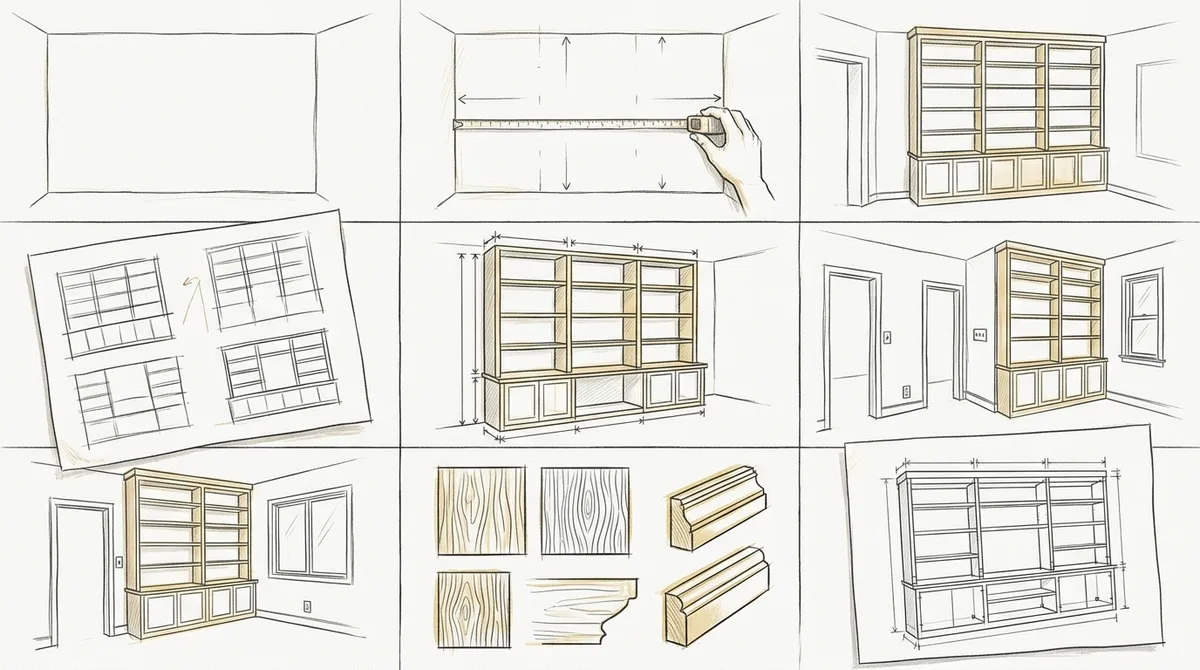
Good planning makes the difference between a bookcase that fits perfectly and one that feels awkward. Follow these steps to plan your built-in bookcase design the right way.
- Measure your wall space carefully. Record the exact width, height, and depth available. Note any outlets, switches, or vents that need to stay accessible.
- Define your primary purpose. Decide if the bookcase is mainly for books, display, media storage, or a combination of all three. This guides the shelf spacing and cabinet choices.
- Choose your style. Match the design to your home’s existing trim, doors, and architectural details. A mismatched style will look out of place even if the craftsmanship is flawless.
- Select your materials. Decide between hardwood, plywood, MDF, or a combination. Each has different cost, durability, and finish implications.
- Plan your finish. Choose between painted, stained, or a combination. Painted finishes are popular and timeless. Stained wood adds warmth and natural beauty.
- Consider add-ons. Think about integrated lighting, glass-front doors, pull-out drawers, or even a hidden reading nook built into the design.
- Hire a skilled carpenter. Custom built-ins require precision cutting, fitting, and finishing. A professional carpenter ensures clean results that last for decades.
If you are unsure where to start, reach out to a custom carpentry expert who can help you turn your vision into a detailed plan.
Choosing the Right Materials for Built-In Bookcases
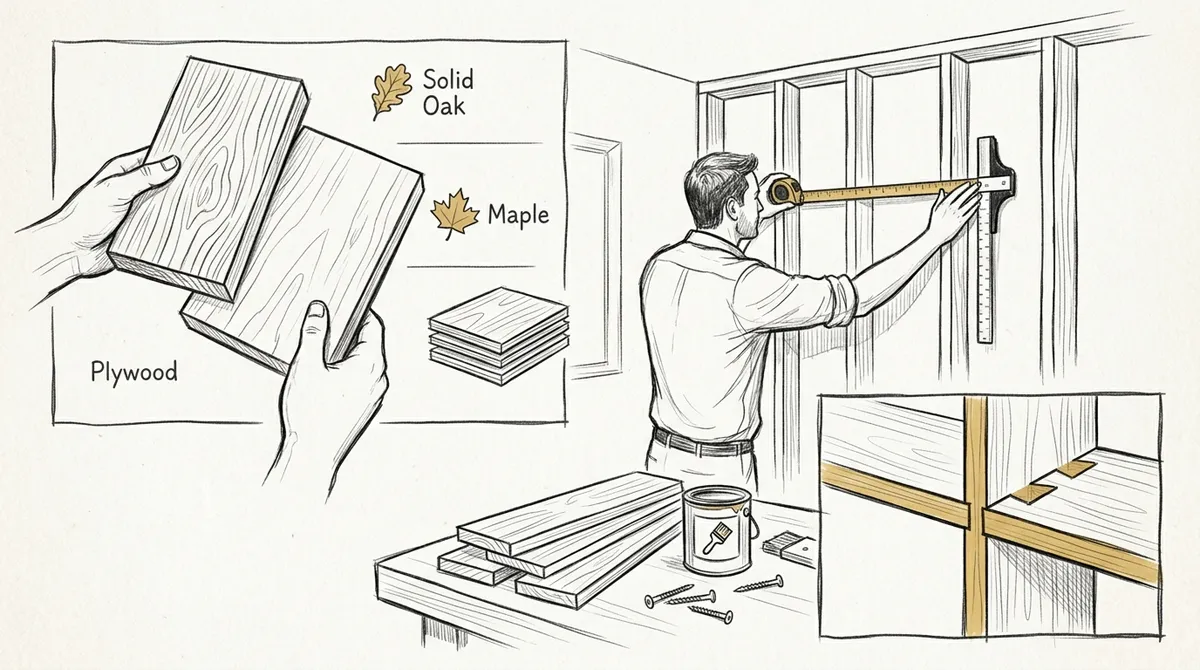
Material choice affects both the look and durability of your built-in bookcase. Here is a quick comparison of the most common options.
| Material | Best For | Durability | Finish Options |
|---|---|---|---|
| Solid Hardwood | Luxury, heirloom-quality pieces | Excellent | Stain or paint |
| Plywood | Structural shelves and cabinet boxes | Very Good | Paint or veneer |
| MDF | Painted built-ins with smooth finish | Good | Paint only |
| Hardwood Veneer | Wood look at lower cost | Good | Clear coat or stain |
Most custom carpenters use a combination of materials. For example, plywood for the cabinet box, solid wood for face frames and trim, and MDF for flat panel doors. This approach balances quality, cost, and aesthetics. To understand custom vs. standard woodworking services, think about how material choice directly impacts the final product.
Built-In Bookcase Design Ideas by Room
Built-in bookcases work in virtually every room of the home. The design, however, should be tailored to the specific function of each space.
Living Room Built-Ins
Living room built-ins are often the most visible and decorative. They frame fireplaces, flank windows, or span entire feature walls. Adding wall enhancements like integrated lighting or decorative trim work elevates the design further. To explore how wall accents with custom carpentry transform your home, the living room is the perfect starting point.
Home Office Built-Ins
A home office built-in should be highly functional. Deep lower cabinets can store office supplies and files. Upper shelves can hold books and reference materials. A built-in desk section can be added seamlessly into the design. This creates an efficient and professional workspace. For inspiration, see 13 custom built-ins that transform every room in your home.
Bedroom Built-Ins
In a bedroom, built-in bookshelves can flank the bed to create a custom headboard effect. They can also be built into a walk-in closet area or used to line an accent wall. The key is keeping the design clean and restful, avoiding too much visual clutter.
Dining Room Built-Ins
Dining room built-ins often double as buffets or bar storage. Lower cabinet sections hold serving pieces and barware. Upper open shelves display glassware, artwork, or décor. This adds significant functionality to a space that is often underutilized for storage.
Key Design Features to Consider
When finalizing your built-in bookcase design, there are several features that can make a big difference in how the finished unit looks and functions.
- Adjustable shelves: Shelves that can be moved up or down give you flexibility as your storage needs change over time
- Integrated lighting: LED strip lights or puck lights inside the bookcase highlight books and décor beautifully
- Glass-front doors: These protect delicate items while keeping them visible, adding a refined look
- Deep lower cabinets: A lower section with deeper drawers or cabinets handles larger items that do not fit on standard shelves
- Decorative trim and molding: Adding detailed trim work ties the bookcase into the room’s overall design language
The right combination of these features depends on your storage needs, budget, and style preference. A skilled carpenter can guide you through these choices based on your specific space.
How to Match Your Bookcase to Existing Trim and Architecture
One of the most important aspects of a great built-in bookcase design is making it look like it has always been part of the home. This requires careful attention to custom wood trim and moulding details throughout your home.
- Match the base profile. The baseboard at the bottom of the built-in should match the existing baseboard in the room.
- Match the crown profile. The crown molding at the top should align with or complement the existing crown molding in the space.
- Match the door style. If your home has raised-panel doors, use raised-panel cabinet doors. If your home has flat, modern doors, use flat-panel cabinet doors.
These small but critical details are what separate a truly custom, built-in look from something that simply sits against a wall. To choose finish carpentry that elevates your home, pay close attention to how all the pieces connect visually.
DIY vs. Hiring a Professional Carpenter
Many homeowners consider a DIY approach to save money on built-in bookshelves. However, built-in bookcase designs require precision skills and specialized tools. Mistakes in measuring, cutting, or fitting are difficult and costly to fix after the fact. To better understand whether to go the DIY route, read about DIY carpentry vs. professional service before making your decision.
Here is a quick comparison:
| Factor | DIY | Professional Carpenter |
|---|---|---|
| Precision and Fit | Challenging without experience | Exact fit guaranteed |
| Time Required | Weeks for most homeowners | Days with a professional crew |
| Material Knowledge | Limited | Extensive |
| Long-Term Durability | Varies | High with proper construction |
| Resale Value Impact | Moderate | High |
For most homeowners, hiring a professional carpenter delivers far better results. You can also find a skilled carpenter near you who specializes in custom built-ins and can guide you from the first measurement to the final coat of paint.
Working with Bucheli Trim on Your Built-In Design
If you are in the Tampa Bay area, Bucheli Trim specializes in exactly the kind of high-end custom carpentry that built-in bookcase designs require. From floor-to-ceiling library walls to fireplace flanking built-ins, the team brings precision and craftsmanship to every project. You can visit Bucheli Trim on Google to read reviews and see what past customers have experienced.
To learn more about the craftsmanship behind great built-ins, you can also follow Bucheli Trim on Facebook for project updates and design inspiration. And to learn more about carpentry as a trade and skill set, Wikipedia offers a solid overview of the craft’s history and techniques.
Conclusion
Built-in bookcase designs are one of the most impactful upgrades you can make to any room in your home. They maximize space, add architectural character, and create a finished, high-end look that freestanding furniture cannot replicate. The key is choosing the right style, materials, and design features for your specific space and lifestyle.
Planning carefully, matching existing trim details, and working with a skilled carpenter will ensure results that last for decades and add genuine value to your home. Whether you want a cozy reading nook, a grand library wall, or a functional home office backdrop, built-in bookshelves deliver on every level.
Ready to transform your space with a custom built-in bookcase? Get in touch with our custom carpentry team and start planning your dream design today.
FAQs
Q: What is the most popular built-in bookcase design style in 2026?
A: Floor-to-ceiling library-style built-ins and fireplace-flanking designs remain the most popular choices in 2026. Both styles maximize wall space and create a dramatic architectural focal point that significantly enhances a room’s character and value.
Q: How long does it take to install a custom built-in bookcase?
A: The timeline depends on the size and complexity of the design. A professional carpenter typically completes a standard built-in bookcase project in a few days to a week. More complex designs with integrated lighting, glass doors, or multiple sections may take longer.
Q: Can a built-in bookcase be built around a fireplace or window?
A: Yes, built-in bookshelves are specifically designed to work around existing architectural features like fireplaces, windows, and doors. A skilled custom carpenter measures and builds each unit to fit precisely within the available space, creating a seamless and intentional look.
Q: What materials are best for a painted built-in bookcase?
A: MDF and plywood are the most common materials for painted built-in bookcases. MDF provides an extremely smooth surface that is ideal for painted finishes, while plywood offers superior strength for shelves that will hold heavy books or objects.
Q: Do built-in bookcases increase home resale value?
A: Yes, high-quality custom built-in bookcases generally increase a home’s resale value. Buyers perceive them as premium architectural features rather than furniture, and professionally installed built-ins signal a well-finished, high-quality home to potential purchasers.