Key Takeaways
-
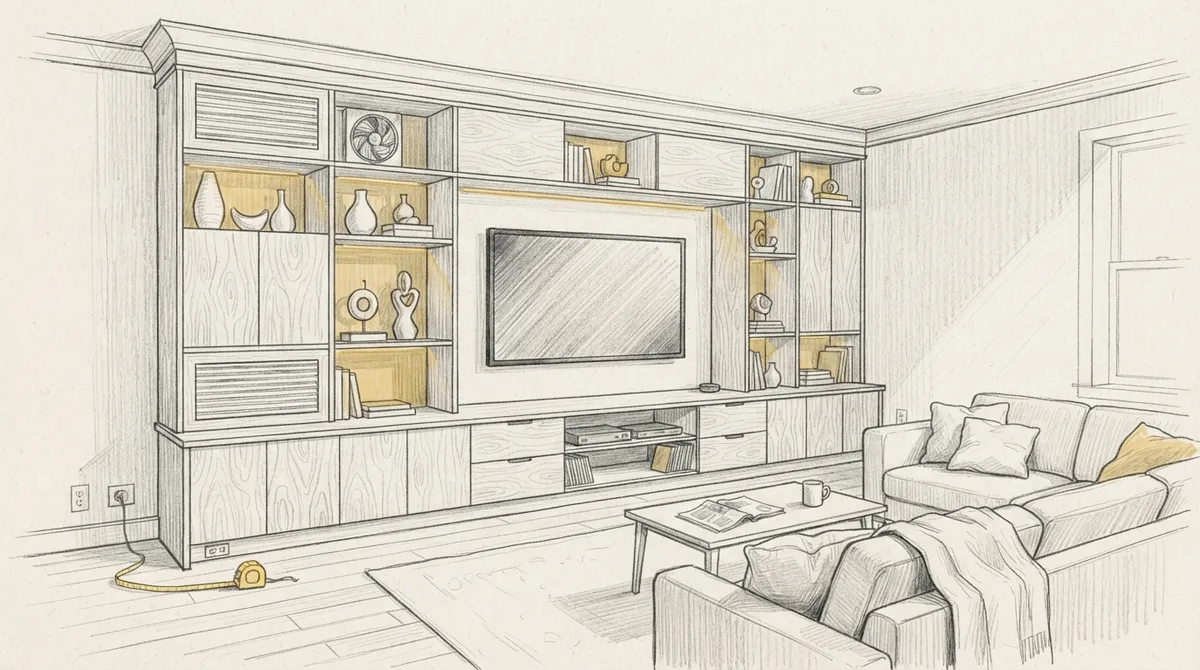
Measure your wall, outlets, and ceiling height first, since custom units are built to exact dimensions and gaps are the most common fit problem.
-
Plan your equipment list before the build, including airflow, vented panels or fans, power, and remote access, to prevent overheating later.
-
Mount the TV at seated eye level, since a screen placed too high is one of the most common causes of neck strain.
-
Choose stable materials such as plywood with hardwood veneer or well-sealed hardwoods, especially in humid climates like Florida.
-
Match the unit's trim, baseboards, and casings to the room's existing molding so the built-in looks like part of the architecture.
-
Build wire channels and pass-through holes into the design from the start to keep all cables hidden while allowing easy equipment access.
Most living rooms have the same problem. The TV sits on a stand that does not fit the wall. Cables hang down like vines. Game consoles, speakers, and media boxes pile up wherever they can. The room feels cluttered, even when it is clean.
That is why so many homeowners now choose custom entertainment centers. A custom unit is built for your wall, your screen, and your gear. It hides the mess, adds storage, and gives the room a clear focal point. It also looks like it truly belongs in the home.
In this guide, you will learn what custom entertainment centers are, how they differ from store-bought furniture, which styles and materials work best, and how the build process works. Whether you are a homeowner, an interior designer, or a developer planning a luxury finish, this article will help you make smart choices.
What Are Custom Entertainment Centers?
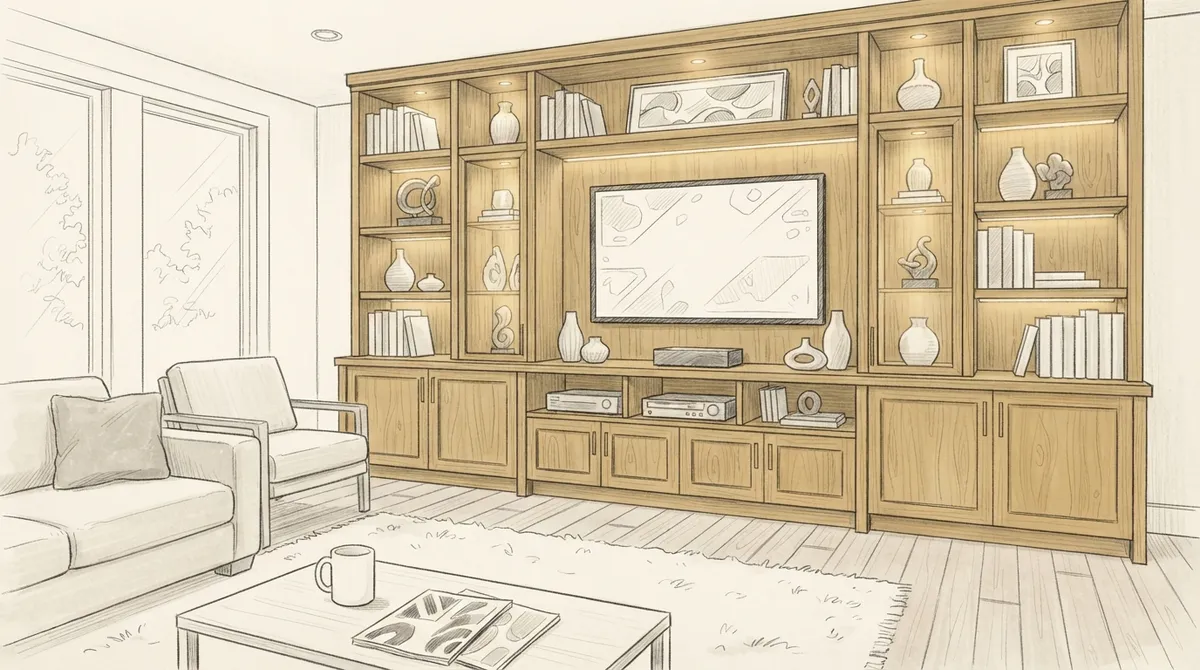
A custom entertainment center is a piece of carpentry made to fit one specific space. A skilled carpenter measures the wall, plans the layout, and builds the unit to match. Some are freestanding cabinets. Many are built-ins that attach to the wall and look like part of the house.
These units usually hold a television, media equipment, and display items. They often include closed cabinets, open shelves, drawers, and hidden wire channels. Some also include a fireplace, lighting, or a hidden compartment for a soundbar.
Unlike a standard TV stand, a custom unit is planned around how you live. You choose the size, the layout, the wood, and the finish. The result is furniture-grade work that feels like part of the architecture. If you want a closer look at the process, read this guide to a custom built-in entertainment center and how to find the right carpenter.
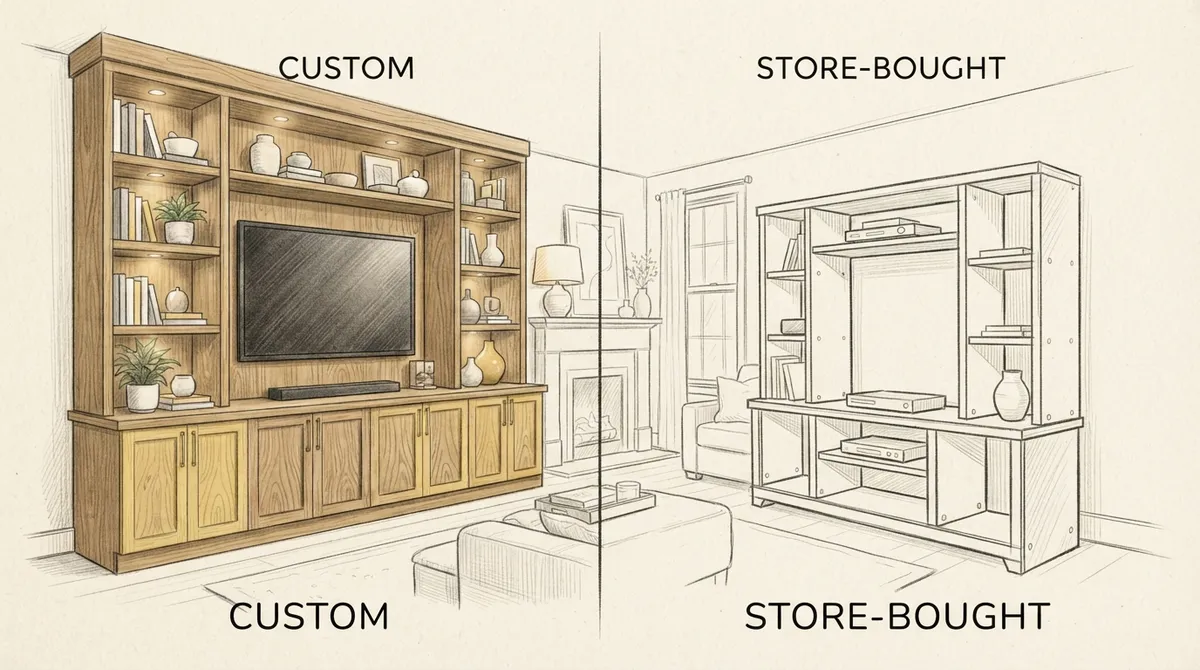
Why Choose Custom Over Store-Bought?
Store-bought media furniture is made for the average room. But very few rooms are average. Walls have outlets in odd places. Ceilings have different heights. Fireplaces, windows, and doorways all change what will fit.
A custom unit solves these problems. It fills the space wall to wall, so there are no awkward gaps. It lines up with your trim, your ceiling, and your style. It also uses better materials and stronger joinery than most mass-produced furniture.
Key Benefits of Going Custom
- Perfect fit: The unit matches your wall size, ceiling height, and room shape.
- Hidden wiring: Cables run inside the cabinet, so nothing shows.
- Smart storage: Shelves and drawers are sized for your actual items.
- Better materials: Solid wood and quality plywood last longer than particleboard.
- Added home value: Built-in carpentry is a feature buyers notice.
- Personal style: You pick the look, the finish, and the details.
Want to see how the two options compare for TV setups? This article on custom TV enclosures versus store-bought options breaks it down well.
Custom vs. Store-Bought: A Quick Comparison
| Feature | Custom Entertainment Center | Store-Bought Stand |
|---|---|---|
| Fit to your wall | Made to exact measurements | Standard sizes only |
| Cable management | Built-in hidden channels | Limited or none |
| Materials | Solid wood, quality plywood | Often particleboard or laminate |
| Design options | Fully tailored | Pre-set styles |
| Lifespan | Decades with care | Often a few years |
| Home value | Adds lasting appeal | Moves with you |
Popular Styles of Custom Entertainment Centers
There is no single look. The best style depends on your home, your taste, and how the room is used. Here are the styles that are most common in custom carpentry today.
Wall-to-Wall Built-Ins
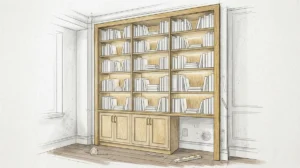
This style spans the full width of a wall. It often reaches the ceiling and includes cabinets below with shelves above. It feels grand and finished. It also gives you the most storage.
Fireplace Surround Units
Here, cabinets and shelves sit on both sides of a fireplace. The TV may sit above the mantle or be hidden behind a panel. This layout creates a warm, balanced focal wall. For ideas, see these shiplap fireplace design ideas for 2026.
Floating Media Consoles
A floating unit mounts to the wall and leaves the floor open. It has a clean, modern look. It also makes small rooms feel larger.
Media Walls With Paneling
Some homeowners want the TV to sit inside a full feature wall. Wood slats, shiplap, or paneled trim frame the screen. If this appeals to you, explore these media wall ideas for inspiration.
Cabinets With Concealed TVs
For formal rooms, a cabinet with doors can hide the screen when it is off. Pocket doors or lift mechanisms keep the room looking classic. When the show starts, the TV appears.
Choosing the Right Materials and Finishes
Material choices shape how your unit looks and how long it lasts. Good carpenters will explain the pros and cons of each option for your home. In Florida, humidity matters too, so it helps to pick materials that handle moisture well.
Common Material Options
- Solid hardwood: Oak, maple, and walnut are strong and beautiful. They take stain well and last for decades.
- Plywood with hardwood veneer: This is stable and resists warping. It is a smart choice for large panels and cabinet boxes.
- Paint-grade woods: Poplar and MDF work well for painted finishes with a smooth, even look.
- Mixed materials: Wood paired with glass, metal, or stone adds contrast and interest.
Finish Choices
The finish protects the wood and sets the mood. Stained finishes show off wood grain. Painted finishes give a crisp, clean look. Some homeowners choose a matte or satin sheen for a modern feel. Others prefer a rich, deep stain for a traditional room. Good painting and finishing work makes the difference between a unit that looks good and one that looks flawless.
Design Details That Make a Difference
The small details are what separate a custom entertainment center from a basic cabinet. Careful planning at the start prevents problems later.
Plan for Your Equipment
List every device that will live in the unit. This may include a cable box, game console, streaming player, receiver, and speakers. Each item needs airflow, power, and access for remotes. Your carpenter can add vented panels, mesh doors, or cooling fans to prevent heat buildup.
Think About Screen Size and Height
The TV should sit at eye level when you are seated. A screen mounted too high causes neck strain. Measure your seating distance and pick a screen size that fits. Then plan the cabinet around it, leaving room for the screen to breathe.
Add Lighting
LED strip lights behind shelves create a soft glow. Picture lights or puck lights highlight art and keepsakes. Good lighting also reduces eye strain during movie nights.
Include Smart Storage
Drawers hold remotes, games, and cables. Closed cabinets hide clutter. Open shelves display books, plants, and photos. A good mix keeps the unit useful and attractive.
How the Custom Build Process Works
Many people worry that a custom project will be confusing. In reality, the steps are clear. Here is how a typical build moves from idea to finished piece.
- Consultation: You meet with the carpenter to share your goals, style, and equipment list.
- Measuring: The carpenter measures the wall, outlets, trim, and ceiling height. Precision here prevents gaps later.
- Design and planning: A layout or drawing shows the shelves, doors, and TV placement. You approve it before work begins.
- Material selection: You choose the wood species, finish, hardware, and any special features.
- Fabrication: The pieces are cut, joined, sanded, and prepared in the shop.
- Finishing: Stain or paint is applied in controlled steps for a smooth, even coat.
- Installation: The unit is installed, leveled, secured to the wall, and trimmed to blend with the room.
- Final walkthrough: The carpenter checks every door, drawer, and edge to be sure it is perfect.
Working with an experienced local team makes this process smoother. If you are in the Tampa Bay area, learn how to find custom carpentry experts for your home.
Matching Your Entertainment Center to the Room
A custom unit should look like it belongs. That means matching it to the trim, ceiling, and wall details around it. When all of these elements work together, the room feels complete.
For example, a built-in with a crown cap looks best when it lines up with the room’s crown molding. Baseboards should flow into the base of the unit. Door and window casings should share the same profile. Learn more about this in our guide to molding details.
Walls matter too. Paneling, shiplap, or wainscoting behind the unit adds depth. A wall enhancement can turn a flat wall into a feature wall. Ceiling work, such as a coffered ceiling, can frame the whole space above your media wall.
Why Interior Designers and Developers Choose Custom
Custom entertainment centers are not just for homeowners. Interior designers use them to bring a client’s full vision to life. A designer can sketch the look, and a skilled carpenter can build it to match. The result is a space that feels planned, not pieced together.
Real estate developers value custom units for a different reason. Luxury buyers notice built-in details. A well-designed media wall in a living room or great room helps a property stand out. It signals quality and care.
Both groups want the same things from a carpenter: precise measuring, clean joinery, reliable timelines, and a finished look that holds up. Our custom projects page shows the kind of work that meets these standards.
Common Mistakes to Avoid
A few simple missteps can cause big headaches. Watch for these when planning your own project.
- Skipping the equipment plan: Adding a new device later may not fit or may overheat.
- Ignoring airflow: Closed cabinets trap heat. Plan vents or fans.
- Mounting the TV too high: This is one of the most common comfort problems.
- Forgetting wiring access: Plan outlets and cable paths before the build begins.
- Choosing materials that do not handle humidity: In Florida, stable materials matter.
- Hiring based on speed alone: Quality carpentry takes time and care.
For more on this topic, read about TV wall panel mistakes you must avoid.
How to Care for Your Custom Unit
A well-built entertainment center needs only light care. Dust the surfaces with a soft cloth. Wipe spills quickly. Avoid harsh chemicals that can dull the finish. Keep the unit away from direct, strong sunlight, which can fade stain over time.
Check hinges and drawer slides once a year. A drop of lubricant keeps them smooth. With this simple care, your unit can look great for decades.
Is a Custom Entertainment Center Right for You?
If your current setup feels cluttered, awkward, or out of place, a custom unit may be the fix. It is especially helpful if you have an unusual wall, a large TV, lots of equipment, or a strong sense of style. It also makes sense if you want a lasting upgrade that adds to the home’s value.
Bucheli Trim builds high-end custom carpentry across the Tampa Bay area, from built-in cabinetry to wall and ceiling work. You can see what customers say by visiting our Bucheli Trim location on Google. You can also learn more about carpentry as a craft and how it has shaped homes for centuries. To follow recent projects, check out the team on Facebook.
Final Thoughts
Custom entertainment centers turn a cluttered corner into the heart of the home. They hide wires, organize gear, and add real craftsmanship to your space. With the right plan, the right materials, and the right carpenter, you get a piece that fits your life and lasts for years.
Ready to start? Contact Bucheli Trim today to talk through your ideas and see how a custom entertainment center can transform your living space.
FAQs
Q: What is the difference between a custom entertainment center and a built-in?
A: A custom entertainment center is any unit built to fit your space, and it can be freestanding or fixed to the wall. A built-in is a type of custom unit that attaches to the wall and often runs floor to ceiling. Many homeowners choose built-ins for a seamless, architectural look.
Q: How long does it take to build a custom entertainment center?
A: Timelines vary based on size, design, and finish. Most projects move through consultation, design, fabrication, finishing, and installation over several weeks. Complex units with extra features may take longer, so it helps to plan ahead.
Q: Can a custom entertainment center hide all my cables?
A: Yes. A carpenter can build wire channels, pass-through holes, and hidden outlets into the design. This keeps cords out of sight while still allowing easy access to your equipment.
Q: What wood is best for a custom entertainment center in Florida?
A: Stable materials like quality plywood with hardwood veneer and well-sealed hardwoods handle humidity best. Painted finishes on stable substrates also hold up well. A local carpenter can recommend the right choice for your home’s conditions.
Q: Will a custom entertainment center fit a very large TV?
A: Yes. Because the unit is built to your exact measurements, it can be sized for any screen. The carpenter plans the opening, mounting, ventilation, and surrounding shelves around your TV for a clean, balanced look.