Key Takeaways
-
Strip old finish completely and sand wood to a smooth surface before applying new finish, as skipping these steps leads to poor adhesion and uneven results that cost more to fix.
-
Choose polyurethane or varnish finishes for high-traffic doors and trim, as different finish types offer varying durability and appearances—select based on wood type and wear expectations.
-
Refinish wood trim and doors when damage is surface-level and wood structure is solid; reserve replacement only for warped, rotted, or structurally damaged wood beyond repair.
-
Hire a professional carpenter for refinishing rather than DIY, as experts ensure even application, proper drying times between coats, and quality craftsmanship that lasts 5-10 years.
-
Refinish wood trim and doors alongside complementary projects like new flooring or wainscoting to create a cohesive, polished room design that increases home value.
-
Watch for peeling finish, faded color, visible scratches, sticky texture, and water stains as signs that refinishing is needed; waiting too long allows damage to penetrate the wood itself.
Your wood trim and doors say a lot about your home. Over time, even the most beautiful woodwork can start to look tired. The finish fades. Scratches appear. The color dulls. But here’s the good news: refinishing wood trim and doors can bring everything back to life. In fact, it can make your home look brand new — without a full renovation. Whether you’re a homeowner wanting a fresh look, an interior designer working on a project, or a real estate developer adding value to a property, this guide covers everything you need to know. You’ll learn what refinishing involves, why it matters, and when to call in a professional carpenter to get the job done right.
What Does Refinishing Wood Trim and Doors Actually Mean?
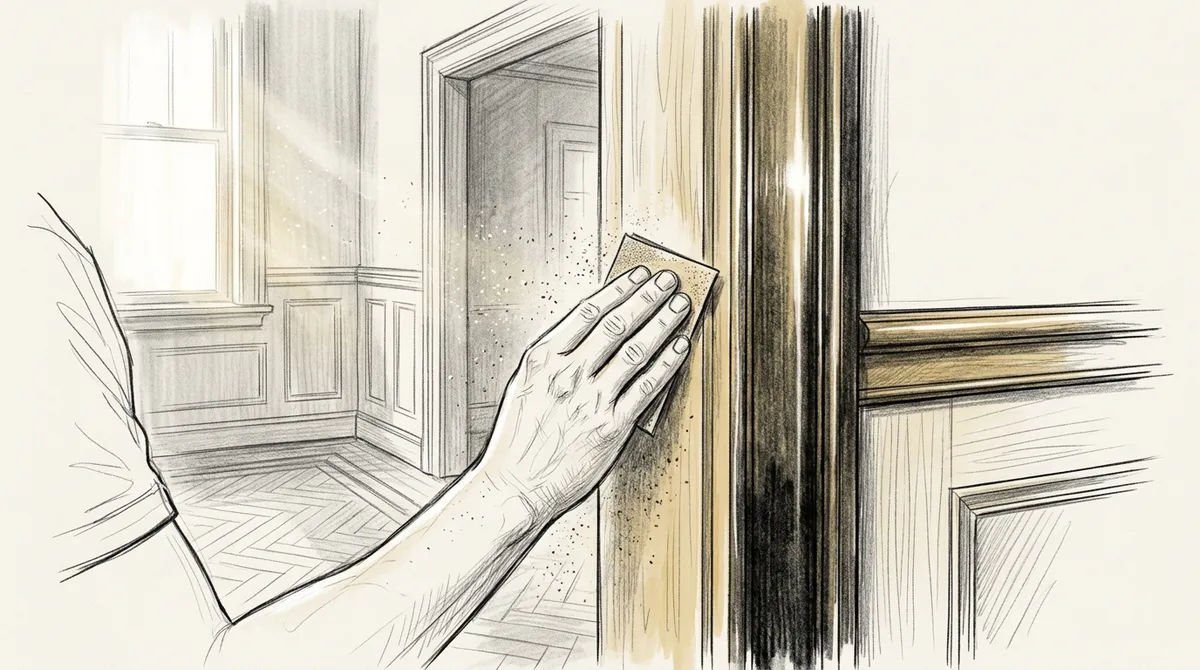
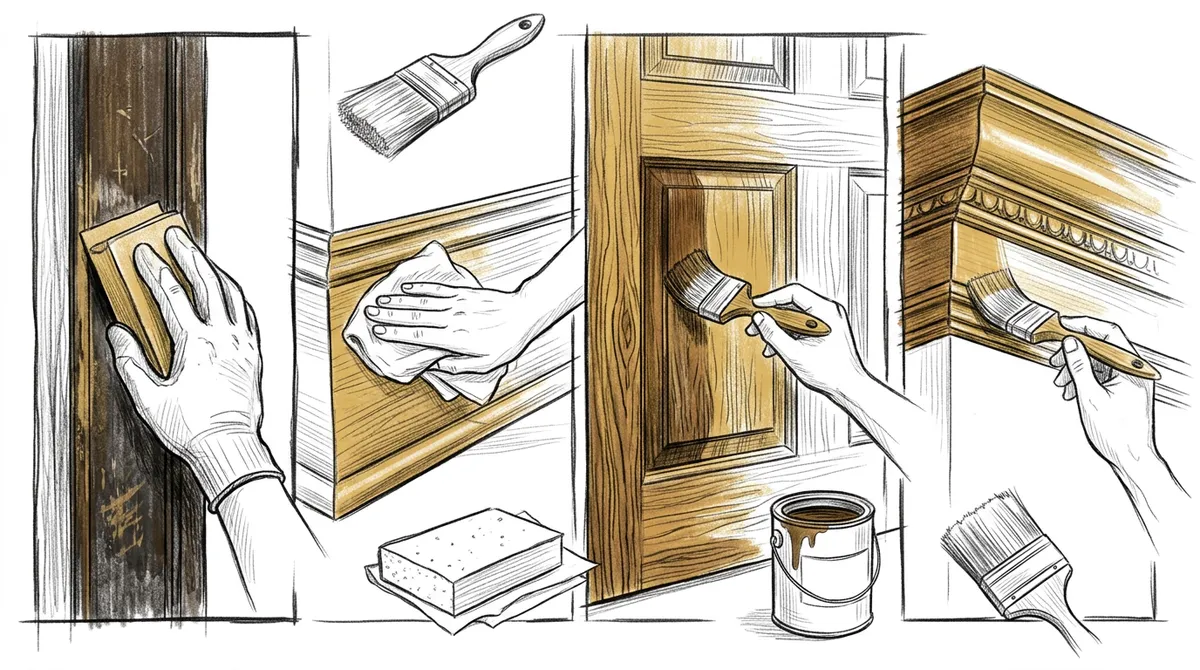
Refinishing is the process of restoring the surface of wood. It involves removing the old finish and applying a new one. This is different from painting over wood or simply cleaning it. When you refinish, you’re working with the actual wood surface. You strip away years of wear and bring the natural beauty back out. For wood trim — like molding details and baseboards — and for interior doors, this process can completely change the look of a room.
Think of it like restoring a classic car. The bones are good. The craftsmanship is there. You just need to bring the surface back to its original glory. Refinishing does exactly that for your woodwork.
Why Refinishing Wood Trim and Doors Matters
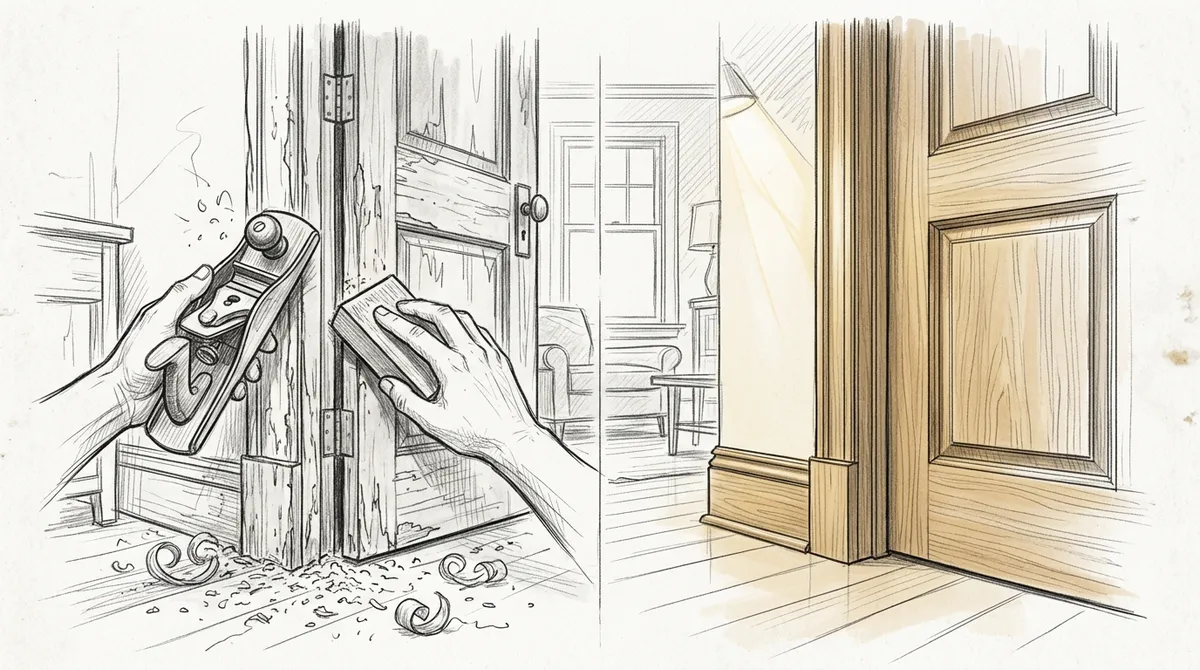
Wood trim and doors are visual anchors in any room. They frame doorways, define spaces, and add architectural character. When they look worn or faded, the whole room feels less polished. When they look sharp and well-finished, everything else in the room looks better too.
Here are the key reasons why refinishing is worth doing:
- Boosts curb appeal and interior appeal — Fresh woodwork makes a strong first impression
- Protects the wood — A good finish seals the wood from moisture and damage
- Increases home value — Buyers notice quality finishes, especially in high-end homes
- Extends the life of your woodwork — Refinishing prevents deterioration and rot
- Supports design updates — A new finish can complement a room’s new color palette or style
- More sustainable than replacing — Refinishing uses fewer resources than full replacement
For real estate developers, well-finished woodwork can be a selling point that sets a property apart. For interior designers, it’s a tool for cohesion and style. For homeowners, it’s a smart investment in comfort and beauty.
Signs That Your Wood Trim and Doors Need Refinishing
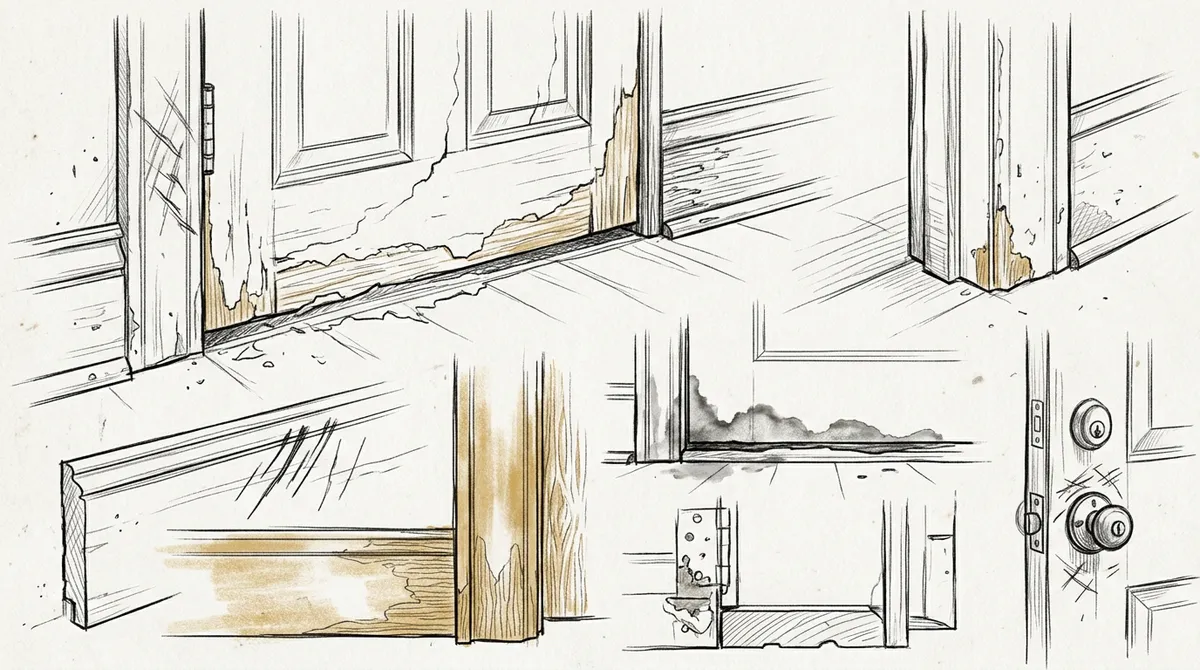
Not sure if it’s time? Here are the most common signs that refinishing is overdue:
- Peeling or cracking finish — This means the protective layer has broken down
- Faded or yellowed color — Especially common in older homes or sunny rooms
- Visible scratches and dents — Surface damage that simple cleaning won’t fix
- Sticky or rough texture — A sign the finish has degraded over time
- Inconsistent color — Patchy areas where the finish has worn unevenly
- Water stains or discoloration — Often found near windows and exterior doors
If you’re seeing more than one of these signs, it’s time to take action. Waiting too long can mean the wood itself gets damaged — and that’s a much bigger fix. You can also read more about when to call a professional carpenter for help.
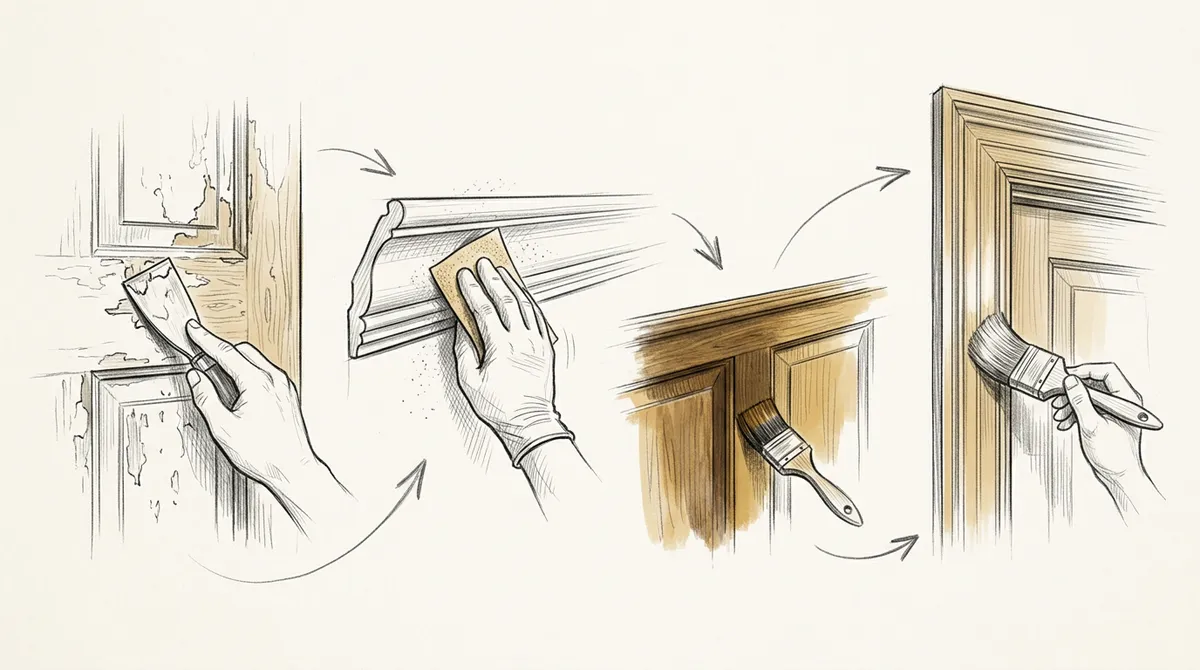
The Refinishing Process: Step by Step
Understanding the process helps you appreciate the craftsmanship involved. Here’s how professional refinishing of wood trim and doors typically works:
- Assessment — The wood is inspected for damage, type of existing finish, and what approach is needed
- Preparation — The area is cleaned and protected. Nearby surfaces are masked off
- Stripping — The old finish is removed using chemical strippers or sanding tools
- Sanding — The wood is sanded to a smooth, even surface, going from coarse to fine grit
- Repairs — Any cracks, holes, or dents are filled and sanded smooth
- Staining (optional) — A stain is applied if a color change is desired
- Finishing — A protective topcoat is applied — often varnish, lacquer, oil, or polyurethane
- Final inspection — Everything is checked for consistency, smoothness, and quality
Each step requires skill and patience. Rushing any part of the process leads to uneven results. That’s why professional carpentry makes such a big difference in the final outcome. To learn more about carpentry and what it involves, it helps to understand the depth of knowledge craftsmen bring to every project.
Types of Finishes Used in Wood Trim and Door Refinishing
Choosing the right finish is a big part of the refinishing process. Each type has different qualities, appearances, and levels of durability. Here’s a quick comparison to help you understand the options:
| Finish Type | Appearance | Durability | Best For |
|---|---|---|---|
| Polyurethane | Clear, glossy or satin | Very high | High-traffic doors and trim |
| Varnish | Warm, amber tone | High | Traditional woodwork and doors |
| Lacquer | Clear, smooth, fast-drying | Moderate | Interior trim with fine detail |
| Oil Finish | Natural, matte look | Moderate | Rustic or natural-look woodwork |
| Shellac | Warm, rich sheen | Low to moderate | Older homes and antique-style trim |
A skilled carpenter can help you choose the best finish based on your style, the wood type, and how much wear and tear the area gets. The team at Bucheli Trim’s painting and finishing services can guide you through these decisions with professional expertise.
Refinishing vs. Replacing: Which Is Better?
This is one of the most common questions homeowners ask. The answer depends on the condition of the wood and your goals. Here’s how to think about it:
- Choose refinishing when: The wood structure is solid, damage is surface-level, and the style still fits your design goals
- Choose replacement when: The wood is warped, rotted, or structurally damaged beyond repair
- Refinishing is more sustainable — It keeps good wood out of landfills
- Replacement allows for upgrades — New custom doors or more detailed trim profiles may be part of a design upgrade
In most cases, refinishing is the smarter choice. It preserves existing craftsmanship and costs less than full replacement. But if you’re redesigning a space entirely, replacement paired with refinishing of other existing elements can give you the best of both worlds. You can also explore how trim and molding can transform your space with either approach.
How Refinishing Fits Into a Larger Home Improvement Plan
Refinishing wood trim and doors rarely happens in isolation. It’s often part of a bigger design update. Here are common projects that pair well with refinishing:
- Updating wall enhancements like wainscoting or shiplap
- Installing new flooring that complements the newly refinished trim
- Adding or refreshing ceiling designs for a cohesive look throughout the room
- Updating built-in cabinetry to match the new trim finish
- Installing new crown molding alongside refinished existing trim
When all these elements work together, the result is a space that feels intentional, polished, and high-end. Interior designers especially appreciate this level of coordination, where every surface complements the next. You can explore more ideas in our custom projects gallery.
For more ideas on how skilled carpentry elevates your home, check out 11 ways custom woodworking transforms homes.
What to Expect When Hiring a Professional Carpenter for Refinishing
Hiring a professional for refinishing wood trim and doors is a smart move. Here’s what the experience typically looks like:
- Initial consultation — The carpenter visits your home, reviews the woodwork, and discusses your goals
- Scope of work agreed upon — You’ll know exactly what will be done before work begins
- Scheduling and setup — The carpenter prepares the space to protect your home during work
- Professional execution — Skilled hands do the stripping, sanding, and finishing with care
- Final walkthrough — You review the completed work and confirm everything meets your expectations
If you’re looking for a trusted professional in the Tampa Bay area, finding a skilled carpenter near you is easier when you know what to look for. Check out our reviews and work on Google to see what our Tampa Bay clients are saying.
Common Mistakes to Avoid During Wood Trim Refinishing
Even well-meaning DIY efforts can go wrong. Here are the most common mistakes to watch out for:
- Skipping sanding between coats — This leads to a rough, uneven finish
- Applying finish in humid conditions — Moisture causes bubbling and poor adhesion
- Not stripping old finish completely — New finish won’t bond well over old layers
- Using the wrong finish for the wood type — Different woods absorb finishes differently
- Rushing the drying time — Each coat needs proper time to cure before the next is applied
These mistakes can cost more to fix than the original job would have cost to do right. That’s why professional refinishing pays off — the results are lasting and the craftsmanship is guaranteed. Follow Bucheli Trim on Facebook to see real project examples and craftsmanship in action.
The Value of Quality Craftsmanship in Refinishing
Wood refinishing is not just about aesthetics. It’s about preserving the integrity of the material. Quality craftsmanship means every detail is attended to — from the smoothness of the surface to the evenness of the finish. The wood is treated with respect. The right products are used. The results last for years.
This level of care is what separates a professional finish from a rushed one. It’s also what makes wood trim and doors a long-term investment rather than a short-term fix. Just like crown molding adds architectural definition, a beautifully refinished door or trim line adds a layer of detail that elevates the entire room.
At Bucheli Trim, we believe every surface deserves that kind of attention. Our team brings precision and skill to every refinishing project we take on in the Tampa Bay area.
Conclusion
Refinishing wood trim and doors is one of the most impactful upgrades you can make to your home. It protects the wood, refreshes the look, and adds real value. Whether you’re refreshing a single room or preparing a property for sale, quality refinishing makes a difference that people notice. The key is choosing the right professional and understanding the process before you begin.
Ready to give your woodwork a fresh start? Get in touch with our team at Bucheli Trim and let’s talk about what refinishing can do for your home or project.
FAQs
Q: How long does refinishing wood trim and doors typically take?
A: The timeline depends on the size of the project, the number of doors and trim sections involved, and the type of finish used. A professional carpenter can usually complete a standard room’s trim and one or two doors in one to three days, including drying time between coats.
Q: Can all types of wood trim be refinished?
A: Most solid wood trim and doors can be successfully refinished. Painted or stained wood, hardwood, and softwood varieties all respond well to stripping and refinishing. Veneer surfaces require more care, and a professional can assess whether refinishing is the right approach for your specific wood type.
Q: How often should wood trim and doors be refinished?
A: In most homes, wood trim and doors benefit from refinishing every 5 to 10 years, depending on the level of wear, exposure to sunlight, and the type of finish applied. High-traffic areas or exterior-facing doors may need attention sooner.
Q: Is refinishing wood trim and doors a DIY job or should I hire a professional?
A: While basic refinishing tasks can be done by experienced DIYers, professional carpenters deliver significantly better results. They have the right tools, knowledge of wood types, and expertise in applying finishes evenly and correctly — especially for detailed trim profiles and high-quality doors.
Q: What is the difference between staining and refinishing wood trim?
A: Staining changes or enhances the color of the wood, while refinishing refers to the full process of removing the old surface finish and applying a new protective coat. Staining is often one step within the broader refinishing process, not a replacement for it.