Key Takeaways
-
Match the carpenter's specialty to your project type: finish carpenters handle visible interior details like trim and built-ins, while rough carpenters focus on framing and structure for new builds.
-
Verify licensing, insurance, and portfolio before hiring; request proof of credentials and review photos for tight joints, even spacing, and clean corners to assess craftsmanship quality.
-
Ask specific questions about experience with similar projects, timeline, materials suited to local climate, and request a written scope of work and agreement before starting.
-
Choose a local carpenter who understands regional climate conditions, building codes, and supplier networks; they're easier to reach for follow-ups and protect their reputation through community trust.
-
Watch for red flags including no written agreement, pressure to decide quickly, lack of insurance proof, bare portfolios, poor communication, or requests for large upfront payments.
-
Define your project clearly in writing before calling, gather referrals from friends and designers, and meet in person so the carpenter can identify potential issues early.
You type “carpenters in my area” into a search bar. Hundreds of names pop up. Some have shiny websites. Some have five-star ratings. Some have almost nothing at all. How do you pick the one who will do the job right?
This guide walks you through the process step by step. You will learn what types of carpenters exist, what questions to ask, and how to spot true craftsmanship. Whether you are a homeowner planning a remodel, an interior designer seeking a skilled partner, or a developer who needs premium finishes, the same core steps apply.
Custom carpentry is different from basic repair work. It takes skill, patience, and an eye for detail. A good carpenter can turn a plain room into a space that feels warm, rich, and one of a kind. A poor choice can leave you with gaps, crooked lines, and costly fixes. Let’s make sure you land on the right side of that line.
What Do Carpenters in Your Area Actually Do?
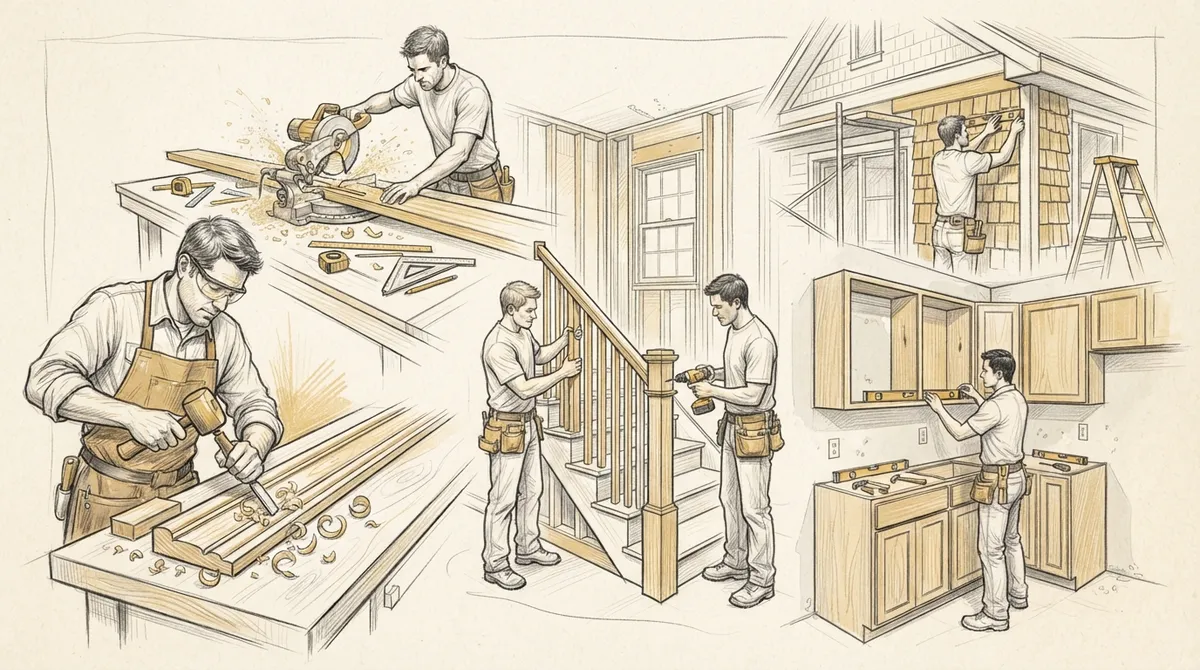
The word “carpenter” covers a wide range of work. Some carpenters frame walls and build roofs. Others focus on the fine details inside a home. If you want to learn more about carpentry as a trade, you will see it spans many skills and specialties.
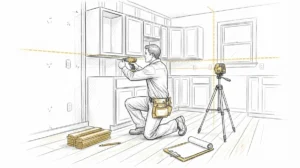
For custom home projects, you will mostly work with finish carpenters. These pros handle the visible parts of a build. Think of the pieces your eyes and hands touch every day.
Common custom carpentry services include:
- Ceiling designs: coffered, tray, and beamed ceilings that add depth and character
- Wall enhancements: wainscoting, shiplap, accent walls, and wall paneling
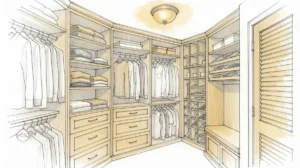
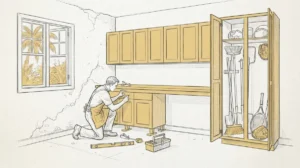
- Built-in cabinetry: bookcases, entertainment centers, closets, and kitchen cabinets
- Trim and molding: baseboards, crown molding, window casings, and door trim
- Custom doors: interior and exterior doors made to fit your style
- Outdoor structures: decks, patios, and gates
If you want a closer look at what a quality professional offers, read about what a finish carpenter does for your home.
What Are the Main Types of Carpenters?
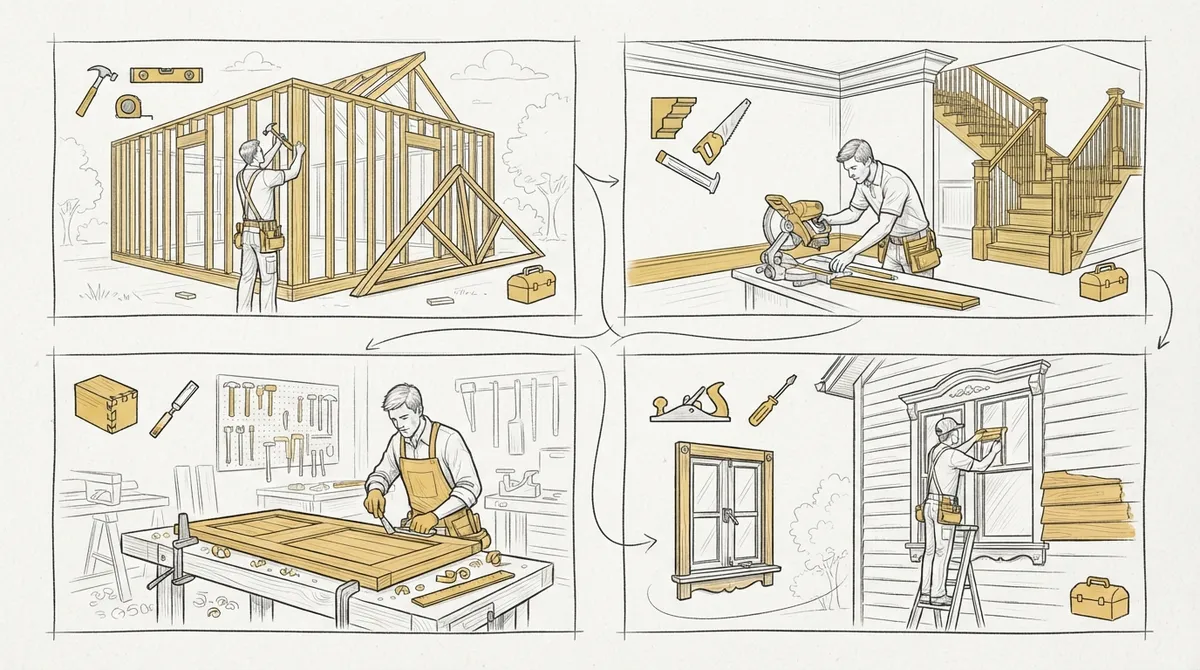
Not every carpenter fits every job. Knowing the difference saves time and money. It also helps you ask better questions when you start calling around.
| Type of Carpenter | Main Focus | Best For |
|---|---|---|
| Rough Carpenter | Framing, structure, and support | New builds and additions |
| Finish Carpenter | Trim, molding, doors, and details | Interior upgrades |
| Cabinetmaker | Cabinets, built-ins, and furniture | Kitchens, closets, and storage |
| Custom Carpenter | One-of-a-kind designs and features | High-end, personalized projects |
For high-end homes, you often need a mix of finish and custom skills. A pro who does both can plan, design, and install your project from start to finish. You can also learn more in this guide on how to identify the three types of carpenters.
Why Does Choosing a Local Carpenter Matter?
Searching for “carpenters in my area” is smart for good reasons. Local pros bring real advantages to your project.
- They know local conditions. In Tampa Bay, heat and humidity affect wood. A local carpenter knows which materials hold up and which ones warp.
- They know local codes. Building rules differ from one city to the next. A local pro follows the right ones.
- They are easier to reach. Site visits, fixes, and follow-ups are simple when the shop is nearby.
- They have a reputation to protect. Local businesses rely on word of mouth. Good work keeps them busy.
- They know trusted suppliers. Strong local ties often mean better access to quality lumber and hardware.
Humidity is a big deal in Florida. Wood swells and shrinks as moisture changes. A carpenter who works in this climate every day knows how to plan for it. You can see how this plays out in our post on crown molding choices in Tampa.
How Do You Start Your Search for Carpenters Near You?
A smart search begins before you ever make a call. Follow these steps to build a strong list of options.
- Define your project. Write down what you want. Is it a built-in bookcase, a new ceiling, or full-room trim? Clear goals lead to clear quotes.
- Gather a few names. Ask friends, neighbors, and designers for referrals. Check online maps and review sites too.
- Review their work. Look at photo galleries and finished projects. Check that their style matches your vision.
- Read customer feedback. Look for patterns in reviews. Praise for clean lines and good communication is a great sign.
- Call your top three. Ask about their process, timeline, and availability.
- Meet in person. A walk-through lets the carpenter see your space and spot issues early.
For extra tips, see how to find the best carpenter near you. You can also compare notes with our guide on where to find a skilled carpenter.
What Should You Look for in a Quality Carpenter?
Great carpenters share a set of traits. Look for these signs as you review each candidate.
A Strong Portfolio
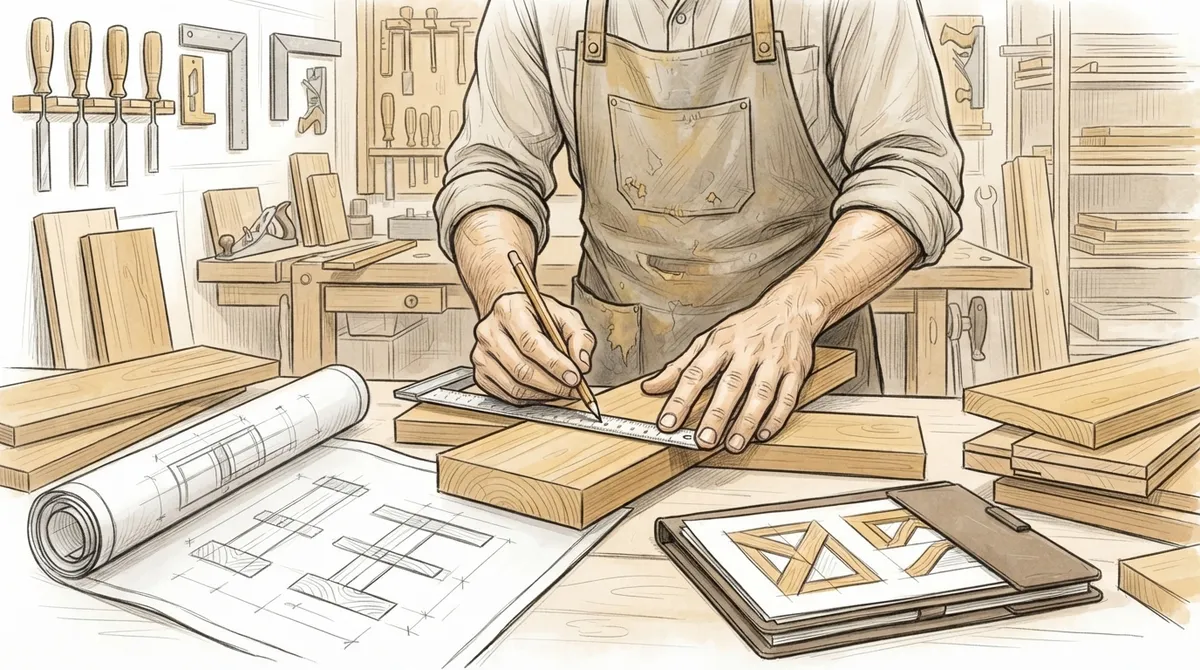
Photos tell the truth. Look for tight joints, even spacing, and clean corners. Check how trim meets walls and how doors close. Small details show big skill.
Proper Licensing and Insurance
Ask for proof of license and insurance. This protects you if something goes wrong on the job. A true pro will share these papers without fuss. Learn more about why licensed carpenters matter.
Clear Communication
Good carpenters explain their plan in plain words. They return calls. They give you a written scope of work. If someone is vague or slow to respond now, expect the same later.
Attention to Craftsmanship
Craftsmanship shows up in small choices. It is the sanding, the fitting, and the finish. Our list of 13 signs of true craftsmanship shows you what to watch for.
Experience with Your Project Type
A carpenter who builds decks all day may not be the best fit for a coffered ceiling. Match the pro to the project. Ask how many similar jobs they have finished.
What Questions Should You Ask Before Hiring?
The right questions reveal a lot. Keep this list handy for your first calls and meetings.
- How long have you worked in custom carpentry?
- Can I see photos of projects like mine?
- Are you licensed and insured?
- Who will be on site each day?
- What materials do you recommend for our climate?
- How do you handle changes during the project?
- What is your timeline from start to finish?
- Do you offer a written agreement and a clear scope of work?
- How do you protect my home during the work?
- What happens if I am not happy with a result?
Pay attention to how they answer. Confident, direct answers are a good sign. Dodging or vague replies are a red flag. You can avoid common traps by reading seven mistakes to avoid when hiring carpenters.
How Do Different Clients Benefit from Custom Carpentry?
Each type of client has different goals. Here is how custom carpentry serves each one.
Homeowners
Homeowners want spaces that feel personal. Custom carpentry adds warmth and value to a home. A built-in bookcase or a wall of paneling can change how a room feels every day. Browse what homeowners need to know about custom carpentry for a deeper look.
Interior Designers
Designers need a partner who can bring a drawing to life. A skilled carpenter reads plans, solves problems, and keeps details true to the vision. Look for someone who welcomes collaboration and respects deadlines.
Real Estate Developers
Developers want finishes that make a property stand out. Quality trim, ceilings, and cabinetry help a listing feel luxurious. Reliable timelines and consistent quality matter most when you manage several units.
Which Carpentry Features Add the Most Impact?
Some upgrades change a room more than others. This table shows popular options and what they bring to a space.
| Feature | What It Adds | Common Rooms |
|---|---|---|
| Crown Molding | Polished edge where wall meets ceiling | Living rooms, bedrooms |
| Wainscoting | Texture, charm, and wall protection | Dining rooms, hallways |
| Coffered Ceiling | Depth and a grand look | Great rooms, offices |
| Built-In Cabinets | Storage and a custom fit | Living rooms, kitchens |
| Custom Doors | Strong first impressions | Entries, interiors |
| Accent Walls | A focal point with style | Bedrooms, media rooms |
Want to explore more? See our pages on ceiling designs, wall enhancements, and custom cabinets. Each page shows what is possible. If you are curious about the material details, here is more on crown molding and how it has been used in homes for ages.
What Red Flags Should You Watch For?
Some warning signs show up early. Spotting them can save you stress later.
- No written agreement. A handshake is not enough for a big project.
- Pressure to decide fast. A good carpenter lets you think.
- No proof of insurance. This leaves you exposed to risk.
- A bare portfolio. No photos often means no experience.
- Poor communication. Missed calls and late replies tend to continue.
- Requests for large upfront payments. Be careful with anyone who asks for most of the money before work begins.
If you see two or three of these, keep looking. Plenty of skilled pros out there will treat you with respect and honesty.
Should You Hire a Carpenter or Try DIY?
Some small tasks are fine for a weekend. But custom work asks for exact cuts, special tools, and years of practice. A mistake on crown molding or built-ins can be hard to undo.
Compare your options in our post on DIY carpentry versus professional service. In most cases, a pro delivers cleaner results and saves you from rework. That is especially true for visible features that guests will see every day.
How Do You Prepare for Your Project?
A little prep makes the job smoother. Use this short checklist before work begins.
- Clear the space. Move furniture and décor out of the work zone.
- Finalize your design. Confirm styles, finishes, and measurements.
- Agree on a schedule. Set start and end dates in writing.
- Plan for dust and noise. Talk about how the crew will protect your home.
- Stay in touch. Set a simple way to check in during the work.
Good prep builds trust on both sides. It also keeps the job on track and the results sharp. For a view of the full process, read what to expect from home carpentry services.
Why Choose a Tampa Bay Custom Carpentry Specialist?
If you live in Tampa Bay, local knowledge gives you an edge. Coastal air and warm weather affect wood, paint, and finishes. A specialist who works here every day knows how to choose the right materials and methods.
Bucheli Trim focuses on high-end custom carpentry across the Tampa Bay area. The team builds ceiling designs, wall enhancements, and built-in cabinetry with a focus on precision and style. You can learn about the team on the About page and view recent work on the custom projects page. To see what past clients say, visit us on Google — Bucheli Trim and read the reviews.
You can also stay connected through Facebook to see fresh project photos and updates.
Conclusion: Your Next Step Toward the Right Carpenter
Finding great carpenters in your area takes a little effort, but it pays off. Define your project, review portfolios, ask smart questions, and trust your instincts. Look for clear communication, solid proof of skill, and a pro who understands your local climate.
Quality carpentry is an investment in how your home looks and feels for years. When you pick the right partner, the process feels smooth and the results speak for themselves.
Ready to talk about your project? Contact Bucheli Trim today to share your ideas and take the first step toward custom work you will love.
FAQs
Q: What is the difference between a carpenter and a finish carpenter?
A: A general carpenter handles many tasks, including framing and structure. A finish carpenter focuses on the visible details inside a home, such as trim, molding, doors, and built-ins. For custom interior upgrades, a finish carpenter is usually the better choice.
Q: How do I know if a carpenter in my area is qualified?
A: Ask for proof of license and insurance, and review a portfolio of past projects. Read customer reviews and request references. A qualified carpenter will share this information openly and explain their process clearly.
Q: How long does a custom carpentry project usually take?
A: Timelines depend on the size and detail of the project. Small trim jobs may take a few days, while built-in cabinetry or ceiling designs can take several weeks. A good carpenter will give you a written schedule before work begins.
Q: Can a carpenter work from my interior designer’s plans?
A: Yes. Skilled custom carpenters regularly work from drawings and design plans. They can review the details, suggest practical changes, and build the pieces to match the original vision.
Q: Why should I choose a local carpenter over a larger company?
A: Local carpenters understand regional climate, building codes, and supplier options. They are also easier to reach for site visits and follow-ups. Their reputation depends on community trust, which often leads to more careful work.