Key Takeaways
-
Store-bought shelves leave gaps and sag, while custom shelving is measured and built to fill your exact wall space, ceiling height, and nooks for a seamless fit.
-
Choose materials by load and finish: hardwood or plywood with hardwood edging for strength and stability, MDF for smooth painted shelves in dry indoor spaces.
-
Keep shelf spans under 36 inches for heavy loads like books, and use thicker boards, a front face frame, or vertical supports to prevent sagging.
-
Plan shelf depth around what you store: about 10 to 12 inches for books, shallower for display items, and deeper for bins or larger objects.
-
In humid climates like Tampa Bay, use stable materials and seal the wood properly so shelves don't warp, swell, or shift over time.
-
Hire a qualified carpenter for built-in work, since poor joinery, unanchored shelves, and inaccurate measurements are costly mistakes that are hard to fix.
Store-bought shelves rarely fit the way you want them to. They sag, leave odd gaps, and never match the style of your room. That is why more homeowners are choosing custom shelving in 2026. Built to your exact space, custom shelves turn wasted wall area into useful, beautiful storage.
Custom shelving is more than boards on a wall. It is a piece of carpentry made to match your home, your belongings, and your taste. Interior designers use it to bring a client’s vision to life. Real estate developers use it to give listings a high-end edge that buyers notice right away.
This guide explains what custom shelving is, which styles work best, how the process works, and how to pick the right materials. You will also learn how to avoid common mistakes and how to work with a skilled carpenter in the Tampa Bay area.
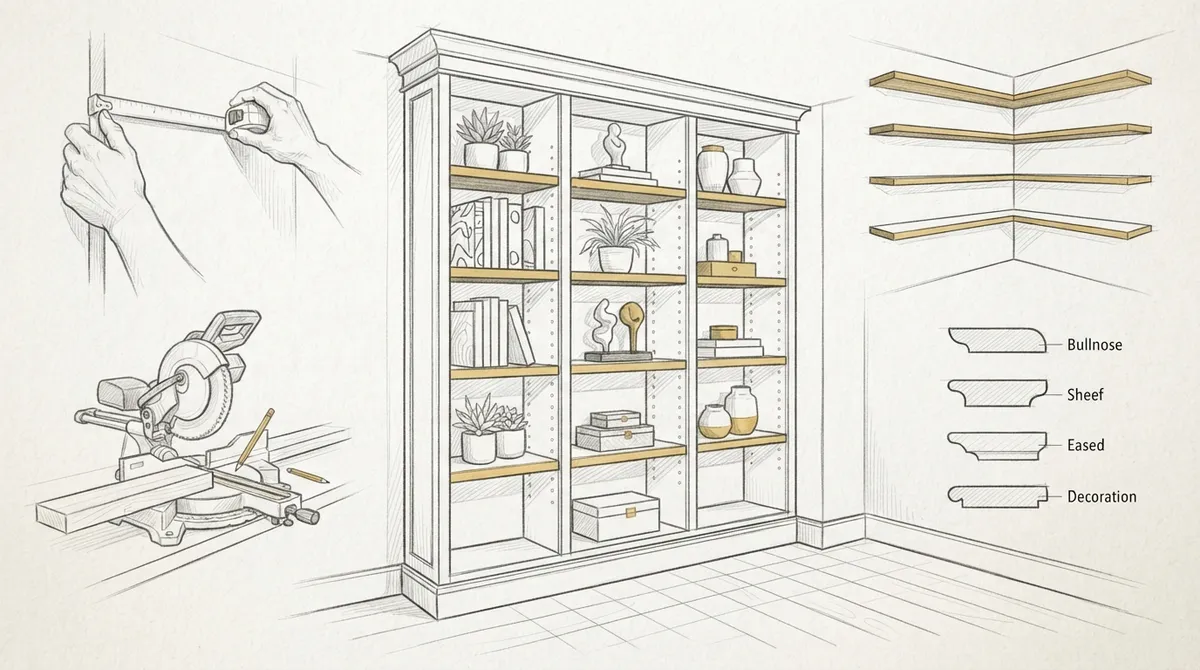
What Is Custom Shelving?
Custom shelving is storage that a carpenter designs, builds, and installs for a specific space. Every measurement, shelf depth, and finish is chosen for your room. Nothing is mass-produced.
This is different from ready-made shelf units. Standard units come in fixed sizes. They leave gaps at the ceiling, along the walls, or around corners. Custom shelves fill the space fully, so the final result looks like part of the house.
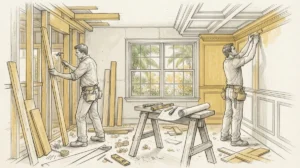
Custom shelving falls under carpentry, a trade built on precision and skill. A good carpenter plans the layout, selects the wood, builds each piece, and installs it with clean, tight joints.
Key Features of Custom Shelving
- Exact fit: Shelves are sized to your walls, nooks, and ceiling height.
- Your choice of material: Pick hardwood, plywood, or painted finishes to match your style.
- Adjustable or fixed layouts: Plan the shelf spacing around the items you own.
- Built-in strength: Properly anchored shelves carry heavy books, décor, and equipment.
- Seamless finish: Trim and paint make the shelves look like part of the room.
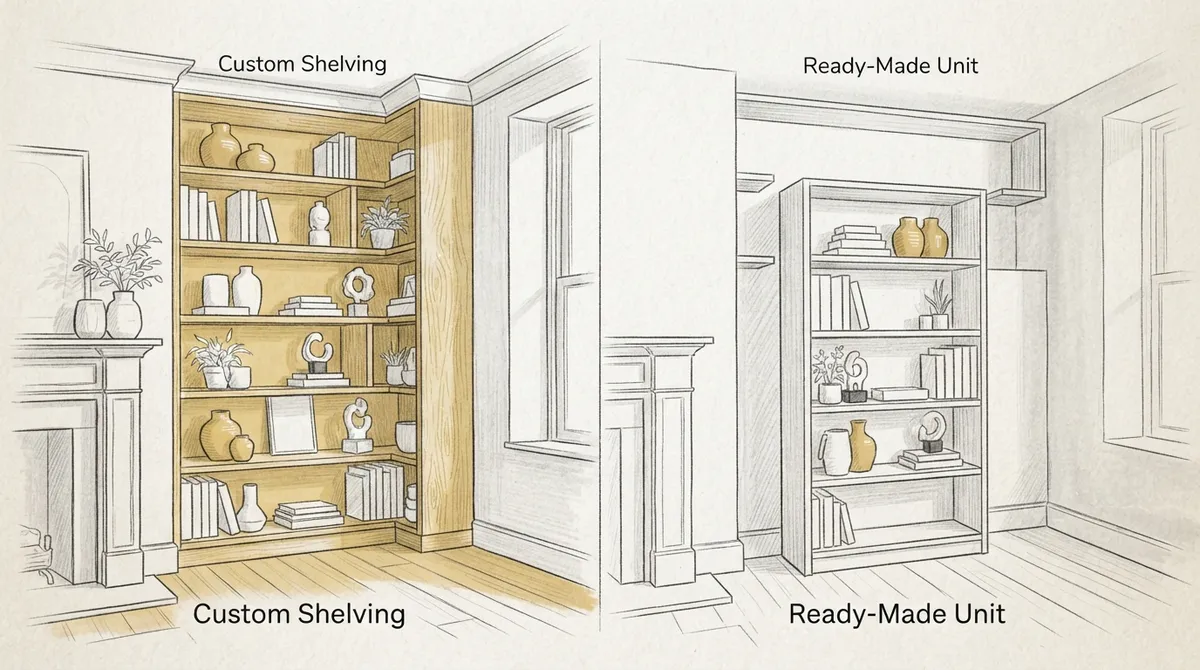
Why Choose Custom Shelving Over Ready-Made Units?
Many people start with store-bought shelves and later wish they had gone custom. The differences show up in fit, strength, and long-term value.
| Feature | Custom Shelving | Ready-Made Shelving |
|---|---|---|
| Fit | Made to exact room measurements | Fixed sizes with gaps |
| Materials | Solid wood, quality plywood, premium finishes | Often particleboard or thin laminate |
| Strength | Anchored into wall framing | Freestanding or lightly mounted |
| Style | Matches your home’s trim and design | Limited color and style options |
| Lifespan | Built to last for decades | May sag or wear out sooner |
| Home appeal | Adds a high-end look | Looks temporary |
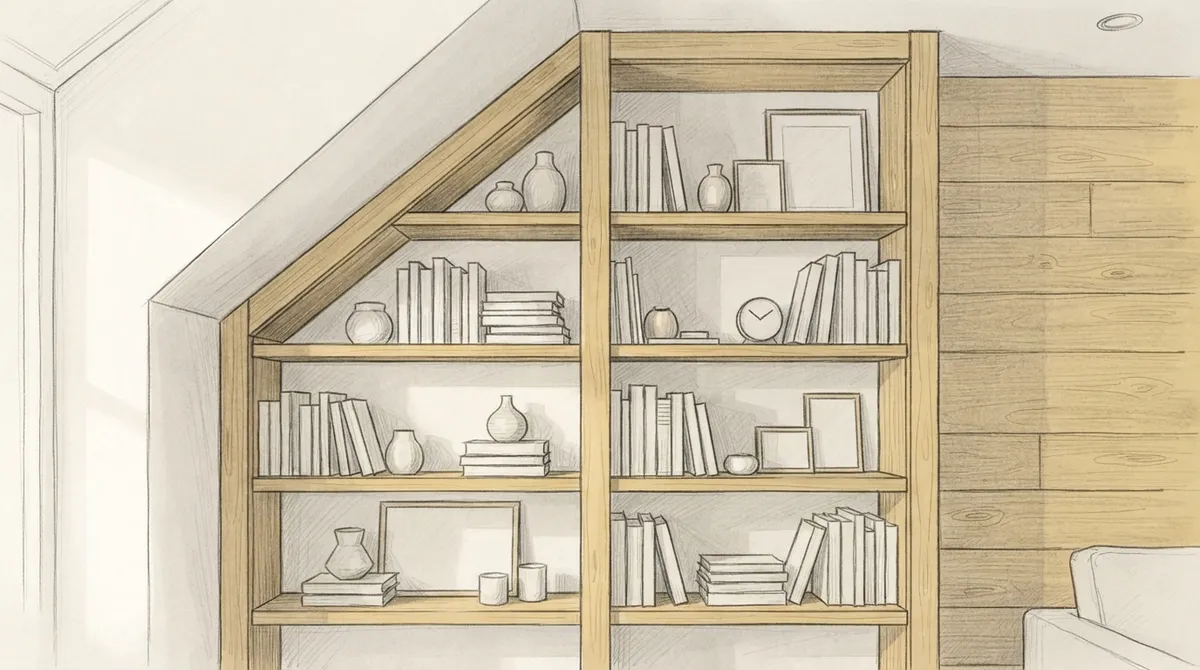
Custom shelving also solves problems that standard units cannot. Odd corners, sloped ceilings, and narrow alcoves all become useful storage. If you want a deeper look at how built-in work compares to loose furniture, read why custom built-ins outperform store furniture.
Popular Types of Custom Shelving
Custom shelving works in nearly every room. The right style depends on what you want to store and how you want the space to feel.
Built-In Bookcases
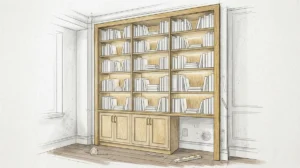
Built-in bookcases are the classic choice for living rooms, home offices, and libraries. They can run from floor to ceiling and wrap around windows or doors. Crown molding and face frames give them a finished, furniture-like look. For design inspiration, see these custom bookcase designs that elevate any room.
Floating Shelves
Floating shelves have no visible brackets. They give a clean, modern look and work well in kitchens, bathrooms, and entryways. A carpenter hides strong supports inside the wall, so the shelf looks light but holds real weight.
Closet Shelving
Custom closets use shelves, drawers, and hanging rods in a layout planned around your wardrobe. This makes every inch useful. Learn more in this guide to closet shelving installation.
Entertainment Wall Shelving
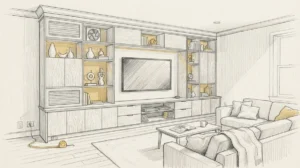
Shelving around a TV can hide cables, display décor, and store media equipment. Open shelves balance closed cabinets for a tidy look. You can explore options in this guide to a custom entertainment center that lasts.
Pantry and Kitchen Shelving
Kitchen shelves can be open for display or built into pantry cabinets. Pull-out shelves, tall units, and narrow spice racks make cooking easier. They are a smart addition to any custom cabinet plan.
Garage and Laundry Room Shelving
These hard-working rooms need strong, easy-to-clean storage. Custom shelves handle heavy bins, tools, and supplies. See how to plan built-in garage cabinets that last for ideas that carry over to shelving.
Choosing the Right Materials
Material choice affects how your shelves look, how much weight they hold, and how long they last. Here is a simple breakdown of common options.
- Solid hardwood (oak, maple, walnut): Strong and beautiful. Best for stained finishes where the wood grain shows.
- Plywood with hardwood edging: Very stable and resists warping. A great choice for wide shelves and painted finishes.
- Medium-density fiberboard (MDF): Smooth and ideal for painted shelving. It works well in dry indoor spaces but is not the best for heavy loads.
- Pine and poplar: Lighter woods that take paint well and suit budget-minded projects with a classic look.
Tampa Bay’s humid climate matters here. Wood can swell or shift when moisture levels change. A skilled carpenter picks stable materials and seals them well, so your shelves stay flat and tight for years.
Finish Options
- Painted: Offers a crisp, clean look and many color choices.
- Stained: Shows off natural wood grain for a warm, rich feel.
- Natural clear coat: Protects the wood while keeping its light look.
- Two-tone: Mixes paint and stain for a custom, designer style.
How the Custom Shelving Process Works
Working with a custom carpenter is simple when you know the steps. Here is how a typical project moves from idea to finished shelves.
- Consultation: You share your goals, style, and what you plan to store. The carpenter visits the space.
- Measuring and planning: Exact measurements are taken. The carpenter checks walls, ceilings, outlets, and lighting.
- Design and material selection: You choose the layout, wood, and finish. Drawings or sketches help you picture the result.
- Construction: Pieces are cut and built with careful joinery. Many are made in a shop for tight quality control.
- Installation: Shelves are anchored into wall studs. Gaps are filled and trim is fitted.
- Finishing: The shelves are sanded, painted or stained, and cleaned up. Final checks make sure every shelf is level and secure.
Good planning prevents most problems. If you want to know what to expect when hiring help, this guide to home carpentry services and what to expect is a useful read.
Design Tips for Better Custom Shelving
A few smart choices can make your shelving look better and work harder. Keep these tips in mind during planning.
- Plan around your items: Measure your tallest books, baskets, and décor before choosing shelf heights.
- Mix open and closed storage: Cabinets at the bottom hide clutter. Open shelves above show off favorites.
- Mind shelf depth: Books need about 10 to 12 inches. Display items may need less. Deeper shelves suit bins and larger objects.
- Add lighting: Built-in LED strips or puck lights make shelves glow and highlight your décor.
- Think about shelf thickness: Thicker shelves look more substantial and resist bending under weight.
- Match your trim: Matching baseboards and crown molding helps shelves blend into the room.
Preventing Shelf Sag
Long shelves can bend over time. A carpenter prevents this by adding a front face frame, using thicker boards, or placing vertical supports at set spacing. As a general rule, keep spans under 36 inches for heavy loads like books.
How Custom Shelving Fits With Other Carpentry Details
The best shelving does not stand alone. It works with the rest of the room’s woodwork. Matching trim, paneling, and ceiling details create a polished, unified look.
For example, you can pair built-in shelves with molding details for a refined top edge. You might also add wall enhancements such as paneling behind open shelves to add depth and color. Some homeowners even tie the whole room together with a custom ceiling design above a wall of shelves.
If you want more ideas, browse these custom shelving ideas that transform Tampa homes. You can also see how shelves fit into bigger projects in custom built-ins that transform every room.
Custom Shelving for Designers and Developers
Custom shelving is a strong tool for professionals too. Each group has its own goals, and custom work meets them well.
For Interior Designers
Designers need carpenters who can follow a vision and deliver clean results. Custom shelving lets you control proportions, finishes, and details so the final room matches your drawings. A skilled carpenter can build to your specs and adjust on site when walls are not perfectly square.
For Real Estate Developers
Buyers notice built-ins. A wall of finished shelving in a living room or a custom closet in the primary suite helps a property stand out. These details signal quality and can help a listing feel more luxurious without a full remodel.
Common Mistakes to Avoid
Most shelving problems come from poor planning or rushed work. Avoid these common errors.
- Skipping accurate measurements: Even small errors lead to visible gaps. Always measure more than once.
- Ignoring wall studs: Shelves must anchor into solid framing to hold weight safely.
- Choosing weak materials: Thin boards sag. Match the material to the load.
- Forgetting about outlets and vents: Plan around electrical boxes and air vents early.
- Overlooking humidity: Unsealed wood can warp in Florida’s damp air.
- Hiring unqualified help: Poor joinery and crooked installs ruin the look. See these mistakes to avoid when hiring carpenters before you choose.
DIY or Professional Custom Shelving?
Simple floating shelves can be a DIY project for experienced homeowners. But full built-in shelving needs advanced tools, precise cuts, and strong installation skills. Mistakes can be costly and hard to fix.
A professional carpenter brings the right tools, trained eyes, and proven methods. The finished shelving looks better and lasts longer. If you are weighing both options, this comparison of DIY carpentry vs. professional service can help you decide.
Working With Bucheli Trim in Tampa Bay
Bucheli Trim creates high-end custom carpentry for homes across the Tampa Bay area. The team builds ceiling designs, wall enhancements, and built-in cabinetry with a focus on craftsmanship, precision, and style. Custom shelving fits naturally into that work, from a single bookcase to a full wall of storage.
You can learn more about the team on the About page, or browse past work in custom projects. Want to hear from past clients? Read testimonials or visit Bucheli Trim on Google to see what Tampa Bay customers say. You can also follow recent work on Facebook.
Conclusion
Custom shelving gives you storage that fits your home perfectly and looks like it was always meant to be there. It uses every inch of space, handles heavy loads, and adds lasting value. With the right design, strong materials, and skilled installation, your shelves will serve you well for many years.
Ready to plan your project? Contact Bucheli Trim to talk through your ideas and start designing custom shelving built for your space.
FAQs
Q: What is custom shelving?
A: Custom shelving is storage that a carpenter designs, builds, and installs for a specific space. Every measurement, material, and finish is chosen to match your room and your needs, so it fits better than ready-made units.
Q: How long does custom shelving last?
A: Well-built custom shelving can last for decades. Strong materials, solid joinery, and proper anchoring into wall studs keep shelves level and secure. Sealing the wood also helps it hold up in Florida’s humid climate.
Q: What is the best wood for custom shelves?
A: Hardwoods like oak, maple, and walnut are strong and look great when stained. Plywood with hardwood edging is very stable and works well for painted shelves. The best choice depends on your style, your load, and the room.
Q: How deep should custom shelves be?
A: Shelves for books usually need 10 to 12 inches of depth. Display shelves can be shallower, while shelves for bins or equipment may need more. A carpenter will plan depth around the items you want to store.
Q: Can custom shelving be added to any room?
A: Yes. Custom shelving works in living rooms, kitchens, closets, offices, laundry rooms, and garages. A carpenter can design shelves for odd corners, alcoves, and sloped walls that standard units cannot fit.