Key Takeaways
-
Master carpenters charge $75-$150+ per hour for custom work like coffered ceilings and built-in cabinetry, while apprentices earn $25-$45 for basic trim; skill level and project complexity are the primary cost drivers.
-
Custom ceiling designs and built-in cabinetry are the most labor-intensive projects, often requiring 20-50+ hours; coffered ceilings and detailed bookcases command premium rates due to precision and craftsmanship requirements.
-
Location significantly impacts rates—urban areas and high-cost regions like Tampa Bay charge more due to greater demand for skilled trades and higher operating costs for contractors.
-
Total project cost depends on labor hours, not just hourly rate; an expert carpenter finishing in 3 days is often more cost-effective than a slower professional taking 2 weeks despite lower hourly rates.
-
Licensed, insured carpenters typically charge more but provide code-compliant work and quality guarantees; verify credentials and request detailed written estimates before hiring to ensure fair pricing.
-
Bundle multiple projects together and plan clearly to reduce setup time and mobilization costs; poor project definition leads to unexpected overruns, making clear communication essential for budget accuracy.
Understanding carpenter hourly rates can feel confusing. There are many factors that affect what you pay. Whether you’re a homeowner planning a renovation, an interior designer sourcing skilled trades, or a real estate developer finishing a luxury property, knowing how carpenters set their rates helps you plan smarter. This guide breaks it all down in simple terms. You’ll learn what influences carpenter rates, what different types of projects involve, and how to get the most value from your investment. Custom carpentry is a skilled trade, and the rates reflect that expertise. By the end of this article, you’ll feel confident navigating the conversation with any professional carpenter — and you’ll know exactly what to look for when comparing options.
Why Carpenter Hourly Rates Vary So Much
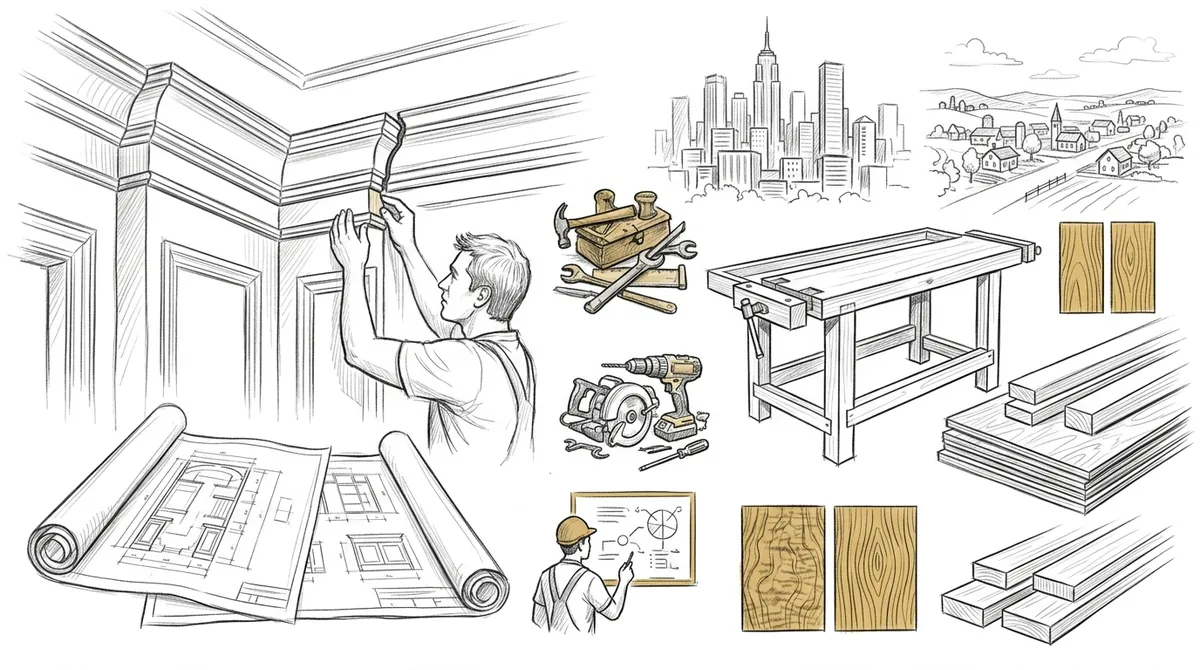
Not all carpenters charge the same rate. Many things affect what a professional carpenter charges per hour. Understanding these factors helps you set realistic expectations before any project begins. To understand what homeowners need to know about custom carpentry, it helps to first understand how rates are structured.
Here are the main factors that influence carpenter hourly rates:
- Experience and skill level: A master carpenter with decades of experience charges more than someone just starting out.
- Type of work: Finish carpentry and custom built-ins require more precision than basic framing work.
- Location: Rates in urban areas or high-cost-of-living regions tend to be higher.
- Project complexity: Intricate designs like coffered ceilings or custom cabinetry take more skill and time.
- Materials involved: Working with exotic hardwoods or specialty materials requires more expertise.
- Licensing and insurance: Licensed, insured professionals typically charge more — and for good reason.
If you want to understand why you should hire licensed carpenters near you, licensing directly impacts both quality and rate.
General Carpenter Rate Ranges by Skill Level
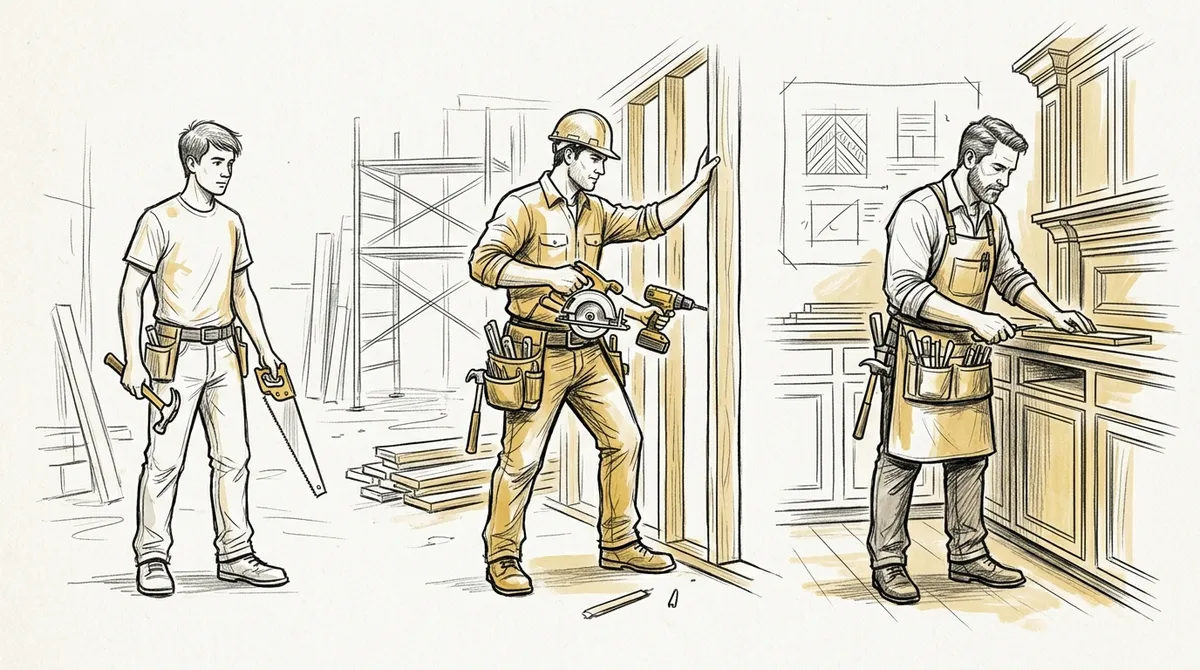
Carpenter rates generally fall into a few tiers based on experience. Here’s a simple breakdown of what you can expect across different skill levels in the custom carpentry field. Keep in mind that these are general industry benchmarks, and actual rates will vary by region and scope.
| Skill Level | Typical Hourly Range | Common Project Types |
|---|---|---|
| Apprentice / Entry-Level | $25 – $45/hr | Basic trim installation, simple repairs |
| Journeyman Carpenter | $45 – $75/hr | Crown molding, baseboard installation, door hanging |
| Master / Custom Carpenter | $75 – $150+/hr | Custom built-ins, coffered ceilings, high-end cabinetry |
Custom and finish carpentry almost always falls in the higher tiers. Projects like custom ceiling designs and built-in cabinetry require precision and artistry that justify premium rates. You can also learn how to find the best carpenter near you in 2026 to ensure you hire someone at the right skill level for your project.
Types of Custom Carpentry Work and Their Hourly Impact
Different types of carpentry projects demand different levels of skill. The more detailed and decorative the work, the higher the hourly rate tends to be. Here’s a look at common custom carpentry services and what affects their labor intensity.
Ceiling Designs
Custom ceilings are among the most labor-intensive carpentry projects. Coffered ceilings, tray ceilings, and beam installations require precise measurements and expert craftsmanship. If you’re wondering what makes a tray ceiling worth adding to your home, the design complexity is a big part of the answer. These jobs often command the highest hourly rates because mistakes are costly and difficult to fix.
Wall Enhancements
Wall enhancements include wainscoting, shiplap, accent walls, and decorative paneling. These projects require careful planning and clean execution. You can explore wall enhancement options to see the variety of work involved. The intricacy of the pattern or panel design directly affects how much time a carpenter spends on the job.
Built-In Cabinetry and Storage
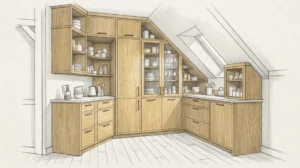
Built-in cabinetry is one of the most valuable custom carpentry services you can invest in. From custom closets to kitchen cabinets and entertainment centers, this work requires detailed planning, precise cuts, and a high level of finish work. The 7 built-in cabinetry solutions that transform your home article gives a great sense of how varied and complex these projects can be.
Trim and Molding Details
Trim work includes baseboards, crown molding, door casings, and window trim. While it may look simple, quality molding details demand sharp angles, seamless joints, and a trained eye. Getting these details wrong can undermine an entire room’s look, which is why experienced trim carpenters are worth their hourly rate. For more on crown molding as a design element, it’s a classic detail that never goes out of style.
How Project Scope Affects the Total Cost
Hourly rate is just one part of the total cost equation. A carpenter may charge a higher rate but finish a project faster due to their expertise. Meanwhile, a lower-rate carpenter may take much longer or require rework. Here’s how to think about the full picture:
- Estimate the total hours needed: Ask the carpenter for a time estimate before the project starts. This helps you calculate the total labor cost based on their hourly rate.
- Factor in material costs separately: Labor and materials are usually quoted separately. Understanding what the hourly rate covers helps you compare quotes accurately.
- Account for project phases: Large custom projects often have distinct phases — design, prep, installation, and finishing. Each phase may have different labor intensity and associated costs.
- Consider the value of speed and quality: An expert carpenter who finishes a project in three days is often more cost-effective than a slower craftsman who takes two weeks. Quality and efficiency both matter.
To learn more about DIY carpentry vs. professional service, comparing the true cost of doing it yourself versus hiring a pro can help you make a smarter financial decision.
What Influences Rates in the Tampa Bay Area
If you’re in the Tampa Bay region, local market conditions play a big role in what carpenters charge. The demand for high-quality custom work in Florida has grown steadily. Homeowners and developers in the area are investing in luxury finishes that command skilled labor. You can also discover 7 reasons to hire a Tampa carpenter for your home to understand the local advantage of working with regional experts.
Here are regional factors that affect Tampa Bay carpenter rates:
- High demand for luxury finishes: Tampa’s growing real estate market drives demand for premium custom work.
- Skilled labor availability: Fewer master carpenters means higher rates for top-tier talent.
- Project volume: Busy seasons can affect availability and scheduling flexibility.
- Specialty services: Unique offerings like epoxy floor installations and custom millwork are in high demand locally.
Bucheli Trim is a trusted name in the Tampa Bay area for high-end custom carpentry. From ceiling designs to built-in cabinetry, their team brings precision craftsmanship to every project. You can visit Bucheli Trim on Google to read reviews and see what local customers have to say about their experience.
How to Evaluate a Carpenter’s Hourly Rate Fairly
Getting a fair rate means understanding what you’re actually paying for. A skilled carpenter brings years of training, professional tools, and the ability to solve problems quickly. When you compare rates, look beyond the number. To identify the 13 signs of true craftsmanship in custom carpentry, you’ll learn what quality really looks like — and why it’s worth a fair hourly rate.
Use these steps to evaluate any carpenter’s rate fairly:
- Request a detailed written estimate: A professional carpenter should provide a breakdown of labor hours and tasks. This makes it easy to compare quotes side by side.
- Check credentials and experience: Ask how long they’ve been in custom carpentry. Look for a portfolio of past work, especially projects similar to yours.
- Read reviews and testimonials: Customer feedback tells you a lot about reliability and quality. You can also read testimonials from satisfied customers to gauge what to expect from experienced custom carpenters.
- Ask about guarantees: A confident carpenter stands behind their work. Ask if they offer any warranty on labor or craftsmanship.
- Verify licensing and insurance: This protects you if something goes wrong. Licensed carpenters also tend to produce higher-quality, code-compliant work.
You can also avoid the 7 mistakes people make when hiring carpenters near them to protect yourself during the hiring process.
Comparing Project Types and Their Typical Labor Hours
To help you plan your budget, here’s a general comparison of common custom carpentry projects and their approximate labor time ranges. These are estimates only — actual hours depend on project size, complexity, and site conditions.
| Project Type | Approximate Labor Hours | Key Factors Affecting Time |
|---|---|---|
| Crown Molding (per room) | 4 – 10 hours | Room size, ceiling height, profile complexity |
| Coffered Ceiling | 20 – 50 hours | Grid size, number of beams, finish details |
| Built-In Bookcases | 15 – 35 hours | Number of shelves, custom features, wall conditions |
| Wainscoting (per room) | 8 – 20 hours | Room perimeter, pattern style, existing wall prep |
| Custom Cabinet Installation | 10 – 30 hours | Number of units, complexity, finish carpentry required |
Understanding labor hours helps you see why certain projects cost more overall, even if the hourly rate seems similar. You can explore custom carpentry project examples to get a sense of the scope involved in different types of work.
Tips for Getting the Best Value From a Custom Carpenter
Hiring a skilled carpenter is an investment. You want great results at a fair rate. Here are some practical tips to get the most value from your custom carpentry project:
- Plan ahead: The more clearly you define your project, the more accurate the estimate will be. Vague project descriptions often lead to unexpected cost overruns.
- Bundle projects together: If you need multiple rooms done, grouping work together can reduce setup and mobilization time, making the overall project more efficient.
- Choose finishes wisely: Some finish options require more hand labor than others. Discuss options with your carpenter to find the best balance of style and efficiency.
- Hire for quality, not just rate: A lower hourly rate doesn’t always mean a lower total cost. Rework, touch-ups, and corrections add time and money.
- Communicate clearly: Good communication saves time. Clear expectations from the start reduce misunderstandings and keep projects on schedule.
For those curious about the broader world of carpentry as a trade, you can learn more about carpentry as a skilled profession and the range of work it encompasses. Interior designers looking to partner with skilled craftsmen will find resources like our guide on choosing finish carpentry that elevates your home especially useful. For those interested in modern flooring options, exploring options like epoxy floors alongside hardwood can open up exciting design possibilities.
Real estate developers can also benefit from understanding how custom work differentiates a property. Explore what custom carpentry work Tampa carpenters can do to see the full range of services that can add luxury appeal to any development. Additionally, working with partners like Brockway Orthodontics in the local Tampa Bay community reflects the kind of professional network that high-quality service providers share across industries.
Finally, staying connected with trusted local professionals through social media helps you track portfolios and project updates. Follow along on Facebook at Bucheli Trim LLC to see real project examples and stay inspired.
Conclusion
Carpenter hourly rates vary based on skill, project type, location, and complexity. Custom carpentry commands higher rates because the work requires more training, better tools, and greater precision. For homeowners, interior designers, and real estate developers, understanding these rates leads to better planning and smarter hiring decisions. Always look at the full picture — not just the hourly number. Quality craftsmanship adds lasting value to any home or property. If you’re ready to start your custom carpentry project in the Tampa Bay area, reach out to the Bucheli Trim team today and get expert guidance on your next project.
FAQs
Q: What is the average hourly rate for a custom carpenter in 2026?
A: Custom carpenters typically charge between $75 and $150 or more per hour in 2026, depending on their skill level, the complexity of the project, and your local market. Highly specialized work like coffered ceilings or built-in cabinetry often falls at the higher end of this range.
Q: Why do finish carpenters charge more than general carpenters?
A: Finish carpenters specialize in detailed, precision work such as crown molding, trim installation, and custom built-ins. This level of craftsmanship requires years of training and a higher degree of accuracy, which is reflected in their hourly rate.
Q: Does location affect how much a carpenter charges per hour?
A: Yes, location plays a significant role in carpenter rates. Urban areas and regions with a high cost of living — like parts of Tampa Bay — tend to have higher labor rates due to greater demand for skilled trades and higher operating costs for contractors.
Q: Is it better to hire a carpenter by the hour or by the project?
A: Both billing methods have advantages. Hourly billing works well for smaller or uncertain-scope projects, while flat project rates offer predictability for larger jobs. Always ask for a detailed written estimate regardless of which billing method is used.
Q: What types of custom carpentry projects typically require the most labor hours?
A: Projects like coffered ceilings, full custom built-in cabinetry, and intricate wainscoting tend to require the most labor hours. These jobs involve detailed planning, precise cuts, and careful finishing work that takes time to do correctly.