Key Takeaways
-
Custom cabinet builders design, build, and install cabinets to exact measurements of your specific room, avoiding the gaps and filler strips that fixed-width factory cabinets often leave behind.
-
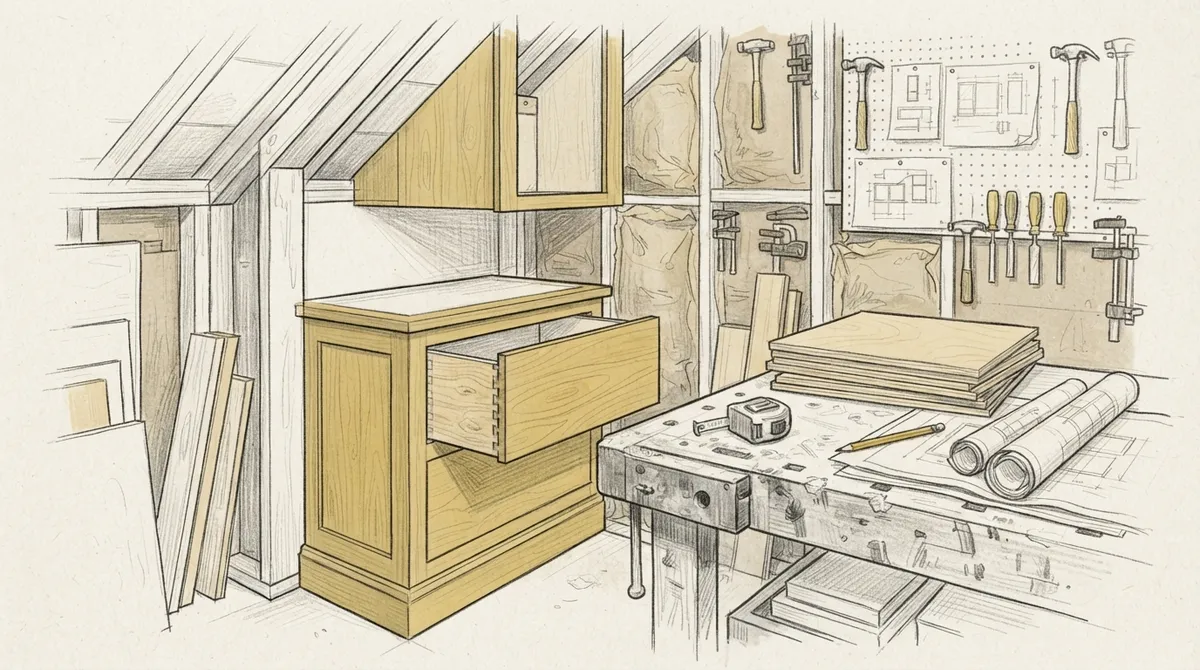
Ask for solid wood face frames, plywood boxes, and dovetail drawers, since factory cabinets often use particleboard or MDF that can swell when exposed to moisture.
-
Choose a builder who also installs their own work, because one point of contact from plan to install reduces blame-shifting when a fit problem appears.
-
Custom work can use dead space above uppers and odd corners for extra storage, and can match existing trim profiles and curved or sloped walls.
-
Before hiring, request photos of past projects, check corners and drawer fronts closely, confirm the installation process, and read client reviews on how problems were handled.
-
Catalog cabinets can suffice for rentals, quick refreshes, or square rooms, but homeowners planning to stay long-term often find custom work worth the investment.
You want cabinets that fit your home and your life. But who should build them? Many homeowners get stuck on this question. A custom cabinet builder works one project at a time, from the first sketch to the final install. A cabinet shop or showroom often sells set sizes and styles. Both can look good in photos, but they work very differently in real homes.
This guide compares the two paths in plain terms. You will see how each one handles design, materials, fit, timing, and long-term use. Whether you are a homeowner, an interior designer, or a developer, you will learn what to ask and what to expect. By the end, you will know which option suits your space in 2026.
What Does a Custom Cabinet Builder Actually Do?
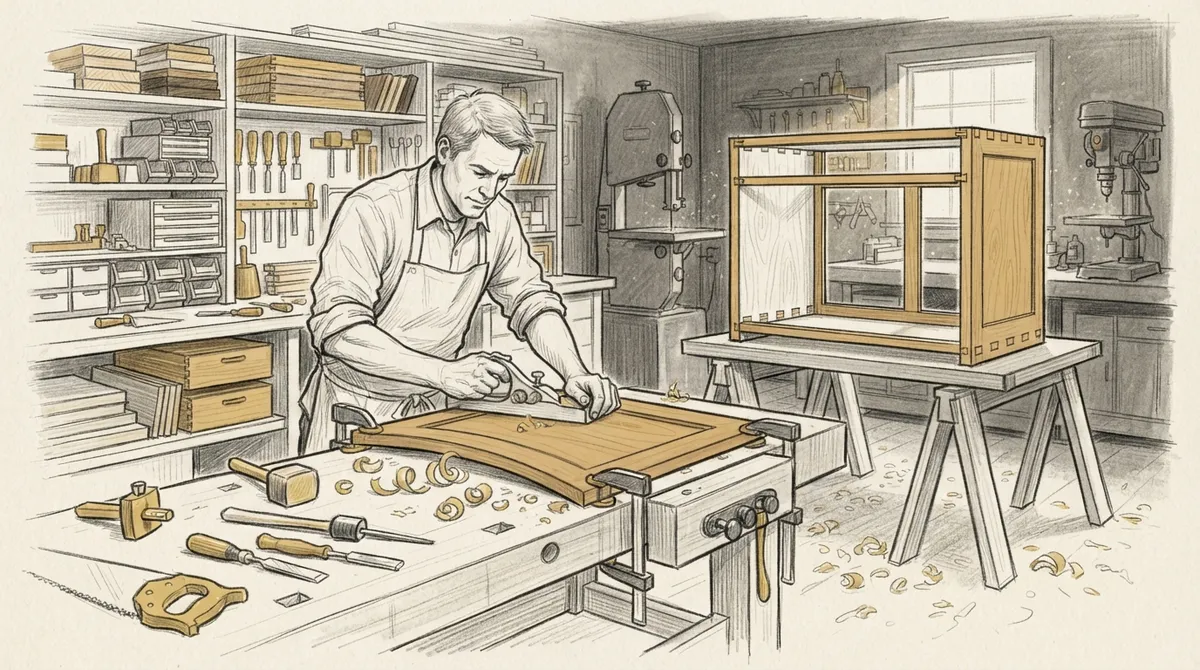
A custom cabinet builder designs and makes cabinets for one specific space. The work starts with measuring your room. Then the builder plans the layout, picks the wood, and builds each box and door to fit. Finally, the builder installs everything on site.
This work sits inside the larger world of carpentry. A good builder does more than build boxes. They think about how doors swing, how drawers glide, and how trim meets walls and ceilings.
A custom cabinet builder often handles:
- Kitchen cabinets and pantry units
- Bathroom vanities and linen storage
- Built-in bookcases and entertainment centers
- Closets, laundry rooms, and garage storage
- Breakfast nooks and mudroom benches
Because the builder works with one home at a time, every choice can match your needs. That is the big difference from a catalog order.
What Is a Cabinet Shop or Showroom?
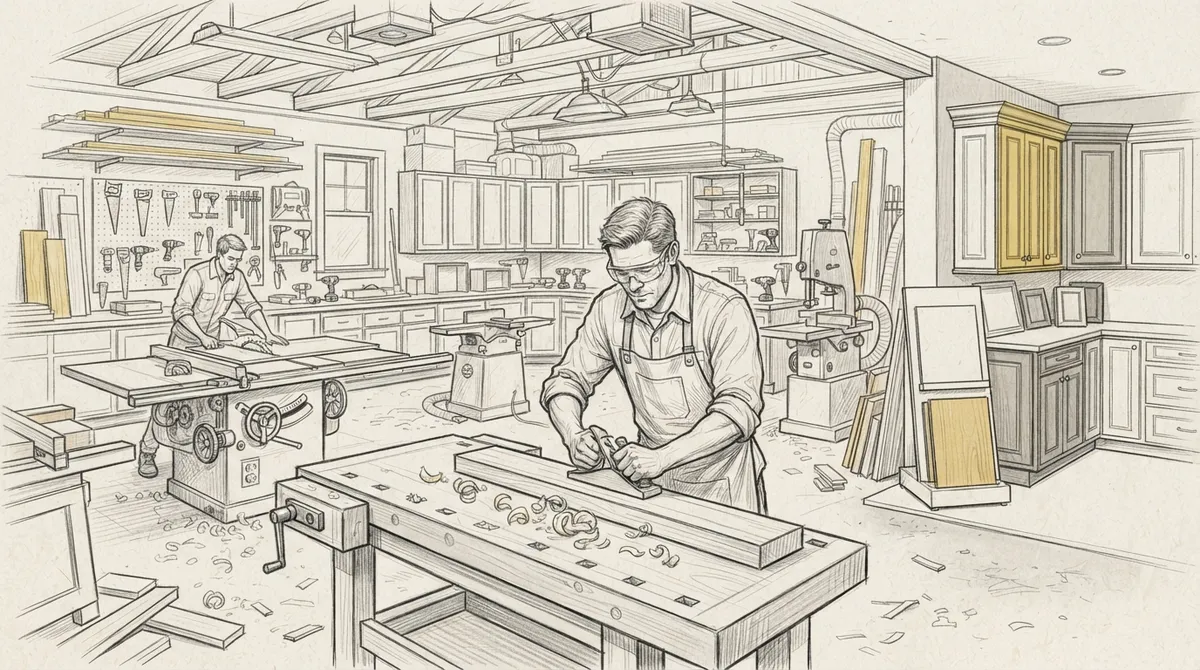
A cabinet shop or showroom usually sells cabinets in set sizes. You pick a door style, a color, and a layout from a list. The cabinets are made in a factory and shipped to you. Then someone installs them.
This path can work well for simple rooms with standard walls. The process is clear, and the choices are easy to see. However, the boxes come in fixed widths, often in 3-inch steps. When your wall does not match those steps, gaps appear. Those gaps get filled with panels or fillers.
Custom Cabinet Builder vs. Cabinet Shop: Side-by-Side
The table below shows how the two paths compare in the areas that matter most.
| Feature | Custom Cabinet Builder | Cabinet Shop or Showroom |
|---|---|---|
| Sizing | Made to exact wall and ceiling measurements | Set widths with filler strips |
| Design freedom | Nearly unlimited shapes, heights, and details | Limited to catalog styles |
| Materials | Solid wood, plywood, and chosen finishes | Often particleboard or MDF boxes |
| Odd spaces | Fits slopes, niches, and angled walls | Hard to adapt |
| Trim and ceiling tie-in | Blended with crown and base trim | Usually separate work |
| Lead time | Varies with design and shop schedule | Varies with factory orders |
| Point of contact | One craftsperson from plan to install | Sales team, factory, then installer |
Neither path is wrong for every project. The right pick depends on your space, your goals, and how much you care about fit and finish.
Design Freedom: Where Custom Wins
Design is the biggest gap between the two options. With a custom cabinet builder, you are not stuck with a menu. You can ask for a taller upper cabinet that reaches the ceiling. You can add a hidden outlet drawer. You can match your cabinets to existing doors and trim.
Interior designers often value this most. A designer may have a clear vision for a room. A custom builder can turn that vision into real wood and real joints. Colors, profiles, and hardware can all line up with the plan.
Matching Your Home’s Style
Older homes and unique layouts often have quirks. A custom builder can copy an old trim profile or match a curved wall. This keeps the look smooth and planned. Learn how detail work shapes a room in Trim Work: The Custom Carpentry Detail That Defines Style.
Making Use of Every Inch
Standard cabinets leave dead space. Think of the gap above the uppers, or the odd corner by a window. A custom builder fills these spots with useful storage. That means more room for dishes, books, or tools without adding square footage.
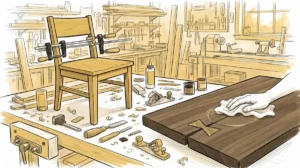
Materials and Build Quality
What is behind the door matters as much as the door itself. Many factory cabinets use thin boxes made from pressed boards. These can swell when water gets in. In Florida’s humid air, that is a real concern.
A custom cabinet builder can choose stronger materials. Common choices include:
- Solid hardwood face frames for strength and a rich look
- Plywood boxes that hold screws well and resist moisture
- Dovetail drawer boxes that last for decades
- Soft-close hinges and full-extension slides
- Hand-applied finishes that protect the wood
You can read more about why this matters in Why Do Custom Kitchen Cabinets Outlast Store-Bought Ones?. Strong materials also help cabinets hold up under daily use.
Fit and Installation
Fit is where small mistakes become big problems. Walls are rarely straight. Floors are rarely level. Ceilings can slope. A custom cabinet builder measures these flaws and builds around them.
Scribing is one example. The builder shapes the edge of a cabinet to match a wavy wall. The result is a tight line with no big gaps. Standard cabinets often rely on caulk and filler to hide the same issue.
Installation also differs. When the same team that built the cabinets installs them, the work flows well. Any small change can be made on site. You can see how the process works in 13 Steps to Install Custom Cabinets the Right Way.
The Risk of Splitting the Job
When one company sells the cabinets and another installs them, blame can get passed around. A bad fit becomes a debate. With one custom builder, there is one person to call. That clear line of care saves stress.
Which Option Fits Each Type of Client?
Different readers have different goals. Here is how the choice often plays out.
Homeowners
Homeowners who plan to stay for years often favor custom work. The cabinets fit their habits and their space. If you cook daily or work from home, well-planned storage makes life easier. Many also find that built-ins raise appeal when it is time to sell. See Why Do Built-In Cabinets Add Value to Your Home? for more.
Interior Designers
Designers need a partner who can follow a plan and solve problems. A custom cabinet builder can read drawings, suggest fixes, and keep details clean. That trust lets a designer promise a result to the client and deliver it.
Real Estate Developers
Developers want to stand out in a crowded market. Buyers notice quality cabinets, built-in features, and clean trim. Custom work can set a property apart from basic builds. Some developers use custom cabinets in key rooms, such as the kitchen and primary suite, and use simpler options elsewhere.
When a Cabinet Shop Might Be Enough
It helps to be fair. A cabinet shop can suit some jobs. Think of a rental unit, a quick refresh, or a room with plain, square walls. When speed and a simple look matter most, a catalog order can do the job.
Still, many people start with a catalog and later wish they had gone custom. Gaps, fillers, and wasted space can bother you every day. It helps to compare your needs honestly before you decide.
How to Choose the Right Custom Cabinet Builder
Not all builders are equal. Use these steps to find a good one.
- Look at past work. Ask for photos of finished kitchens, vanities, and built-ins.
- Check the details. Look at corners, drawer fronts, and where cabinets meet walls.
- Ask about materials. A good builder explains what goes into each box and finish.
- Confirm who installs. The best results often come when the builder installs the work.
- Read reviews. Past clients show how a builder handles problems and deadlines.
- Ask about timing. A clear schedule shows the builder plans ahead.
For more tips on spotting quality, read How Do You Find the Best Custom Cabinet Makers Near You?. You can also avoid common errors by reviewing 7 Custom Cabinets Mistakes That Cost You Big.
Why Local Matters in Tampa Bay
Local knowledge counts in Tampa Bay. Heat, humidity, and salt air all affect wood and finishes. A local builder knows which materials hold up and which ones warp. They also know local building styles, from coastal homes to newer developments.
Working with a nearby team also makes site visits easy. Changes can be handled fast, and follow-up care is simple. Bucheli Trim serves the Tampa Bay area with high-end custom carpentry, including cabinets, ceiling designs, and wall enhancements. You can see what past clients say when you visit Bucheli Trim on Google.
Cabinets as Part of a Whole-Room Plan
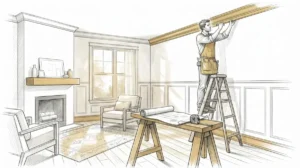
Cabinets rarely stand alone. They meet walls, ceilings, floors, and trim. A builder who also does finish carpentry can tie all of these together. For example, a cabinet can run right up to a coffered ceiling, with crown molding that matches the room.
Planning the whole space at once gives a smoother look. It also avoids awkward gaps where one trade ends and another begins. If you are planning a larger project, Kitchen Remodeling Phases: A Custom Carpentry Timeline shows how each step fits together.
Trim details matter here too. A clean profile like crown molding can make cabinets feel built into the home rather than added later.
Long-Term Care and Repairs
Good cabinets should last many years. Custom pieces are often easier to repair because they use real wood and sturdy joints. A scratched door can be refinished. A worn hinge can be swapped out. A builder who stands behind their work will help with these fixes.
Simple habits also help. Wipe spills quickly, avoid harsh cleaners, and keep hinges tight. For ongoing tips, see Home Maintenance Guide for Custom Carpentry in 2026.
Final Thoughts: Choose Fit Over Convenience
Both paths can give you cabinets. But they do not give the same result. A cabinet shop offers speed and simple choices. A custom cabinet builder offers exact fit, strong materials, and design that matches your life. For most long-term homes, that difference shows up every single day.
Start by listing your needs. Think about your space, your storage goals, and your style. Then talk with a builder who listens and can show real work. If you are ready to plan cabinets that fit your home, contact Bucheli Trim to start your custom cabinet project and take the first step toward storage built just for you.
FAQs
Q: What does a custom cabinet builder do?
A: A custom cabinet builder designs, makes, and installs cabinets for one specific space. They measure your room, choose materials, and build each piece to fit your walls, ceiling, and style.
Q: How is a custom cabinet builder different from a cabinet shop?
A: A cabinet shop usually sells set sizes and styles made in a factory. A custom cabinet builder creates pieces to exact measurements, which means fewer gaps, more storage, and a look that matches your home.
Q: How long do custom cabinets last?
A: Well-built custom cabinets can last for decades. Strong materials like solid wood and plywood, along with quality joints and finishes, help them hold up to daily use and Florida humidity.
Q: Can a custom cabinet builder work with my interior designer?
A: Yes. Many custom builders work closely with designers. They read drawings, suggest practical fixes, and build to match the plan so the final result stays true to the design vision.
Q: What should I ask before hiring a custom cabinet builder?
A: Ask to see past projects, learn what materials they use, and confirm who handles installation. Also ask about their timeline and read client reviews to see how they handle problems.