Key Takeaways
-
Custom built-ins are designed to your exact wall dimensions with hidden cable management and seamless integration with existing trim, unlike store-bought units that leave awkward gaps.
-
A skilled carpenter brings expertise in wood species, precision joinery, structural requirements, and the ability to solve complex challenges like uneven walls and integrate with existing architectural elements.
-
Hire a carpenter by reviewing their portfolio for similar projects, checking references and online reviews, verifying licensing/insurance, and understanding their detailed design and installation process before signing a contract.
-
Custom built-ins typically use a combination of plywood for cabinet boxes, solid hardwood or MDF for doors and frames, and require 2-6 weeks from consultation to final installation depending on complexity.
-
Custom built-in entertainment centers are high-value home improvements that attract buyers, signal quality craftsmanship, and differentiate luxury properties by making living rooms feel more refined and intentional.
-
Match your built-in’s trim profiles, paint/stain colors, and lighting to existing room elements and extend it to ceiling height to ensure it looks like an original architectural feature, not an added unit.
A custom built-in entertainment center can completely transform a living room. It creates a focal point that is both beautiful and functional. Unlike store-bought units, a built-in is designed specifically for your space. It fits perfectly from wall to wall and floor to ceiling. Homeowners, interior designers, and real estate developers all recognize the value a custom built-in brings. But finding the right custom built-in entertainment center carpenter makes all the difference. This guide will walk you through everything you need to know — from planning and design to hiring the right professional.
What Is a Custom Built-In Entertainment Center?
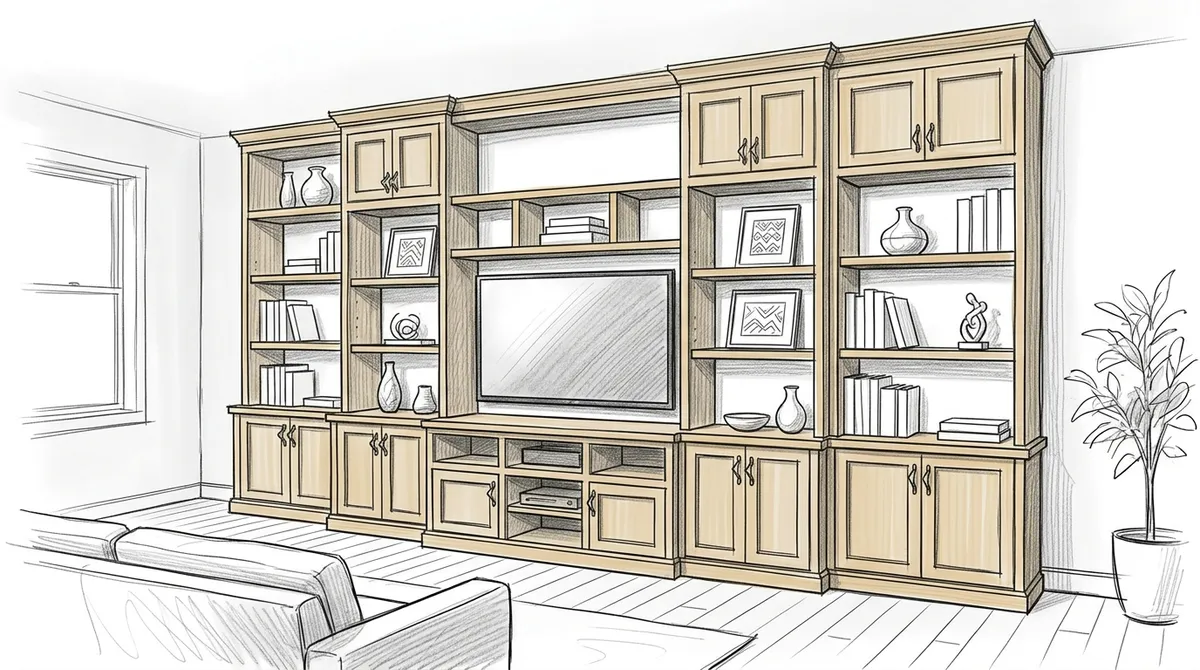
A custom built-in entertainment center is a permanent, carpentry-built structure integrated into your wall. It is designed to house your TV, audio equipment, media storage, and decorative items. A skilled carpenter builds it to match your home’s exact dimensions and style. You can learn more about carpentry to understand the craft behind these installations.
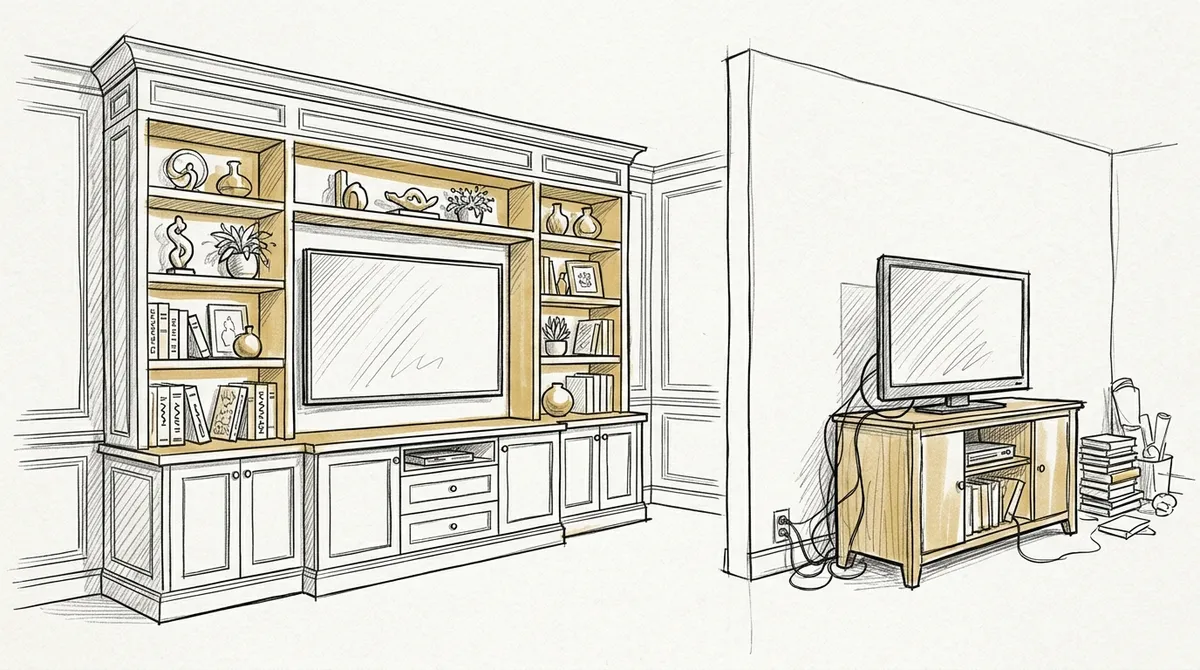
Unlike freestanding furniture, built-ins become part of the architecture of your home. They look intentional and polished. They add a level of sophistication that off-the-shelf units simply cannot match. If you want to explore related built-in options, check out 13 Custom Built-Ins That Transform Every Room in Your Home.
Why Choose a Custom Built-In Over Store-Bought?
Many homeowners start by asking whether a custom build is really worth it. The answer almost always comes down to fit, quality, and longevity. Here are the key reasons to choose custom:
- Perfect fit: Built to your exact wall dimensions — no awkward gaps or overhangs
- Personalized design: Choose your wood species, finish, and cabinet layout
- Superior materials: High-quality wood and hardware that last for decades
- Hidden cable management: Wires are routed cleanly inside the structure
- Increased home value: Custom built-ins are a selling point for buyers
- Seamless integration: Matches existing trim, molding, and architectural details
Real estate developers often invest in built-in entertainment centers to differentiate luxury properties. Interior designers rely on skilled carpenters to bring their client’s vision to life. For ideas on how built-in furniture design transforms spaces, visit What Makes Built-In Furniture Design Transform Your Space.
Key Design Elements of a Built-In Entertainment Center
A well-designed built-in entertainment center has several important components. Each element serves a purpose — both aesthetic and functional. Here is a breakdown of the most common design features:
| Design Element | Purpose | Common Options |
|---|---|---|
| TV Panel | Central display area for the television | Recessed, flush-mount, framed |
| Open Shelving | Display décor, books, speakers | Fixed, adjustable, floating |
| Cabinet Doors | Hide equipment and media clutter | Shaker, raised panel, glass-front |
| Molding and Trim | Adds architectural detail and polish | Crown molding, pilasters, casing |
| Lighting | Highlight display areas and improve ambiance | LED strip lights, puck lights |
| Base Cabinet | Storage for media equipment and games | With or without drawers |
The finishing touches matter just as much as the structure itself. Details like crown molding add elegance and tie the built-in to the room’s overall design. A good carpenter will help you choose the right details for your style. You can also explore Molding Details to see how trim elevates custom woodwork.
How to Plan Your Custom Entertainment Center
Good planning leads to great results. Before contacting a carpenter, think through what you need the built-in to do. Here is a simple step-by-step planning process:
- Measure your wall space: Note the width, height, and any obstacles like windows, outlets, or vents
- Determine your TV size: The TV panel should be sized appropriately for your screen
- List your storage needs: Count your devices, media, books, and display items
- Choose a style: Traditional, modern, transitional, or rustic — know what fits your home
- Gather inspiration images: Collect photos to share with your carpenter during consultation
- Discuss cable management: Plan for power outlets and cable routing inside the unit
Interior designers often prepare detailed mood boards and specifications before meeting with a carpenter. This helps the carpenter understand the vision clearly. You can also browse Custom Projects for inspiration on what skilled carpenters can create.
What a Skilled Carpenter Brings to the Project
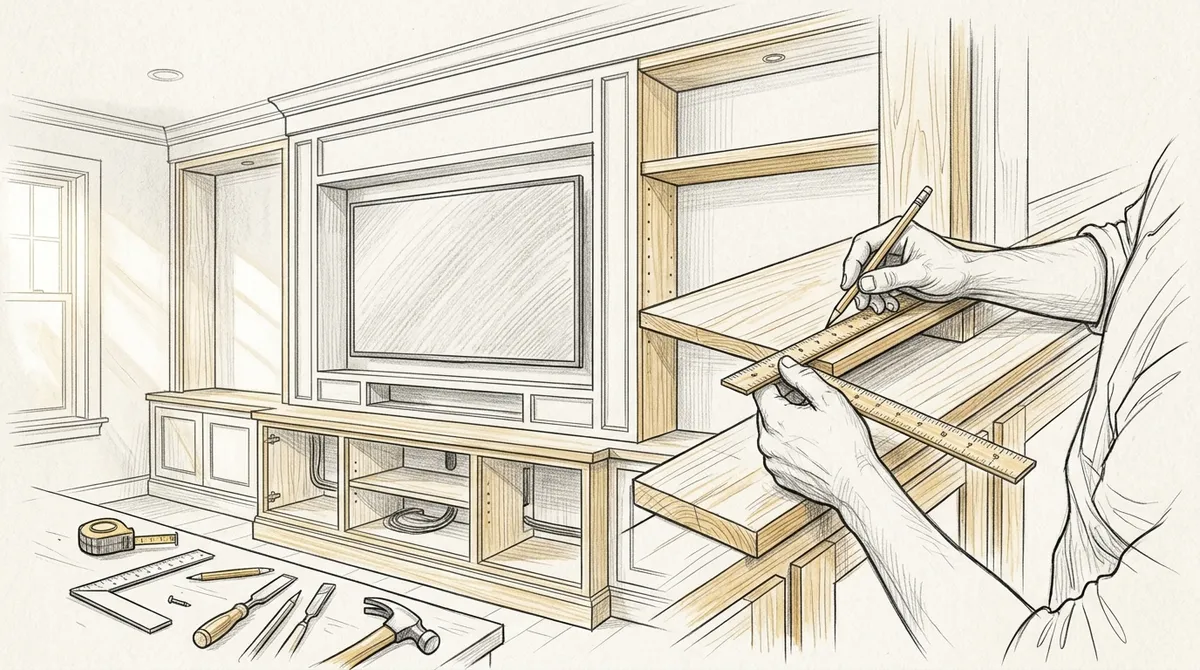
A skilled carpenter does far more than cut wood and assemble cabinets. They bring expertise in design, materials, joinery, and finishing. Here is what sets a true craftsman apart:
- Deep knowledge of wood species and their properties
- Precision measuring and cutting for seamless installation
- Experience integrating built-ins with existing architectural elements
- Ability to match existing trim profiles and finishes
- Understanding of structural requirements for wall mounting
Experience matters enormously. A seasoned carpenter has encountered every challenge — uneven walls, tricky corners, complex cable requirements — and knows how to solve them. To understand what separates top professionals from average ones, read 13 Signs of True Craftsmanship in Custom Carpentry.
Bucheli Trim brings this level of expertise to every project in the Tampa Bay area. Their team specializes in high-end built-in cabinetry, wall enhancements, and custom woodwork designed to complement the unique character of each home. Visit us on Google — Bucheli Trim to read reviews from satisfied homeowners across the region.
Styles of Custom Built-In Entertainment Centers
Your built-in should reflect your personal style and complement your home’s architecture. Here are the most popular styles carpenters build today:
- Traditional: Features raised-panel doors, decorative molding, and rich wood stains. Classic and timeless.
- Modern: Clean lines, flat-panel doors, and minimal ornamentation. Often uses painted finishes.
- Transitional: A blend of traditional and modern. Shaker-style doors with simple trim details.
- Rustic/Farmhouse: Incorporates natural wood grain, open shelving, and distressed finishes.
- Built-In with Fireplace: Surrounds a fireplace with matching cabinetry on both sides for a dramatic focal point.
Each style requires different techniques and materials. A knowledgeable carpenter can guide you toward the best option for your space. You can also learn how 10 Media Wall Ideas to Transform Your Living Space to get more design inspiration.
How to Choose the Right Carpenter for Your Project
Hiring the right professional is the most important step. A poor choice can lead to costly mistakes and disappointing results. Follow these steps to find a qualified custom built-in entertainment center carpenter:
- Review their portfolio: Look for built-in projects similar to what you want. Quality should be visible in photos.
- Check references and reviews: Speak with past clients. Read online reviews to confirm consistency.
- Verify licensing and insurance: Always hire a licensed carpenter. This protects you from liability.
- Ask about their process: A professional carpenter should walk you through their design, build, and installation steps.
- Understand the timeline: Custom built-ins take time to build properly. Get a realistic project schedule.
Avoid common hiring pitfalls by reading 7 Mistakes to Avoid When Hiring Carpenters Near Me. You should also know 5 Things to Know When Hiring a Trim Carpenter Near Me before signing any contract.
Materials Used in Custom Built-In Entertainment Centers
The choice of materials directly affects the look, durability, and value of your built-in. Here is a comparison of the most common options:
| Material | Characteristics | Best For |
|---|---|---|
| Solid Hardwood | Durable, premium appearance, can be refinished | Traditional and high-end designs |
| Plywood | Strong, stable, resists warping | Cabinet boxes and structural components |
| MDF (Medium-Density Fiberboard) | Smooth surface ideal for painting, affordable | Painted modern or transitional designs |
| Wood Veneer | Natural wood look over engineered core | Cost-effective stained finishes |
Most custom built-ins use a combination of materials. For example, a carpenter might use plywood for cabinet boxes, solid hardwood for face frames, and MDF for painted door panels. Your carpenter will recommend the best combination based on your design and needs. For more on custom cabinet work, explore the full range of cabinetry options available.
Integrating Your Built-In with the Room’s Design
A custom built-in should not look like an addition — it should look like it was always part of the room. A skilled carpenter achieves this through careful attention to architectural details. Here is how integration is done right:
- Match the built-in’s trim profiles to existing door and window casings
- Use the same paint or stain color as other woodwork in the room
- Extend the built-in to ceiling height for a grand, built-in look
- Incorporate lighting that complements the room’s existing fixtures
- Align shelving heights with artwork or furniture proportions in the space
This level of integration requires experience and a trained eye. Interior designers especially appreciate carpenters who understand how their work fits into a broader design vision. If you are working with a designer, explore how a TV wall design company transforms your living space as part of the overall interior plan. You can also follow Bucheli Trim on Facebook to see recent project photos and get design inspiration for your own home.
The Build and Installation Process
Understanding the process helps you set realistic expectations. A custom built-in entertainment center project typically follows these stages:
- Consultation and design: The carpenter visits your home, takes measurements, and discusses your vision and requirements.
- Design approval: A detailed plan or drawing is created and reviewed. Changes are made before any wood is cut.
- Material selection and ordering: Wood species, hardware, and finishing materials are chosen and sourced.
- Shop fabrication: Cabinet components are built in the carpenter’s workshop for precision and quality control.
- On-site installation: Components are brought to your home and assembled into the wall space with precision.
- Finishing: Painting, staining, or clear-coating is applied for a flawless final appearance.
This process ensures a high-quality result every time. Shortcuts at any stage can compromise the final product. For more insight, read about what professional carpentry services include for your home.
Adding Value to Your Home with a Built-In
Custom built-ins are one of the highest-value improvements you can make to a home. Real estate professionals consistently note that built-in cabinetry and entertainment centers attract buyers and command higher sale prices. Built-ins signal quality craftsmanship and a well-maintained home.
For real estate developers, investing in custom carpentry elevates the perceived value of a property significantly. It is one of the most effective ways to differentiate a luxury listing. You can also explore 7 Built-In Cabinetry Solutions That Transform Your Home to see all the options available. If you are ready to take the next step, you can also find out why custom cabinetry in Tampa is worth it for homeowners and developers alike.
Just as a beautifully aligned smile enhances confidence, a perfectly crafted built-in transforms how a home feels — and both require a skilled professional who pays attention to detail. Much like how Segovia Orthodontics tailors treatment to each patient’s unique needs, a master carpenter tailors every built-in to the specific dimensions and style of your home.
Get Started on Your Custom Built-In Today
A custom built-in entertainment center is a lasting investment in your home’s beauty and function. It takes the right carpenter to bring your vision to life with precision and craftsmanship. Whether you are a homeowner, interior designer, or developer, working with a skilled professional ensures results you will love for decades.
Bucheli Trim is proud to serve the Tampa Bay area with expert built-in cabinetry, custom carpentry, and high-end finish work. Every project is handled with care, precision, and a commitment to excellence. Reach out to our team today to schedule your consultation and start designing the custom built-in entertainment center your home deserves.
FAQs
Q: What does a custom built-in entertainment center carpenter do?
A: A custom built-in entertainment center carpenter designs, builds, and installs a permanent cabinetry structure integrated into your wall. They measure your space precisely, fabricate the components in their workshop, and install everything on-site with a professional finish. The result is a unit tailored to your home’s dimensions, style, and storage needs.
Q: How long does it take to build a custom built-in entertainment center?
A: The timeline varies based on the complexity of the design and the carpenter’s schedule. Most custom built-in projects take between two and six weeks from consultation to final installation. More intricate designs with detailed molding, specialty finishes, or integrated lighting may take longer to complete properly.
Q: What materials are best for a custom built-in entertainment center?
A: Most carpenters use a combination of materials to balance quality and performance. Plywood is commonly used for the cabinet boxes due to its strength and stability. Solid hardwood or MDF is used for face frames and doors depending on whether the unit will be stained or painted. Your carpenter will recommend the best combination for your specific design.
Q: Can a custom built-in entertainment center increase my home’s value?
A: Yes, custom built-ins are widely recognized as a high-value home improvement. They signal quality craftsmanship to potential buyers and make a living room feel more refined and purposeful. Real estate professionals often highlight built-in cabinetry as a premium feature that sets a property apart in the market.
Q: How do I find a qualified custom built-in entertainment center carpenter near me?
A: Start by reviewing portfolios of local carpenters who specialize in built-in cabinetry and custom woodwork. Check online reviews, ask for references, and verify that they are licensed and insured. A good carpenter will offer a detailed consultation, walk you through the design process, and provide a clear project timeline before work begins.