Key Takeaways
-
Solid wood baseboards are the top choice for high-end homes due to superior durability and long-lasting finish, while MDF works for budget-conscious painted trim and composite materials suit moisture-prone bathrooms.
-
Professional installers use specific tools like miter saws, coping saws, and laser levels to achieve precise cuts and seamless joints that separate polished results from rushed DIY attempts.
-
Baseboards must be dry-fit before final installation, secured to wall studs with proper nail length, and carefully caulked to avoid visible gaps—common mistakes that detract from the finished appearance.
-
Matching baseboard height, style, and profile to door casings, crown molding, and wainscoting creates a cohesive, high-end design that buyers notice and value during home showings.
-
Professional baseboard installation accounts for flooring type variations, expansion gaps, and uneven floors to ensure trim sits flush against both walls and different floor surfaces like hardwood, tile, or carpet.
-
Well-maintained baseboards last decades when properly installed; regular dusting, touch-up paint for scuffs, and annual caulk inspection prevent deterioration and keep trim looking sharp.
Walk into any beautifully finished home, and you might not notice the baseboards right away. But take them away, and something feels off. Baseboard installation is one of those details that quietly does a lot of work. It protects your walls, hides gaps, and adds a finished look that ties a whole room together.
For homeowners planning a renovation, interior designers sourcing skilled trade partners, or real estate developers polishing off a luxury build, baseboard installation deserves more attention than it usually gets. This guide breaks down what baseboard installation really involves, why it matters, and how to get it right the first time. Along the way, we’ll cover materials, styles, and the process a trusted molding details specialist follows to deliver clean, lasting results.
What Is Baseboard Installation, Exactly?
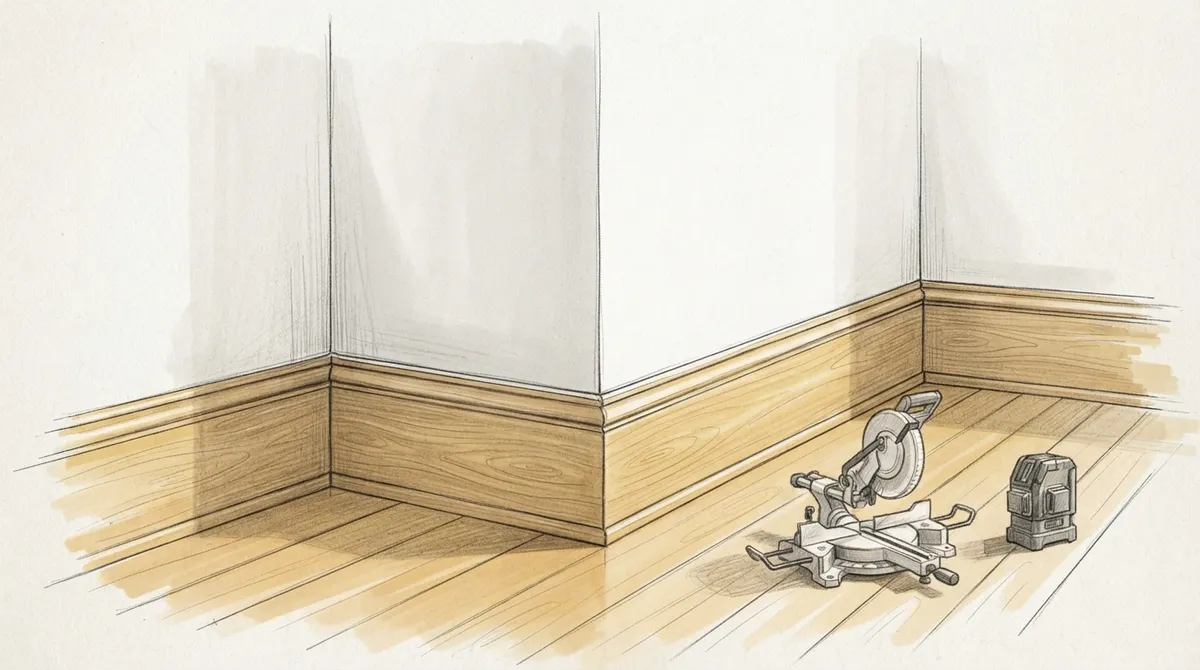
Baseboard installation is the process of attaching trim boards along the base of interior walls, where they meet the floor. This trim, sometimes called skirting board, serves both a practical and decorative purpose. It covers the gap between flooring and drywall, protects walls from scuffs, and adds a polished edge to any room.
In custom carpentry, baseboard installation goes beyond nailing a strip of wood to the wall. It involves precise measuring, careful cutting, and attention to how the trim interacts with door casings, corners, and other wall enhancements. A skilled carpenter treats baseboards as part of the home’s overall design, not an afterthought.
Why Baseboards Matter More Than You Think
Baseboards do more than look nice. Here’s what they actually accomplish:
- Protect drywall from vacuum cleaners, furniture, and foot traffic
- Hide uneven gaps where flooring meets the wall
- Add a finished, cohesive look to any room
- Increase perceived home value during resale or showings
- Complement other trim work like crown molding and door casings for a unified style
Without proper baseboards, a room can feel unfinished, even if the walls are painted and the floors are new. This is especially true in high-end homes, where every detail is expected to match a certain standard of craftsmanship.
Common Baseboard Materials and Styles
Choosing the right material and style is one of the first steps in any baseboard installation project. The options vary based on budget goals, home style, and durability needs.
| Material | Best For | Durability | Style Flexibility |
|---|---|---|---|
| Solid Wood | High-end homes, custom builds | Very High | Excellent, easy to stain or paint |
| MDF (Medium-Density Fiberboard) | Budget-conscious painted trim | Moderate | Good, smooth paintable surface |
| PVC/Composite | Bathrooms, moisture-prone areas | High, moisture-resistant | Limited, mostly painted finishes |
| Finger-Jointed Wood | Cost-effective painted trim | Moderate to High | Good for paint, not stain |
Solid wood remains the top choice for homeowners and developers who want a long-lasting, upscale finish. It holds paint and stain well, resists warping when properly installed, and matches the quality expected in custom carpentry projects. For more on how trim choices affect overall design, check out this guide on what molding baseboard is and why it matters.
Popular Baseboard Profiles
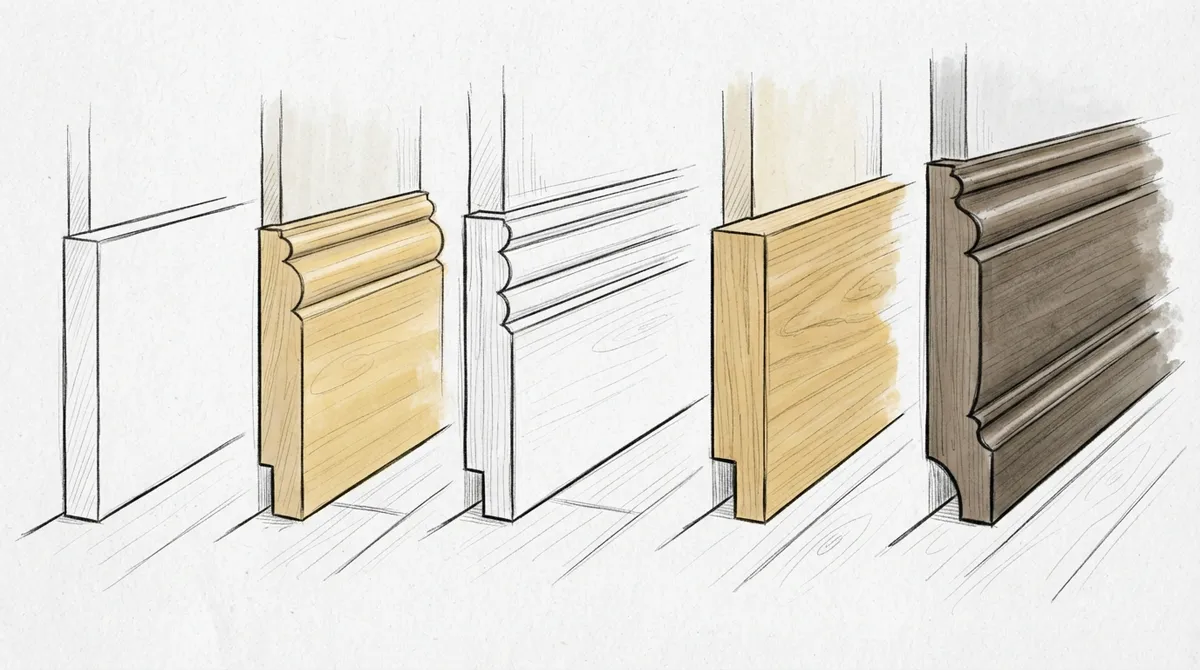
Baseboard styles range from simple and modern to ornate and traditional. Some popular profiles include:
- Colonial style: Curved profile with classic appeal, common in traditional homes
- Craftsman style: Flat, simple lines that suit modern and transitional interiors
- Ranch style: Basic, low-profile trim often used in budget-friendly builds
- Victorian style: Detailed, decorative profiles for historic or luxury homes
Interior designers often select a baseboard style based on the home’s architecture and the client’s design goals. Matching baseboard height and profile to door and window trim creates a cohesive, professional look throughout the space.
The Baseboard Installation Process Step by Step
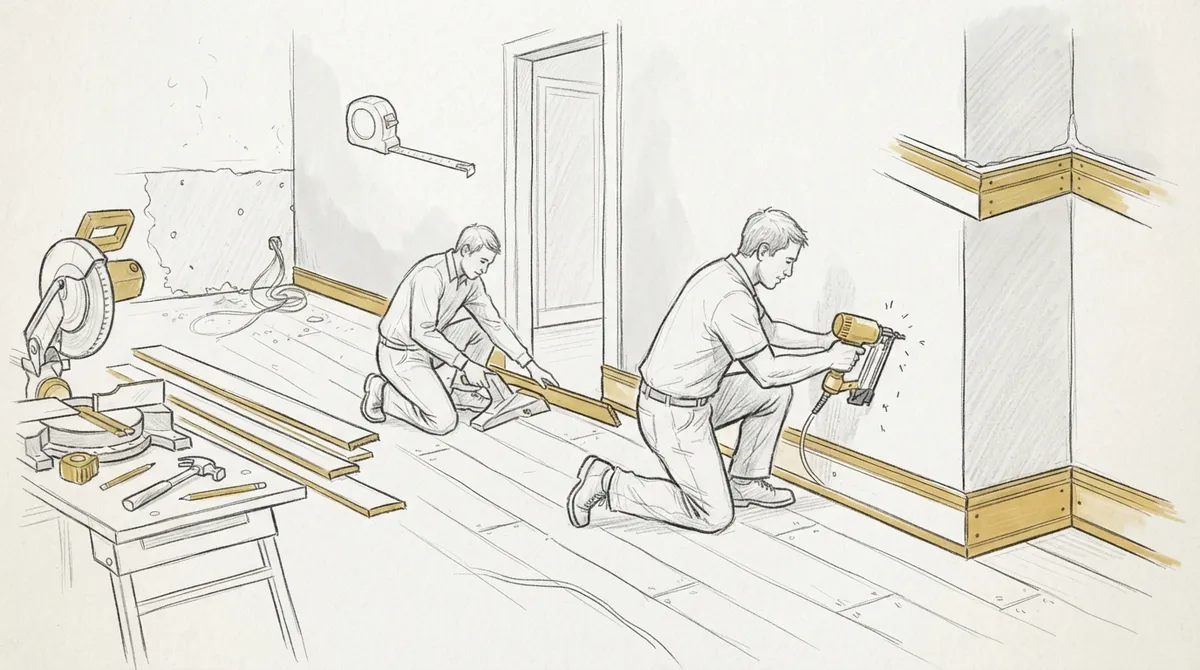
Understanding the installation process helps homeowners and developers know what to expect from a professional carpentry team. Here’s how a typical project unfolds:
- Measuring and planning: The carpenter measures each wall and calculates the amount of material needed, accounting for waste and seams.
- Material selection: Based on the home’s style, the right wood or composite material is chosen.
- Cutting and coping: Boards are cut to length, with corners either mitered or coped for a tight, seamless fit.
- Fitting and dry layout: Pieces are laid out and test-fitted before any nails go in, ensuring everything aligns properly.
- Nailing and securing: Baseboards are attached to wall studs using finish nails, keeping the trim flush and stable.
- Caulking and filling: Gaps, seams, and nail holes are filled and caulked for a smooth, paint-ready surface.
- Painting or finishing: The final step involves painting, staining, or sealing the trim to match the room’s design.
Each step requires precision. A slightly uneven cut or poor caulking job can leave visible gaps that detract from the finished look. This is why many homeowners turn to professionals rather than attempting a DIY approach, especially for larger homes or intricate custom projects.
Tools and Techniques That Make a Difference
Professional carpenters rely on specific tools to achieve clean results:
- Miter saws for precise angle cuts at corners
- Coping saws for detailed inside corner joints
- Pneumatic nail guns for consistent, secure fastening
- Laser levels to keep long runs of trim perfectly straight
- Quality caulk and wood filler for seamless finishing
- Skipping the dry-fit step, leading to poor corner alignment
- Using nails that are too short to reach wall studs securely
- Ignoring uneven flooring, which causes gaps under the trim
- Rushing the caulking process, leaving visible seams
- Choosing the wrong baseboard height for the room’s proportions
- Portfolio of completed trim projects, ideally similar in scale to yours
- Clear communication about timelines and material options
- Experience with the specific material you want, whether solid wood or composite
- Attention to detail in past work, especially around corners and transitions
- Positive reviews from homeowners, designers, or developers in your area
- Wipe down baseboards regularly to prevent dust buildup
- Touch up scuffs or scratches with matching paint as needed
- Check caulking annually and reseal if it starts to crack
- Avoid dragging heavy furniture across trim edges
These tools, paired with years of hands-on experience, are what separate a rushed DIY job from a polished, professional installation. If you’re weighing your options, this comparison of DIY versus professional baseboard installation breaks down the pros and cons in more detail.
Common Mistakes to Avoid
Even small errors during baseboard installation can lead to noticeable problems down the road. Some of the most frequent mistakes include:
These issues are common enough that we’ve written a full breakdown of baseboard installation mistakes you must avoid. Avoiding these pitfalls saves time, money, and frustration, especially for developers managing multiple units on a tight schedule.
How Baseboard Installation Fits Into a Larger Design Plan
Baseboards rarely stand alone. They work best when paired with other trim elements, like crown molding, door casings, and wainscoting. For interior designers, this means baseboard choices should align with the overall trim package planned for a space.
Real estate developers often see the biggest return when trim details are consistent throughout a property. Buyers notice cohesive design, even if they can’t name exactly why a home feels more polished. Pairing baseboards with quality ceiling designs and custom cabinetry creates a unified, high-end feel that stands out during showings.
Matching Baseboards to Flooring Transitions
One often overlooked detail is how baseboards interact with different flooring types. Hardwood, tile, and carpet all require slightly different approaches for a clean finish. Professionals account for expansion gaps, transition strips, and floor height differences when planning baseboard height and placement. For more on how flooring choices affect trim work, see this piece on how professional flooring installation transforms your home.
Why Professional Installation Makes a Difference
Baseboard installation looks simple, but small errors add up quickly. Uneven cuts, gaps at corners, and mismatched profiles are easy to spot once the trim is painted and the room is finished. Professional installers bring years of practiced skill to every cut and joint, ensuring a result that looks intentional and refined.
Bucheli Trim has built a reputation across the Tampa Bay area for precise, detail-focused trim work, including baseboard installation that holds up to close inspection. Whether you’re renovating a single room or finishing an entire custom build, working with an experienced team means fewer callbacks and a finished product that lasts. You can follow along on Facebook to see examples of recent projects, or visit us on Google — Bucheli Trim to read what past clients have to say.
What to Look for in a Baseboard Installation Team
When hiring a carpentry team for baseboard work, consider these factors:
For a deeper look at finding the right fit, this guide on finding a skilled carpenter near you offers practical tips for vetting potential contractors.
Caring for Your Baseboards After Installation
Once your baseboards are installed, a little maintenance keeps them looking sharp for years. Simple habits go a long way:
Well-maintained baseboards can last decades, especially when installed with quality materials and proper technique. According to general woodworking standards outlined in resources like this overview on carpentry, proper installation and moisture control are the biggest factors in how long trim work lasts.
Bringing It All Together
Baseboard installation might seem like a small detail in the grand scope of a renovation or new build, but its impact is anything but minor. It protects your walls, ties your design together, and signals quality craftsmanship to anyone who walks through the door. Whether you’re a homeowner refreshing a single room, a designer coordinating trim across an entire project, or a developer aiming to impress buyers, getting baseboard installation right pays off.
If you’re ready to upgrade your space with precise, professional baseboard installation, our team is here to help. Reach out to schedule your consultation and see how the right trim work can transform your home or project from the ground up.
FAQs
Q: What is the best material for baseboard installation?
A: Solid wood is the top choice for durability and long-term style, especially in high-end homes. MDF and composite materials work well for budget-friendly, painted trim in moisture-resistant areas like bathrooms.
Q: How long does baseboard installation typically take?
A: A single room usually takes a few hours, while a full-home installation can take one to three days depending on size and complexity. Timelines also depend on the number of corners, transitions, and finishing details involved.
Q: Can baseboards be installed over existing flooring?
A: Yes, baseboards are typically installed after flooring is in place, with a small gap left for expansion. Professionals measure carefully to ensure the trim sits flush against both the wall and floor.
Q: Do baseboards need to match other trim in the home?
A: While not required, matching baseboard style and height to door casings and crown molding creates a more polished, cohesive look. This consistency is especially valued in custom carpentry and high-end builds.
Q: Is professional baseboard installation worth it over DIY?
A: Professional installation reduces the risk of uneven cuts, visible gaps, and poor corner joints that are common in DIY attempts. Experienced carpenters also work faster and can match trim to existing architectural details more precisely.