Key Takeaways
-
Custom carpentry adds measurable resale value through unique details like coffered ceilings, built-in cabinetry, and crown molding that buyers notice and pay for.
-
Unlike store-bought solutions, custom carpentry is measured and designed specifically for your home's exact dimensions, solving problems with oddly-shaped rooms and irregular walls.
-
Top-impact carpentry projects include ceiling designs, wall enhancements (wainscoting/shiplap), built-in cabinetry, and trim work that dramatically improve room aesthetics and functionality.
-
Plan custom carpentry projects by identifying priority rooms, setting clear goals, researching experienced carpenters with portfolios, and confirming design details before work begins.
-
Avoid common mistakes: don't choose trendy designs over timeless ones, skip proper measurements, hire based on price alone, or rush the planning phase to save time.
-
Quality custom carpentry with proper materials and craftsmanship lasts for decades and offers better durability than prefabricated alternatives at comparable investment levels.
Many homeowners think about paint colors or new furniture when they plan a home improvement project. But the changes that truly transform a house often come from something else. Custom carpentry adds real value, style, and function that store-bought items simply can’t match. From ceiling designs to built-in cabinetry, skilled carpentry work turns an ordinary house into a standout home.
This guide explains why custom carpentry is one of the smartest home improvement choices you can make. We’ll cover the most popular carpentry upgrades, how they compare to standard renovations, and what to expect when working with a professional team. Whether you’re a homeowner planning your dream space, an interior designer sourcing skilled hands, or a real estate developer looking to boost property value, this article will help you understand your options.
What Does Home Improvement Mean in Custom Carpentry?
In the custom carpentry world, home improvement means more than fixing what’s broken. It means adding craftsmanship and design details that make a house feel finished and elegant. This can include coffered ceilings, wainscoting, built-in shelving, and custom trim work.
Unlike generic renovations, custom carpentry is built around your specific home. Every angle, wall, and room gets measured and designed to fit perfectly. This attention to detail is why learn more about carpentry as a craft shows centuries of tradition behind these techniques.
Why Homeowners Choose Custom Carpentry Over Store-Bought Solutions
Store-bought shelving and trim kits are made for average rooms. Real homes rarely have average dimensions. Custom carpentry solves this problem by designing pieces that match your exact space.
- Perfect fit for oddly shaped rooms or walls
- Higher quality materials that last for decades
- Design flexibility to match your home’s style
- Increased resale value compared to generic fixtures
- One-of-a-kind details you won’t find in any catalog
Top Home Improvement Projects That Use Custom Carpentry
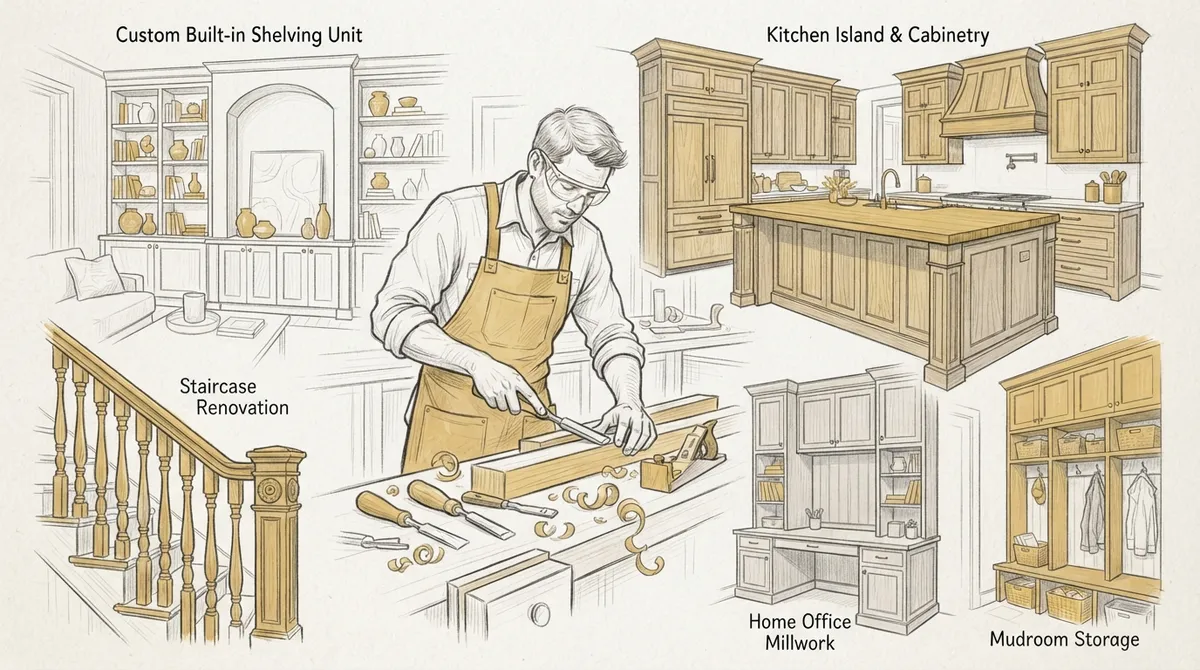
Some home improvement upgrades rely heavily on carpentry skill. These projects tend to offer the biggest visual and functional impact for any home.
1. Ceiling Designs
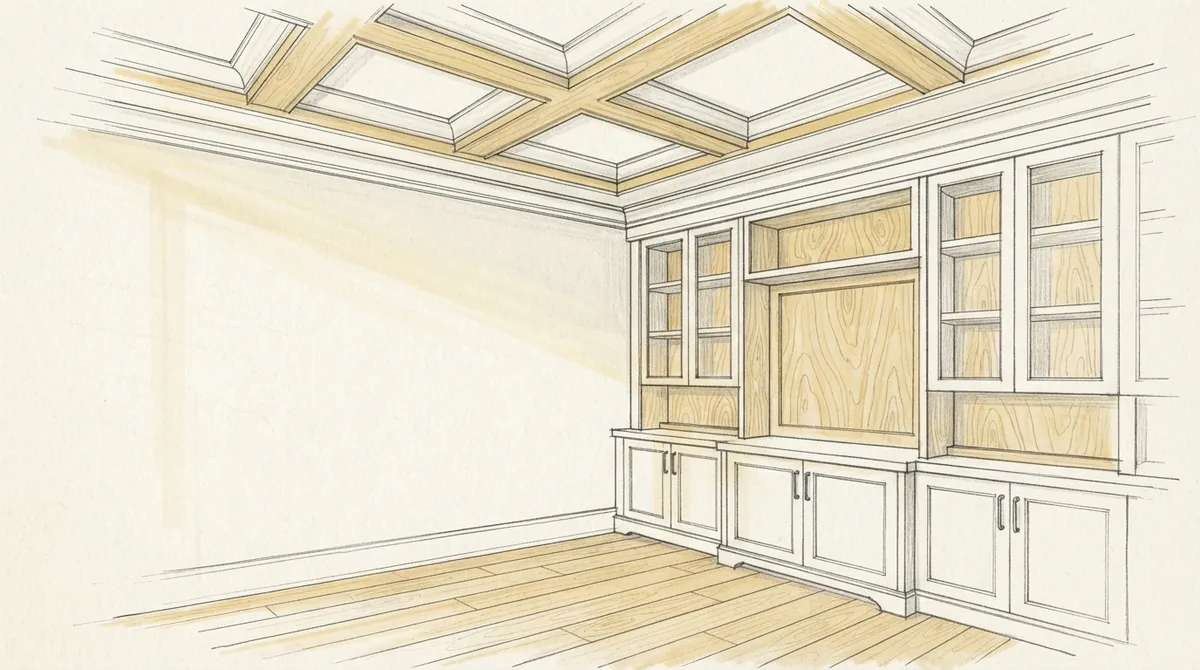
A plain ceiling is often the most overlooked part of a room. Adding custom ceiling designs like coffered panels, beams, or tray ceilings creates depth and character. This upgrade works well in living rooms, dining rooms, and primary bedrooms. To learn about the basics, check out this guide on what custom ceilings are and why should you consider them.
2. Wall Enhancements
Flat, boring walls can make a room feel unfinished. Wall enhancements like wainscoting, shiplap, or accent paneling add texture and warmth. These details are especially popular in entryways, dining rooms, and home offices.
3. Built-In Cabinetry
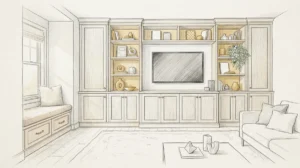
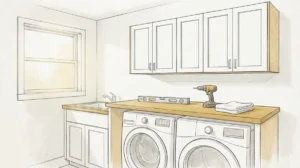
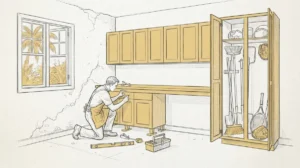
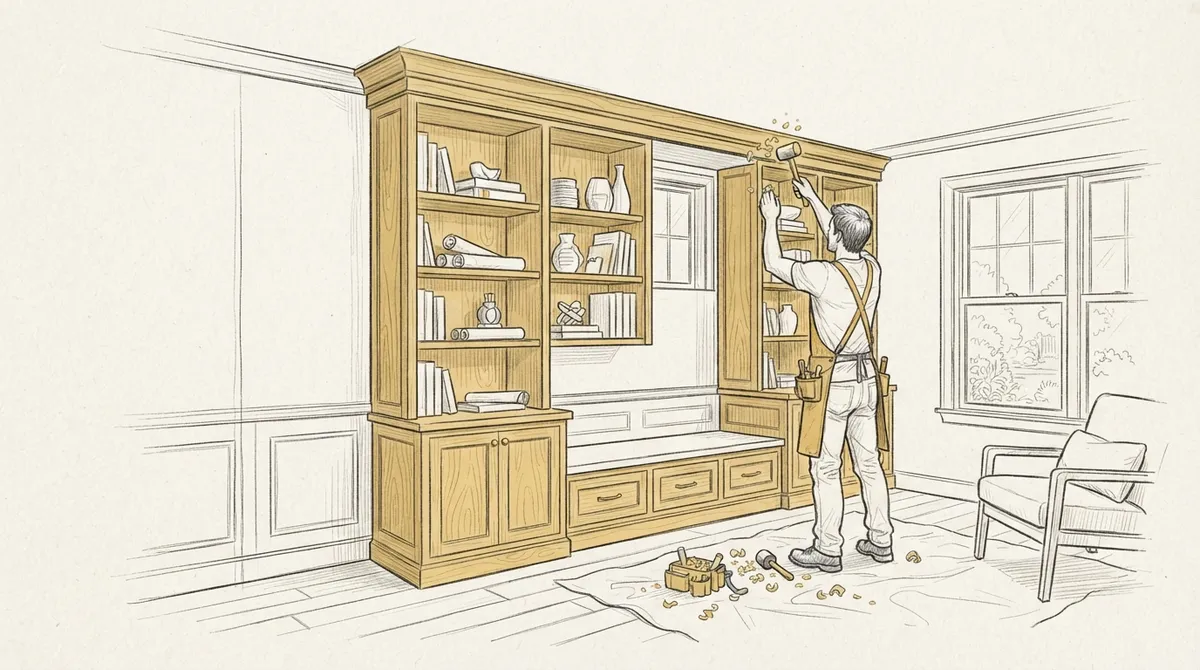
Built-ins are one of the smartest home improvement investments you can make. They add storage without taking up floor space and look tailored to your home. Explore custom cabinet options for kitchens, bathrooms, living rooms, and home offices.
4. Molding and Trim Details
Crown molding, baseboards, and door casings frame a room and give it a polished look. Good molding details can make ceilings appear taller and rooms feel more elegant. Learn more about crown molding and its long history in architecture.
How to Plan a Custom Carpentry Home Improvement Project
Planning ahead helps avoid delays and mistakes. Follow these steps to make your project run smoothly.
- Identify which rooms need the most improvement
- Set clear goals for style and function
- Research skilled carpenters with proven experience
- Ask for examples of past custom projects
- Discuss timeline and material options
- Confirm design details before work begins
- Schedule regular check-ins during the project
Skipping steps can lead to mismatched trim, wrong measurements, or unclear expectations. A professional carpentry team walks you through each step so nothing gets missed.
Custom Carpentry vs. Standard Home Improvement Materials
Many homeowners wonder if custom work is really worth it compared to prefabricated materials. The table below breaks down the key differences.
| Feature | Custom Carpentry | Standard Materials |
|---|---|---|
| Fit and Precision | Made to match your exact space | Generic sizing, often needs adjustment |
| Design Options | Unlimited style choices | Limited to available stock designs |
| Durability | Built with quality wood and joinery | Often lower-grade materials |
| Resale Value | Adds noticeable value to a home | Minimal impact on resale |
| Uniqueness | One-of-a-kind craftsmanship | Common, seen in many homes |
If you’re weighing your options, this comparison on DIY carpentry vs. professional service offers more detail on what to expect from each path.
Home Improvement Tips for Homeowners
If you’re a homeowner planning your first custom carpentry project, keep these tips in mind.
- Start with one room to test the process before expanding
- Choose wood species that match your home’s existing style
- Ask about maintenance needs for different finishes
- Consider how natural light affects your design choices
- Think long-term about resale value, not just current trends
Homeowners in the Tampa Bay area often ask about hiring local experts. If you’re searching for a trusted team, this article on where you can find a skilled carpenter near you is a helpful starting point.
Guidance for Interior Designers
Interior designers often need a carpentry partner who can bring detailed visions to life without cutting corners. Custom carpentry teams that understand design language make collaboration much easier.
What Designers Should Look For in a Carpentry Partner
- Strong portfolio showing variety in style and scale
- Clear communication about timelines and material sourcing
- Willingness to work from detailed drawings or sketches
- Experience with high-end finishes and custom joinery
- Reliability on job sites with multiple trades involved
Designers can browse examples like tray ceiling designs or floor-to-ceiling bookcases to see the range of possible carpentry solutions for client projects.
Guidance for Real Estate Developers
Developers know that small upgrades can make a big difference in buyer interest. Custom carpentry details often become the feature that sells a home faster and at a better price.
Carpentry Upgrades That Attract Buyers
- Statement ceilings in main living areas
- Built-in cabinetry in kitchens and bathrooms
- Custom closet systems in primary bedrooms
- Crown molding throughout common areas
- Accent walls in entryways or dining rooms
These upgrades photograph well for listings and stand out during showings. Developers working on multiple properties often rely on a consistent carpentry partner to maintain quality across projects. Reviewing signs of true craftsmanship in custom carpentry can help when evaluating a potential partner.
Common Mistakes to Avoid During Home Improvement
Even well-planned projects can go wrong without the right guidance. Here are mistakes that often hurt the final result.
- Choosing trends over timeless design
- Skipping proper measurements before ordering materials
- Hiring based on price alone instead of experience
- Ignoring how new carpentry will match existing finishes
- Rushing the planning phase to save time
For more specific pitfalls, this article on mistakes to avoid when hiring carpenters near you offers practical advice for any homeowner or developer.
Why Flooring and Finishing Touches Matter Too
Home improvement doesn’t stop at walls and ceilings. Flooring, doors, and finishing details tie a whole space together. Professional flooring installation pairs well with custom trim to create a seamless look throughout your home.
Options like epoxy floors are gaining popularity for garages and utility spaces because of their durability. You can learn more about the material itself through this overview of epoxy and its many uses. Custom doors, painted finishes, and tile work also round out a complete home improvement plan. Explore options like custom doors, painting services, and tile work to complete your vision.
How Bucheli Trim Approaches Home Improvement Projects
Bucheli Trim has built a reputation across Tampa Bay for precision and craftsmanship in every project. The team focuses on custom solutions rather than one-size-fits-all products. This means every ceiling design, wall enhancement, and cabinet build is made specifically for the homeowner’s space and style.
Working with an experienced local team also means better communication and fewer surprises during the project. You can read more about the company’s approach on the About page, or see client feedback and past work through testimonials from Tampa Bay homeowners.
What to Expect When You Hire a Custom Carpentry Team
Understanding the process helps set realistic expectations for your project timeline.
- Initial consultation to discuss goals and budget range
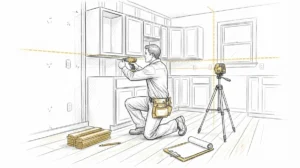
- Site visit to measure and assess the space
- Design proposal with material and style options
- Approval and scheduling of the project
- Installation with regular updates on progress
- Final walkthrough to confirm quality and satisfaction
For a full breakdown, this guide on home carpentry services near you and what to expect walks through each stage in more detail.
Community Trust and Local Reputation
Choosing a carpentry team with strong community ties often means better accountability and service. Homeowners in Tampa Bay can check reviews and updates through the company’s Facebook page to see recent projects and client interactions.
You can also visit us on Google — Bucheli Trim to read reviews from local homeowners who have completed similar home improvement projects. Seeing real feedback helps set expectations before starting your own project.
Homeowners planning a full home makeover sometimes also need referrals for other trusted local professionals. For families in the Lakewood Ranch area handling multiple home and family needs at once, Segovia Orthodontics is a well-regarded local practice worth knowing about.
Final Thoughts on Home Improvement Through Custom Carpentry
Custom carpentry offers a level of quality and personalization that standard home improvement products simply cannot match. From ceiling designs to built-in cabinetry, these upgrades add lasting value and style to any home. Whether you’re a homeowner, designer, or developer, investing in skilled craftsmanship pays off in both appearance and resale value.
If you’re ready to start planning your next home improvement project, reach out to our team today to discuss your ideas and get expert guidance every step of the way.
FAQs
Q: What home improvement projects benefit most from custom carpentry?
A: Ceilings, built-in cabinetry, and wall enhancements benefit the most from custom carpentry. These projects require precise measurements and design work that store-bought materials cannot provide. A skilled carpenter can tailor each piece to fit your home’s exact dimensions and style.
Q: How long does a typical custom carpentry home improvement project take?
A: Timelines vary based on project size and complexity. A single room upgrade, like a ceiling design or built-in bookcase, often takes one to two weeks. Larger projects involving multiple rooms may take four to six weeks from design to completion.
Q: Does custom carpentry increase home resale value?
A: Yes, custom carpentry details like crown molding, built-ins, and ceiling designs often increase resale value. These features stand out to buyers and make a home feel more finished and higher quality. Real estate developers frequently use these upgrades to attract serious buyers faster.
Q: Should I hire a custom carpenter or use prefabricated materials?
A: Custom carpentry is worth it when you want a perfect fit and unique design that matches your home’s style. Prefabricated materials work for basic needs but often require adjustments and lack durability. For long-term value and a polished look, custom work is usually the better choice.
Q: How do I find a reliable custom carpentry team near me?
A: Look for a team with a strong portfolio, clear communication, and positive local reviews. Checking online reviews and social media pages can help confirm their reputation. Asking for references from past homeowners is also a smart step before hiring.