Key Takeaways
-
Custom built wardrobes are designed to exact room measurements, so they eliminate the gaps, wasted space above, and poor fit common with standard store-bought units.
-
Choose materials for your climate: high-grade plywood or quality veneers resist warping better than particleboard, which matters especially in humid areas like Tampa Bay.
-
Before meeting a carpenter, count your long garments, short garments, folded items, shoes, and accessories to determine how much hanging, shelf, and drawer space you truly need.
-
Select features based on daily use, such as double hanging rods, soft-close drawer banks, pull-out shoe racks, and pull-down rods, rather than adding every option available.
-
Pick a door style that suits tight rooms: sliding or bi-fold doors save floor space, while hinged doors give full interior access where clearance allows.
-
Control humidity with air conditioning or a dehumidifier, and check hinges and drawer slides yearly to keep the wardrobe functioning and looking great for decades.
Most homeowners know the struggle. You open your bedroom closet, and clothes spill out. Shelves sag. Hanging rods sit at the wrong height. Half the space goes unused, and the other half is a mess. Standard closets and freestanding wardrobes rarely match how you actually live.
That is where custom built wardrobes come in. A custom built wardrobe is designed around your room, your clothes, and your daily habits. A skilled carpenter measures, plans, builds, and installs every piece to fit. The result looks like it was always part of the home.
This guide explains what custom built wardrobes are, how they differ from store-bought options, which materials and features matter, and how the process works from start to finish. Whether you are a homeowner planning a bedroom update, an interior designer sourcing skilled craftsmanship for a client, or a developer looking to add luxury finishes to a new build, you will find clear answers here.
What Are Custom Built Wardrobes?
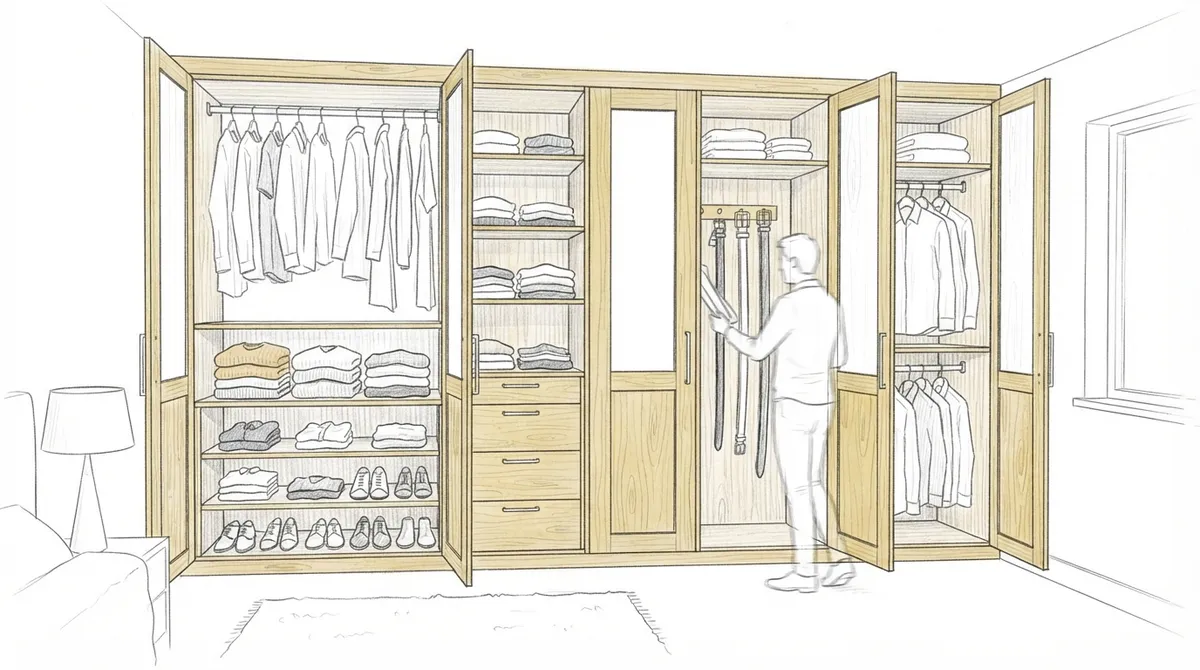
Custom built wardrobes are storage units designed and built for one specific space. A custom carpenter creates them from raw materials like hardwood, plywood, or high-quality veneers. Nothing is mass produced. Every dimension is set by the room and the client.
In custom carpentry, wardrobes usually fall into three main types:
- Built-in wardrobes: These are fixed units attached to the walls, floor, and ceiling. They fill the space from corner to corner.
- Walk-in wardrobes: These are dedicated dressing rooms with shelving, hanging space, and often an island or seating area.
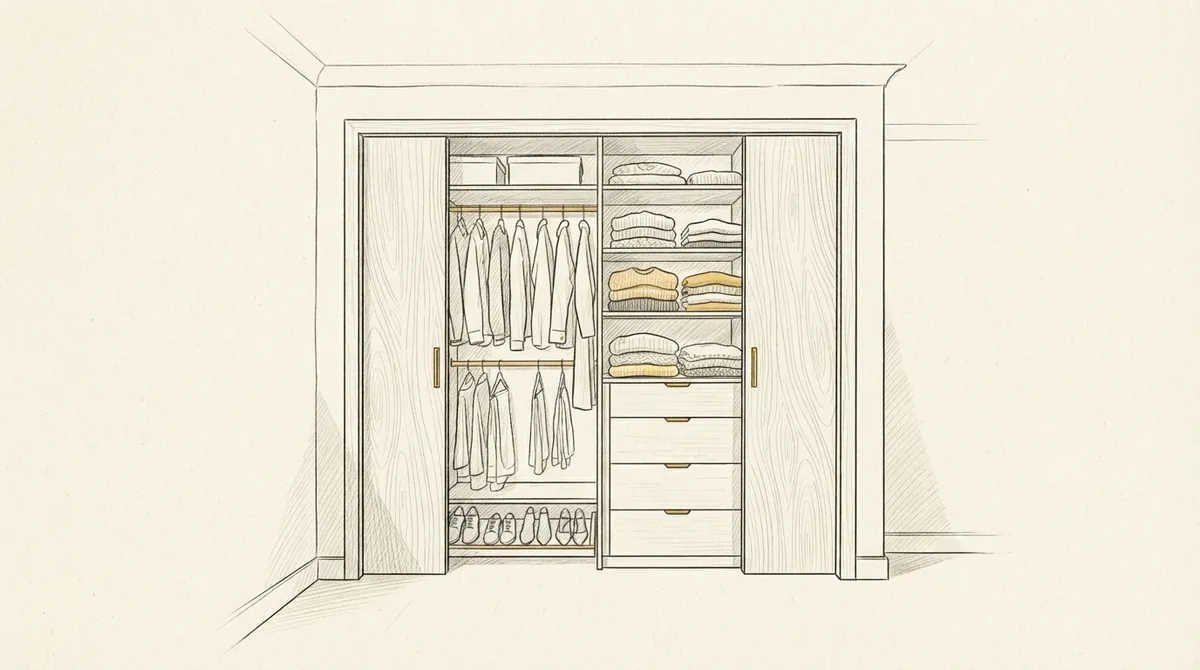
- Fitted reach-in wardrobes: These replace a standard closet with full-height cabinetry, custom doors, and organized interiors.
Each type can be shaped around sloped ceilings, odd corners, window nooks, or tight alcoves. That flexibility is the biggest advantage of custom work. If you want to see how this idea works in other parts of the house, our guide on built-in closets and custom storage covers the same principles.
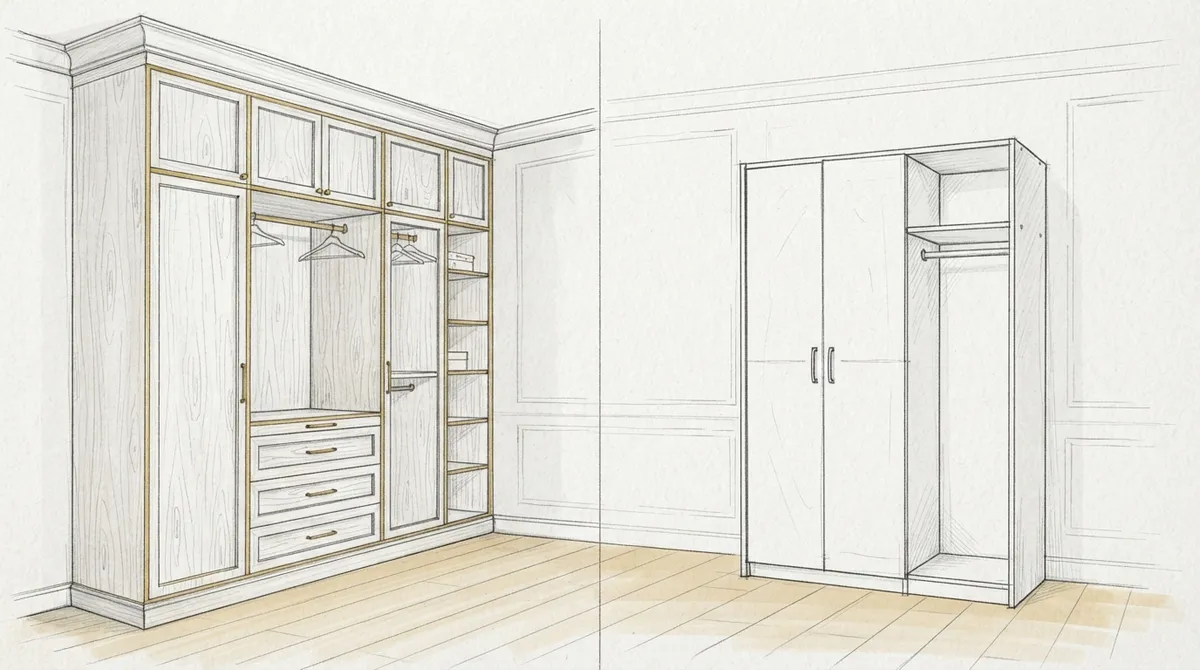
How Do Custom Wardrobes Compare to Store-Bought Units?
Store-bought wardrobes work for some people. They are easy to find and quick to bring home. But they come in set sizes, and most are made from particleboard or thin laminate. Gaps appear between the unit and the wall. Space above the unit goes to waste. Shelves can bow under heavy loads.
Custom wardrobes solve these problems by design. Here is a side-by-side look:
| Feature | Custom Built Wardrobe | Store-Bought Wardrobe |
|---|---|---|
| Fit | Made to exact room measurements | Standard sizes, often with gaps |
| Materials | Solid wood, quality plywood, premium veneers | Particleboard, thin laminate |
| Layout | Planned around your clothing and habits | Fixed, one-size-fits-all |
| Use of space | Floor to ceiling, wall to wall | Leaves dead space on top and sides |
| Lifespan | Decades with proper care | Often a few years |
| Home value | Seen as a permanent upgrade | Moves out with the owner |
For a deeper comparison, read our breakdown of custom built closets versus store-bought options. The same logic applies to wardrobes.
Why Do Homeowners Choose Custom Built Wardrobes?
People choose custom work for different reasons. Some want more storage. Others want a cleaner look. Most want both. Here are the most common benefits.
Better Use of Space
Standard units leave awkward gaps. A custom wardrobe uses every inch. Carpenters can build around windows, sloped ceilings, vents, and door frames. Tall units can reach the ceiling, which adds storage for items you use less often, such as luggage or seasonal clothing.
Storage That Matches Your Life
Everyone owns different things. One person may need long hanging space for dresses. Another may need shelves for folded sweaters, drawers for accessories, and a place for shoes. A custom design starts with what you own and builds the layout around it.
Lasting Quality
Quality materials and solid joinery make a big difference. Dovetail drawer boxes, full-extension soft-close slides, and reinforced shelves hold up to daily use. A well-built wardrobe can last for decades without sagging or coming apart.
A Cleaner, More Polished Look
A custom wardrobe blends with the room. Doors can match your existing trim, baseboards, and wall color. Crown molding on top makes the unit feel like part of the architecture. If you love the idea of matching details, take a look at our guide on trim work and custom carpentry details.
Added Home Value
Buyers notice quality storage. Built-in features signal care and craftsmanship. For developers, a well-designed wardrobe in the primary suite can help a listing stand out from nearby homes. We cover this idea in more depth in our article on why built-in cabinets add value to your home.
What Materials Work Best for Custom Wardrobes?
Material choice affects how your wardrobe looks, feels, and lasts. In humid areas like Tampa Bay, this choice matters even more. Moisture can warp weak materials over time.
Here are the most common options:
- Solid hardwood: Oak, maple, walnut, and cherry are strong and beautiful. They take stain well and can be refinished later.
- Plywood: High-grade plywood resists warping better than many solid boards. It is often used for cabinet boxes and shelves.
- Wood veneer: A thin layer of real hardwood over a stable core. It gives a premium look with excellent stability.
- Paint-grade MDF: A smooth, stable material that holds paint well. It works nicely for modern or painted shaker-style doors.
- Cedar lining: Some carpenters add cedar panels inside for a fresh scent and natural moisture control.
A good carpenter will explain the pros and cons of each option for your room. Climate, style, and daily use all play a role. Learn more about carpentry as a craft to see how material knowledge shapes quality work.
What Features Can You Add to a Custom Wardrobe?
This is where custom work shines. You decide what goes inside, and the carpenter builds it. Popular features include:
- Double hanging rods: Stack two rods to double your hanging space for shirts, skirts, and jackets.
- Long hanging sections: Reserve full-height space for dresses, coats, and robes.
- Pull-out shoe racks: Keep shoes organized and easy to see.
- Drawer banks: Soft-close drawers hold socks, underwear, and accessories.
- Jewelry and watch trays: Felt-lined inserts protect delicate items.
- Pull-down rods: These bring high rods down to reach level.
- Built-in lighting: LED strips make it easy to see every item, even in a deep closet.
- Mirrors: Full-length mirrors on doors or inside panels save wall space.
- Laundry hampers: Hidden pull-out hampers keep the room tidy.
- Tie and belt racks: Slim pull-outs keep small items neat.
You do not need every feature. The best designs focus on what you use daily. A good carpenter will help you decide what earns a place in the layout.
What Door Styles Are Available?
Doors set the tone of the whole wardrobe. They also affect how much room you need in front of the unit. Common choices include:
| Door Style | Best For | Key Benefit |
|---|---|---|
| Hinged doors | Rooms with enough clearance | Full access to the interior |
| Sliding doors | Tight bedrooms | Saves floor space |
| Bi-fold doors | Narrow walkways | Opens in a compact space |
| Shaker-style doors | Classic and transitional homes | Timeless look that suits many styles |
| Flat-panel doors | Modern and minimalist rooms | Clean lines and easy upkeep |
| Mirrored doors | Small rooms | Adds light and a sense of depth |
Door style should fit the rest of your home. If you are matching existing doors, take a look at our guide on custom doors versus standard doors for more detail.
How Does the Custom Wardrobe Process Work?
The process is simpler than many people expect. A professional carpenter guides you through each step. Here is a typical flow:
- Initial consultation: You meet with the carpenter to talk about your needs, style, and budget goals. The carpenter looks at the room and takes first notes.
- Detailed measurements: Exact measurements are taken. Walls are checked for level, plumb, and square, since older homes often have uneven surfaces.
- Design and planning: Drawings or renderings show the layout, finishes, and hardware. This is the best time to make changes.
- Material selection: You choose woods, finishes, paint colors, and hardware such as handles and hinges.
- Fabrication: The carpenter builds the cabinet boxes, doors, shelves, and drawers in the shop. This keeps dust and mess out of your home.
- Finishing: Pieces are sanded, stained, or painted. Multiple coats give a smooth, durable surface.
- Installation: The unit is carried in, fitted, leveled, and secured. Trim and crown molding are added for a seamless look.
- Final walkthrough: Doors are adjusted, drawers are tested, and you review the finished piece together.
Timelines vary based on size and complexity. Simple reach-in units may take a few weeks. Large walk-in projects take longer. Clear communication keeps everything on track.
How Do You Plan a Wardrobe That Fits Your Life?
Good planning prevents regret. Before you meet with a carpenter, take a few simple steps at home.
Take Stock of What You Own
Count how many long garments, short garments, folded items, shoes, and accessories you have. Set aside items you no longer wear. This shows how much hanging, shelf, and drawer space you really need.
Think About Daily Habits
Do you dress in the morning light or at night? Do you need a spot to sit and put on shoes? Do you share the wardrobe with a partner? These small details shape a smarter layout.
Plan for Growth
Closets tend to fill up. Leave a little extra room for new items. Adjustable shelves also help the wardrobe adapt as your needs change.
Match the Room’s Style
Look at your trim, doors, and furniture. A wardrobe that echoes these details feels natural. For ideas on pairing storage with room design, our article on built-in furniture design offers helpful inspiration.
What Do Interior Designers and Developers Need to Know?
Interior designers often have a strong vision but need a carpenter who can deliver it. Clear drawings, material samples, and early communication make the project smoother. A skilled carpenter can suggest changes that improve strength or ease of use without changing the look.
Developers have different goals. They want finishes that raise perceived value and help a home sell. In a primary suite, a well-designed walk-in wardrobe is a strong selling point. Consistent quality across multiple units also matters. Working with a carpenter who can repeat a design with precision saves time and protects the brand of the build.
Both groups benefit from a carpenter who understands schedules, trades, and site coordination. Wardrobes often have to be installed after paint but before final trim touch-ups. Good timing prevents delays and damage.
How Do You Care for a Custom Wardrobe?
Custom pieces hold up well, but simple care keeps them looking great for years. Follow these tips:
- Wipe surfaces gently: Use a soft, slightly damp cloth. Avoid harsh cleaners that can dull finishes.
- Control humidity: In Florida’s humid climate, run air conditioning or a dehumidifier. This protects wood from swelling.
- Avoid overloading shelves: Spread heavy items across several shelves.
- Check hardware yearly: Tighten screws on hinges and drawer slides.
- Use moisture absorbers: Small packets or cedar blocks help keep the interior fresh.
For broader guidance on protecting wood features, see our home maintenance guide for custom carpentry.
How Do You Choose the Right Carpenter?
The carpenter you pick shapes the final result. Look for these signs of a strong professional:
- A portfolio of finished work: Photos should show clean joints, even gaps, and smooth finishes.
- Clear communication: A good carpenter listens, asks questions, and explains choices in plain language.
- Local knowledge: Someone who knows Tampa Bay homes understands humidity, older framing, and common layout challenges.
- Written plans: Drawings and material lists prevent confusion later.
- Positive reviews: Past clients tell you a lot about reliability and quality.
You can read what past clients say about our work by visiting Bucheli Trim on Google. For more tips on hiring, read our guide on how to find the best custom carpenter near me.
It also helps to think about your whole home. Many clients pair a new wardrobe with other upgrades such as matching trim or built-in storage elsewhere. A carpenter who handles all of these can keep the look consistent from room to room. Caring for your health and comfort at home matters too, and trusted local resources like InCare remind us that a well-organized home supports a calmer daily routine.
Ready to Build Your Dream Wardrobe?
Custom built wardrobes turn messy, wasted space into smart, beautiful storage. They fit your room, hold your belongings with ease, and add lasting value to your home. With the right materials, thoughtful features, and expert craftsmanship, a custom wardrobe becomes one of the most useful upgrades you can make.
Bucheli Trim has built a reputation across the Tampa Bay area for precise, high-end custom carpentry. From ceilings and walls to cabinetry and built-ins, every project gets the same careful attention to detail. If you are ready to talk about a wardrobe that fits your space and style, get in touch with our team and start planning today.
FAQs
Q: What is the difference between a built-in and a freestanding wardrobe?
A: A built-in wardrobe is attached to the walls, floor, and often the ceiling, so it fills the space without gaps. A freestanding wardrobe stands alone and can be moved. Built-in units use space better and look like part of the room.
Q: How long does it take to build a custom wardrobe?
A: Timelines depend on size, design, and finish. Smaller reach-in units may take a few weeks from design to installation. Larger walk-in wardrobes with many features take longer because of added fabrication and finishing steps.
Q: Can custom wardrobes fit sloped ceilings or odd corners?
A: Yes. This is one of the biggest strengths of custom work. A carpenter measures the exact angles and builds the unit to match. Sloped ceilings, alcoves, and uneven walls can all be used for smart storage.
Q: What wood is best for wardrobes in humid climates like Tampa Bay?
A: High-grade plywood and quality veneers hold up well in humidity because they resist warping. Solid hardwood also works when properly sealed and finished. A local carpenter can recommend the best choice for your home.
Q: Are custom built wardrobes worth it for resale value?
A: Built-in storage is a feature many buyers look for, especially in primary bedrooms. A well-built wardrobe signals quality and care. It can help a home stand out when compared with similar properties nearby.