Key Takeaways
-
Coffered ceilings and exposed wood beams are the most impactful custom ceiling treatments for living rooms in 2026, requiring adequate height (9+ feet) but delivering strong architectural character across multiple design styles.
-
Custom ceiling treatments must be planned alongside lighting, walls, and flooring as a cohesive design system rather than isolated upgrades to maximize visual impact and long-term home value.
-
Tray ceilings, beadboard, and decorative medallions with crown molding offer effective alternatives for standard 8-foot ceilings, allowing homeowners with lower spaces to still achieve custom ceiling appeal.
-
Avoid common mistakes like mismatched scale in small rooms, ignoring lighting integration, and skipping professional carpenter assessment, which can result in cramped spaces, alignment problems, or structural issues.
-
Work with experienced custom carpenters who can coordinate the entire ceiling design with quality materials, ensuring precise execution that impresses real estate appraisers and increases home resale value.
-
Geometric trim ceiling designs are trending in 2026 as modern alternatives, creating bold artistic effects that work particularly well in contemporary homes with clean architectural lines and modern furnishings.
Your living room ceiling is one of the most overlooked surfaces in your home. Most homeowners focus on walls, floors, and furniture. But the ceiling? It often gets a coat of flat white paint and nothing more. That’s a missed opportunity. Custom ceiling treatments can completely transform how a room feels. They add depth, character, and visual interest that no piece of furniture can match. Whether you prefer a classic, rustic, or modern look, there’s a ceiling design that will make your living room feel like a showpiece. In 2026, more homeowners in the Tampa Bay area are investing in ceiling designs that reflect their personal style and elevate their home’s overall value. This guide walks you through the best ideas for custom ceiling treatments in living rooms — and what to consider before getting started.
Why Custom Ceiling Treatments Make a Big Difference
A plain ceiling does nothing for a room. A custom ceiling treatment, on the other hand, draws the eye upward and creates a sense of height and elegance. It gives the living room a finished, intentional look. Interior designers often call the ceiling the “fifth wall” because of how much impact it can have on a space. If you want to understand what custom ceilings are and why they matter, the answer is simple: they make rooms feel complete.
Beyond looks, custom ceiling treatments can also improve acoustics and define zones within open floor plans. They guide the eye, create focal points, and add architectural detail that plain ceilings simply cannot offer. For real estate developers, a well-designed ceiling can be a strong selling point that sets a property apart.
Popular Ideas for Custom Ceiling Treatments in Living Rooms
There are many ways to dress up a living room ceiling. The right choice depends on your room’s size, style, and height. Here are the most popular and effective options available through skilled custom carpentry work.
1. Coffered Ceilings
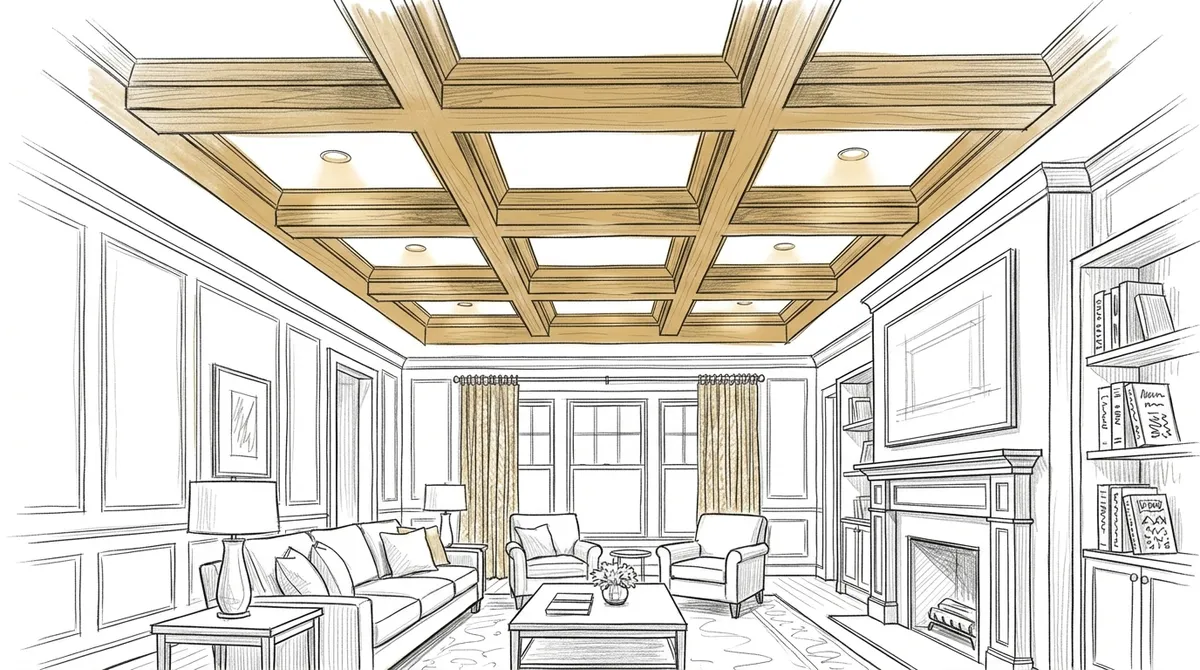
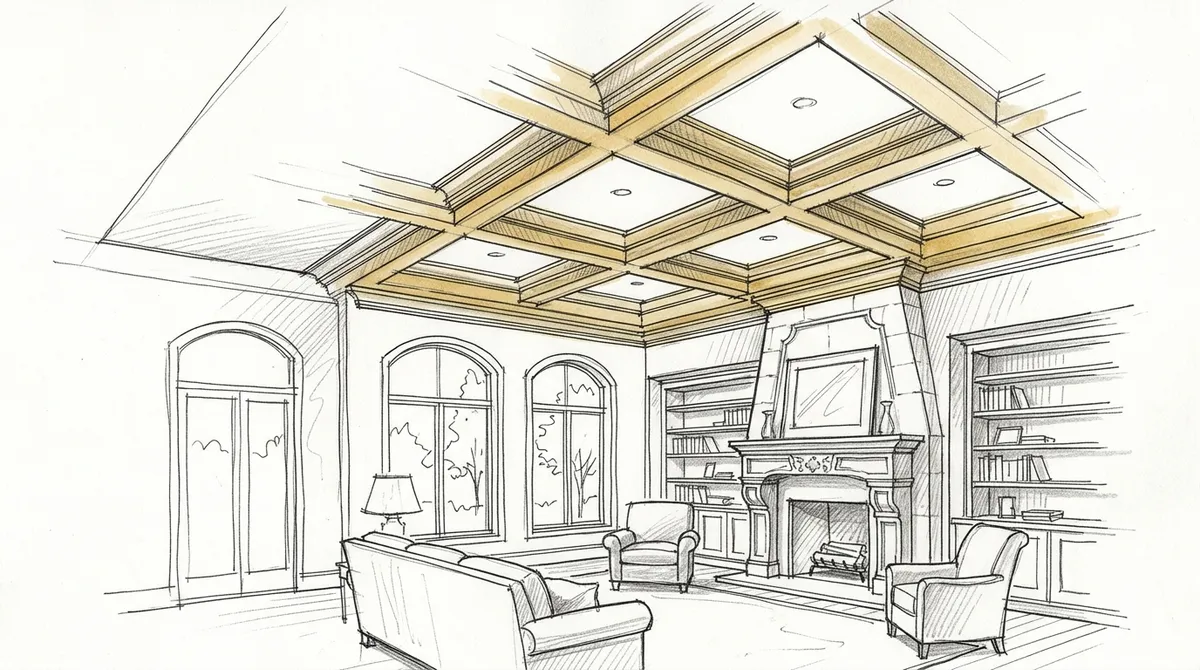
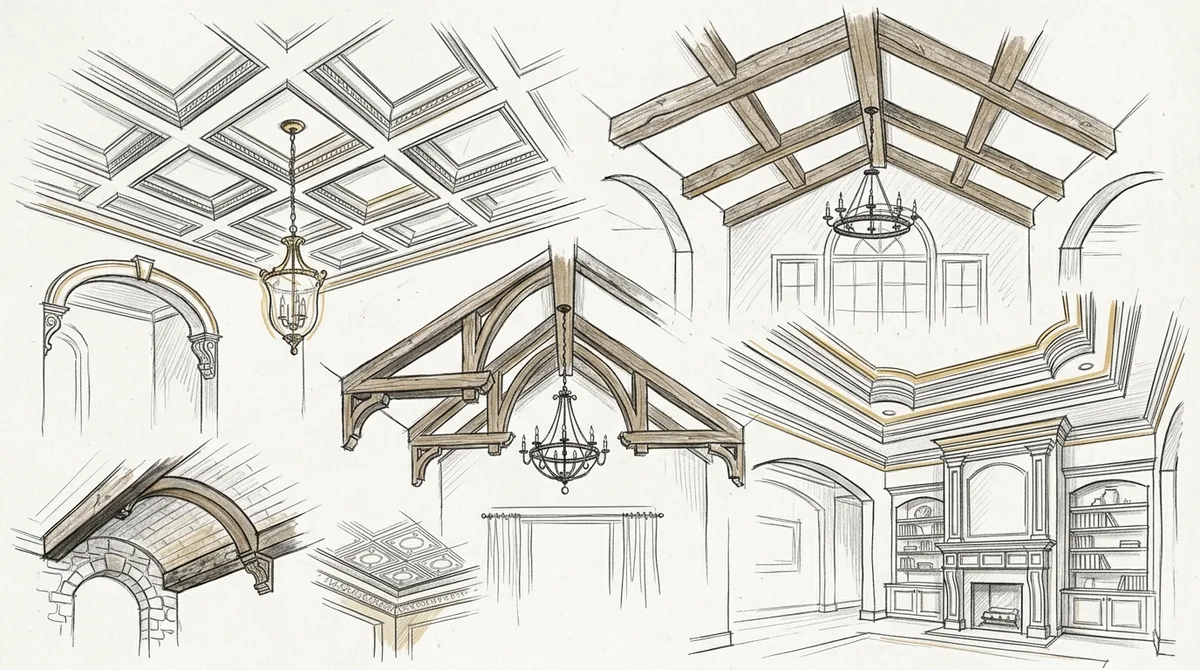
Coffered ceilings are a timeless classic. They feature a grid of recessed panels separated by beams. This creates a rich, layered look that adds depth and visual weight to any room. Coffered ceilings work especially well in larger living rooms with higher ceilings. They pair beautifully with crown molding around the perimeter. You can learn more about crown molding and how it complements ceiling designs as part of a cohesive look.
2. Exposed Wood Beam Ceilings
Wood beams add warmth and a natural, organic feel to a living room. They work well in farmhouse, rustic, and even transitional design styles. Beams can run parallel across the ceiling or be arranged in a grid pattern. If you’re curious about the benefits, check out 9 reasons to add beams to your ceiling in 2026. The results are striking in almost any living room size.
3. Tray Ceilings
A tray ceiling is a recessed center section that creates a stepped or layered look. It adds architectural interest without overwhelming the space. Tray ceilings work great in rooms with standard ceiling heights. They can be painted an accent color or fitted with lighting to create a dramatic effect. Learn what makes a tray ceiling worth adding to your home before you commit to this treatment.
4. Tongue and Groove or Beadboard Ceilings
Beadboard and tongue-and-groove ceiling panels give a living room a cozy, cottage feel. They’re often used in coastal and farmhouse-style homes. The narrow wood planks run across the ceiling and add texture and visual rhythm. This treatment pairs well with natural wood tones throughout the room. You can explore more about how wood beadboard installation transforms your home.
5. Decorative Medallions and Crown Molding
Sometimes, simplicity wins. A ceiling medallion placed at the center of the room — especially around a light fixture — adds a classic touch without major construction. Pair it with custom molding details along the perimeter for a polished, formal look. This is one of the most affordable ideas for custom ceiling treatments in living rooms while still making a strong visual statement.
6. Geometric Trim Ceiling Designs
For a more modern or contemporary feel, geometric ceiling designs are trending in 2026. These involve applying trim in repeating shapes — squares, hexagons, or diamonds — directly to the ceiling surface. The result is a bold, artistic look that turns the ceiling into a design feature. This style works well in homes with strong architectural lines and modern furniture.
Comparing Custom Ceiling Treatment Options
It helps to see the options side by side before making a decision. Here’s a quick comparison of the most common ceiling treatments for living rooms.
| Ceiling Treatment | Best Room Size | Design Style | Visual Impact |
|---|---|---|---|
| Coffered Ceiling | Large rooms | Traditional, formal | Very high |
| Exposed Wood Beams | Medium to large | Rustic, farmhouse, transitional | High |
| Tray Ceiling | Medium rooms | Modern, transitional | Medium to high |
| Beadboard/Tongue & Groove | Small to medium | Coastal, cottage, farmhouse | Medium |
| Medallion + Crown Molding | Any size | Classic, formal | Medium |
| Geometric Trim Design | Medium to large | Modern, contemporary | High |
Things to Consider Before Choosing a Ceiling Treatment
Not every ceiling treatment works in every room. Before choosing, here are some key factors to think about:
- Ceiling height: Coffered and beam ceilings need adequate height — typically 9 feet or more.
- Room size: Larger rooms can handle bold, complex treatments. Smaller rooms benefit from simpler designs.
- Existing style: The ceiling treatment should complement your current architectural style.
- Lighting placement: Some treatments require adjusting or repositioning light fixtures.
- Structural access: A professional carpenter needs to assess the structure before installing heavy beams or deep coffered panels.
- Long-term goals: If you’re planning to sell, choose treatments that have broad appeal to buyers.
If you’re unsure where to start, this guide on how to choose ceiling treatments for low ceilings can help you navigate your options based on your room’s specific constraints.
Common Mistakes to Avoid
Many homeowners make avoidable errors when planning ceiling treatments. Here are the top mistakes to watch out for:
- Choosing the wrong scale: Large coffered panels in a small room can make the space feel cramped and heavy.
- Ignoring the lighting plan: Ceiling treatments and lighting must be planned together, not as afterthoughts.
- Skipping a professional assessment: DIY ceiling work often leads to alignment problems, sagging panels, or structural issues. Always consult a skilled carpenter.
- Overlooking the transition to walls: The ceiling treatment should connect smoothly to the wall enhancements below it for a cohesive look.
- Choosing style over function: Some complex ceiling designs can trap heat or affect HVAC performance. A professional will help you balance both.
To avoid these pitfalls, read about the 7 new ceiling mistakes that ruin your home’s look before making any decisions.
How Custom Carpentry Brings These Designs to Life
Every ceiling treatment on this list requires skilled hands and precise execution. Custom carpentry is the foundation of all these designs — from cutting and fitting beams to installing coffered grid systems and applying decorative trim. A skilled carpenter measures, cuts, and installs each element with accuracy so the final result looks clean and intentional. You can learn more about carpentry to understand the craftsmanship behind these installations.
At Bucheli Trim, the team specializes in high-end custom ceiling designs throughout the Tampa Bay area. From traditional coffered ceilings to modern geometric trim patterns, every project is handled with precision and care. You can browse their completed work through their custom projects gallery to see real examples of ceiling treatments done right. For trusted local reviews, visit Bucheli Trim on Google to see what homeowners in the area are saying.
How to Get the Most From Your Ceiling Treatment Investment
A ceiling treatment is a long-term investment in your home. Here’s how to maximize that investment:
- Work with an experienced carpenter who has a proven portfolio of ceiling projects.
- Plan the whole room together — coordinate the ceiling with flooring, molding details, and lighting before work begins.
- Choose quality materials — real wood and premium trim hold up better over time than cheaper alternatives.
- Think about resale value — architectural ceiling details consistently impress buyers and appraisers.
- Maintain the finish — painted or stained ceilings need periodic touch-ups to stay looking fresh.
For inspiration beyond ceilings, explore how 11 ceiling designs can transform any room. Pairing your ceiling treatment with complementary wall enhancements and trim and molding creates a truly custom, cohesive interior. You may also find value in connecting with your local community’s home improvement resources — neighbors at businesses like Smile District in the Tampa Bay area understand how much local craftsmanship matters for community pride and home value.
Ceiling Treatments and Room Cohesion
A great ceiling treatment doesn’t exist in isolation. It works best when the whole room tells a consistent design story. The ceiling, walls, trim, and flooring should all connect. Here are some pairing tips:
- Coffered ceilings pair well with wainscoting or panel wall designs below them.
- Wood beam ceilings complement hardwood or wide-plank flooring for a unified natural look.
- Tray ceilings look great with accent walls that share the same color or material as the tray recess.
- Geometric trim ceilings pair with clean-lined wall enhancements for a modern, architectural feel.
- Beadboard ceilings coordinate naturally with beadboard wall accents in coastal or cottage-style rooms.
Also consider how the ceiling treatment interacts with your flooring choice. Lighter floors can balance heavier ceiling treatments, while dark floors can add drama when paired with bold ceiling designs. Thoughtful planning across all surfaces is what separates a good room from a great one. You can explore more about carpentry and woodworking as a guide to custom home upgrades to see the big picture. Follow Bucheli Trim on Facebook for design inspiration, project updates, and ceiling treatment ideas tailored to Tampa Bay homes.
Conclusion
The ceiling is one of the most powerful design elements in your living room — and one of the most underused. From coffered and beamed ceilings to tray designs and geometric trim work, the ideas for custom ceiling treatments in living rooms are varied and exciting. The right choice depends on your room’s size, your personal style, and your long-term goals. What matters most is working with a skilled carpenter who can bring your vision to life with precision and quality craftsmanship. If you’re ready to transform your living room from the top down, get in touch with the Bucheli Trim team today and start planning your custom ceiling treatment.
FAQs
Q: What is the most popular custom ceiling treatment for living rooms in 2026?
A: Coffered ceilings and exposed wood beams remain the most sought-after custom ceiling treatments for living rooms in 2026. Both options add strong architectural character and work well across a variety of design styles, from traditional to transitional.
Q: Do I need a high ceiling for custom ceiling treatments?
A: Not necessarily. While coffered ceilings and exposed beams benefit from ceilings at least 9 feet high, treatments like tray ceilings, beadboard, and decorative molding work well in rooms with standard 8-foot ceilings. A skilled carpenter can recommend the best option based on your specific ceiling height.
Q: How long does it take to install a custom ceiling treatment in a living room?
A: Installation time varies depending on the complexity of the design. A simple beadboard ceiling may take one to two days, while a full coffered ceiling with detailed trim work can take several days to a week. Your carpenter will provide a project timeline after assessing the room.
Q: Can custom ceiling treatments increase my home’s value?
A: Yes. Architectural ceiling details are a recognized value-add feature in the real estate market. Buyers and appraisers often respond positively to coffered ceilings, wood beams, and tray ceilings because they signal quality craftsmanship and thoughtful design.
Q: Should I coordinate my ceiling treatment with my wall and floor finishes?
A: Absolutely. The best results come from treating the ceiling, walls, and floors as a connected design system. For example, wood beam ceilings pair naturally with hardwood floors, while coffered ceilings complement wainscoting or formal wall paneling below them.