Key Takeaways
-
Define your project category first (ceilings, wall details, built-ins, trim, or doors) so you can match your search to a company with the right specialty.
-
Confirm licensing, liability insurance, and workers' compensation before discussing design, since licensing matters especially in Florida.
-
Study portfolio photos for clean joints, no gaps at corners, smooth paint or stain finishes, and straight, balanced lines.
-
Read review comments for patterns about communication and on-time work, and call two or three references to ask whether they would hire the company again.
-
Ask how changes are handled, who actually works on your home, and which materials suit Florida humidity, since local climate affects wood and finishes.
-
Avoid companies with no real portfolio, pressure to sign quickly, vague licensing answers, or no written scope of work.
Searching for carpentry companies near me can feel overwhelming. Every company says it does great work. Photos look nice online. But how do you know who will deliver real quality in your home?
This guide gives you a clear process. You will learn how to define your project, check skills, review past work, and ask the right questions. The steps work for homeowners, interior designers, and real estate developers alike.
Custom carpentry is different from basic repair work. It means building ceilings, wall details, trim, and built-in cabinetry that fit your space exactly. That kind of work needs training, patience, and an eye for detail. Choosing the right team in 2026 will shape how your home looks and feels for decades.
Follow these steps, and you will find a carpentry partner you can trust. If you want to see what high-end work looks like, Bucheli Trim shows its craftsmanship across the Tampa Bay area.

Step 1: Define What Kind of Carpentry You Need
Before you search, know what you want built. Carpentry is a wide field. Some companies frame houses. Others focus on fine finish work. Matching the right company to your project saves time and stress. You can learn more about carpentry to see how broad the trade really is.
Start by writing down your goals. Think about the rooms you want to change and the look you want. Then sort your project into a category.
Common Custom Carpentry Project Types
- Ceiling work: Coffered, tray, and beamed ceilings that add depth to a room.
- Wall details: Wainscoting, shiplap, accent walls, and TV wall panels.
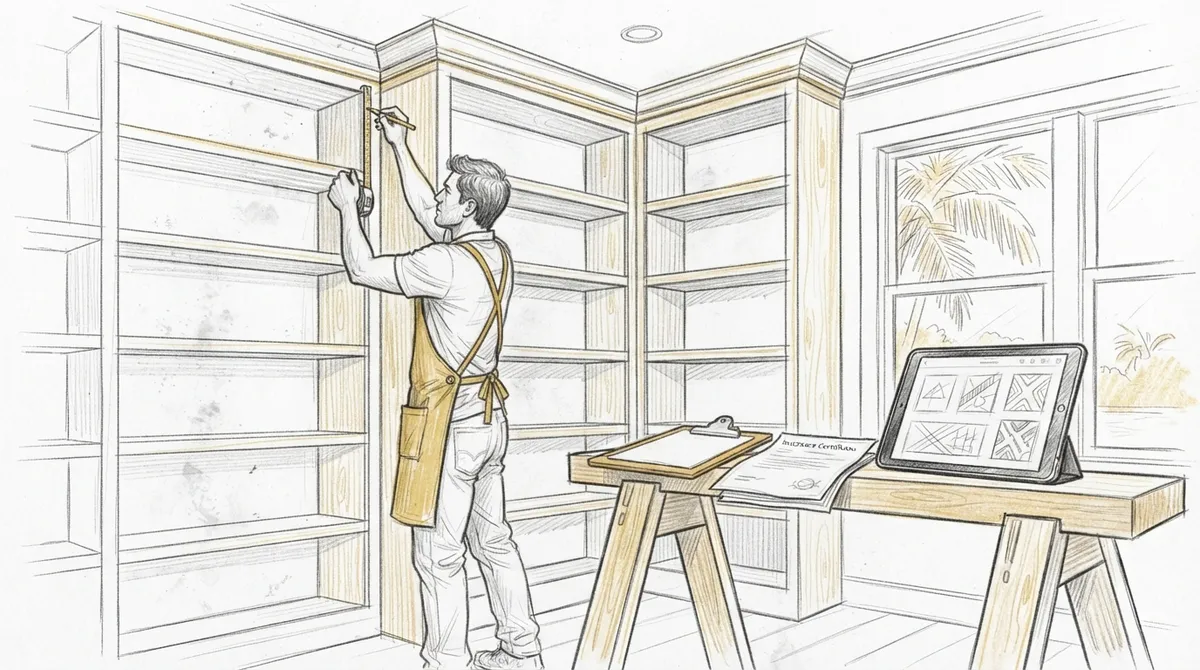
- Built-in cabinetry: Bookcases, closets, entertainment centers, and garage storage.
- Trim and molding: Crown molding, baseboards, and window and door casings.
- Doors and mantels: Custom interior doors, exterior doors, and fireplace mantels.
If you are not sure where to start, read about what custom carpentry services are and whether you need them. It helps you narrow your list before you contact anyone.
Step 2: Understand the Types of Carpenters
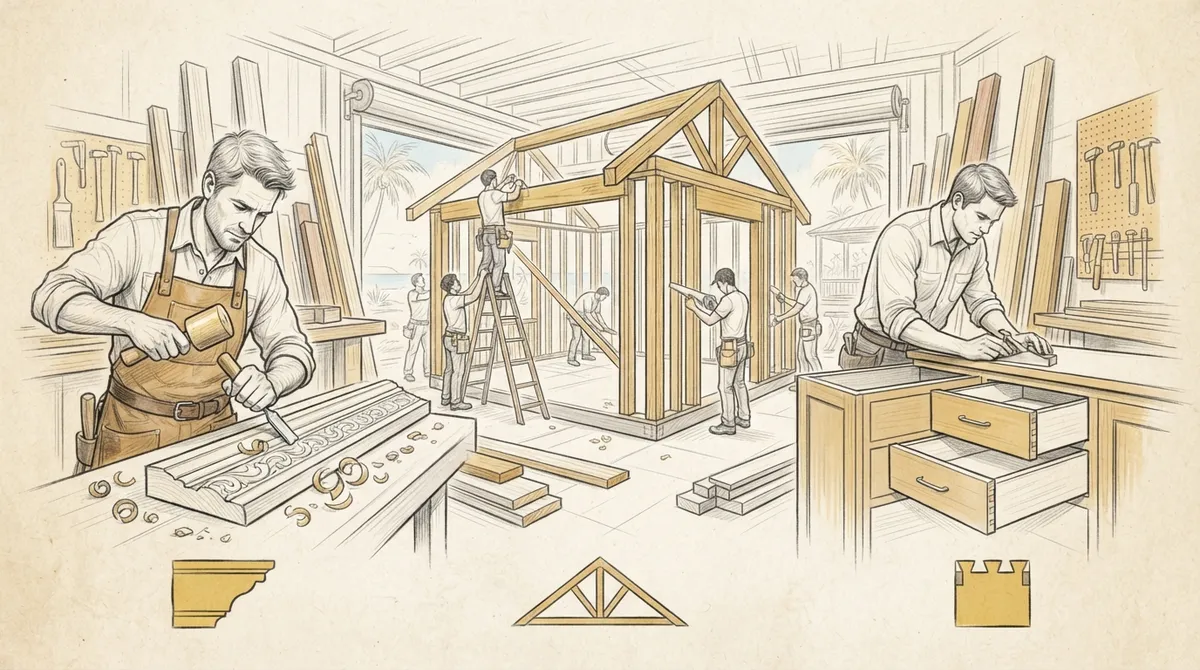
Not every carpenter does the same job. Knowing the difference helps you ask for the right skills. A rough carpenter builds structure. A finish carpenter handles the visible details that people notice every day.
For high-end homes, you want a company that is strong in finish work and custom millwork. These pros focus on tight joints, clean lines, and smooth surfaces. Our guide on how to identify the 3 types of carpenters explains this in more detail.
| Type of Carpenter | Main Focus | Best For |
|---|---|---|
| Rough Carpenter | Framing and structure | New builds and additions |
| Finish Carpenter | Trim, molding, doors, and details | Visible, high-quality finishes |
| Custom Carpenter | Built-ins, ceilings, and made-to-fit pieces | Unique, one-of-a-kind spaces |
| Handyman | Small repairs and basic tasks | Quick fixes |
If your project is about beauty and fit, look for a custom or finish specialist. You can also compare roles in 6 key differences between a carpenter and a handyman.
Step 3: Start Your Search the Smart Way
Now you are ready to build a list. Use several sources, not just one. A mix of online searches and personal referrals gives the best picture.
- Search with local terms. Add your city or region, such as Tampa or Tampa Bay, to find companies that serve your area.
- Check Google Business profiles. Look at star ratings, photos, and how owners reply to reviews.
- Ask for referrals. Neighbors, designers, and builders often know who does careful work.
- Browse portfolios. A strong company shows real projects, not just stock photos.
- Look at social pages. Active pages, like a company Facebook profile, can show recent work and customer comments.
Aim for a short list of three to five companies. That is enough to compare without getting lost. For more search tips, see 7 ways to find quality carpentry services near you.
Step 4: Check Licensing, Insurance, and Experience
Good looks mean little if the company is not set up properly. Always confirm the basics before you talk about design.
What to Verify
- Proper licensing: Ask for license details and confirm they are current.
- Liability insurance: This protects your home if something goes wrong.
- Workers’ compensation: This protects you if a worker is hurt on your property.
- Years in business: Longer track records often mean steadier service.
- Specialty focus: A company that does custom work daily will do it better than one that dabbles.
Licensing matters a lot in Florida. Learn why in why you should hire licensed carpenters. You can also follow the steps in how to find a licensed carpenter near me.
Step 5: Review Portfolios and Past Work
A portfolio is the best proof of skill. Photos show how a company handles real rooms, real corners, and real challenges. Look closely at the details, not just the big picture.
Here is what to study in each photo:
- Joints and corners. They should meet cleanly with no gaps.
- Paint and stain finish. Look for smooth, even surfaces.
- Symmetry and alignment. Lines should be straight and balanced.
- Fit to the room. Built-ins should look like part of the home, not an add-on.
- Variety of work. A wide range shows real skill and flexibility.
Want to know what true quality looks like? Read 13 signs of true craftsmanship in custom carpentry. It gives you a checklist you can use while browsing photos.
You can also look at the custom projects gallery from a local team to see the standard you should expect.
Step 6: Read Reviews and Ask for References
Reviews tell you how a company behaves when the job gets hard. Look beyond the star rating. Read the written comments for patterns.
What Good Reviews Mention
- Clear communication from start to finish
- Work finished on schedule
- A clean and respectful job site
- Attention to small details
- Fair handling of changes or surprises
Be careful if you see repeated complaints about missed deadlines or poor follow-up. One bad review is normal. A pattern is a warning.
Also ask each company for two or three references. Call them. Ask how the project went and whether they would hire the company again. You can see what real clients say on the testimonials page, and you can read Bucheli Trim reviews on Google to see how feedback looks for a Tampa Bay carpentry team.
Step 7: Ask the Right Questions in Your First Call
The first conversation tells you a lot. A good company listens, asks questions, and explains its process. A weak one rushes you or stays vague.
Use this list of questions during your call or consultation:
- Do you handle design help, or do I need a plan first?
- What materials do you recommend for my space and climate?
- Who will work on my home, and who manages the job?
- How long will the project take from start to finish?
- How do you handle changes once work begins?
- What does your warranty or follow-up service cover?
Florida homes face humidity and moisture, so material advice matters. A skilled team will explain which woods and finishes hold up best. For more on this, see 7 mistakes to avoid when hiring carpenters near me.
Step 8: Compare Companies Side by Side
Once you have talked to your top choices, compare them fairly. A simple chart keeps your thinking clear and removes guesswork.
| Factor to Compare | What to Look For |
|---|---|
| Specialty | Focus on custom and finish work |
| Portfolio | Clean, detailed, varied projects |
| Reviews | Steady praise and fair replies to concerns |
| Communication | Quick, clear, and honest answers |
| Process | Defined steps from design to install |
| Credentials | License and insurance confirmed |
Do not choose only on speed or a single factor. The best match is the company that scores well across the board and makes you feel confident.
Tips for Interior Designers and Developers
If you work with clients or manage properties, your needs go beyond one room. You need a carpentry partner who can follow plans and hit deadlines.
What Designers Should Look For
- A team that can read drawings and turn sketches into real pieces
- Skill in matching custom profiles and finishes
- Respect for your design vision and your client’s budget and timeline
What Developers Should Look For
- Capacity to handle multiple units or phases
- Consistent quality from one home to the next
- Reliable scheduling that keeps the build on track
Premium details help properties stand out and attract buyers. Features like custom ceiling designs, wall enhancements, and built-in cabinets add lasting value.
Red Flags to Watch For
Knowing the warning signs protects you from costly mistakes. Pay attention if you notice any of these during your search.
- No portfolio or only stock images. They may not have real work to show.
- Pressure to sign right away. Good companies give you time to decide.
- Vague answers about licensing. This often means something is missing.
- Poor communication early on. It rarely improves once work starts.
- No written scope of work. Clear paperwork prevents misunderstandings.
If something feels off, trust that feeling and keep looking. There are many skilled carpenters in the Tampa Bay area. You can also see where to find a skilled carpenter near you for more guidance.
Why Local Matters for Custom Carpentry
A local company knows your climate, your building styles, and your suppliers. In Tampa Bay, humidity affects wood, paint, and trim. A local pro plans for that from day one.
Local teams are also easier to reach. If a question comes up after the job, they can stop by and help. That kind of support is hard to get from a distant company. Read about 7 reasons to hire a Tampa carpenter for your home to see the full benefits.
Local trades also work together. Many carpentry teams partner with other home professionals. For example, a local dental office like Charming Smiles of Ocoee shows how community-based businesses build trust through steady, quality service. Carpentry works the same way: reputation grows one project at a time.
Make Your Final Decision
You have done the research. Now bring it all together. Look at your notes and rank each company on skill, trust, and fit. Then pick the one that earns the top spot across the board.
Before you sign, get everything in writing. The agreement should list the scope, materials, timeline, and payment terms. Clear paperwork protects both sides and keeps the project smooth.
Remember that great carpentry is an investment in your home. A well-chosen team delivers work that looks beautiful and lasts. Poor choices cost you more in repairs and redo work. Take your time and choose with care.
Conclusion
Finding the right carpentry companies near me comes down to a clear process. Define your project, learn the types of carpenters, build a short list, and check licenses. Then review portfolios, read reviews, ask smart questions, and compare your options side by side.
Follow these steps in 2026, and you will avoid common mistakes. You will end up with a team that respects your vision and builds with real skill. Whether you are a homeowner, a designer, or a developer, the right partner makes every project better.
Ready to talk about your project? Get in touch with our Tampa Bay carpentry team to start a conversation about your ceilings, walls, trim, or built-ins.
FAQs
Q: How do I find reliable carpentry companies near me?
A: Start with a local search that includes your city or region. Then check Google reviews, browse portfolios, and ask neighbors or designers for referrals. Narrow your list to three to five companies and compare them on skill, licensing, and communication.
Q: What is the difference between a custom carpenter and a general carpenter?
A: A general carpenter often handles framing, repairs, and basic installs. A custom carpenter designs and builds made-to-fit pieces like built-in cabinetry, coffered ceilings, and detailed wall paneling. For high-end results, a custom or finish specialist is the better choice.
Q: What should I ask a carpentry company before hiring them?
A: Ask about licensing, insurance, timeline, materials, and who will work on your home. Also ask how they handle changes and what follow-up service they offer. Clear, confident answers are a good sign of a trustworthy company.
Q: Why does local experience matter for carpentry in Tampa Bay?
A: Tampa Bay has high humidity that affects wood, paint, and trim over time. A local carpenter knows which materials and finishes hold up in this climate. Local teams are also easier to reach for questions or follow-up after the job is done.
Q: How can I tell if a carpentry company does quality work?
A: Look closely at portfolio photos for clean joints, smooth finishes, and tight corners. Read reviews for patterns about communication and on-time work. Asking for references and speaking with past clients gives you the clearest picture.